
Mahjong Racks Reviews: What Matters When You Buy
Last updated: Nov 23, 2026
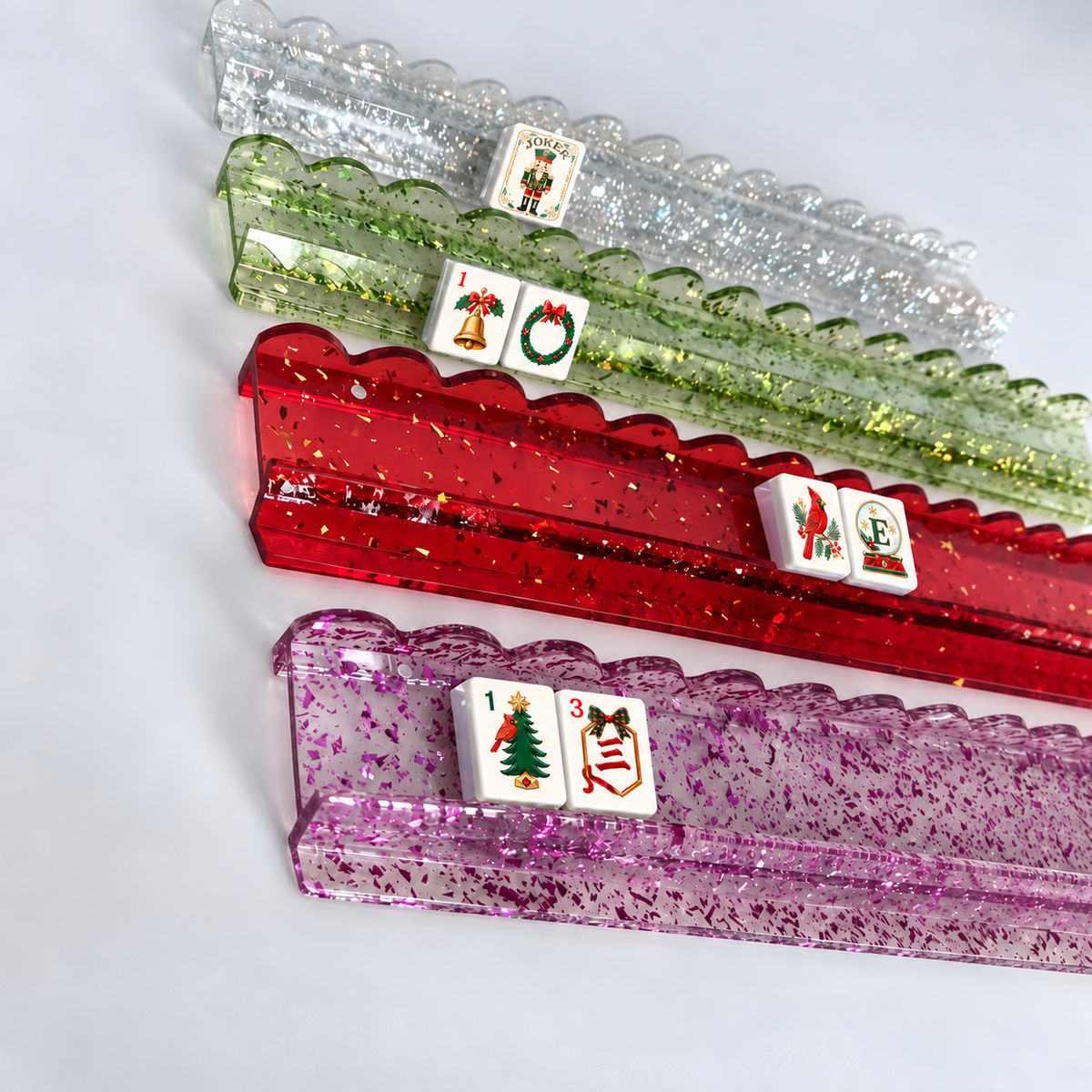
A mahjong rack is a wooden or acrylic tray that holds your hand of tiles at eye level, keeping them hidden from opponents and organized by suit. American mahjong racks typically accommodate 13–14 tiles when paired with a pusher—a small tool that advances tiles one at a time without fumbling. Quality separates racks into three tiers: entry-level (basic grip, lightweight), mid-range (angled design, reinforced joints, comfortable pusher), and premium (weighted stability, bamboo or hardwood, ergonomic pusher set). Most racks cost between basic and mid-range for home players; premium suits serious weekly tables. Avoid racks with slippery surfaces, misaligned tile holders, or pushers that split or slide. Look for a pusher that sits flush against the rail and a grip that doesn't absorb sweat. Mahstead's mahjong racks with pushers ship with each set and are designed for standard American 160-tile acrylic pieces.
What makes one rack better than another?
A better rack grips tiles without scratching them, tilts at the angle your wrist naturally prefers, and has a pusher that glides smoothly without catching. Poorly finished racks let tiles slip sideways, wrist-angle racks tire your forearm after an hour, and bad pushers jam or split after a few dozen uses. Test the grip by holding it: your fingers should feel a slight resistance—not slippery, not rough. Check the pusher by running it the full length of the rail; it should move with one finger, not require a thumb-press. The best racks stay level even when you lean in to call a tile.
Should you buy racks separately or with a set?
Buying racks with a set usually saves money compared to sourcing them later. A complete set already includes matched racks and pushers tested for that tile size and weight. If you already own a set and the racks are worn, replacements are cheaper than a full new set. However, if you host weekly games and want four matched racks at your table, buying a best-selling mahjong set once covers your four players; adding individual racks later costs more per unit. For that reason, many players upgrade to a full set rather than patch and buy.
🀄 Shop best-selling mahjong sets →
What's the difference between wood and acrylic racks?
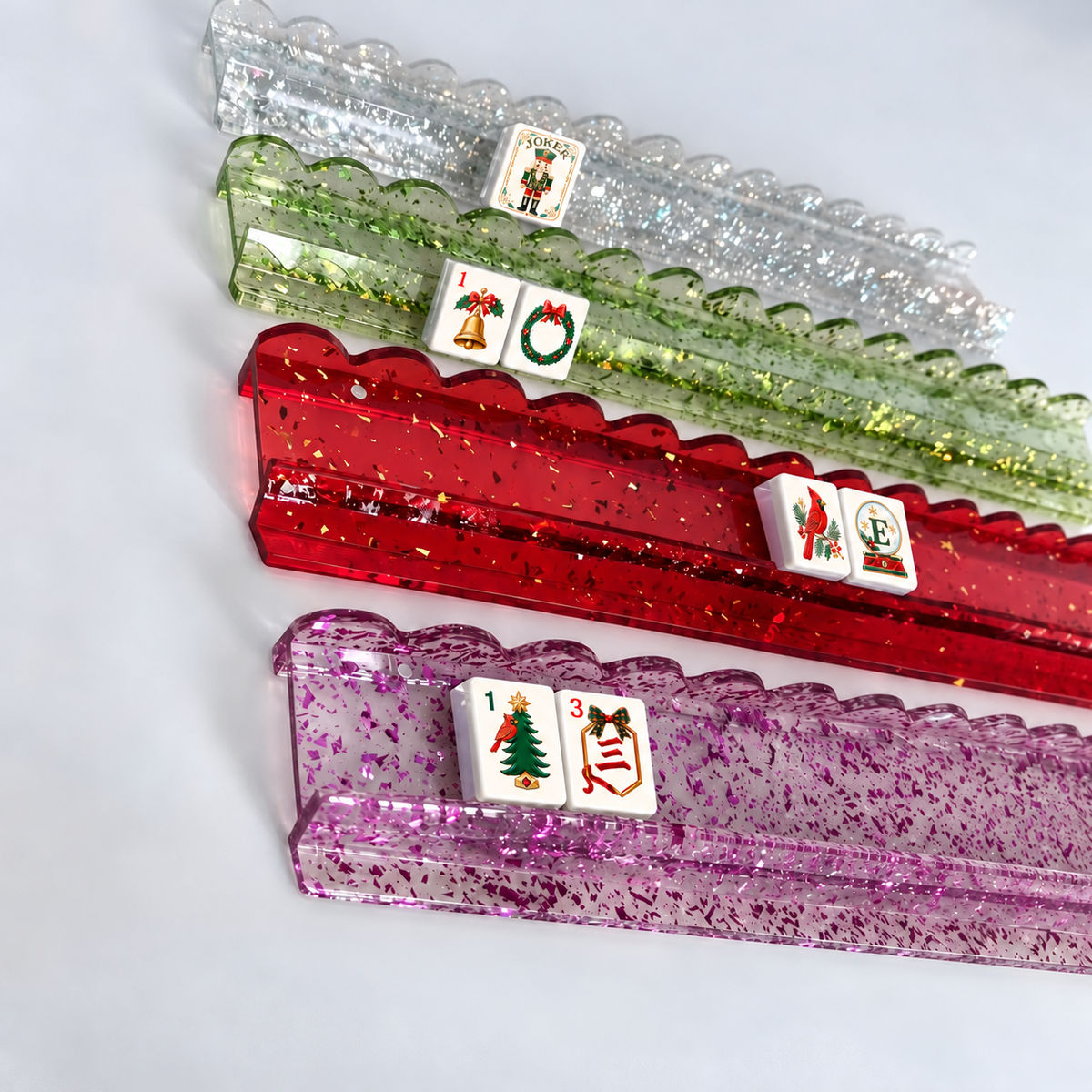
Wood racks (typically bamboo or hardwood) are heavier, grip better, and look elegant. They age gracefully but can warp in damp heat and occasionally splinter if joints loosen. Acrylic racks are lightweight, durable, and easy to clean. They don't warp, but cheaper grades can feel hollow or slide around on a smooth mat. For a host who stores sets between games, acrylic outlasts wood. For a collector or luxury table, wood wins on feel. Many players mix: wood set with acrylic racks for daily use, hardwood racks reserved for tournaments or showcase play.
Rack Material | Best For | Durability | Grip Feel | Care |
Bamboo | Casual weekly games | 5–8 years | Warm, natural | Dry storage, occasional oil |
Hardwood (maple, walnut) | Serious players, collectors | 10+ years | Premium, stable | Climate control recommended |
Acrylic | Frequent play, travel | 7–10 years | Smooth, cool | Soap and water, no warping |
Laminate (budget) | Beginners | 2–4 years | Can slip | Prone to joint failure |
How do you know if a pusher will last?
A pusher fails when the rail joint splits, the handle breaks, or the gliding edge warps. To spot a weak one before buying, hold it and flex gently—no creaking or give. Run your finger along the gliding edge; it should be smooth and consistent, not wavy or splintered. If you buy online, check whether the pusher is one-piece (better) or glued-joint (more likely to fail). After purchase, store pushers flat, never upright; gravity weakens the joint over time. We've seen pushers outlast racks when handled right, and we've seen them split after two games if the glue joint was weak to start. A good pusher costs as much as a basic dinner; replacing a set of four is worth the upfront care.
What size rack do you need for your set?
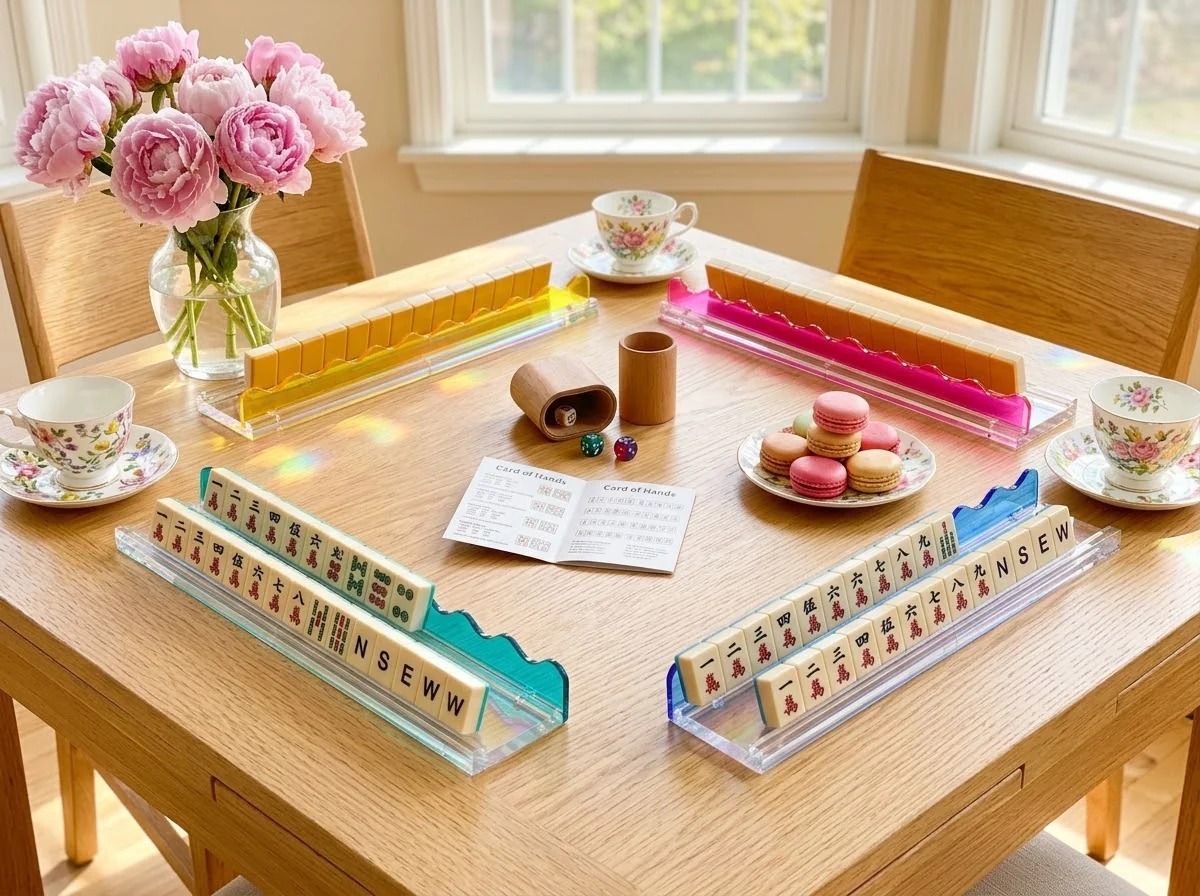
Standard American mahjong tiles are roughly 1 inch wide by 1.25 inches tall. A rack must hold 13–14 tiles comfortably without stacking or tilting. Most racks built for American 160-tile acrylic sets fit this standard, but overseas sets (Chinese, Hong Kong) use different tile sizes and need different racks. Before ordering replacements, measure a tile from your set: width and height in inches. Compare those to the rack listing or contact the seller for a fit guarantee. Mismatched racks and tiles are the second-most-common mistake after buying a set without a mat. A mahjong mat and racks work best as a pair for your specific tiles.
🎁 See our most-loved mahjong sets & accessories →
How do racks affect your play and comfort?
A poorly angled or uncomfortable rack forces you to crane your neck, slows your tile-reading, and tires your wrist and shoulder over two hours. The best racks sit at a natural 15–25 degree angle, rest your wrist without strain, and let you see the discard pile and other players' melds without shifting your head. If your current racks make you sore, it's not weakness—it's a bad rack. Upgrading to matched, ergonomic racks transforms a stiff game into a relaxed one. Many players who quit early blamed slow play or "stiff neck"—both were really a bad rack. Test a borrowed rack from someone else's weekly game before buying; what works for a casual player might not suit your play style.
What should you check before ordering racks?
Pre-purchase checklist:
Confirm tile dimensions (width × height in inches) from your current set or listing
Verify the pusher is included in the order and matches the rack length
Look for photos showing the pusher gliding fully extended, not stuck mid-rail
Check customer feedback (if available) for "pusher broke" or "tiles slip"—these are red flags
Ask whether the racks are finished (sealed/varnished) or raw; sealed lasts longer
Confirm free return or exchange if tiles don't fit
For travel, weigh the racks and add to your bag; heavy wood adds up fast
If you host weekly games, buy four matched racks from the same batch, not separately
What to avoid:
Racks where the pusher is glued at only one point (it will fail)
Finished sets with racks that rattle or feel loose; this signals cheap joints
Claims of "fits all tile sizes"; racks are narrowly matched to one standard
Single-pusher orders if you host; buy four or buy a set with four included
Acrylic racks labeled "bargain" or under $X; these often slip on mats
✨ Find your Mahstead set — free US shipping →
Comparison: What type of rack is right for your table?
Rack Type | Who It's For | Durability | Feel | Best With |
Acrylic with rubber grip | Beginners, travel, casual players | 5–7 years | Light, stable | Acrylic tile sets, mats with grip |
Bamboo, lightweight | Weekly home games | 6–9 years | Warm, smooth | Mid-range tile sets |
Hardwood with pusher set | Serious players, clubs, tournaments | 10+ years | Premium, stable | High-end tile sets, tournament mats |
Vintage or estate | Collectors, nostalgia | Varies 2–30+ years | Unique | Matching vintage set, dry storage |
A rack is only as good as the pusher it ships with. Mahstead's mahjong racks with pushers are sized for standard American acrylic 160-tile sets and tested for smooth, long-term use. If you're upgrading your existing set or hosting for the first time, start by confirming your tile dimensions, then order racks that match—not generic or "one size fits all."
FAQ
Can I use a mahjong rack with a mat, or do they conflict?
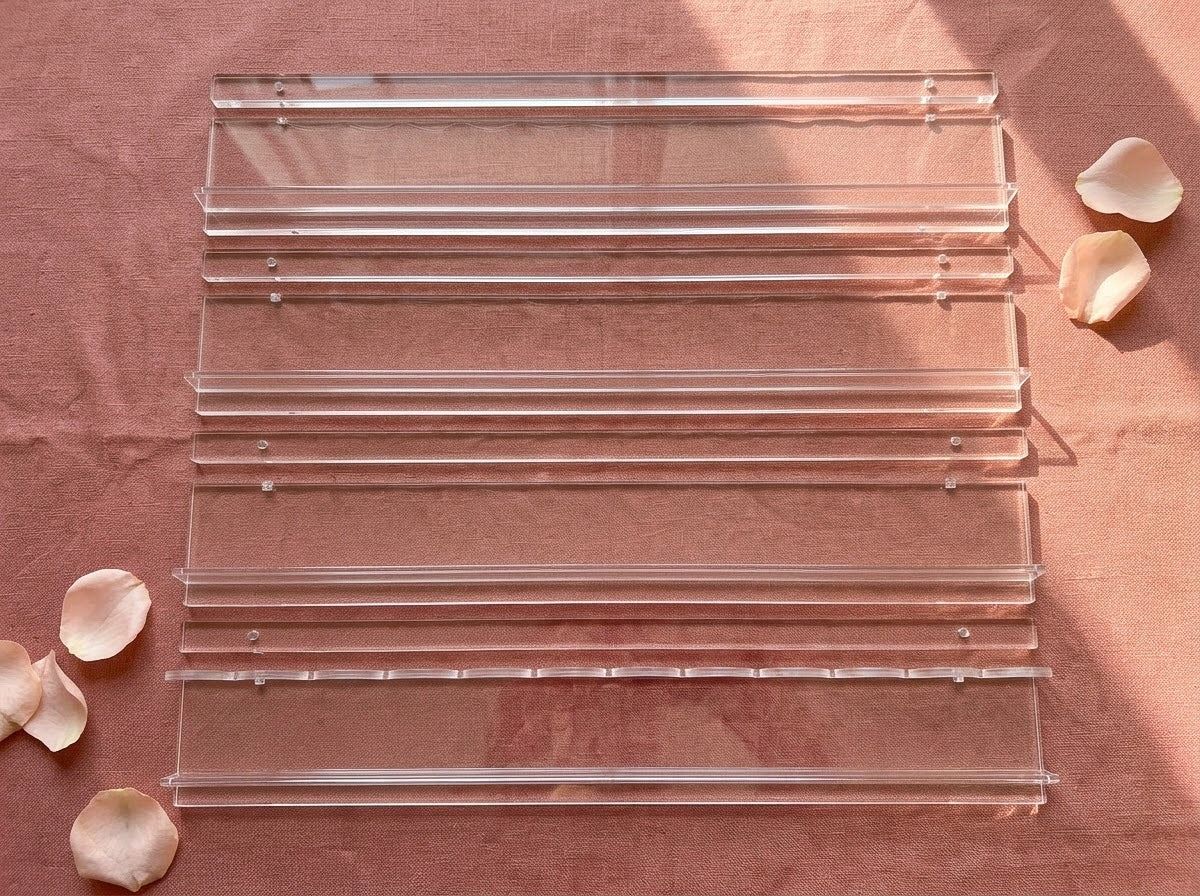
Yes, they work together. A mat protects the table and holds the center discard pile; racks hold your hand tiles. The rack sits in front of the mat edge on your side of the table. They're independent and both recommended.
Why do some pushers have a ridge and others are flat?
A ridge on the pusher helps grip tile edges and prevents slipping on smooth racks. Flat pushers are lighter but require more precision. Ridge pushers cost slightly more and last longer on busy tables.
How often should I replace my racks?
With normal play (weekly games, dry storage), racks last 5–10 years. If you notice cracks, loose joints, or tiles slipping sideways, it's time. Pushers may need replacing before racks if joints weaken.
Do I need matching racks for all four players?
Matching racks look professional and ensure fair play (no one gets a higher or slippier rack). If racks are mismatched, players may dispute who has an unfair advantage. For weekly games, buy four of the same model.
What if the pusher that came with my set broke?
Most retailers sell replacement pushers separately. Measure your rack's internal length (from the left rail to the right rail) and order a pusher that length. Pushers are one of the few replaceable parts worth buying extra of.
Can I travel with heavy wood racks?
Yes, but acrylic is lighter and safer. Heavy wood racks in a suitcase risk breaking tiles if the bag shifts. For travel, use a mahjong travel bag with acrylic racks or lightweight bamboo.


View More
View More
View More
