
Fujian Mahjong Etiquette: Rules, Respect & Table Talk
Last updated: Nov 23, 2026
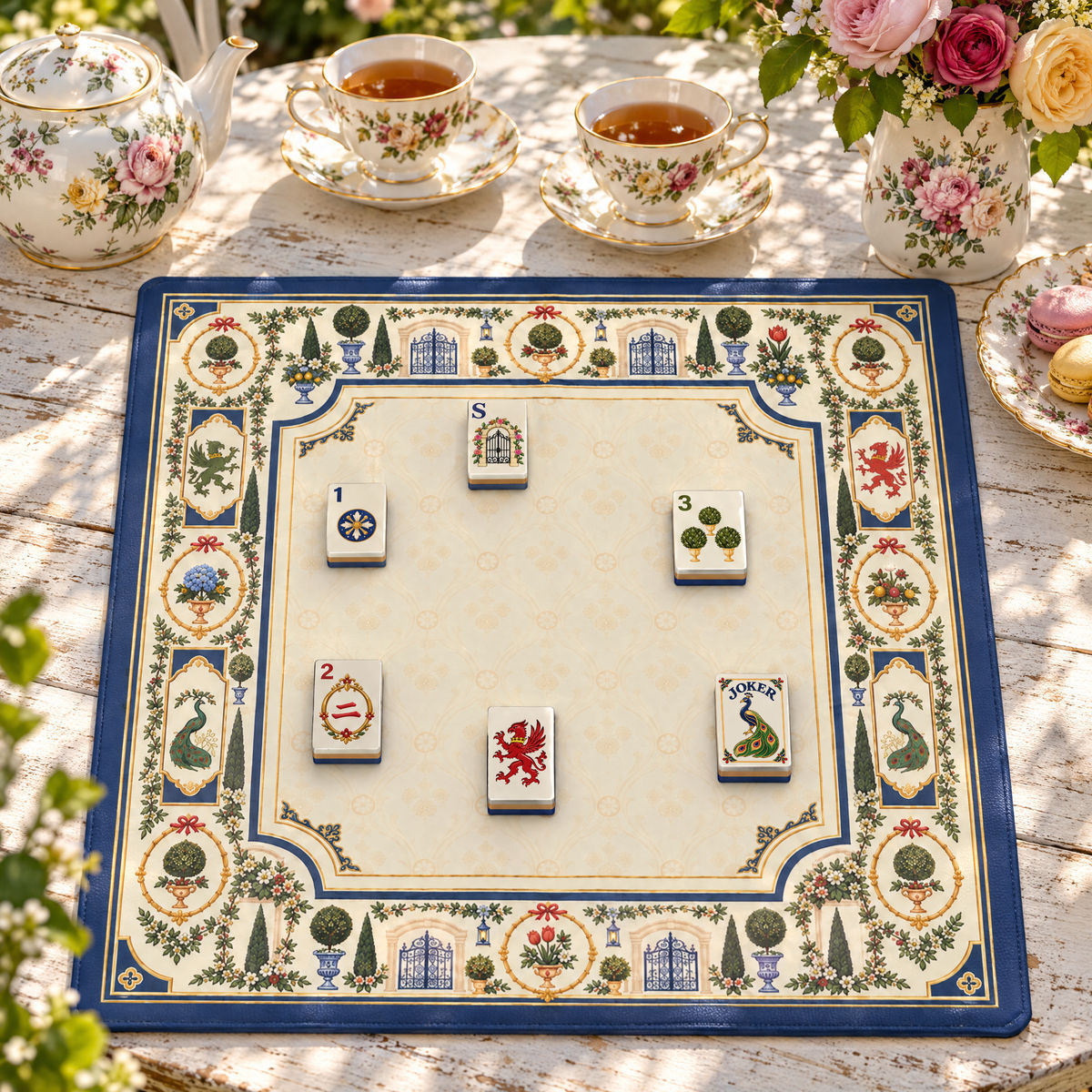
Fujian mahjong etiquette refers to the behavioral and communication standards observed during play in Fujian Province and among Fujian diaspora communities. It encompasses hand signals to indicate melds and draws, deliberate pacing to prevent disputes, verbal declarations at key moments, and explicit respect for the discard pile and other players' tiles. Unlike American mahjong, which uses the National Mah Jongg League card and relies on visible racks, Fujian mahjong is often played with concealed hand-holding, making clear table etiquette essential to police fairness. Violations—such as touching another player's tiles, premature announcements, or ambiguous discard signals—are resolved through house rules established before play.
How do players signal melds without showing their hand?
In Fujian mahjong, players announce melds by tapping or knocking on the table in a specific rhythm: a pung (triplet) is one knock, a kong (quad) is two knocks, and a quint or sextet varies by local rule. Some groups use verbal calls instead—"pung," "kong," or numbered announcements. The critical rule: never touch the discard pile directly; instead, players must point or name the tile aloud before a mahjong arbiter (or the discarder) confirms it belongs to them. This separation prevents "hand traveling" disputes where one player claims another stole a tile. Players should establish the tapping rhythm at table start and confirm it with all four players before the first hand begins.

Why is tile concealment so important in Fujian play?
Tile concealment prevents collusion and ensures equity; if all hands are visible, two seated next to each other can silently signal which tiles to discard. Fujian mahjong played in home games traditionally hides tiles behind a screen or in a player's cupped hand, with only the top few tiles showing. This rule also means players may not touch, fan, or rearrange another's hand—not even to "help" organize it. Any accidental exposure (a tile falls face-up) must be announced immediately so all four players witness it. Breaking this rule once creates mistrust for the entire session; establish at the start: "Hands stay private, announce all exposures, no touching neighbors' tiles."
What hand signals prevent confusion over claiming tiles?
Standard Fujian etiquette uses a two-step claim process: the claiming player first announces the type of meld ("pung" or "kong"), then points at the discard tile while naming it aloud (e.g., "5 Bam, pung"). The discarder confirms by saying "yes" or nods; if uncertain, they say "show me," and the claimant must display the meld without disturbing the rest of their hand. Never take a tile from the discard pile until the entire table has heard the claim and seen no one else is claiming it first. If two players claim the same tile, Fujian etiquette gives priority to the player seated closest to the discarder, moving clockwise; confirm this rule before the first hand starts. Some groups use a "no claim, no foul" rule—if you don't announce immediately, you forfeit the right to the tile forever in that hand.
Comparison Table: Common Etiquette Signals Across Fujian Play Styles
Signal | Meaning | Action | Why It Matters |
One table knock | Pung claim | Pointing + announcing tile name | Prevents silent collusion; audible to all four |
Two table knocks | Kong claim | Same as pung, but "kong" stated | Distinguishes from pung; affects scoring & draw count |
Immediate verbal "wait" | Player pauses hand to listen | Other player voices intent before discard confirms | Stops double-claims; establishes priority |
Holding tiles upright, fan-style | Standard hand position | Never lay tiles flat or spread them | Flat tiles hide counts; fan shows you control the hand |
Placing discard in center, perpendicular | Standard discard placement | Never place discard touching the wall or your rack | Center placement is neutral; touching racks suggests collusion |

How do players announce "ready" or "waiting" without tipping their hand?
In Fujian mahjong, a player who is one tile away from victory must announce "waiting" (or "ting" in some dialects) by tapping the table three times or saying the word aloud. Once waiting, a player may not pick up any new tile or change their hand composition; they may only discard and hope for the winning tile. The announcement itself is mandatory—failing to declare it and then winning on a tile you drew is considered cheating and may disqualify you from the pot. Announce waiting at the moment you achieve it, not later; if you pick up a tile, decide immediately whether you stay waiting or cancel the announcement. Canceling is allowed and costs no penalty, but it must be announced to the table before you discard. This rule keeps play transparent and prevents players from hiding their proximity to victory.
What role does timing and pacing play in fair Fujian etiquette?
Fujian mahjong etiquette enforces a strict turn order and pacing: each player has a set time to examine their drawn tile (typically 5–10 seconds in casual home play) before discarding. Rushing or delaying signals information; if you discard in under 2 seconds, you likely had no winning tiles among your options, and skilled players track this. Conversely, holding a tile for 30 seconds signals you're close to winning or deciding between two tiles—a major tell. Some formal Fujian clubs enforce a sand timer or phone alarm to ensure fairness; casual home games rely on house consensus. Never comment on another player's speed ("You're slow today!"), as this constitutes coaching and is forbidden. Keep your own rhythm consistent hand to hand; sudden changes invite suspicion. Establishing a "no talking during play except for official announcements" rule prevents accidental hints and keeps the table professional.
🀄 Shop best-selling mahjong sets →
When is it appropriate to correct or dispute a move?
Disputes in Fujian mahjong are resolved through a hierarchy: if a player breaks an etiquette rule, any other player may call "foul" immediately; the discarder (East) or a pre-agreed arbiter then rules. No ruling is retroactive beyond one turn; if you don't call a foul on a meld claim immediately after it's announced, you forfeit the right to challenge it. Calling a foul should be respectful and factual: "I didn't hear the announcement" or "The tile was claimed out of turn," not accusatory ("You're cheating"). Personal disputes over interpretation (e.g., did the waiting announcement happen before or after the discard?) should be settled by unanimous house rule vote before the next hand. Never argue during active play; pause the hand, discuss calmly, vote, and resume. Players who repeatedly dispute or refuse to accept rulings may be asked to sit out or end the session for that day.
Checklist: Fujian Etiquette Best Practices for Your Game
[ ] Agree on tapping rhythms before the first hand (1 tap = pung, 2 = kong, etc.)
[ ] Confirm tile-claiming priority (closest to discarder? clockwise? house rule?)
[ ] Designate a neutral arbiter (rotating East, or one player who sits out) to rule disputes
[ ] Establish hand-holding standards (hidden behind screen? cupped in hands? all visible?)
[ ] Set a turn timer (mental or phone) so all players know the pacing expectation
[ ] Write down any house rules (e.g., "no claim = no foul after one turn," "waiting must be announced aloud") and post at the table
[ ] Agree on penalty for breaking etiquette (loss of one hand, skipped turn, or removal from pot)
[ ] Use a clear discard placement rule (always center, perpendicular, never touching racks)
[ ] Define how to handle accidental tile exposures (announce immediately, show all at table start, re-shuffle?)
🎁 See our most-loved mahjong sets & accessories →
What to Check Before You Buy or Host a Fujian Game
Tile legibility under dim light: Fujian mahjong is often played in home settings with varying lighting. Ensure your tiles have crisp, high-contrast engravings or printing so players can read suits (Bam, Crak, Dot) and numbers at a glance—this directly reduces disputes over tile identity and speeds up signal calls. Our engraved mahjong sets feature deeply etched characters that remain readable in low light, a practical advantage in home play.
Set completeness: Fujian play typically uses the standard 152-tile count (36 Bams, 36 Craks, 36 Dots, 16 winds, 12 dragons, 8 flowers, 8 jokers). Verify your set includes all denominations before the first hand; missing or duplicate tiles undermine fair play. A high-quality acrylic set comes sealed and counted, eliminating that risk.
Stable playing surface: Uneven tables cause tiles to roll, triggering false "accidental exposures" claims. Use a dedicated mahjong mat with a lip or raised edge to corral tiles and prevent disputes over whether a tile left the play area.
Clear house rule documentation: Write your etiquette rules (claiming priority, waiting announcements, penalties) on a card and keep it at the table. Refer to it whenever a question arises; consistency prevents hurt feelings and preserves friendships.
✨ Find your Mahstead set — free US shipping →

FAQ
Is Fujian mahjong etiquette the same as Hong Kong or Taiwanese mahjong etiquette?
No. Fujian play emphasizes concealed hands and tapping signals; Hong Kong mahjong uses more visible melds and verbal calls ("chow," "pung," "kong"); Taiwanese mahjong has its own exposure rules and penalty systems. Each region has developed distinct norms. Always clarify house rules with new players before starting.
What happens if I accidentally touch another player's tiles?
In strict Fujian etiquette, an accidental touch is treated as a foul; the offending player must pass one tile to the player whose hand was touched as compensation, or sit out one turn—depending on house rule. Prevent this by keeping your hands to yourself and establishing a clear boundary at table start ("no hands across the play area").
Can I take back a discard after I've placed it?
No. Once a tile is placed in the center discard area and released, it belongs to the group; if claimed, the claiming player takes it; if not claimed, the next player draws from the wall. Establish a rule: "Tile released = tile gone." Count to three after discard placement before the next player draws, giving claim time.
How do I know if someone is cheating in a hidden-hand game?
Watch for pattern tells: sudden speed changes, unusually long hold times, inconsistent discard timing, or tiles that reappear after being discarded (impossible in fair play). If you suspect cheating, call "pause game" and ask the table to vote on a re-deal or investigation. Never accuse directly; present the observation ("I noticed tiles appearing twice") and let the group decide.
What should I do if a player refuses to follow house etiquette rules?
First, remind them politely of the rule (e.g., "We agreed waiting must be announced aloud"). If they refuse, the table may vote to exclude them from the current hand or, if repeated, end the session. Friendship and trust are the real score in home mahjong; a player who won't respect the group's rules is better asked to leave than to poison the table.
Does Fujian mahjong use the same tiles as American mahjong?
Yes, both use the standard 152-tile set (36 each Bam, Crak, Dot; 16 winds; 12 dragons; 8 flowers; 8 jokers). However, American mahjong is played with visible racks and requires hands from the National Mah Jongg League card each year, while Fujian mahjong is played with hidden hands and traditional winning combinations. The tiles are identical; the game philosophy and etiquette are different.


View More
View More
View More
