
Mahjong Racks for Your Group: How to Choose & Set Up
Last updated: Nov 23, 2026

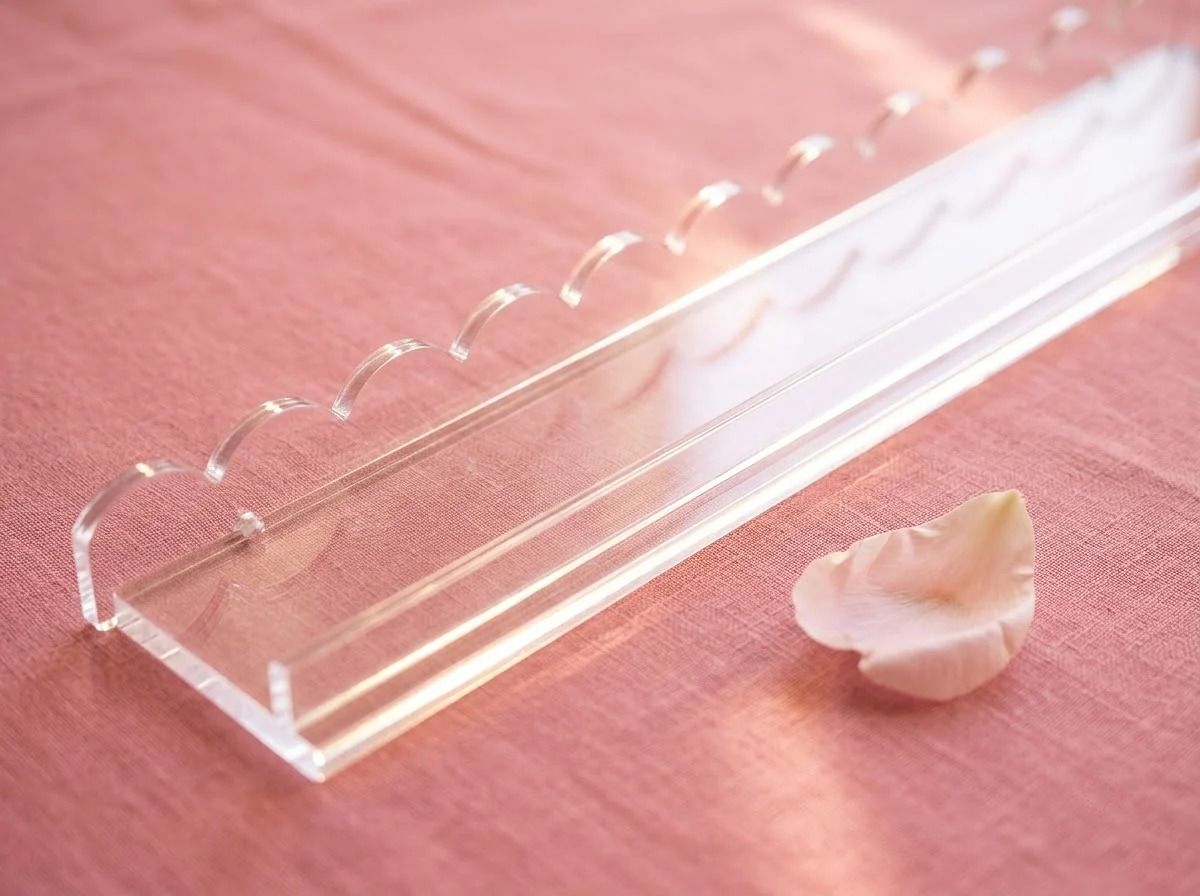
Mahjong racks are tile holders that sit in front of each player to organize and display their hand on-table. American mahjong groups use them at every game to keep tiles face-down, sorted by suit and number, and safe from accidental exposure. Racks come in two main styles: those with integrated pushers (which nudge tiles forward as you draw) and simple stands. Most hold the standard 152-game tiles plus spare jokers. A good rack prevents tile spillage, speeds up play, and protects your set's edges during a long session. Our mahjong racks with pushers collection spans minimalist acrylic stands to fully-featured designs with color-coded pusher zones. Prices and features vary widely; the key is matching the rack's size and pusher mechanism to your table's width, your hand size, and how you manage the Charleston. Check whether a rack is designed for American tiles (wider, heavier) before ordering, and confirm it fits alongside your mat and three opponents' racks. 🀄 Shop best-selling mahjong sets →
What size rack do you actually need?
A rack must hold fourteen tiles upright without tipping when you're drawing, discarding, or managing jokers mid-hand. Most American racks span twelve to fourteen inches horizontally and sit four to five inches tall. Your table's width matters: with four players, mats, and four racks in play, a standard 48–60-inch round or square table leaves about twelve inches per player. Measure your existing setup before ordering a new rack; an overly deep rack steals table space and forces players' hands too far back. If your mat is custom, check its dimensions first. Most Mahstead mahjong racks fit comfortably in front of a standard play area and don't wobble on textured mats. Order a set of four if you're hosting, not one; players expect uniformity in look and balance.
🎁 See our most-loved mahjong sets & accessories →

Do you need pushers, or can you manage without them?
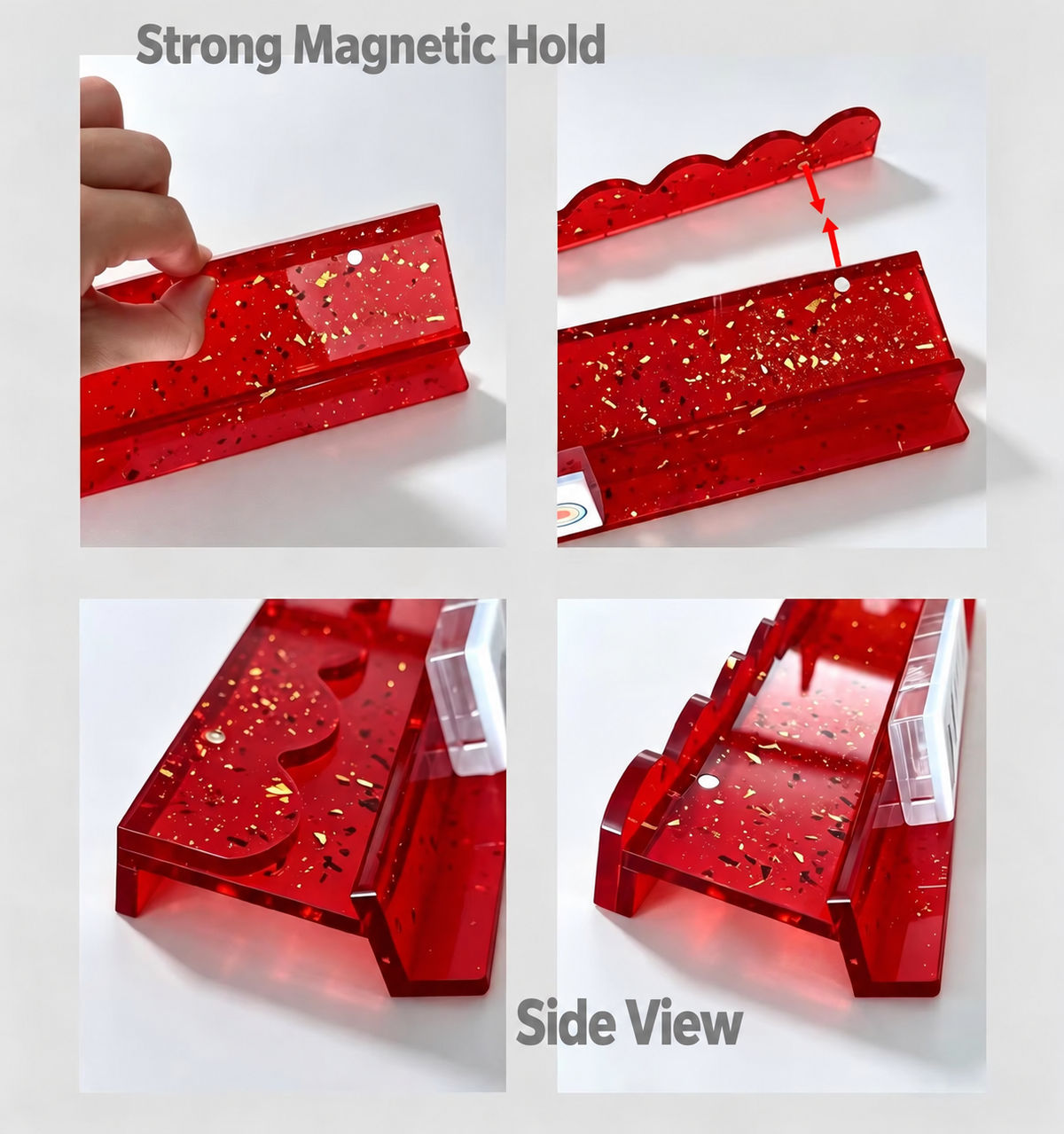
Pushers are small levers or rails that advance your hand forward as you draw tiles from the wall. They save time, reduce accidental tile tips, and let newer players manage their hand confidently without fidgeting. Experienced groups that play fast may skip pushers entirely and manually arrange tiles, accepting a tiny spillage risk for a cleaner sight line. If your group includes beginners, elderly players, or anyone with hand coordination concerns, pushers are invaluable. They also reduce the chaos during the Charleston, when tiles fly between players at speed. Pusher styles vary: some are separate rods, others are built into the rack frame. Test a borrowed rack at a friend's game before committing; you'll know instantly whether your group prefers the tactile feedback or a clear hold. Mahstead offers both pusher and non-pusher designs, so you can pick what suits your table's rhythm.
What material holds tiles best without damage?
American tiles are durable ceramic or acrylic, but their edges wear if knocked repeatedly against wood or cheap plastic. Acrylic racks are gentle, non-slip, and lightweight; they won't scratch your tiles or add bulk to your carry bag if you're rotating hosting duty. Some groups prefer bamboo or lacquered wood for aesthetics, but wood absorbs humidity and can warp in hot climates, risking tile warping too. We make racks from quality acrylic with textured contact surfaces so tiles don't slide during the draw. If you're choosing a mahjong set and racks together, match the material: acrylic sets pair naturally with acrylic racks. Heavier tiles (traditional bone and bamboo) can be harder on cheap racks; if you own premium tiles, invest in a sturdy acrylic or bamboo rack with reinforced corners. Clean racks monthly with a soft cloth; grit trapped underneath will micro-scratch tiles over time.
Feature | Solo Play / Casual | Weekly Group | Tournament / Premium |
Pusher type | Optional; manual fine | Integrated rod; reliable | Twin rails; precision |
Material | Any acrylic | Textured acrylic | Acrylic or wood |
Height | 4–5 inches | 4–5 inches | 5–6 inches (visibility) |
Tile capacity | 14–16 tiles | 14–16 tiles | 16–18 tiles (spares) |
Fit with mat | Flexible | Tested fit required | Matched set |
Price basis | Entry-level | Mid-range | Premium acrylic or wood |
Why it works | Low cost, occasional use | Reliable, balance, speed | Durability, reduced fatigue |
How do you set up racks before the Charleston?
Place all four racks at the table before drawing the wall and mixing tiles. Each player sits behind their rack with the pusher mechanism closest to them (toward their body). Position the rack so the tile-holding groove faces the player, not the wall—this way you load tiles left-to-right and see your hand clearly. If your rack has color-coded pusher zones or a suit separator, align it with your group's convention (often Bams on the left, Craks in the middle, Dots on the right). Leave an inch of space between each rack and its neighbor so tile-handling doesn't collide. After the Charleston, before the wall is set, every player should have fourteen tiles in their rack, sorted and ready to meld. If a rack is too tall or narrow, players' hands tense up and tiles fall; too shallow, and jokers slip out during play. Spend five minutes at your first session positioning and testing; the muscle memory will carry into future games.
✨ Find your Mahstead set — free US shipping →
What's the difference between dedicated racks and DIY alternatives?
Some casual players use small easels, book stands, or even stacked coasters—cheap and fun for a first game. They fail badly under regular use: tiles tip, pushers jam, and the lack of a uniform grip wastes time. A dedicated rack is engineered to hold 152-tile weight, survive hundreds of Charlestons without wobbling, and keep tiles organized in the chaos of live play. If you host weekly, a proper rack pays for itself in lost-tile-prevention and smoother game flow within two seasons. Shared racks across your whole group (four identical sets) ensure consistency; mismatched racks create balance and sight-line problems that frustrate players. We recommend buying a full set of four racks at the same time so your setup is predictable. If you're starting a group or gifting a complete mahjong set, a matched rack set makes setup foolproof and reduces setup-time arguments.
What to check before you buy
Before ordering, confirm:
Table dimensions: Measure your playing surface; racks must fit four-across with a few inches to spare.
Tile set you own or plan to buy: American 152-tile sets need racks rated for standard-sized tiles, not mini or jumbo variants.
Pusher preference: Decide as a group whether you want pusher rods, integrated rails, or no pusher at all.
Height clearance: Racks shouldn't block sight lines across the table; test at a friend's game if possible.
Quantity: Always order four racks (one per player), not one. Mismatched racks slow games.
Material & longevity: Acrylic is forgiving and durable; check reviews or ask other local groups about wear over time.
Accessory compatibility: Ensure your mat and racks don't interfere—measure corners and mat edges.
FAQ
Can I use one rack and rotate it between players?
Rotating a single rack during play wastes time and breaks the game's rhythm. Each player needs their own rack at the table, always. If you're short on budget, buy two now and two next month; every group eventually owns four.
Do racks work on a mat, or should I use a bare table?
Racks work fine on a textured mat—actually better, since the mat's grip prevents rack-slide. If your mat is slippery or your racks are ultra-light, tape the rack bottoms with non-slip grip tape to anchor them.
Will a pusher slow down experienced players?
No. Pushers speed up tile management for all skill levels by eliminating manual re-stacking. Experienced players adapt instantly; they often prefer pushers because they reduce hand fatigue over long sessions.
What if my tiles don't fit in the rack I bought?
American tiles are a standard width; if they don't fit, the rack was made for a different variant (Hong Kong, Chinese, or mini tiles). Before ordering, confirm the rack's spec sheet says "American mahjong" or "152-tile." If unsure, contact Mahstead with your tile measurements.
How often should I replace my racks?
A quality acrylic rack lasts five to ten years with weekly play and basic care. Replace only if a pusher mechanism breaks, the rack cracks, or tiles start sliding despite grip tape. Most groups keep one set for a decade or more.
Can I customize a rack with my group's name or logo?
Mahstead offers engraving and custom designs on some mahjong racks. Contact us with your group's name and preferences; we'll show you options and lead times.


View More
View More
View More
