
Urea Mahjong Tiles: Weight, Feel & What Matters
Last updated: Nov 23, 2026
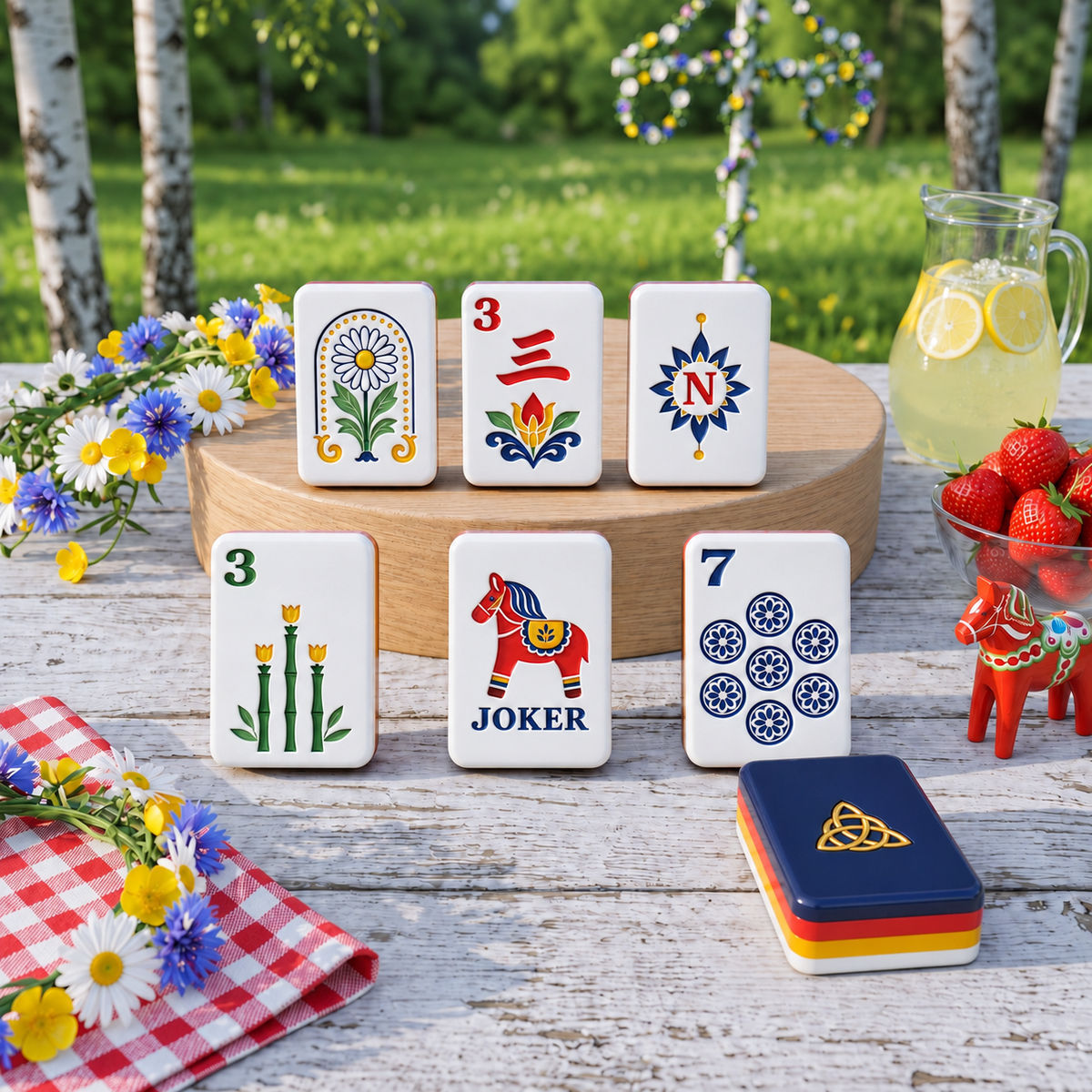
Urea tiles—molded from urea-formaldehyde resin—weigh roughly 8–12 grams per tile depending on resin density, thickness and mold quality. The heavier the tile, the more substantial the feel in hand and the slower the shuffle; lighter tiles accelerate faster but risk feeling cheap. American sets use exactly 160 tiles (152 playing tiles plus spares). Quality urea tiles have crisp edges, vibrant printed or engraved symbols, and consistent thickness so they stack and slide evenly. Poor-quality urea can warp, fade or chip at corners. Mahstead's engraved American mahjong sets use precision-molded urea with permanent engraving, eliminating print fade—a key difference because engraving cuts into the tile rather than sitting on the surface.
Urea resin tiles—molded from urea-formaldehyde resin—weigh roughly 8–12 grams per tile depending on resin density, thickness and mold quality. The heavier the tile, the more substantial the feel in hand and the slower the shuffle; lighter tiles accelerate faster but risk feeling cheap. American sets use exactly 160 tiles (152 playing tiles plus spares). Quality urea tiles have crisp edges, vibrant printed or engraved symbols, and consistent thickness so they stack and slide evenly. Poor-quality urea can warp, fade or chip at corners. Mahstead's engraved American mahjong sets use precision-molded urea with permanent engraving, eliminating print fade—a key difference because engraving cuts into the tile rather than sitting on the surface.
Why does tile weight change how the game feels?
Weight directly affects shuffle speed, hand control and long-session comfort. Heavier tiles (10–12g) feel premium, demand more wrist strength during shuffles, and slide more deliberately—ideal for experienced players who appreciate deliberate play. Lighter tiles (8–9g) shuffle faster, suit players with arthritic hands or those who prefer a brisk pace. Neither is objectively "better"; it's about fit. We've noticed that players switching from a light set to a heavy one often comment that the game "slows down" in a good way—they catch mistakes earlier because tiles move less frantically.

How does engraving versus printing affect long-term weight?
Printed tiles have color applied to the surface, adding negligible weight but creating a thin wear layer. After hundreds of shuffles, printed symbols fade, especially on high-contact faces like the Dot suit. Engraved tiles have symbols carved into the resin itself during molding, so the design is permanent and the weight is uniform across all tiles—no surface buildup to wear away. Over two years of weekly play, an engraved set looks identical to week one; a printed set begins to show ghosting on frequently-handled tiles like honors and flowers.
What is the relationship between tile thickness and playability?
Standard American mahjong tiles measure approximately 1 inch wide, 1.25 inches tall, and 0.75–0.85 inches deep. Thickness affects how cleanly tiles stand in racks and how they shuffle through a mat. Tiles thinner than 0.70 inches feel fragile and may tip or wobble in racks; tiles thicker than 0.90 inches become hard to fit into standard mahjong racks with pushers and feel bulky in hand. Precision molding ensures every tile in a set matches this range, so you never have to adjust a rack for uneven tiles.
How do you know if urea tiles are dense enough?
Density determines durability and sound. Hold a tile: it should feel solid, not hollow or flexible. A high-density urea tile will not bend under finger pressure and produces a crisp click when placed on a mat or stacked with others. Low-density tiles sound dull and may flex slightly—a sign the resin wasn't fully cured or the mold was under-packed. Drop a single tile from 12 inches onto a hard surface; it should land with a sharp sound and show no cracks or stress marks at the corners. We test every batch before packing by listening to the shuffle sound; a dense set produces a uniform rolling tone.

What makes acrylic tiles different from urea, and which should you choose?
Acrylic tiles are injection-molded from a different polymer, typically weighing 12–16 grams per tile—noticeably heavier than urea. They resist fading and scratching far better than urea and feel luxurious in hand, but they cost more and are less common in American mahjong culture. Urea remains the standard because it balances cost, weight, and playability. Acrylic suits players willing to invest extra for a set that will outlast a decade of weekly play with zero maintenance. For weekly home games and travel, urea is practical; for a showcase set you keep pristine, acrylic is worth considering. Our best-selling mahjong sets include both options so you can compare weight and feel side-by-side.
Quick Comparison: Weight & Durability by Tile Type
Tile Type | Weight per Tile | Durability | Surface Wear | Cost Basis | Best For |
Urea (printed) | 8–10g | 2–3 years | Symbol fades | Standard | Budget, casual play |
Urea (engraved) | 9–11g | 5+ years | Permanent | Mid-range | Weekly players, long-term |
Acrylic | 12–16g | 10+ years | Scratch-resistant | Premium | Collectors, display |
🀄 Shop best-selling mahjong sets →
How to test tile weight and feel before buying
We recommend asking for sample tiles if ordering online, or holding multiple sets in person if buying locally. When you hold a tile, ask yourself: Does it feel balanced? Can you shuffle 13 tiles in your hand without fatigue? Does the symbol remain readable from three feet away? Place a tile on a mat and slide it—it should glide smoothly, not stick or skip. If you're replacing an older set, compare side-by-side; a noticeable weight jump means a different play rhythm (not bad, just different).
What to check before you buy
Edge quality. Run your thumb along all four edges of a sample tile. Edges should be smooth, not sharp or rough. Rough edges indicate incomplete molding or poor quality control.
Symbol clarity. For printed tiles, ensure all symbols are sharp and centered. For engraved tiles, check that the carved line is even and deep enough to read at arm's length.
Consistent thickness. Stack 5–10 sample tiles and see if they form a even tower or tilt. Uneven tiles will frustrate you during games.
Color accuracy. Verify that Bams are orange-red, Craks are black, Dots are white/cream, and honors match the card you use. Faded or mismatched colors suggest poor pigment or old stock.
Weight in hand. Hold 13 tiles (a typical hand) and imagine holding them for two hours. If your wrist feels strained, the tiles may be too heavy for your play style.
🎁 See our most-loved mahjong sets & accessories →
Urea tiles remain the practical choice for American mahjong because they deliver consistent weight, reasonable durability, and affordable pricing. The critical decision is printed versus engraved: printed tiles cost less upfront but fade over 2–3 years; engraved tiles carry a higher price but remain vibrant for 5+ years of weekly play. If you host regular games or play professionally, engraved urea is the better investment. If you're learning or play casually a few times a year, printed urea works fine.
Weight preference is personal. We encourage new players to try both light (8–9g) and medium-weight (10–11g) sets before committing. Most players gravitate toward medium-weight tiles because they offer the best balance of control and speed. Heavier tiles suit players with strong hands; lighter tiles suit those playing on tablets or with mobility concerns.
Mahstead's engraved sets arrive with all 160 tiles identical in weight and thickness, so you'll never experience the frustration of replacing a warped or chipped tile mid-game. We use precision molds and cure each batch to specification, then hand-inspect for edge quality and symbol depth before packing.
✨ Find your Mahstead set — free US shipping →

FAQ
How much do urea mahjong tiles typically weigh?
Standard urea tiles range from 8–12 grams each. Lighter tiles (8–9g) shuffle fast; heavier tiles (10–12g) feel more premium and play slower. Weight depends on resin density and mold precision.
Will engraved tiles stay readable longer than printed tiles?
Yes. Engraved symbols are carved into the resin during molding, so they never fade or wear off. Printed symbols sit on the surface and often show ghosting after 2–3 years of heavy play.
Can I mix tiles from different sets?
Not recommended. Sets vary in weight, thickness, and color tone. Mixing creates uneven shuffles and tactile inconsistency. Keep each set separate or upgrade all tiles at once.
What's the difference between a 160-tile set and a 152-tile set?
American mahjong uses exactly 152 tiles in play plus 8 jokers. A 160-tile set includes spare tiles (extra jokers and/or blanks) for replacements if one cracks. A 152-tile set has no spares.
Do heavier tiles last longer?
Not necessarily. Durability depends on resin quality, mold precision, and surface finish (engraving vs. print), not weight alone. A well-made 10g engraved tile outlasts a poorly molded 12g printed tile by years.
Should I store tiles in a bag or case to preserve their weight and feel?
Both work, but a padded mahjong bag or case protects against temperature swings and humidity that can warp urea over time. Store in a cool, dry place—avoid damp basements or hot attics.


View More
View More
View More
