
Mahjong Party Ideas in Westchester: How to Host Your First Game
Last updated: Nov 23, 2026
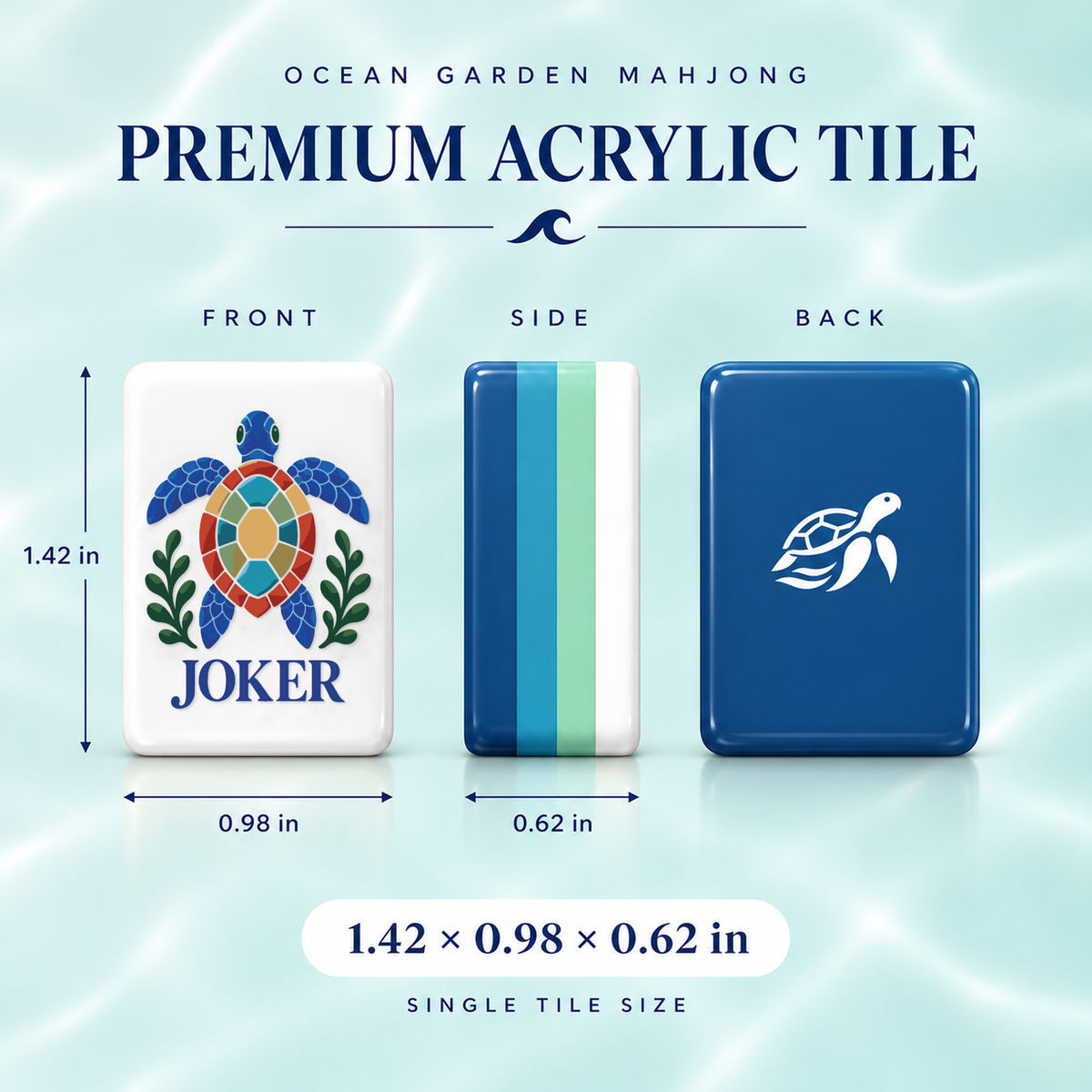
Hosting a mahjong party in Westchester starts with a host's set of 152 tiles, a mat or table cover, and four players. You'll want to find a level dining table or invest in a dedicated mahjong mat to protect tiles and create grip. Most gatherings happen at community centers, synagogues, libraries, and country clubs throughout the region—call ahead to ask about existing groups or reserve a room. Plan for 2–3 hours per session; beginners need setup time plus a practice hand. The National Mah Jongg League card (issued every spring) is mandatory for American mahjong play. From Mahstead, best-selling acrylic sets ship free across the US and include everything except the card and cash for scoring.
Where do Westchester players meet?
Community centers, libraries, synagogues, and country clubs across Westchester host regular mahjong games. Check your town's Parks & Recreation department website or call the main library branch; they often maintain bulletin boards or mailing lists of game times and locations. Country clubs sometimes welcome non-member visitors to beginner events. Meetup boards and local Facebook groups are reliable for finding weekly games—search "mahjong" plus your town name. Many groups play Tuesday or Thursday afternoons; some offer lessons before open play.

What gear do you actually need to start?
You need four identical tiles, a mat or table cover, rack dividers (optional but helpful), and the current-year League card. A complete host setup includes a mahjong mat—it protects tiles, marks each player's hand area, and prevents tiles sliding during draws. Racks with pushers keep your hand organized and hidden from opponents; they're not required but make play faster and more professional. A carrying bag keeps everything safe and portable between games.
🀄 Shop best-selling mahjong sets →
How do you actually run your first game?
Step 1: Seat four players on opposite sides of the mat. Step 2: Break the seal on your 152-tile set and lay all tiles facedown. Step 3: Each player builds a wall by stacking tiles two-high in a line in front of them. Step 4: Agree on East seat (usually the host); East rolls dice to determine who deals first. Step 5: The dealer draws 14 tiles; other players draw 13 each. Step 6: Study the League card together to identify possible hands. Step 7: Play proceeds: East discards one tile faceup; West draws from the wall and either discards or calls a pung (three identical tiles exposed), kong (four), or a winning hand. Step 8: When a player reaches a complete hand matching a pattern on the card, they say "Mahjong" and others pay them according to the scoring chart.
Most first games take 45 minutes to an hour. New players should review how to read the card first—it's visual and quickly becomes intuitive.
What mistakes kill a beginner party?
Mistake | Why It Breaks Your Game | How to Avoid It |
Playing without the current League card | Hands don't match; arguments erupt | Buy/download the spring card; everyone sees it before tiles mix |
Using faded or cracked tiles | Discards get mixed up; players can't see numbers | Buy new acrylic sets; inspect for chips before inviting friends |
Mixing 144- and 152-tile rules | Someone says "that's not a hand" | Use one standard set; agree on American rules (152 tiles, no chows) |
Forgetting the Charleston | Players feel unprepared; hands feel locked | Run the three-pass tile exchange ritual before the deal every game |
No joker agreement | Dispute over what jokers can replace | Agree aloud: jokers replace any number (not pairs or single tiles) and can be called out of sequence |
Playing on an uneven table | Tiles roll; hands fall apart | Use your mat or check the table with a level; mat also marks each player's zone |
🎁 See our most-loved mahjong sets & accessories →

How do you keep Westchester players coming back?
Host at the same day and time each week (or month) so regulars know when to show up. Rotate who brings snacks and drinks. For a special event, consider engraved sets personalized with your host name or group initials—they make a memorable gift for core players and often spark new friendships. If hosting during the holidays, a festive set creates warmth and gives players a reason to attend. Keep score on paper each week so players track their wins across months. Most importantly, celebrate a beginner's first "Mahjong!" call loudly—it builds confidence and community.
Common beginner questions answered on the spot
Q: Do I need four people or can we play with two or three? A: American mahjong is designed for four. Two or three player variants exist but use different rules and tile counts; stick with four for your first 10 games so the rules stay consistent.
Q: Can I use a regular dining table or do I need to buy a mat? A: A regular table works, but tiles slide and it's hard to see each player's discard row. A mat marks zones, prevents sliding, and makes the game feel official. Our mat collection includes options that fit standard tables.
Q: How much does hosting cost me per player? A: If four players rotate bringing snacks and host, the hosting player covers nothing. A set costs roughly one afternoon coffee per player when shared across seasons. Set yourself a game season (spring to fall, or fall to spring) rather than daily play to keep costs low.
Q: What if someone doesn't know the rules? A: Teach everyone the American basics before tiles are shuffled. Most learning happens by watching two hands; after that, questions come naturally.
Q: Should I use jokers from my set or buy extras? A: Your 152-tile set includes jokers in the count. Never add extra jokers to play—American mahjong always uses exactly 152 tiles, period. Understand how jokers function before your first game.
What to check before you buy
Tile size & readability. Hold a sample at arm's length; numbers should be clear and bright. Acrylic tiles stay legible for years; bamboo and bone can yellow.
Case or bag durability. Will your set move between homes? Check that the bag zips smoothly and padding protects corners.
Tile feel. American mahjong tiles should have enough weight to feel substantial but not so heavy that shuffling hurts wrists. Test a few tiles if possible.
Mat size. Measure your table width; mats come in standard sizes. An undersized mat frustrates players; oversized mats hang off edges.
Completeness of the box. Count tiles before playing—missing even one tile derails the game.
✨ Find your Mahstead set — free US shipping →

FAQ
Where can I find an existing mahjong group in Westchester to join before hosting my own?
Call your local Parks & Recreation office, visit the main library, and check community center bulletin boards. Many synagogues and country clubs post mahjong schedules online. Meetup.com and local Facebook groups often list current game times and welcome newcomers.
What's the minimum investment to host one game?
One set (152 tiles, includes jokers), one mat or table cover, and the current League card. Many players share sets and mats across weeks, so dividing costs among four makes hosting affordable.
Can I mix my old tiles with new ones if some break?
No. All 152 tiles must match in size, color, and weight so they shuffle evenly and discards are distinguishable. Buy a complete new set rather than patch older sets.
Is American mahjong the only way to play, or do Westchester groups play other versions?
American (with the League card) is standard in most Westchester venues. Some groups play Chinese or Riichi variants, but always confirm which rules apply before joining. If you're hosting, pick one variant and stick with it for the season.
How many extra jokers or blank tiles come in a standard set?
A 152-tile set includes exactly the tiles needed for play. Spare tiles beyond that number vary by set design and are never added to the game itself.


View More
View More
View More
