
Mahjong Party Ideas in the Villages: Games, Rules & Setup
Last updated: Nov 23, 2026
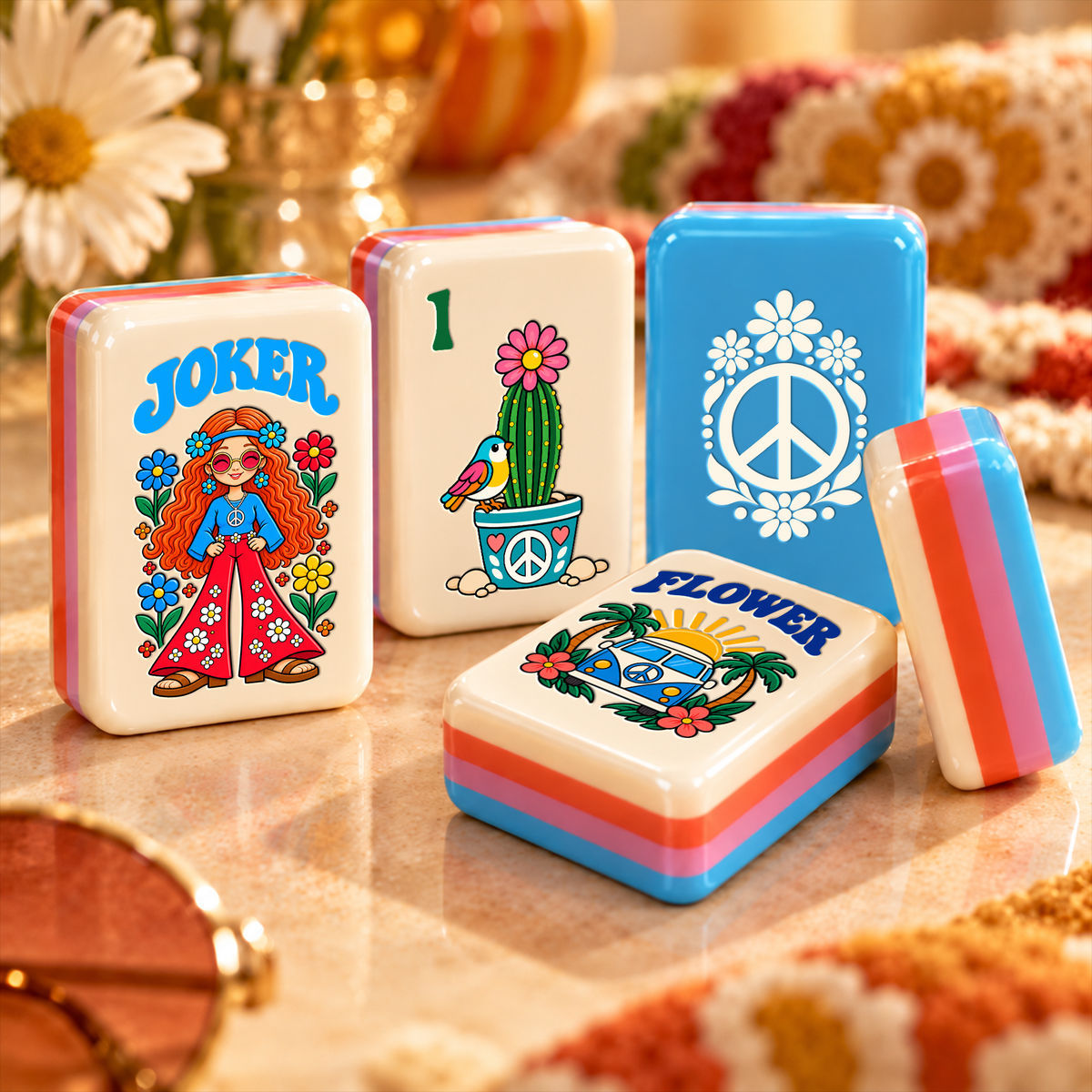
A mahjong party in the Villages starts with a complete 160-tile set, a mat for tile handling, and four players. You'll need the current year's National Mah Jongg League card, which changes every spring and defines all valid hands—no improvising. Set aside 90 minutes for a relaxed four-game session: each game takes 15–25 minutes plus 5 minutes for the Charleston (the tile-passing ritual before play). American mahjong follows strict rules: no sequences (chows), only identical-tile groups called pungs, kongs, and jokers as wildcards. Newcomers should learn how to play American mahjong first. The Villages' clubhouses, community centers, and recreation areas host regular games; start there to find weekly groups. Equipment matters: invest in best-selling mahjong sets with clear tile marking and a mat that keeps tiles organized during play, especially for hosting multiple parties. Avoid mixing damaged or mismatched tiles—they create scoring disputes and confusion mid-game. Budget-friendly sets exist, but durability saves money long-term when hosting frequently. 🀄 Shop best-selling mahjong sets →
Should you host at home or at a club?
Hosting at a club (recreation center, community room) means shared tables, established groups, and no setup burden—ideal if you're new and want to observe first. Home hosting builds intimacy, lets you control snacks and timing, and lets you teach at your own pace; choose this if your friends are nervous or you want a casual learning environment. Both work; the difference is size and commitment. A home party typically works best for 4–6 players; clubs often accommodate drop-ins and larger groups. Start at a club to learn the culture; host at home once you've played a few rounds.

What tiles and equipment do you actually need?
Every American mahjong game uses exactly 152 tiles: three suits (Bams, Craks, Dots) numbered 1–9 with four copies of each (108 tiles), plus 16 winds (four each: North, East, West, South), 12 dragons (Red, Green, White), and 8 flowers. An 8-joker set rounds out to 160 tiles; the extra eight are spares, never used in play. Each player sits at a wall of 38 tiles, draws and discards in turn, and builds exposed groups (pungs of three identical tiles, kongs of four, or longer combos using jokers). You'll need a mat to organize your hand—it protects tiles, reduces table noise, and keeps the game organized. Racks with pushers hold your 14 tiles upright and let you slide them to show what you discard, preventing accidental reveals. A score sheet or app tracks points; the NMJL card is non-negotiable—it changes yearly, so verify the current year before buying. Don't skimp on tile clarity; small or scratched tiles cause misreads and arguments.
🎁 See our most-loved mahjong sets & accessories →
How do you teach absolute beginners without overwhelming them?
Start with one hand type, not the full card. Pick a simple hand from the current NMJL card (e.g., three pungs and a pair in one suit) and ask everyone to build it; they'll feel the texture of the game in 10 minutes. Next, run a live hand: deal 13 tiles to each player, play three or four turns, and show how discard strategy works. Explain jokers last—they're wildcards that can fill any slot in a pung, kong, or pair (but never a pair by themselves or standing alone). Teach the Charleston after two live hands; it feels like chaos the first time, but the rhythm clicks fast. Use engraved sets with clear naming so players don't confuse suits. Avoid scoring on the first night; play for fun and tally at the end if anyone cares. Many Villages players enjoy the social puzzle more than the points.
What's the best way to organize a 4-game party session?
Structure for one evening:
Activity | Duration | Notes |
Introductions & rules chat | 5–10 min | Set tone; answer tile questions. |
Live hand demo | 10 min | Play one hand tip-to-tip to show rhythm. |
Charleston & game 1 | 20 min | Slower; expect confusion on first pass. |
Games 2–4 | 15 min each | Pace quickens; focus on fun, not speed. |
Final tally & next date | 5 min | Book your next gathering. |
Total: 90 minutes, social, memorable. If a player doesn't want to track score, they can keep a running verbal tally or sit out the math—the game still works. For repeat parties, shorten demo time and play five games. In the Villages' climate, evening parties (6–9 p.m.) work best; avoid afternoon heat if hosting outdoors or in non-AC spaces.
✨ Find your Mahstead set — free US shipping →

What common hosting mistakes should you avoid?
Mistake 1: Mixed or incomplete tile sets. If one player brings a damaged set and another brings their own, don't mix them mid-party. Use one set all night; mismatches confuse tile identification and slow play. Mistake 2: No printed NMJL card. Print the current year's card (available from the National Mah Jongg League) and have it visible; phone apps work, but a card table sheet is clearer when four people need to read it. Mistake 3: Poor lighting. Tile pips (dots) are tiny; bad light leads to misreads and frustration. Use a table lamp or sit near a window during day parties. Mistake 4: Cramped seating. American mahjong builds large exposed melds on the table; if players sit too close, elbows collide and tiles shift. Space players 18–24 inches apart. Mistake 5: Rushing the first game. Let game 1 breathe; people are learning table flow, not speed-playing. Skip timer pressure the first night. Mistake 6: Dirty or sticky tiles. Greasy fingers or spilled snacks make tiles slip. Keep a soft cloth nearby; it eliminates frustration fast.
How do you choose what set to buy for regular hosting?
If you're hosting weekly, durability beats novelty. Acrylic sets resist wear, crack slowly (if ever), and handle humidity in the Villages better than bone or bamboo. Look for sets where suit symbols are embossed or engraved, not painted—paint chips under heavy play. Clear tile backs (ivory, cream) let you spot jokers and damaged tiles instantly. Weight matters: lighter sets are easier to handle for older players; heavier sets feel premium but tire hands during long sessions. Budget roughly mid-range for hosting; entry-level sets feel cheap after two months, and ultra-luxury sets add no game value. For new arrivals and seasonal collections, check what's in stock; Christmas-themed sets work well as party gifts if you're hosting gift exchanges. Buy once, use for years; that logic holds for mahjong sets.
What to check before you buy
Tile clarity: Can you read the suit symbol at arm's length?
Completeness: Does the set ship with 160 tiles and the bag or case?
Year-round availability: Is the set in stock, or will you wait weeks?
Engraving: Can you personalize it for a gift or your name?
Free shipping: We ship all sets free across the US; confirm with the seller.

FAQ
Can I host a mahjong party with only three players?
Yes, but the rules change significantly. Three-player American mahjong uses fewer tiles and alters hand patterns; learn the 2 and 3 player rules first. Four-player is the standard and easiest to host; start there.
How long does it take to play one full game?
One game (four hands) takes 15–25 minutes for experienced players, 30–45 minutes for learners. A relaxed party of four plays four to six games in 90 minutes including setup and chat.
Do I need to buy sets for each player, or can we share one set?
One complete set plays all four players. Share it; buying four sets is unnecessary and expensive. Every player draws from the same wall and builds on a shared table.
What's the minimum age to host a mahjong party?
American mahjong has no minimum age restriction; it's a game of strategy and memory, not gambling. The Villages skews older, but teenagers and young adults play and enjoy it equally.
If someone has never played, how do I know they'll like it?
Invite them to a club event first so they observe without pressure. If they enjoy puzzles, strategy games, or social card games, mahjong fits the profile. Most people who try it get hooked by game two.
Should I charge money for hosting a party?
Some Villages groups play for small stakes (quarters, dollar chips) to add focus; others play for pride or bragging rights. Decide with your guests upfront. Never let money surprise anyone mid-party.


View More
View More
View More
