
Mahjong Party Ideas in Salt Lake City: Host & Learn
Last updated: Nov 23, 2026
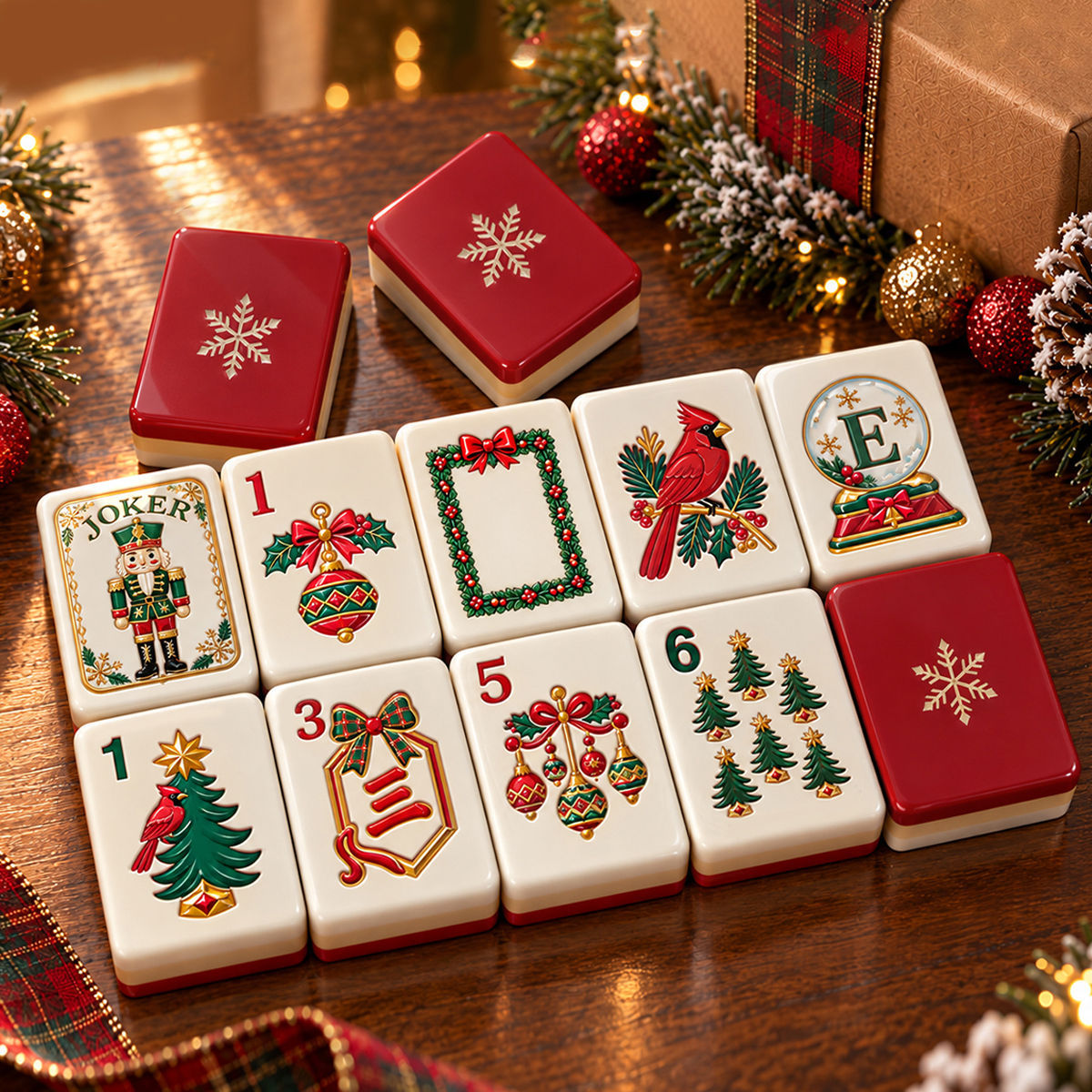
Salt Lake City has a thriving mahjong culture centered in community centers, libraries, synagogues, and country clubs where casual and serious players gather. To host a mahjong party here, you'll need a 152-tile American mahjong set, a mat or table cover, and the current year's National Mah Jongg League card (issued each spring). Most beginner-friendly gatherings run 2–4 hours with four players per table. Start with a Charleston (the tile-passing ritual), deal 13 tiles per player, then play hands from the League card. If teaching newcomers, plan lighter scoring and simplified hands; experienced hosts in Salt Lake often run themed nights—holiday tournaments, fortune-cookie giveaways, or progressive games. Mahstead offers engraved and standard acrylic sets with free US shipping, plus mats and racks designed for home hosting.
Where do Salt Lake City mahjong players gather?
Community centers, libraries, synagogues, and country clubs throughout Salt Lake City host regular mahjong games and often welcome newcomers. Check your neighborhood community center's activity board or call ahead to ask about drop-in games, lessons, or club nights. Many synagogues and country clubs have established mahjong groups that meet weekly or monthly. Meetup boards, Facebook community groups, and local senior centers list upcoming games and beginner classes. Starting at an open game is the fastest way to find your local mahjong network.

What should a beginner's first mahjong party include?
A beginner party works best with clear rules, simple hand choices, and no time pressure. Have the current year's National Mah Jongg League card visible for all four players, a mat that clearly shows discard zones, and written score sheets so no one guesses scoring. Pick 4–6 beginner-friendly hands from the League card beforehand and announce them aloud before play starts. Allow 10 minutes per hand while players learn tile names and pung formation. Skip complex bonuses on round one. Serve snacks during the Charleston and between hands. A 160-tile acrylic set with easy-to-read markings and a sturdy mat remove setup friction and let newcomers focus on the game itself.
🀄 Shop best-selling mahjong sets →
How do you teach the Charleston to new players?
The Charleston is a three-pass tile exchange before play begins, done in unison by all four players. Pass 1: Each player selects three tiles from their hand (face down) and slides them left. Each player receives three tiles from their right neighbor and adds them to their hand. Pass 2: Again, each player chooses three tiles and slides them left; receive three from the right. Pass 3: Each player chooses one, two, or three tiles and passes them to their right neighbor; receive what comes from the left. Players call "pass" aloud when done to keep rhythm. Demonstrate it once slowly with dummy tiles before real play. Most new players understand the concept after one or two Charlestons. Write the three passes on a card and place it at the table so no one has to remember.
Feature | Helps with | Why it matters |
Printed card at table | Charleston steps | Removes doubt mid-game |
Calling "pass" aloud | Timing & fairness | Everyone moves together |
Practice run before real hand | Confidence | No panic on hand one |
Extra jokers on rack | Flexibility | Easy to swap if needed |
What themed nights work well in Salt Lake City homes?
Themed nights draw players and add fun without changing core rules. Holiday tournament: December parties with a Christmas or Hanukkah set, holiday snacks, and small prizes (gift cards to local restaurants, holiday cards). Fortune-cookie night: Serve fortune cookies with mahjong tips printed inside ("A pung is three, never a sequence"; "Jokers never sit alone"). Triple-tile challenge: All hands use triplets or kongs only, no pairs or singles—simplifies reading the card. Progressive tables: Beginners play at one table while intermediate players rotate at another; winners move up. Lucky number night: Players choose one lucky number (1–9) before play; if that number appears in their hand, they get a bonus point. These themes work because they honor Salt Lake's friendly, community-minded hosting style without overcomplicating rules.

What equipment makes home hosting easier?
Racks with pushers prevent tiles from sliding and speed up hand display—guests see exactly what you're holding. A dedicated mat with labeled discard zones eliminates confusion about where tiles live; many hosts in Salt Lake prefer this over a bare table. Tile bags keep sets organized between parties and protected during storage. Dice are essential for determining who deals first and for bonus scoring. A score sheet template (printed or on your phone) tracks points without mental math. Sturdy travel cases let you transport your set to a friend's house or a community center without tile loss. These pieces transform a casual evening into a smooth, repeatable experience where guests focus on the game, not logistics.
🎁 See our most-loved mahjong sets & accessories →
How do you avoid common hosting mistakes?
Mistake 1: Playing with wrong or missing tiles. Check your 152-tile count before guests arrive. A full set has 108 suited tiles (Bams, Craks, Dots in 1–9, four of each), 16 winds, 12 dragons, 8 flowers, and 8 jokers. If a set is incomplete, substitute a blank or call the hand void.
Mistake 2: Using last year's League card. New cards drop every spring. Hands printed in 2025 won't match the 2026 card. Announce the card year aloud and verify before dealing.
Mistake 3: Sitting too close. Leave arm's length between players so tiles and arms don't collide. A mat or cover helps define personal space.
Mistake 4: Rushing beginners. Allow 12–15 minutes per hand on round one, then speed up as confidence grows. No timer, no pressure.
Mistake 5: Unclear scoring. Write the result of every hand on a score sheet visible to all players. No disputes if everyone sees the math.
What to check before you buy:
Tile count: Confirm your set has all 152 playing tiles (108 suited + 16 winds + 12 dragons + 8 flowers + 8 jokers). Count on arrival if hosting is your first time.
Readability: Acrylic sets with bold painted markings outlast resin sets and are easier to read under house lighting.
Mat dimensions: Measure your table; most mats fit 36–42 inches. A mat should cover the playing surface without overhang.
Rack capacity: Standard racks hold 16–18 tiles per player. Confirm before purchase if you plan multi-table hosting.
Case durability: If you transport your set weekly, choose a reinforced bag or hard case; soft bags work for occasional use.
✨ Find your Mahstead set — free US shipping →
For a deeper dive into American rules and strategy, read our beginner's guide and how to read the League card. Once your first party ends, you'll know whether to invest in racks, a custom mat, or an engraved set for repeat hosting.

FAQ
Where do I find beginner mahjong games in Salt Lake City right now?
Check community center activity boards, library bulletin boards, synagogue event calendars, and country club websites. Call ahead or ask at the front desk about drop-in games or beginner classes. Facebook community groups and Meetup boards often list weekly gatherings. Many groups welcome newcomers and offer informal lessons before play starts.
Do I need to buy the current 2026 League card before hosting?
Yes. The National Mah Jongg League issues a new card every spring, and players use only hands from that year's card. Hands from older cards are no longer valid. You need one card per table, though all four players can share if they sit close enough to see it clearly.
How many tiles come in a standard American mahjong set?
A playing set contains 152 tiles: 108 suited tiles (Bams, Craks, Dots in 1–9, four of each), 16 winds (four each of North, East, West, South), 12 dragons (four each of Red, Green, and White), 8 flowers, and 8 jokers. A 160-tile set includes the 152 playing tiles plus spare tiles.
Can I play mahjong on a regular dining table or do I need a mat?
A regular table works, but a mat or cover is worth the investment. It defines discard zones, prevents tiles from sliding, protects the table surface, and speeds up learning for newcomers who need visual guides. Experienced hosts in Salt Lake often use mats because they reduce disputes and keep games moving.
What's the biggest beginner mistake when hosting a first game?
Using an outdated League card or a set with missing tiles. Both ruin the game before it starts. Count your tiles on arrival and confirm you have the current year's card. A second common error is rushing beginners through hands; allow 12–15 minutes per hand on round one so players feel confident, not pressured.


View More
View More
View More
