
Mahjong Party Ideas in Raleigh: Host a Game Night
Last updated: Nov 23, 2026
A mahjong party in Raleigh starts with four players, a standard American mahjong set (152 tiles plus 8 jokers), a mat, and this year's National Mah Jongg League card. Plan for 2–3 hours per session; each hand takes 10–20 minutes once players know the rules. You'll need snacks, drinks, and a quiet table. Local options to find players: community centers, libraries, country clubs, and online meetup boards often host open groups or beginner-friendly sessions. Mahstead's best-selling mahjong sets come ready to play—acrylic tiles, clear racks, pushers, and dice included. Cost varies by design and set quality; see current price on the product page. Biggest hosting mistake: mixing tile counts (use exactly 152 playing tiles) or forgetting that American mahjong uses no sequences—only exposed pungs, kongs, quints, and sextets. Start with a beginner-friendly hand and do the Charleston (tile-passing ritual) before round one.
Where do you find mahjong players in Raleigh?
Raleigh has growing interest in mahjong across all age groups. Check your local community center's bulletin board or website for weekly drop-in groups; many neighborhoods host mahjong circles on weekday afternoons or weekend evenings. Public libraries often sponsor game nights or maintain a list of registered clubs. Country clubs and private clubs frequently have active tables. Online, search Meetup or Facebook groups for "Raleigh mahjong" and filter by beginner-friendly or open-table events. Ask friends if they know anyone who plays—word-of-mouth still fills most casual games. Once you've found 4 people, hosting becomes the fun part. 🀄 Shop best-selling mahjong sets →

What equipment do you need to host?
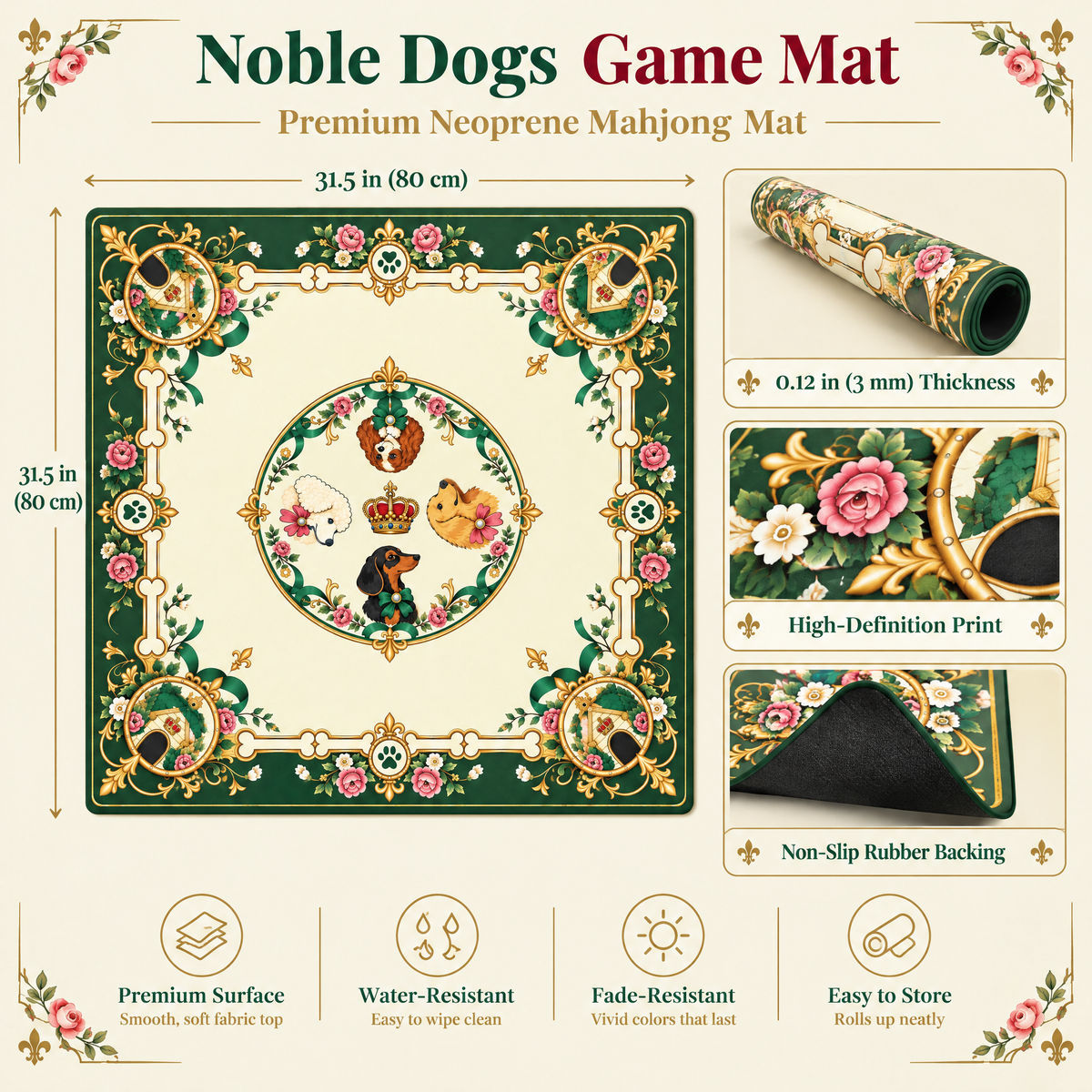
Four essential items make a legal game: a 152-tile American mahjong set with jokers and dice, racks and pushers (so players don't fumble tiles), a mat with labeled seating (dealer marks wind positions clearly), and the current year's National Mah Jongg League card (rules change annually). Acrylic sets are durable and fast—tiles click and shuffle smoothly—unlike bamboo, which splinters and slows play. A mat protects your table, keeps tiles from sliding, and marks center for the wall. Racks keep your hand organized; pushers let you extract tiles without showing your neighbors what you're drawing. Many hosts also add a card holder so the card stays visible without hand cramps. Visit our mahjong mats collection and racks with pushers guide to see what fits your space and style.
How do you teach absolute beginners before the first hand?
Spend 15 minutes on three core concepts: (1) American mahjong wins only by completing a hand that appears on the current year's card—no improvisation. (2) You expose only pungs (three identical tiles), kongs (four identical), quints (five), and sextets (six); chows (sequences like 1-2-3) are never called or exposed. (3) Jokers fill blanks in exposed sets, never stand alone or form a pair. Walk through one sample hand from the card together: read the notation, point out the four sets and pair, show how jokers substitute. Then walk through the Charleston explained—the pre-game tile exchange that randomizes hands and teaches tile passing. Demonstrate drawing a live tile, discarding, and declaring "mah jongg" when you complete the hand on the card. A dry run with no scoring takes 10 minutes and prevents confusion mid-game. New players often assume they're building sequences or can form pairs with any number; clarify that pungs are always identical tiles, never 1-2-3.
What's the easiest hosting schedule?
Run four consecutive hands per session, each 12–20 minutes depending on player speed. Rotate dealer position (marked E, S, W, N on the mat) clockwise after each hand. Between hands, rest 3–5 minutes; players stretch, grab water, and the new dealer shuffles. After four hands, tally scores on paper. A full evening is one session (4 hands = ~90 minutes play time plus setup and breaks). A casual Saturday morning is 2–3 sessions (3–4 hours total). Keep it predictable: same day, same time each week builds habit and loyalty. Most Raleigh groups meet weekly or biweekly. Beginners play slower, so allow 20-minute hands if anyone is still learning the card. Don't rush; confusion drains fun. If you have more than four people, rotate players in and out, or run two tables. Mahstead's travel bags and cases collection helps you transport sets between locations if you rotate hosting duty.

How do you balance mixed skill levels at one table?
Pair a beginner with an experienced player as neighbor partners (in seating, not in scoring—mahjong is individual). Have the experienced player sit across or beside so they can glance at the beginner's hand during play without coaching. Print a simplified one-page guide to the current year's card: highlight 3–4 beginner-friendly hands (usually simple shapes like pairs of winds and two pungs) so new players see patterns quickly. Beginners often feel pressure; remind them that the first night is learning, not winning. Play for fun, not money. After game two, most new players read the card faster. If someone stays stuck, pause play for 30 seconds and let the group confirm a hand together—you're teaching. Experienced players who teach well should sit between one new and one veteran, sharing knowledge without dominating. Rotate seating every session so no one gets stuck in the difficult position (East, the dealer, plays from the start of each hand and faces more draw pressure). One shared culture: everyone celebrates other players' wins. 🎁 See our most-loved mahjong sets & accessories →
What common hosting mistakes should you avoid?
Mistake | Why It Breaks the Game | How to Fix It |
Mixing tile counts (144, 152, 160 in same set) | Hands mismatch; someone runs out mid-deal | Use exactly 152 playing tiles; spare tiles stay in the box |
No current-year card | Players can't read legal hands; everyone argues | Buy the new card every spring; old cards are invalid |
Chow rule misunderstanding | Players try to expose 1-2-3 sequences | Repeat: American mahjong has NO chows. Only pungs, kongs, quints, sextets |
Joker in a pair or single | Breaks hand legality | Remind: jokers replace blanks in exposed sets only, never form pairs |
Unclear dealer rotation | Confusion on who draws first each hand | Mark seats E-S-W-N on your mat; rotate clockwise after each hand |
Racks too small or no pushers | Players show their tiles accidentally, slowing play | Invest in full-size racks with pushers; they last years |
Our pillar guide on mahjong for beginners covers rules in depth. New hosts often forget that even experienced players in your group might not know the current year's card changes—build in a 5-minute card review before hand one. Another stumble: not discarding clearly. Insist players place discards face-up in a neat line, not scattered; it prevents calling the wrong tile. Finally, mute phones and ask everyone to arrive 10 minutes early so you start on time.
What should you check before you buy your first set?
Ask yourself these questions:
Do you want acrylic or bamboo? Acrylic is faster, louder (satisfying click), and lasts forever; bamboo is quieter, heavier, and needs care.
How many players will you host regularly? One set = one game (4 players). If you rotate two tables, buy two sets.
Do you have storage? Acrylic sets in original boxes take ~12 × 8 × 6 inches; a closet shelf works. A decorative case looks nice on a shelf but costs more.
Will you travel with it? Get a padded bag if you host at different locations.
Who's your audience? Casual friends, family, or serious players? Engraved sets with titles ("Mahjong Royalty," "Tile Shark") spark conversation and gifts; plain sets are classic.
Our best-selling collection lists sets with complete specs—tile material, racks, mat included, case options. Compare by your answers above; see current price on the product page. First-timers often buy too small a set thinking they'll save money; acrylic sets are affordable, and you'll use it weekly if you're serious about hosting. Budget for a mat separately if your set doesn't include one—a good mat runs 12–24 inches and protects the table from staining and tile wear. ✨ Find your Mahstead set — free US shipping →

FAQ
Can you play mahjong with fewer than four people in Raleigh?
Yes. American mahjong adapts to 2 or 3 players, though the standard is four. Rules change slightly; our guide on 2 and 3 player mahjong explains wall draws and hand distribution. Most Raleigh groups play four because it's classic and faster.
How long does it take to learn American mahjong before hosting?
New players need 30–60 minutes of instruction plus one full hand played slowly. Watch or play 2–3 hands yourself before hosting others. Reading the card is the hardest part; most people grasp it in hand two or three.
What's the best mat size for a Raleigh apartment table?
Standard mats are 24 × 24 inches, fitting most dining tables. If your table is smaller (under 36 inches), a 20-inch mat works. Our mat guide covers dimensions and materials in detail.
Should you use the Charleston every hand or just at the start of a session?
Every hand. The Charleston randomizes tiles before each deal; it's part of the game, not a one-time ritual. It takes 2–3 minutes and builds camaraderie.
What if someone doesn't have the current year's card before hosting?
Print copies or display it on a tablet at the table. The card changes every spring; old cards are unplayable. You can order a physical card from the National Mah Jongg League or use digital versions—confirm with your players beforehand on format.
How do you score a hand so people know who won?
American mahjong has no points—you win by completing a legal hand first and calling "mah jongg." Scoring is just tracking who won how many hands in the evening. Our American mahjong scoring guide explains optional betting and tournament scoring if your group wants more.


View More
View More
View More
