
Mahjong Party Ideas in Portland: Beginner-Friendly Game Nights
Last updated: Nov 23, 2026
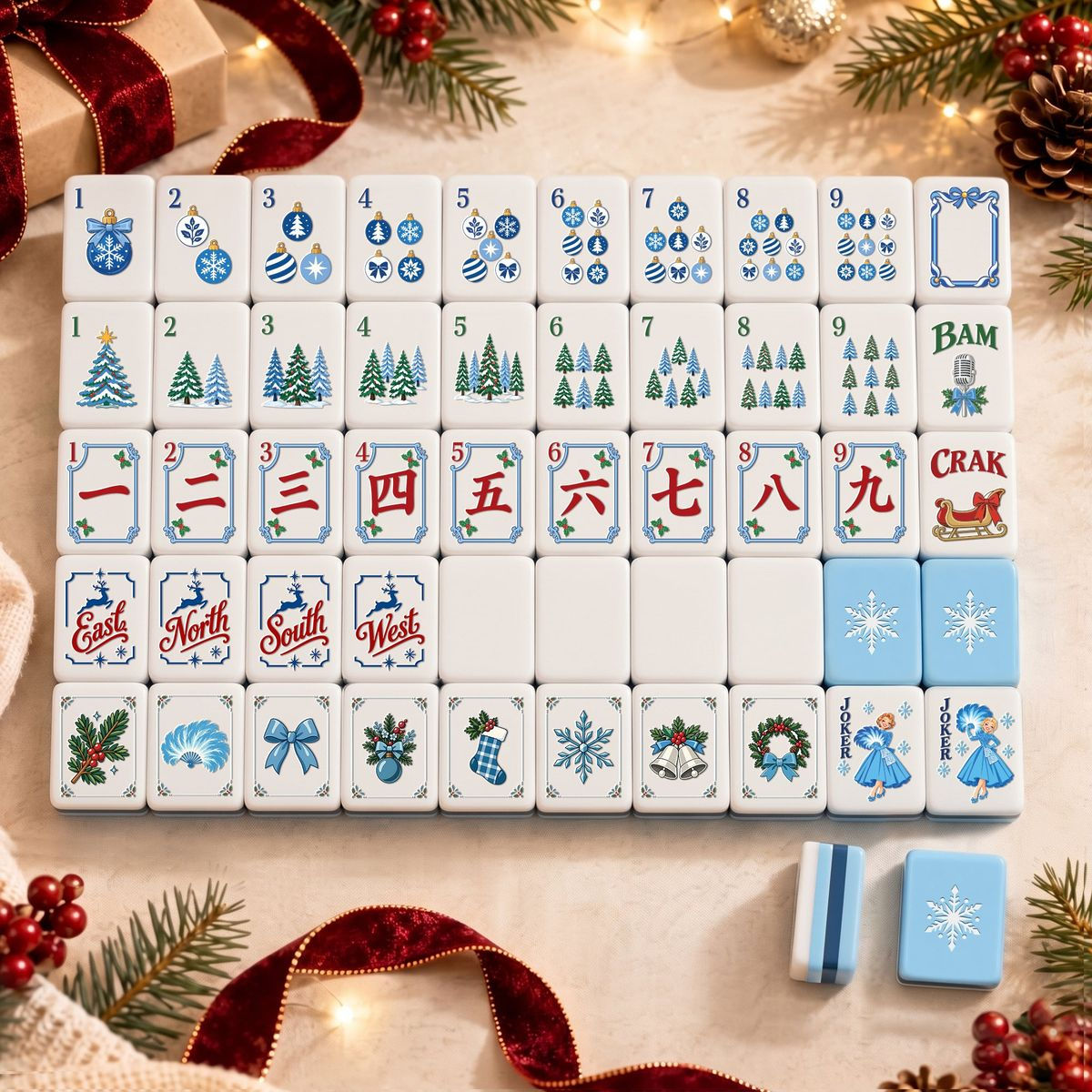
A Portland mahjong party starts with four players, a 160-tile set, a mat, and the current National Mah Jongg League card. American mahjong plays in two-hour rounds; each hand takes 10–20 minutes. Before play, the Charleston—a tile-passing ritual—builds suspense and balance. Beginners learn the card (which hand patterns win) in 15 minutes with practice; actual gameplay feels strategic, not overwhelming. Most groups rotate dealer position and scoring every hand. Portland's community centers, libraries, and synagogues host open play; independent groups meet via Meetup or word-of-mouth. Equipment costs vary; a quality set from Mahstead's best-selling collection gives you durable acrylic tiles you'll enjoy for years. Start small—four friends, snacks, and one shared deck—then scale up once everyone's comfortable.
Where in Portland can you find mahjong players?
Portland has no shortage of places to meet mahjong communities. Check community centers (especially in Northeast and Southeast neighborhoods), public libraries' events calendars, and Jewish community centers—many run open-play sessions or beginner classes. Meetup.com lists active Portland mahjong groups; search "mahjong Portland" and filter by your neighborhood. Country clubs and retirement communities often host weekly games. Ask at local bookstores or cafes with bulletin boards; word-of-mouth remains powerful. Most groups welcome drop-ins; call ahead to confirm time, buy-in rules (often donation-based or free), and whether they use American or Chinese rules.

What's the simplest way to teach beginners the rules?
Start by explaining the goal: build a winning hand from your 13 tiles plus one draw, matching a pattern on the current year's National Mah Jongg League card. Show three must-know facts: (1) you need exactly 14 tiles to win (13 in hand, 1 drawn or won from discard), (2) winning hands consist of pungs (three identical tiles) and kongs (four identical), plus one pair, or chows never exist in American mahjong, and (3) the card lists hundreds of valid patterns—beginners pick one and hunt for it. Let players practice laying out tiles for two rounds before scoring. Use the Charleston as a teaching moment: it's the tile-swap before play that makes every game feel fresh. Most newcomers grasp the basic loop (draw, discard, wait for a match) by hand two; the card takes longer—that's normal.
🀄 Shop best-selling mahjong sets →
How do you set up the physical space for a party?
Seat four players around a table (36" square minimum—a dining table works fine). Place the 160-tile set in the center, the card in front of the dealer, and a mat under the tiles to muffle noise and keep them organized. If you use mahjong racks with pushers, each player holds their 13 tiles in front—cleaner and faster than loose piles. Assign a scorekeeper (can rotate) and a card reader; even experienced players misread patterns. Leave clear space for the discard area (usually the mat's outer ring) so players draw easily. Ensure lighting is bright enough to read the card and tile faces; a desk lamp near the dealer helps. Snacks and water go to the side, not near tiles (mah tiles absorb grease). If you're hosting regularly, a dedicated mahjong mat (not just a tablecloth) keeps play consistent and protects the table.
What makes a beginner-friendly tournament or casual league?
Beginner-friendly events use house rules that lower the penalty for mistakes and skip complex scoring tiers. Play starts with clear announcements: "We're using the current National Mah Jongg League card for 2026. Jokers work anywhere. If you discard a winning tile, you're still in—just can't win this hand." Keep scores simple: most groups use a flat points-per-win system rather than bonus multipliers until players solidify the basics. Rotate dealers every hand so no one feels left out. Set a time limit (often eight or twelve hands, roughly 90 minutes) so parties feel bouncy, not marathon. Offer a consolation round: lowest scorer doesn't sit out; instead, deal a "trash hand" where jokers are wild and any tile match wins—laughter over perfection. Prize pools stay small or symbolic (snacks, bragging rights); money shifts the mood for learners. Most Portland groups cap parties at six players; larger events split into two tables.
🎁 See our most-loved mahjong sets & accessories →

What supplies do you actually need for a smooth party?
Item | Why It Matters | Party Size | Notes |
160-tile set (acrylic) | Durable, loud enough to hear discards, lasts years | 1–2 groups | One set per four players; buy second if hosting 8+ regularly |
Current-year card | Defines winning hands; changes every spring | Essential | Print extras or laminate one—they curl from tile shuffle |
Mahjong mat | Quiets tiles, organizes play space, protects table | Highly recommended | Use even on a dining table; tilework-only mats work fine |
Racks with pushers | Holds 13 tiles, prevents accidental reveals | Optional but smart | Speeds play, reduces "I didn't see what you discarded" drama |
Paper + pen | Scorekeeper tool | Essential | Prevents mental math errors that sink morale |
Dice | Determines starting position | Essential | Standard mahjong dice; any pair works |
Comfortable chairs | 60+ minute games demand good support | Often overlooked | Don't underestimate—back pain kills return attendance |
Stock extras: second scoresheet, backup dice, a spare set if a tile cracks (rare with acrylic, but possible after years). Many Portland hosts keep a small notebook of house rules so new players see consistency.
How do you scale from your first game to a regular hosting gig?
Host your first party as a low-stakes trial: invite two or three friends who've played before (they'll anchor the mood), or join an open-play group first to see how experienced hosts run things. Play three hands (45 minutes), debrief what felt fun, and ask whether people want round two. If yes, pick a regular time (Thursdays 7 p.m., first Sunday of the month) and stick to it; repetition builds habit. After three parties, you'll notice patterns: which friends show up consistently, whether you need a larger mat, whether house rules need tweaking. Upgrade equipment gradually—buy a second mahjong set for backup play once your group stabilizes at six or more. Consider a travel bag or case if you're moving sets between venues. Join Portland's broader mahjong Meetup to cross-promote and network; experienced hosts often mentor newcomers, and generosity builds loyalty. Most regular groups form because one person commits to showing up and saying "yes, next week too."
What mistakes do new hosts make—and how to avoid them?
Forgetting the current card: The National Mah Jongg League card updates every spring. Players can't win without it. Print or laminate a backup; store it flat (curled cards invite arguments). Mixing rule sets: Decide upfront: American rules only? Or are you open to Chinese or Hong Kong variants? Switching mid-game kills momentum. Underestimating setup time: Budget 15 minutes to shuffle, deal, explain the Charleston, and seat everyone. Don't start the clock until everyone's ready. Ignoring scorekeeper errors: Even one miscalculation (adding 50 instead of 500) demoralizes the table. Use a printed scoresheet; double-check totals aloud. Playing too many hands: Fatigue drops after hour two. Eight hands = ideal; twelve = people leave tired. Cluttered discard area: Piles of tiles block sight lines and cause misdeals. Keep discards in a line or ring, one per player. Not addressing rule questions mid-hand: Pause, look at the card together, resolve it, and move on. Ambiguity saps fun.
✨ Find your Mahstead set — free US shipping →
What to check before you buy your first set or host your first party
Confirm your table size: Measure the surface. A 36" × 36" (or 2–3 feet square) minimum works; larger is better.
Get the current card: Order or print the 2026 National Mah Jongg League card; confirm the year printed on it.
Choose tiles carefully: Acrylic sets are durable and quiet; bamboo sets are beautiful but need seasoning and care. For beginners and regular play, acrylic is forgiving.
Plan snacks ahead: Avoid greasy finger foods near tiles. Crackers, cheese, fruit, and water work well.
Clarify house rules in writing: "No penalties for honest mistakes first three hands," "Jokers allowed everywhere," "Scoring via simple points, not bonus multipliers." Distribute before play starts.
Start with one mat: You don't need fancy; a felt mat from Mahstead's mat collection quiets play and organizes the space.
Recruit a co-host or scorekeeper: Don't referee alone on your first night. A friend taking scores frees you to help new players.

FAQ
Can I host a mahjong party if I'm a complete beginner?
Yes. Watch one game at a Portland open-play session first, then host a small trial with one experienced player in the group. They'll answer questions; you focus on snacks, timing, and mood.
Do I need eight players and multiple sets?
No. American mahjong plays with four players and one set. If eight people want to play, run two tables of four—but you'll need two sets and two mats.
How long should my first party last?
Two hours total: 15 min setup, 90 min play (six to eight hands), 15 min wrap-up. Guests remember a shorter, snappy night more favorably than a marathon.
What's the easiest way to teach someone the card?
Show one winning hand: "Here's a pung of 5 Dots, a kong of Red Dragons, a pung of East Winds, and a pair of White Dragons—that's a win." Point to it on the card. Repeat twice with different hands. By hand two, they'll get it.
Should I charge money to play?
For beginners, no. Donation-based (suggested $2–5 for snacks) or completely free builds goodwill and removes anxiety. Once your group plays regularly and everyone's comfortable, ask the group what feels right.
Where do I find other Portland hosts to share tips?
Check Meetup.com's Portland mahjong groups, local library event pages, and Jewish community centers. Call ahead to introduce yourself; most experienced hosts welcome questions and mentorship.
What if someone lands on a winning tile by accident during their turn?
Standard rule: if you discard a winning tile, you're still in the game, but you can't win that hand. Clarify this upfront so no one feels cheated.
Do I need to learn how jokers work before hosting?
Yes. In American mahjong, jokers substitute for any tile in a pung, kong, quint, or sextet—but never in a pair or single tile. Teach this rule clearly on hand one.


View More
View More
View More
