
How Many Tiles in Filipino Mahjong: Variants Explained
Last updated: Nov 23, 2026
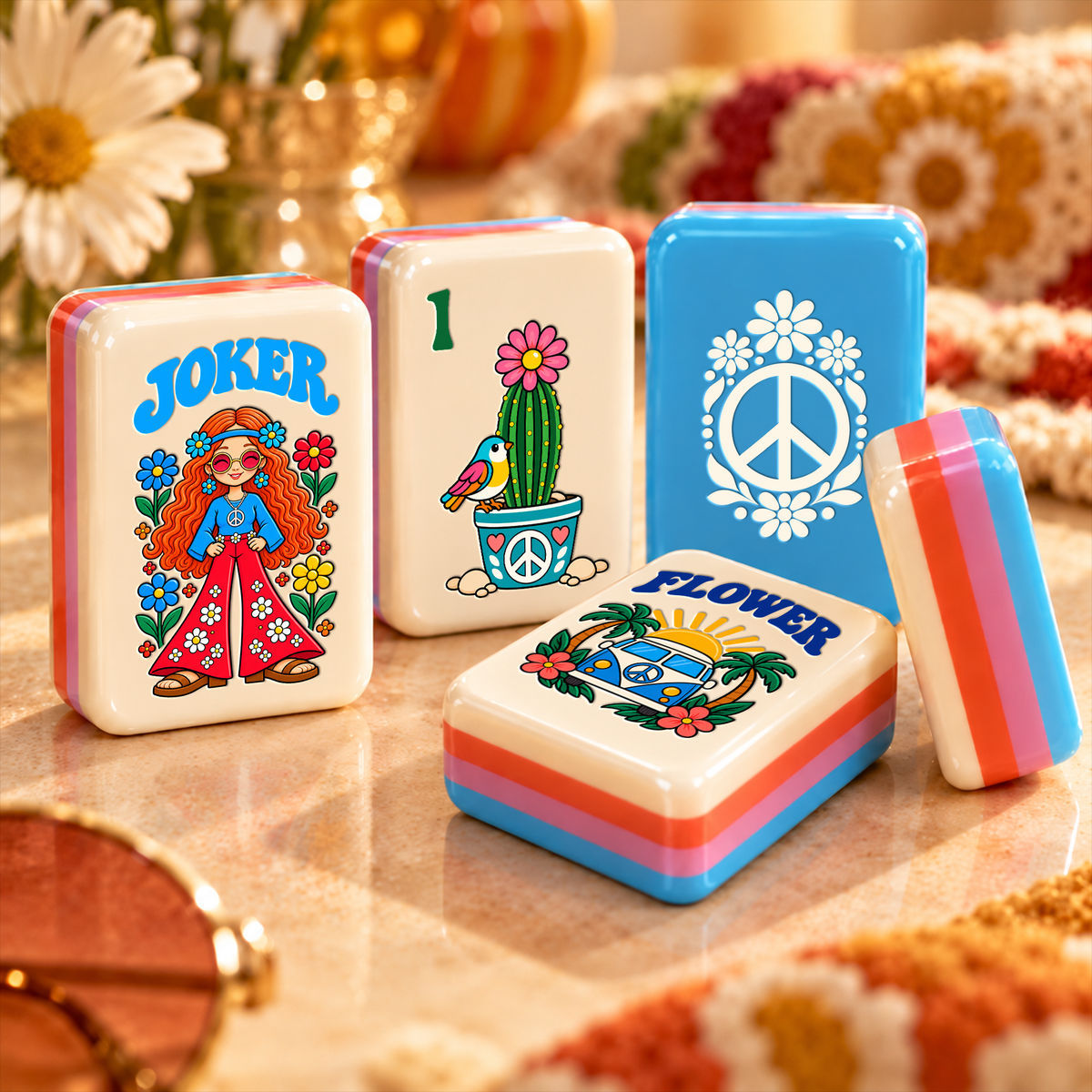
Filipino mahjong uses 152 tiles: 108 suit tiles (Bams, Craks, Dots in sets 1–9, four copies each), 16 winds (four each: North, East, West, South), 12 dragons (four each: Red, Green, White), and 8 flowers. Some Filipino games add extra jokers or blanks, but the core deck is identical to American mahjong in tile count. However, Filipino play differs sharply: hands come from custom local patterns, not a printed league card; chows (sequences like 1-2-3) can be called and exposed (unlike American rules); and scoring is often simplified or house-ruled. If you're learning Filipino mahjong from players in your community, ask whether you're playing the Hongkong-influenced style (which allows chows) or a regional variant—the hand lists and point values shift dramatically. Starting with a standard 152-tile set from a trusted maker like Mahstead gives you the foundation, but always confirm your table's specific hand card and scoring rules before sitting down.
Why Filipino and American mahjong have the same tile count but play so differently
Both Filipino and American mahjong begin with 152 tiles. The difference lies in what you can do with them. American mahjong forbids chows—you may only expose pungs (three identical tiles), kongs (four identical), quints (five), and sextets (six). Filipino play, especially in regions influenced by Hongkong or Chinese rules, permits chows: sequences of three consecutive numbers in the same suit (for example, 3 Bam, 4 Bam, 5 Bam can be called together). This single rule change transforms strategy entirely. In American play, you hunt for sets of identical tiles and work from a single printed league card updated yearly. In Filipino play, you're often working from house patterns or regional hand lists that vary by region or even by family. The 152-tile deck size stays constant because both games need enough tiles for four players drawing and discarding over roughly 14 rounds per game, with enough diversity to support both identical sets and sequences.

How many tiles does each player hold in Filipino mahjong?
Each of the four players starts with 13 tiles after the wall is built and the first draw is taken. Play proceeds with draws and discards until one player completes a winning hand—typically 14 tiles: either four melds (pung, kong, chow, or mixed) plus a pair, or a hand that matches a specific pattern on the local hand card. The exact tile count at win varies by house rules; some Filipino tables allow "all chows" wins with no honor tiles, others require honor tiles in the hand. Always ask your host or the most experienced player at your table what constitutes a legal win before you begin, because this changes both strategy and tile usage. Unlike American mahjong, where the National Mah Jongg League card is the law, Filipino play is fluid: two tables in the same city might have slightly different winning patterns. Ask to see the hand card your group uses before you play.
🀄 Shop best-selling mahjong sets →
What's inside a 152-tile Filipino mahjong set
A complete 152-tile Filipino mahjong set includes: 108 suit tiles across three suits (Bam, Crak, Dot) numbered 1 through 9, four copies of each number; 16 winds (North, East, West, South); 12 dragons (Red, Green, White); and 8 flowers (Spring, Summer, Autumn, Winter, each appearing twice). Some sets sold as 160-tile versions include extra jokers or blank tiles as spares—these extras sit off the table during play and serve only as replacements if a tile is lost or damaged. The core 152 is what goes into the wall. In Filipino games, you'll use all of these tiles identically to American play, with one caveat: your specific group may rule that certain tiles (like White dragons or specific flowers) carry special meaning or scoring weight. Clarify with your players whether White is treated as zero (as in American play), or whether it has unique scoring value in your variant.
Filipino vs. Hongkong vs. Chinese: tile counts and hand-calling differences
Variant | Tile Count | Chows Allowed? | Hand Card | Joker Use |
Filipino (standard) | 152 | Yes (usually) | Local/house patterns | Often permitted in melds |
Hongkong | 152 | Yes | Regional hand list | Limited or none |
Chinese (classical) | 152 | Yes | Regional rules | Rarely |
American | 152 | No | NMJL card (annual) | Required, strict rules |
Riichi (Japanese) | 136 | Yes | Specific combos | No jokers |
Filipino mahjong most often mirrors Hongkong or classical Chinese play in hand structure, but individual regions and families adapt rules heavily. The 152-tile deck is universal across Filipino, Hongkong, and Chinese play; American is the only major variant that forbids chows and uses a rigid printed card. If you're playing Filipino mahjong for the first time, ask whether your group follows "Hongkong style" (more complex patterns, honor-tile emphasis) or simplified house rules (fewer hand types, faster play). Riichi mahjong, played in Japan, uses only 136 tiles and has no jokers—it's a completely separate game system.
🎁 See our most-loved mahjong sets & accessories →

How to verify you have the right tile set before your first Filipino game
Before you sit down, count your tiles or confirm the set label states 152 tiles. Open the box and spread tiles on a mat to visually check: you should see four copies of each number 1–9 in each suit (verify 1 Bam shows a bird), four of each wind, four of each dragon, two of each flower. If your set says 160 tiles, the extras are spares—never add them to the wall. Ask the host or most experienced player to show you the hand card your table uses and walk through one winning example: "This is a pung (three 5 Dots), that's a chow (4-5-6 Bam)," and so on. Ask explicitly: "Do we use jokers in melds or not?" and "Is this flower considered high-value, or just part of the pattern?" These five minutes save confusion mid-game. If the group has house rules written down, ask for a copy or a photo. If play is entirely oral tradition, write down the key rules (what counts as a win, how jokers work, whether you pay double for winning on certain tiles) as the first round begins.
What you'll need for your first Filipino mahjong night
A standard 152-tile set forms the foundation, but hosting or traveling to games goes smoother with a complete setup from our best-selling collection. A mahjong mat protects tiles and defines the play zone, reducing wear and accidental knocks. Racks with pushers hold your hand upright so no one can see your tiles, and pushers speed setup between rounds. A sturdy bag or case protects your set if you're traveling between houses—Filipino mahjong groups often rotate hosts. If you're gifting a set to start a new group, an engraved set with a personal touch signals that this is a keepsake, not a throwaway import. Check the current product pages for exact specifications and availability.
✨ Find your Mahstead set — free US shipping →
What to check before you buy a mahjong set for Filipino play
Tile count: Confirm the label or product page says 152 tiles (or 160 if it includes documented spares). If it says 144, that's a Chinese set missing winds and flowers—wrong for Filipino play.
Material and durability: Acrylic or resin tiles resist moisture and handling wear. Avoid paper-thin wood; tiles crack after a season of weekly play.
Clarity of suit marks: In Filipino games, you'll be calling chows quickly. Ensure Bam, Crak, and Dot symbols are embossed or printed clearly so you spot sequences instantly across the table.
Rack and mat fit: If you're buying a set bundled with racks, confirm racks hold 13–14 tiles comfortably and fit your play surface or mat. Cramped racks slow the game and frustrate players.
Hand card included or accessible: Some sets come with a printed card or QR link to patterns. If not, ask the seller or your play group where to find the hand list before you buy. Playing without a shared reference card causes endless disputes.

FAQ
Is Filipino mahjong the same as Hong Kong mahjong?
No. Both use 152 tiles and allow chows, but hand patterns, scoring, and tile values differ. Hongkong mahjong has stricter hand structures; Filipino play is often more flexible and house-ruled. Always confirm your group's specific hand card and scoring system.
Can I use an American mahjong set to play Filipino mahjong?
Physically yes—it has 152 tiles. But American mahjong has no chows and relies on a printed league card. You'd need your Filipino group's hand list and must ignore American calling rules. Simpler to use a set intended for your actual game variant.
How many jokers are in a Filipino mahjong set?
Standard 152-tile sets include 8 jokers. Some Filipino games use jokers in melds like any tile; others restrict them. Your table's rules decide. Extra jokers in a 160-tile set are spares and don't go in the wall.
Do I need racks and pushers for Filipino mahjong?
No, but they're strongly recommended. Racks hide your hand so opponents can't see your tiles, and pushers organize your hand quickly between draws and discards. Filipino games move fast; racks reduce confusion and speed play.
What's the easiest way to learn Filipino mahjong if I know American mahjong?
Unlearn the "no chows" rule first. Ask your Filipino host to walk through one complete hand, calling out each meld and the winning pair. Watch two full rounds before you play. Then play conservatively and ask questions mid-hand.
Can I buy a mahjong set in the US and use it for Filipino games?
Yes. Mahstead ships 160-tile acrylic sets across the US with free shipping. Confirm with your Filipino play group that their hand list matches your set's tile symbols (Bam, Crak, Dot) before you buy—regional variants occasionally use slightly different naming or tile designs, though the core 152-tile count never changes.


View More
View More
View More
