
5 Crak Tile in Chinese Mahjong: Identification & Role
Last updated: Nov 23, 2026
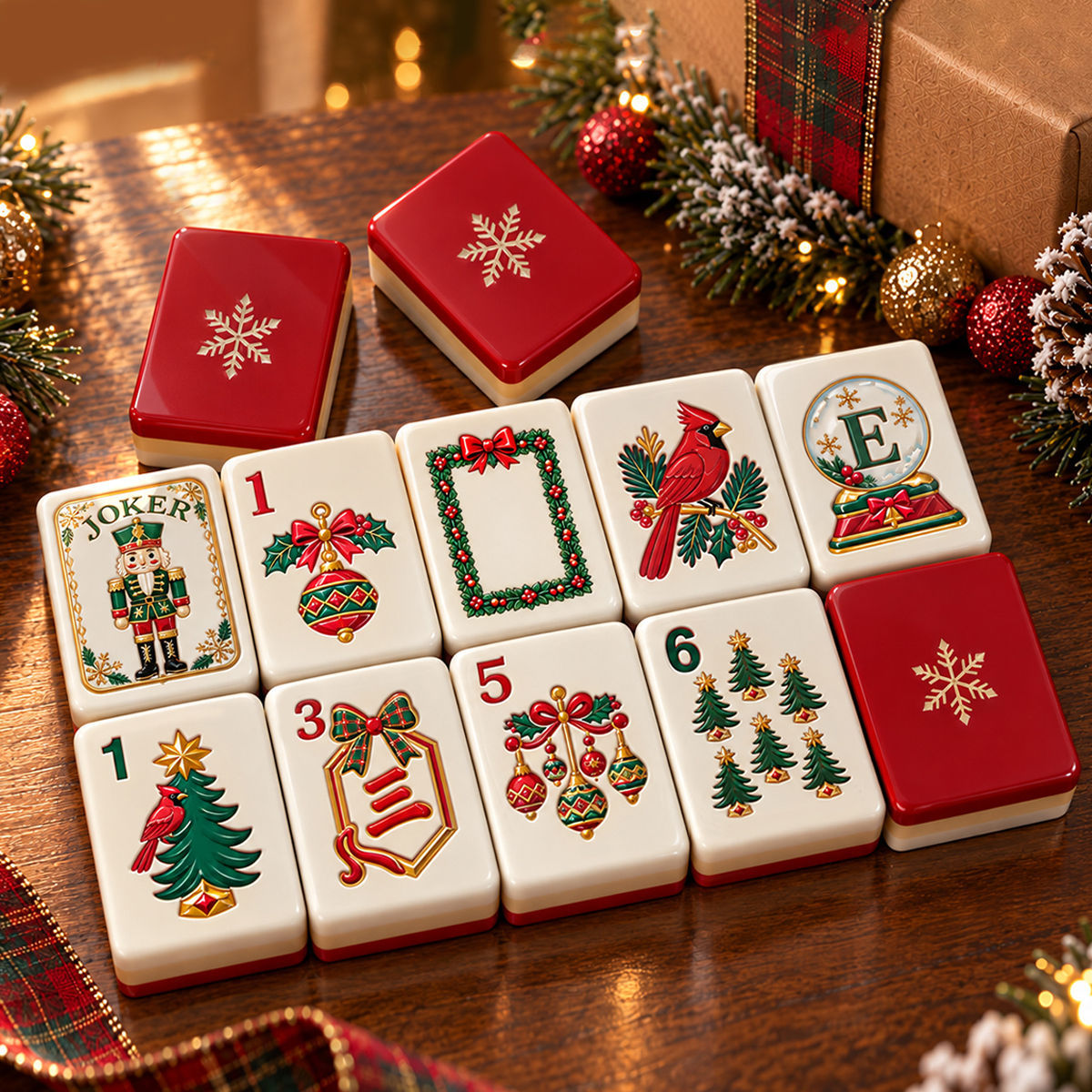
In Chinese mahjong, the 5 Crak (五索 in Cantonese or Mandarin) is one of three copies of that tile in the suit of Craks (bamboos), numbered 1–9. It's a mid-range tile used to form melds (pungs, chows, kongs) and hand patterns. In American mahjong, you'll see four 5 Craks in every standard 160-tile set, because American uses four copies of every number-suit combination instead of three. The 5 Crak looks like a bamboo stalk with five segments. Chinese players often consider mid-range tiles like 5 Crak more flexible for building sequences (chows: 3–4–5, 4–5–6, 5–6–7) than in American play, where chows are never exposed or called. American mahjong uses what's in an American mahjong set only from the yearly card; Chinese mahjong is played with open melds and discard strategy. Cost and scarcity don't apply—5 Craks are standard in any complete set. --- 🀄 Shop best-selling mahjong sets →
How do you identify the 5 Crak tile visually?
The 5 Crak shows five vertical bamboo stalks (or segments) on the tile face. In modern tile design, these are usually green or teal-colored bamboo lines arranged vertically or in a bamboo-like pattern. The character "5" may also appear in Chinese numerals. On acrylic sets, the engraving or printed detail is crisp; on traditional bone-and-bamboo tiles, the visual is slightly more ornate. If you're new to mahjong, the Crak suit is easier to spot once you know that Craks = bamboo, Dots = circles, Bams = characters or sticks. Holding a full set and sorting by suit helps you train your eye.

What is the difference between Chinese and American 5 Craks?
Chinese mahjong sets contain three copies of each tile numbered 1–9 in each suit, plus winds, dragons, flowers and jokers—typically 144 tiles total. American mahjong sets contain four copies of every number-suit tile, for what's in an American mahjong set of 152 playing tiles plus 8 jokers. This means you'll see four 5 Craks in American play, but only three in Chinese or Hong Kong variants. The tile itself looks the same; the difference is quantity and how it's used. In Chinese mahjong, mid-range tiles like 5 Crak are highly flexible for chows (sequences like 3–4–5 or 5–6–7). In American mahjong, you never expose or call chows; the 5 Crak is only used in pungs (three identical), kongs (four identical), or longer identical runs (quints, sextets) and must match a hand pattern from the yearly National Mah Jongg League card. Chinese play is dynamic discard strategy; American play is fixed hand matching.
Feature | Chinese Mahjong | American Mahjong |
Copies per number-suit | 3 | 4 |
Total tiles in set | 144 | 152 (plus 8 jokers) |
Melding 5 Crak | Chows (3–4–5, 5–6–7) + pungs | Pungs, kongs, quints, sextets only |
Role in play | Flexible, discarded often | Fixed by yearly card pattern |
Suit name | Index, Bamboo | Crak |
Why does the 5 Crak matter in hand composition?
In Chinese variants (Cantonese, Mandarin), the 5 Crak is a workhorse tile because three copies exist and mid-range numbers (4, 5, 6) form most chows. A strong hand might hold two 5 Craks to build overlapping sequences: 3–4–5 and 5–6–7 share the 5. In American mahjong, the 5 Crak's value depends entirely on the current year's National Mah Jongg League card. Some years it appears in multiple hand patterns; other years it's rare. American players study the card before the season to learn which number-suit combinations are "hot" (appear in many hands) and which are "cold" (appear rarely). Because American play requires an exact pattern match and four copies exist, the 5 Crak can be used in a pung (all three visible tiles identical) or kong (all four) or as part of a longer run, but never in a chow. The difference in role means a Chinese player sees 5 Crak as a bridge-building tile; an American player sees it as a pattern-fitting tile.

How do you avoid misidentifying the 5 Crak in a mixed set?
Common mistakes happen when sorting a brand-new set or when mixing tiles from two different sets (which we don't recommend). The 5 Crak can look similar to the 5 Dot (five circles) or the 5 Bam (five character symbols) under poor lighting. Best practice: sort tiles under bright, natural light in a clear area. Group by suit first (all Craks together, all Dots, all Bams), then by number. On acrylic sets, the Crak tiles have a distinctive bamboo engraving that reads clearly once you've seen it. On traditional tiles, the Crak suit has a greener or more natural hue. If you're hosting a game, ask all players to help sort and verify tiles before play—it takes 10 minutes and prevents disputes mid-hand. Many of our players use engraved acrylic mahjong sets because the tile markings are larger and easier to read, especially for players with vision concerns or in games with side-by-side racks.
🎁 See our most-loved mahjong sets & accessories →
Why does tile quantity matter when buying a mahjong set?
If you play only American mahjong, you need a 160-tile set (152 playing tiles + spare tiles) with four copies of each number-suit tile. If you ever play Chinese, Hong Kong, or Riichi mahjong with friends, a 144-tile set is more useful—but it won't work properly for American play because American requires exactly four copies of each number-suit combination. Some players keep both types of sets at home for flexibility. If you buy a set labeled "160 tiles," it will include spares (extra jokers and blank tiles) beyond the 152 used in play; these are backups only and never shuffled into the active game. The cost difference is modest, but the playing difference is real. Best-selling acrylic mahjong sets at Mahstead are all 160-tile American sets, and we note the tile count clearly on each product page so you know exactly what you're getting. Buying a set that doesn't match your game variant leads to frustration and wasted money.
✨ Find your Mahstead set — free US shipping →
What to check before you buy a mahjong set
Confirm the game variant: Are you playing American (needs 152 playing tiles + 8 jokers, four copies of each number-suit), Chinese (144 tiles, three copies), Hong Kong, or another style? Ask your hosts or check your local mahjong club.
Verify tile count in the product description: A 160-tile set is American; 144-tile is Chinese. Mahstead sets are 160-tile American sets.
Check the tile material: Acrylic (easier to read, durable), bone-and-bamboo (traditional feel, more fragile), or plastic (budget-friendly, less satisfying).
Look at suit markings under the light you'll use at home: If you have vision concerns or play in dim light, larger engraved designs are worth the investment.
Count the jokers and spare tiles: You need exactly 8 jokers for American play; any spares are backups, not part of the game.
Test the case or bag fit: Make sure the set's storage matches your space and transport needs.

FAQ
Is the 5 Crak the same in every mahjong variant?
The tile looks identical across variants—five bamboo stalks—but the quantity differs: four per set in American (152-tile), three in Chinese/Hong Kong (144-tile). Its role also changes: Chinese uses it in chows; American uses it only in identical melds or per the yearly card pattern.
Can I play American mahjong with a Chinese 144-tile set?
No. American requires four copies of each number-suit tile; Chinese sets have only three. You'll be missing one copy of every tile, including the 5 Crak, making hands impossible to complete. Use a 160-tile set for American play.
Why is the 5 Crak called "index" in some Chinese mahjong groups?
In Cantonese mahjong, the Crak suit is called "索" (sou, meaning rope or index); the name varies by region and language. The bamboo visual stays the same; the name is just local dialect.
How do I know if the 5 Crak tile in my set is authentic acrylic and not cheap plastic?
Authentic acrylic tiles are heavier, have clean engraved details, and feel smooth under your fingers. Cheap plastic feels lighter, has blurry prints, and can warp in heat. Examine a tile under bright light and compare the weight to a known acrylic tile if possible.
What should I do if I find only three 5 Craks in my American mahjong set?
Check the spare tiles (usually in a small pouch)—one may be there. If not, the set is incomplete or mislabeled as American when it's actually a Chinese or Hong Kong set. Contact the seller. Mahstead sends complete 160-tile sets; if you're missing tiles, contact customer service with your order details.
Can I use jokers to replace a missing 5 Crak in American play?
No. In American mahjong, jokers have strict rules: they can never be used as a single tile or a pair, and they can only substitute in exposed melds (pungs, kongs, quints, sextets) where the other tiles are identical. A joker cannot replace a 5 Crak in your hand or in an exposed set, because the rest of that meld wouldn't be all 5 Craks. Use a spare tile from your set's extras, or remove the 5 Crak requirement from the current hand and move to a different pattern.


View More
View More
View More
