
Mahjong Party Ideas in Charleston: Host Your First Game
Last updated: Nov 23, 2026
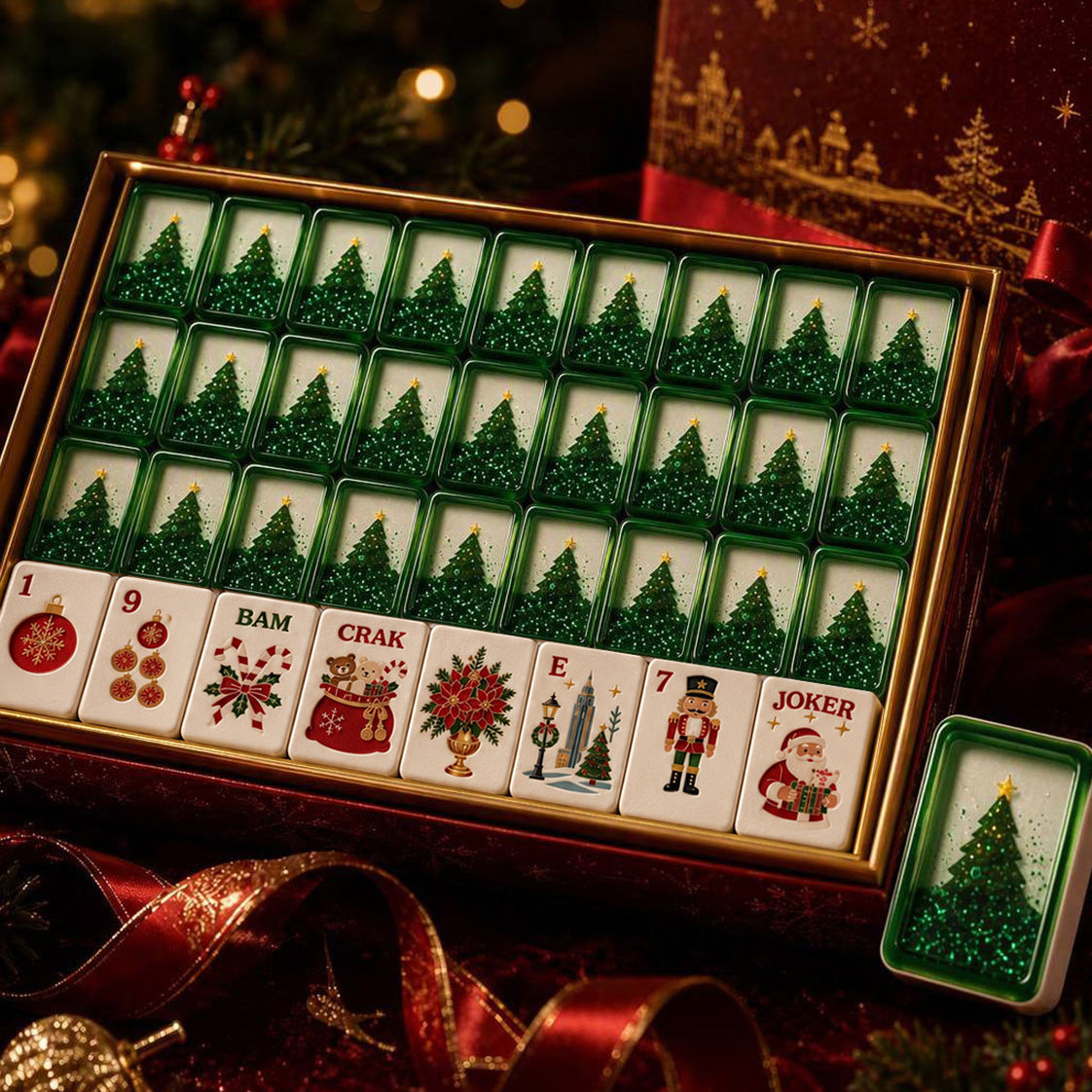
Hosting a mahjong party in Charleston means securing a level surface (dining table or mat), inviting four players of mixed skill, providing the current National Mah Jongg League card, and planning 2–3 hours for learning plus casual play. You'll need one American mahjong set (152 tiles plus 8 jokers), best-selling mahjong sets include acrylic options that hold up to coastal humidity and spilled drinks. Budget for snacks, light refreshment, and score pads; skip alcohol until after the first hand or two. Most first-timers stumble on the Charleston (the pre-game tile pass), confusing joker rules, or misreading the card—all teachable in under ten minutes. The key: manage expectations, pick players who like collaborative puzzle-solving (not pure luck), and rehearse one full hand before real scoring starts.
How do I set up a mahjong party space in Charleston's climate?
Charleston's moisture is your enemy: acrylic tiles resist warping and salt-air corrosion better than bamboo or bone. Position your table away from windows to avoid glare on the card and direct sun on tiles. Use a dedicated mahjong mat as your base—it defines the play zone, protects your table, and keeps tiles from sliding across slippery surfaces. Set up a card holder so all four players can see the current year's League card without leaning or squinting. Provide a small tray for drinks at least arm's-length away; spills near tiles cause disputes and ruin equipment. Test airflow: a humid room makes tiles sticky; a ceiling fan keeps the space fresh without blowing tiles around. Seat players so the dealer sits at the head of the table—position matters for calling, declaring, and confidence.

What's the fastest way to teach beginners before we play?
Skip theory. Instead, walk through one complete, unscored hand aloud. Lay out all 152 tiles face-down in the wall, have each player draw 13, and you draw 14. Show how to read the card: find a hand pattern (for example, "three pungs of Dots, two pairs of winds, and a kong of Dragons"), explain which tiles fill it, and demonstrate the Charleston—the three-pass ritual that exchanges tiles before play. Mention jokers are wild but cannot be part of a single tile or a pair. Most errors happen when players try to call mid-hand before understanding what hands are legal; prevent this by reading the card together, not during play. Then play one hand without score, discussing every draw and discard. By hand two, everyone knows the rhythm.
🀄 Shop best-selling mahjong sets →
Who should I invite, and how do I manage mixed skill levels?
Mahjong is not competitive—it's collaborative pattern-finding. Invite players who like puzzles, cards, or trivia. Avoid true competitive gamers on their first night; they will try to "win" by outwitting others instead of seeing hands as group challenges. Mix newcomers with one or two veterans; experienced players teach by example and prevent stalling. Limit your first party to four players, no exceptions—five or six players dilute attention and slow the game past retention point. Tell guests in advance: "This is a learning game. We'll laugh, reread the card often, and take about three hours." Manage frustration by keeping the tone light; when someone misreads the card, celebrate the save rather than score a penalty. Bring printed copies of the current League card, not just one shared card—parallel learning speeds up confidence.
What gear and snacks actually make a difference?
Item | Why It Matters for Charleston | Budget Expectation |
Acrylic mahjong set | Humidity-proof; easy to clean | One-time purchase |
Dedicated mat | Defines play space; prevents tile scatter | One-time purchase |
Holds tiles upright; speeds hand-reading | Optional, makes play smoother | |
Printed League cards (4 copies) | Each player sees the hand at once | Low cost |
Score pads | Prevents mental math disputes | Few dollars |
Water or unsweetened drinks | Keeps energy up in heat; avoids sticky fingers | Minimal |
Light snacks (nuts, cheese) | Occupies hands between rounds; prevents boredom | Minimal |
Avoid salty snacks near tiles—salt residue on fingers transfers to acrylic and causes buildup. Skip wine or beer until after three hands; alcohol clouds the card-reading logic that beginners need. A dedicated mat elevates your setup and signals respect for the game; it also reduces tile-table noise that gets annoying after two hours in a quiet room. Racks are nice but not essential for a first party—focus on tiles and the card first.

What mistakes do first-time hosts make, and how do I avoid them?
Mistake 1: Inviting five or six players. Four is sacred in mahjong. Five or more creates dead time, teaches slower, and divides attention. Politely cap your guest list.
Mistake 2: Playing without a current League card. An outdated card makes hands illegal; guests feel cheated. Confirm you have the current year's card before the party.
Mistake 3: Rushing the Charleston. This three-pass exchange confuses newcomers because the direction and distance seem arbitrary. Go slow: "Pass right, then across, then left. No peeking." Repeat twice and practice empty-handed before tiles touch the table.
Mistake 4: Treating jokers like wildcards in poker. In American mahjong, jokers are blanks that replace one tile in a pung, kong, quint, or sextet—never as a single tile or pair. Say this twice. Say it again.
Mistake 5: Starting score too early. Play one full unscored hand so players build muscle memory. Scoring rules add a layer of confusion that wrecks confidence. Save points for hand two.
Mistake 6: Not having a backup set. If a tile breaks or goes missing (Charleston can scatter them), a second set of accessories keeps the night alive. Travel bags store extras compactly for your next party.
How do I keep the energy up through three hours?
Structure your night in blocks: 20 minutes introduction, 30 minutes first hand (unscored), 15 minute break, 60 minutes second and third hands (scored), 15 minute break, then open play or exit. Take a pause between hands to stretch, refill water, and reset the wall. Around the two-hour mark, energy dips—this is when bathroom breaks, bathroom-adjacent conversations, and snack refills happen naturally. Do not push through; let people leave if they need to. Most first-timers stay the full three hours if the pace is steady and laughter is steady. Avoid long rule explanations mid-hand; write disputed calls on a notepad and settle them after the hand ends. If someone is clearly lost, pair them with a veteran for one hand as a co-player, then rotate. The game teaches itself faster through play than through talking.
🎁 See our most-loved mahjong sets & accessories →
What should I check before I buy equipment?
Before investing in a set, confirm: (1) your table is at least 32 inches square—mahjong needs space. (2) You have or can print four copies of the current League card. (3) At least one guest has read how to play American mahjong in advance, or you have watched a video tutorial together. (4) Your climate is humid—if yes, acrylic is worth it. (5) You plan to host again—if unsure, borrow a set from a local game group first. Best-selling sets include everything you need to start; avoid sets with fewer than 152 tiles or unclear tile markings. If your party ends and guests ask to play again, buy a quality set and a mat—your investment will pay back in three or four gatherings.
✨ Find your Mahstead set — free US shipping →

FAQ
Do I need to teach mahjong rules before we start, or can people learn while playing?
Learn while playing. Walk one full unscored hand aloud first—show the card, demonstrate the Charleston, and explain joker rules—then play it. By hand two, everyone understands the rhythm. Lecturing beforehand confuses people and kills momentum.
Can I host mahjong outdoors in Charleston summers?
Not recommended. Heat warps some tiles, sun glare makes the card unreadable, and humidity is worse outdoors. An air-conditioned room or screened porch with good shade is best.
What happens if someone gets bored halfway through?
Boredom usually means they feel lost or the pace is too slow. Pair them with a veteran for the next hand, or take a break and restart. If they still lose interest, they can leave—mahjong is not for everyone.
Do I have to use the National Mah Jongg League card, or can we make up hands?
You must use the current year's League card. Made-up hands break the game's logic and confuse newcomers. The card is the rule book; it is non-negotiable.
How many jokers does a mahjong set have?
American mahjong requires exactly 8 jokers in play at all times. Sets include spares, but only 8 are used per game. Never add extra jokers to the table.
What's the difference between a mahjong mat and a table cover?
A mat is padded, defines the play zone, and protects tiles and table. A table cover is thin fabric that protects only the table surface. For serious hosting, a dedicated mat is worth it.
Can I use bamboo tiles if I live near the coast?
Acrylic is safer for Charleston humidity and salt air. Bamboo absorbs moisture and warps; acrylic tiles resist both. Stick with acrylic if you plan regular games.


View More
View More
View More
