
Mahjong Party Ideas in Boise: Host a Winning Game Night
Last updated: Nov 23, 2026
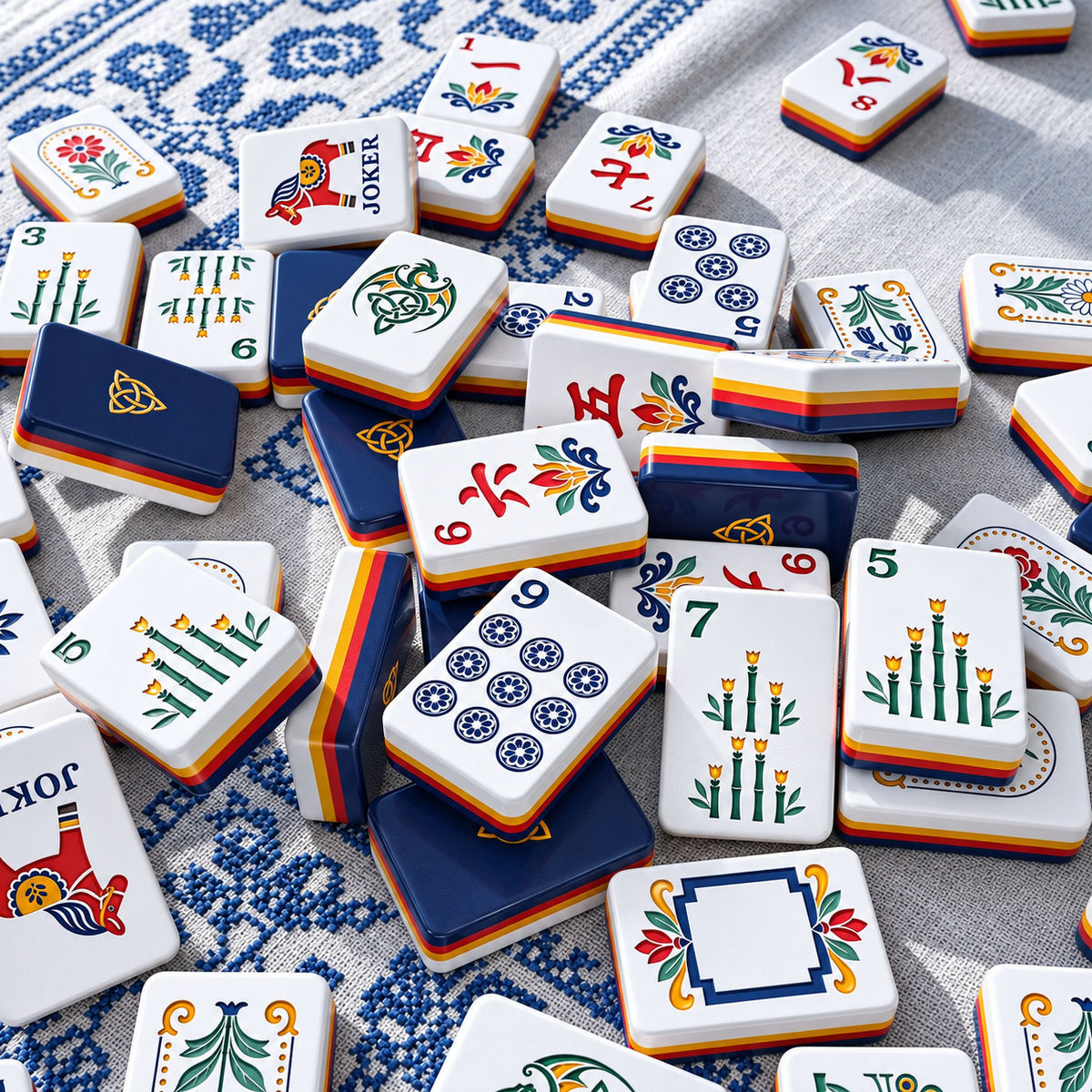
A mahjong party in Boise works best with four players seated at a table, 152 tiles in an acrylic set, a designated mat, and wind assignments (North, East, South, West). Most groups in Boise gather at homes, libraries, community centers, or country clubs; check your local library's event board or Meetup for established groups and venues. A single game takes 30–60 minutes; plan 2–4 rounds for a party. Your setup includes one American mahjong set (160 tiles including spares), one mat to protect the table surface, one rack per player to hold tiles hidden, one scoring pad, and the current National Mah Jongg League card. First-timers often underestimate how much a good mat and rack system speeds learning—poor visibility and fumbled tiles kill the momentum. Mahstead's acrylic sets come ready to play and arrive with spare tiles so replacements are always on hand; a quality mat prevents tiles from sliding mid-game, and racks with pushers let every player see their hand clearly.
What's the easiest way to introduce mahjong to first-time players at a party?
Start with a demo hand before the Charleston. Sit everyone at the table, place 13 tiles faceup in a practice rack, then walk through one complete hand—how to recognize suits, what a pung is, why jokers matter. Show them the current National Mah Jongg League card and point to one hand type they'll aim for. Give them 10 minutes to ask questions. Skip deep strategy; just show the rhythm: draw, discard, listen for calls. First-timers learn fastest when they can see a clear win in the first game. Once they've played two rounds, they'll ask smarter questions and retain the rules naturally.

How do you set up the table so everyone can play comfortably?
Place the mat in the center and the discard rack (a small tile holder) in the middle. Each player sits at one side with a rack for their hand, a pen, and access to the score pad. Leave at least 24 inches of table space per player so tiles don't crowd. Orient the mat so each player faces their side clearly. Position the wind tiles where all four can see them at once. Use dice, placed in plain sight, to determine the player order. Good lighting—overhead or a focused lamp—prevents squinting and tile mix-ups. Phones away, water glasses on coasters, clear of tile zones. When the table is uncluttered, even nervous beginners feel in control.
Should you host at your home or find a Boise venue?
Home games are most common and most relaxed: you control the table, the food, the pace, and can take breaks without rushing. Boise has community centers, libraries, and synagogues that offer mahjong nights or room rentals; call ahead to ask if mahjong is welcome or if they host existing groups. Country clubs sometimes have mahjong-friendly members who gather weekly. Check Meetup, the Boise Public Library's event calendar, and local community bulletin boards for standing games; joining an established group is faster than hosting from scratch if you're new to the area. Home is best for teaching; venues are best for meeting experienced players.
Hosting Option | Best For | What You Provide | Boise Resources |
Home (living room or dining) | Small, relaxed group; new players | Set, mat, racks, snacks, score pad | Your space; ideal for teaching |
Library or community center | Mixed experience; low cost | Show up; venue supplies table | Call ahead; check event boards |
Country club or private venue | Weekly recurring games | Possibly a small table fee | Ask current members for referrals |
Established Meetup group | Meeting experienced players | Just yourself and willingness to learn | Search "mahjong Boise" on Meetup |
🀄 Shop best-selling mahjong sets →

What snacks and pacing work best during a mahjong party?
Serve finger foods and drinks that won't spill on tiles: cheese, crackers, nuts, pre-cut fruit, and tea or coffee in mugs with lids. No sticky hands at the tiles. A typical party runs 2–4 games; play one round (30–45 min), break 10 minutes, play again. Between games, people chat, eat, and reset their minds. Keep a score sheet visible so players track wins over the night. After two games, take a 15-minute break where people get up, stretch, and recharge. If anyone looks frustrated, offer them a seat-out or a teach-through of the card. A party that feels rushed and exhausting becomes a one-time event; a party with breathing room and laughter becomes a standing invite. Music playing softly in the background (nothing with lyrics) adds energy without distraction.
What equipment mistakes do first-time hosts make—and how to avoid them?
Mistake: Undersized or cheap mats. Thin, flimsy mats slide during play, and tiles stick or catch. A quality mat with a non-slip base stays put and protects your table surface. Our mahjong mats guide walks through size, thickness, and materials in detail; most home games thrive on a standard-size mat.
Mistake: Racks that don't hide your tiles. If players can see each other's hands, the game dies instantly. Each player needs a personal rack with pushers that holds 13–14 tiles at a slight angle, face-toward-you only.
Mistake: Mixed or incomplete tile sets. Playing with 144 tiles, borrowed tiles from two sets, or worn tiles causes confusion and disputes. Buy one complete 160-tile acrylic set—you get 152 playing tiles plus spares, so no scrambling mid-game if a tile cracks or someone loses one.
Mistake: Not having the current year's National Mah Jongg League card. The hands change every spring. Playing off an old card means no one's hand list matches reality. Keep a printed or laminated copy on the table so everyone can reference it.
Mistake: Starting without clear wind assignments. Many new hosts skip the dice roll or assign seats casually. This is how confusion starts. Roll dice, assign winds (North, East, South, West), and write them down before you deal.
A best-selling set from Mahstead includes quality acrylic tiles that won't chip, a mat sized for four players, racks with pushers, and a bag for storage—everything a first-time host needs in one buy.
🎁 See our most-loved mahjong sets & accessories →
What should a Boise host check before and after each party?
Before guests arrive:
Verify all 152 tiles are present and undamaged (count quickly: 36 Bams, 36 Craks, 36 Dots, 16 winds, 12 dragons, 8 flowers, 8 jokers).
Test the racks to make sure pushers slide smoothly and tiles sit level.
Confirm you have the current National Mah Jongg League card and a working pen for scoring.
Set the mat straight and wipe it clean.
Position seating so light falls on everyone's rack, not in their eyes.
After the party:
Return all 152 tiles to the set bag or case.
Wipe the mat with a dry cloth and let it air-dry flat (never fold it damp).
Store racks and tiles in a protective case or bag to prevent dust and damage.
Note any cracks, sticks, or missing tiles so you can address them before the next game.
A single mahjong set lasts years when stored properly; neglect and it becomes unusable in a season.
✨ Find your Mahstead set — free US shipping →

FAQ
Can I host a mahjong party with fewer than four players in Boise?
Yes. American mahjong adapts to 2 and 3 players using modified rules (fewer tiles in hand, adjusted draws). Rules change significantly, so look up 2–3 player variants before inviting. Four players is the standard and easiest entry point for new hosts.
Where do I find other mahjong players in Boise to grow my party?
Check community centers, public libraries, country clubs, and synagogues for standing groups or event postings. Search Meetup for "mahjong Boise" or "game night Boise." Ask at local card shops if they know groups. Established players are usually welcoming to steady newcomers.
What if someone in my Boise group doesn't know how to play—do I teach mid-game?
No. Teach before the Charleston (the tile-passing ritual). A 10-minute demo on suits, pungs, the card, and one sample hand prevents confusion and keeps the flow smooth. Trying to teach mid-round frustrates everyone.
Is an acrylic mahjong set better than bamboo for a party?
Acrylic sets are louder when tiles click (good—everyone hears calls), more durable (dings don't chip the surface), and easier to clean. Bamboo is prettier and quieter but fragile. For a party where ease of play and durability matter, acrylic wins.
How many mahjong parties should I host before buying my own set?
Buy one set before you host the first time. A shared or borrowed set often goes missing, breaks, or feels incomplete. You'll use it dozens of times. One quality set is worth the investment; see the best-selling collection for options.
What's the best way to score and track wins over multiple games at a Boise party?
Use a printed scoring pad (any paper works) with one column per player and one row per game. Write the winning hand type and points for each round. At the end of the night, total the scores. This keeps the night light and fun—no one obsesses over one loss.


View More
View More
View More
