
Chinese Official Mahjong Scoring: Rules & Point System
Last updated: Nov 23, 2026
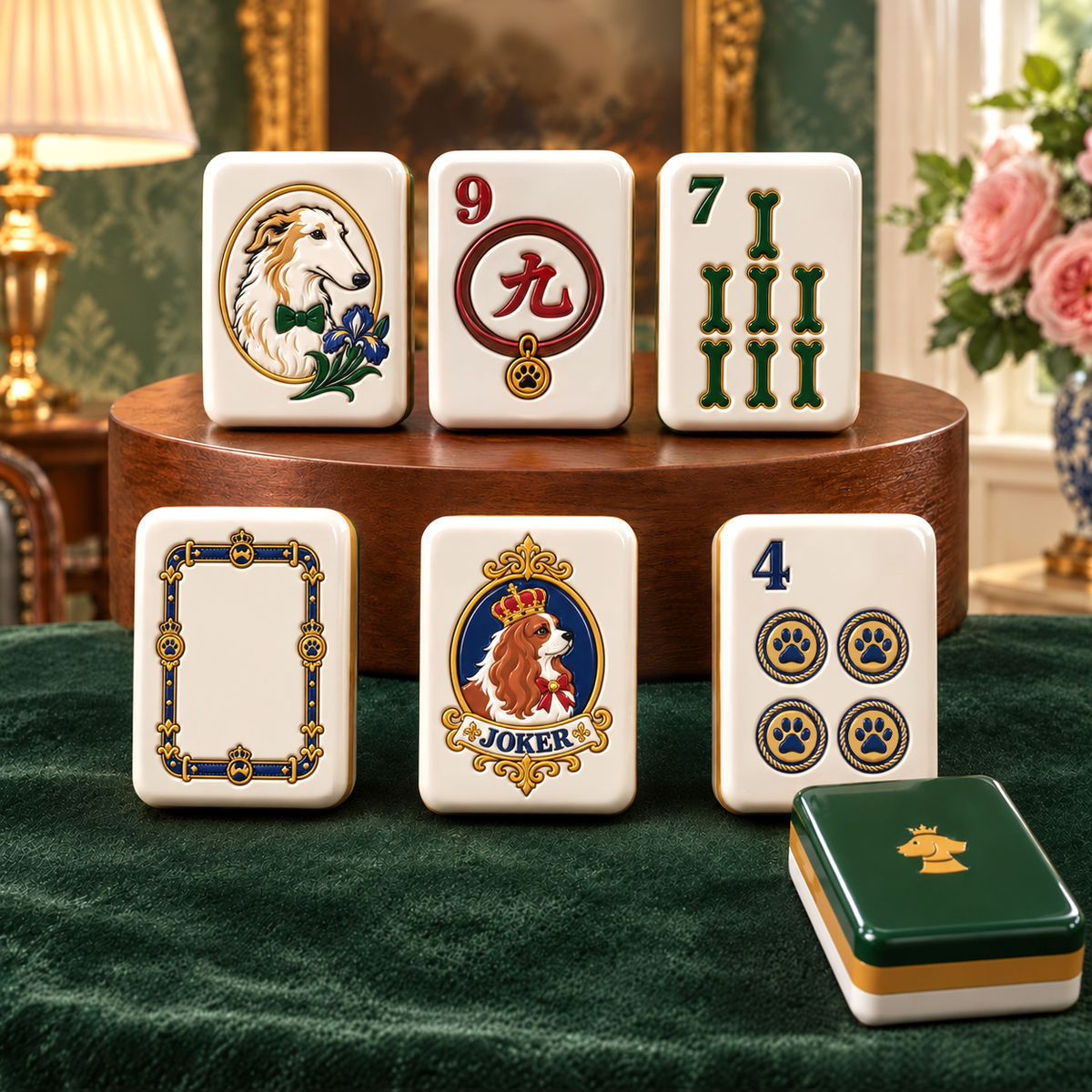
Chinese official mahjong scores hands using fan (multiplier levels, typically 1–8 or higher) and points (base value, usually 20–80), calculated as base points × 2^fan. A player declaring "win" (hu/和) must match one of dozens of legal hand patterns; unlike American mahjong, chows (sequences like 2–3–4 Bamboo) are allowed and form most hands. Winners collect from all opponents or the discarder only, depending on whether the draw was live or from a discard. Games run for a set number of rounds (often 4 or 8), and cumulative score determines the final winner.
🀄 Shop best-selling mahjong sets →
How does the fan-and-points system actually work?
The fan-and-points model is the heart of Chinese official scoring. Each winning hand earns a fan rating (1–8+) based on its pattern complexity and rarity. Once you know the fan count, you multiply the base point value (usually 20, 30, or 40) by 2 to the power of the fan: for example, a 2-fan hand worth 30 base points pays 30 × 2² = 120 points per opponent. At higher fan levels, 7-fan and 8-fan hands often have fixed payouts (like 2,000 or 4,000 points) rather than continuing the exponential formula. The rulebook (whether Cantonese, Shanghai, or tournament standard) defines which patterns earn which fan. Understanding your scoring system before sitting down prevents disputes and keeps the game moving fast.

What tile patterns count as winning hands?
Chinese official mahjong recognizes a much broader set of winning patterns than American play. The most common include pung hands (three identical tiles), kong hands (four identical), chow hands (three consecutive tiles in one suit—2–3–4 or 7–8–9, for instance), and mixed combinations of these. A legal hand usually contains four melds (either exposed or concealed) plus a pair. Some patterns carry bonus fan: for example, all chows (no pungs or kongs) is often worth extra fan, as is all honors (only wind and dragon tiles). A seven pairs hand (seven sets of identical tiles, no melds) is a separate valid pattern. The exact list varies by ruleset; the most widely used in North America are Cantonese Classical and Shanghai Tournament rules, though others exist. Always confirm which ruleset your group uses before the first hand, because the same tile arrangement might score differently under different rules.
Who pays whom when you win?
Payment structure differs sharply from American mahjong's uniform discard-draw settlement. In most Chinese official variants, if you draw a tile from the wall and win, all three opponents pay you. If you win by claiming a discard, usually only the player who discarded pays you (though some rulesets split payment among all three). The amount each opponent pays is the fan-and-points calculation: for a 3-fan hand at 40 base points, that's 40 × 2³ = 320 points per player when drawing, or 960 points from the discarder alone. Some groupshouse-rule a "payment cap" to prevent one huge loss; others allow unlimited payouts. Before your first session, clarify whether the table uses payment caps, whether draws and discards both pay the full amount, and whether ties (two or more players with winning hands) are re-dealt or scored equally.

How is final score calculated across an entire game?
Games consist of multiple rounds (typically four rounds of four hands each, or eight rounds total), and each round rotates the dealer position. After each hand, the winner's point total is added to their running score (positive for winners, negative for losers). At game's end, the player with the highest cumulative score is the overall winner. Some groups then settle money (or points for hobby play) based on the difference between final scores; for example, if Player A finishes +600 and Player B finishes -200, A collects 800 points from B. Others use a "dead man" rule where only the lowest-scoring player pays everyone else an agreed amount per point. Keeping a running tally on paper—or using a scorepad designed for Chinese mahjong—prevents mental math errors and keeps everyone aligned on who's ahead.
What's the difference between Chinese official and American mahjong scoring?
The comparison table below shows where the two games diverge:
Aspect | Chinese Official | American Mahjong |
Tile count | 144 (standard) | 152 (standard) |
Hand patterns | Chows + pungs + kongs + pair + bonuses | Fixed yearly card (no chows) |
Scoring system | Fan (multiplier) + base points | Point value per hand type |
Scoring card | No; patterns memorized or rulebooked | Yes; National Mah Jongg League card |
Chows allowed | Yes, always | No; never called or exposed |
Winner payoff | Variable by hand & draw type | Fixed per hand |
Rounds per game | 4–8 rounds typical | Usually 1–2 racks (often ~8 hands) |
Complexity | High (dozens of patterns) | High (annual card mastery) |
American mahjong is entirely rules-driven by the current year's League card, whereas Chinese official is pattern-memorization-heavy and ruleset-dependent. If you've played only American, expect a steeper learning curve with Chinese official because you'll need to internalize 20–40 winning patterns rather than consulting a card each hand. Learn the fundamentals of American mahjong scoring if you're switching between the two, so you understand how the philosophies differ.
Can you really use a standard American set to play Chinese official?
Technically, yes, but with caveats. A standard American set (152 tiles) contains extra jokers and blanks that Chinese official doesn't use; you'd set them aside and play with only 144 tiles per hand. The tile faces, suits (Bamboo, Character, Dot), and honors are identical in both games, so the appearance is compatible. However, many Chinese players prefer sets with slightly different tile weight, size, or marking conventions for comfort over long sessions. Mahstead's best-selling mahjong sets are built to American spec and can function for Chinese play in a pinch, but if you're committing to regular Chinese official games, confirm your group's tile preferences before investing. Some players in North America simply accept the American-set hybrid and never look back; others keep a dedicated 144-tile Chinese set for purity.
🎁 See our most-loved mahjong sets & accessories →
What to check before you buy a set for Chinese official play
Ruleset consensus: Ask your intended playing partners which ruleset (Cantonese Classical, Shanghai, Hong Kong, or another) your table will use, and get a copy of the scoring rules in writing.
Tile count: Confirm whether your group plays 144-tile standard or a local variant; this determines what to set aside if using an American set.
Scorepad or app: Prepare a paper scoresheet or scorekeeper app in advance; mental math at speed causes errors.
Pattern reference: Print or bookmark the winning-pattern list for your ruleset so you can look up unfamiliar hands without interrupting play.
Payment cap agreement: Decide in advance whether your table has a cap on single-hand payouts or plays open-ended.
✨ Find your Mahstead set — free US shipping →

FAQ
Is Chinese official mahjong harder to score than American?
Yes. American uses a fixed annual card; Chinese requires memorizing 20–40+ hand patterns and applying fan-and-point math. Many players find Chinese more rewarding once the patterns stick.
Can I play Chinese official with only three people?
Yes, but most rulesets adjust hand length and scoring for three-player games. Confirm rules with your group first; some use shorter melds or different fan adjustments for three-player balance.
What happens if two people win on the same discard?
Most rulesets declare a "tie" or "collision" and re-deal that hand, or split the payout equally among winners. Check your ruleset; house rules vary widely.
Do all Chinese regions use the same scoring system?
No. Cantonese, Shanghai, Hong Kong, and Taiwanese rulesets differ significantly in fan limits, pattern definitions, and payments. Confirm which your table uses before sitting down.
Can I use jokers in Chinese official mahjong?
No. Chinese official uses only the 144 base tiles (no jokers or blanks). If playing with an American set, set jokers and blanks aside entirely.
How long does a typical game take?
A full game (usually 8 rounds, with 4 hands per round) takes 2–3 hours depending on table speed. Faster players finish in 90 minutes; learners may stretch it to 4 hours.


View More
View More
View More
