
Mahjong Mistakes to Avoid: Rules, Etiquette & Tile Management
Last updated: Nov 23, 2026

The most costly mahjong mistakes fall into three categories: rule violations (jokers in singles or pairs, exposing pungs with non-identical tiles, calling a hand off the current year's card), tile management (throwing discards into the dead wall, losing track of what's been exposed), and etiquette lapses (calling out of turn, picking before the Charleston ends, telegraphing your discards). Each cancels your hand or ruins the game's integrity. We host weekly games and see beginners repeat the same errors—most preventable once you know the written rule and the reason behind it. Our best-selling mahjong sets come with clear tile counts so you spot missing pieces before dealing. The fix: study the official rules before your first game, keep the current year's National Mah Jongg League card visible, never assume you know a rule, and ask the table before you act.
What Are the Biggest Rule Violations in American Mahjong?
The most common infractions are joker misuse and pung errors. Jokers cannot appear in a single tile (like a singleton honor) or as part of a pair—they can only fill pung, kong, quint, or sextet positions. A pung must always contain three identical tiles (e.g., three 5 Dots), never three different numbers like 1-2-3 (that's a chow, which isn't exposed in American mahjong). Players often confuse American rules with other variants; in Chinese or Hong Kong mahjong, sequences and different tile counts are legal. In American play, only identical sets count. The National Mah Jongg League card, issued each spring, is the absolute law—any hand not on that year's card is invalid, even if it looks perfect. We've seen players call a hand they won two seasons ago; the moment it's off the current card, the hand dies and they're penalized.
🀄 Shop best-selling mahjong sets →

Why Does the Charleston Timing Matter So Much?
The Charleston is the tile-exchange ritual before play begins, and it has strict phases: the right pass, the middle pass, and the left pass, each followed by an optional return pass. If you pick a tile before the left return pass is complete, you've broken the sequence and may have to restart. Players often rush, especially newcomers eager to see their tiles. The rule exists to ensure equal opportunity—if one player picks early, they gain an advantage no one else gets. We recommend staying silent and keeping your hands off the tile wall until the dead player (the player not passing to you in that phase) signals the pass is done. Watching the most experienced player at your table and mirroring their timing is the safest move. The Charleston is longer than a single exchange, and impatience costs games.
How Do You Avoid Throwing a Discard into the Dead Wall?
The dead wall—the 16 tiles at the end of the wall—is off-limits for discards. Discards go face-up in the center of the table, arranged in rows by player and turn order. Beginners sometimes toss a tile toward the wall without looking and accidentally land it behind the dead wall line, which either nullifies the discard or, depending on house rules, gets called out immediately. The fix is tactical: always pause before discarding, make deliberate eye contact with the center, and place your tile clearly in the discard area. High-traffic games around a crowded mahjong mat with poor lighting are especially risky; we've seen players miss the line because the glare off acrylic tiles washes out the grid. If your setup is cramped or dim, take an extra half-second to orient yourself. Some players use racks with pushers on both sides, which naturally corral your hand and reduce fumbles.
What Happens When You Misread the Card or Call Out of Turn?
Calling out of turn—saying "Pung!" or "I've got it!" before the player to your right has discarded—voids your claim. American mahjong is turn-strict: only the player to your right can call your discard first, then the player opposite, then the player to your left, and only after all three pass can you claim it for yourself. If you call before your turn, the discard goes uncalled and play moves on. Similarly, misreading the card and calling a hand that doesn't exist cancels your turn and often costs penalty points. The current year's National Mah Jongg League card is dense—it lists hundreds of hands in shorthand. New players often jump at a hand shape without confirming the exact tile count, suit sequence, or joker placement on the card. Our advice: read the full hand line on the card before you call, and if you're unsure, ask the table to verify before you commit. Slow calls beat wrong calls every time.
How Do You Spot a Tile or Joker Error Before the Game Starts?
A 160-tile American mahjong set includes 152 playing tiles and spare pieces—enough to cover missing or damaged tiles mid-game. Before dealing, count out the entire tile set aloud with another player: three suits (Bams, Craks, Dots) numbered 1–9 in four copies each, four each of North, East, West, South winds, four Red dragons, four Green dragons, four White dragons, eight flowers, and eight jokers. If any category is short, swap in a spare from the bag. Many mistakes happen because sets are incomplete—a missing joker or bent wind tile that doesn't slide smoothly into a rack. We lay tiles in a line by type and count in fours; it takes five minutes and prevents hours of confusion. Some players skip this step and regret it mid-game when a tile goes missing and no one knows when it vanished. Document your set's baseline before the first session, especially if you own custom engraved American mahjong sets that are harder to replace piece-by-piece.
Mistake | Impact | Prevention | Equipment Help |
Joker in a single or pair | Hand called off; you're penalized | Never use joker alone; only in pung/kong/quint/sextet | Racks with pushers keep exposed sets separate |
Pung with non-identical tiles (e.g., 1-2-3) | Hand void; play ends | Verify every exposed set matches the card exactly | Card holder or mat with printed rules |
Calling out of turn | Claim forfeited; tile passes | Wait for discard, then the player to your right's turn | Printed turn order on mat edge |
Discard into dead wall | Discard voids or play restarts | Pause and place tiles clearly in the center | Mat with grid lines and dead wall boundary |
Incomplete set count before dealing | Accusations mid-game; game abandoned | Count all 152 tiles + verify spares before round 1 | Pre-counted sets; spare tile inventory list |
What Should You Check Before You Buy or Host with Your Set?
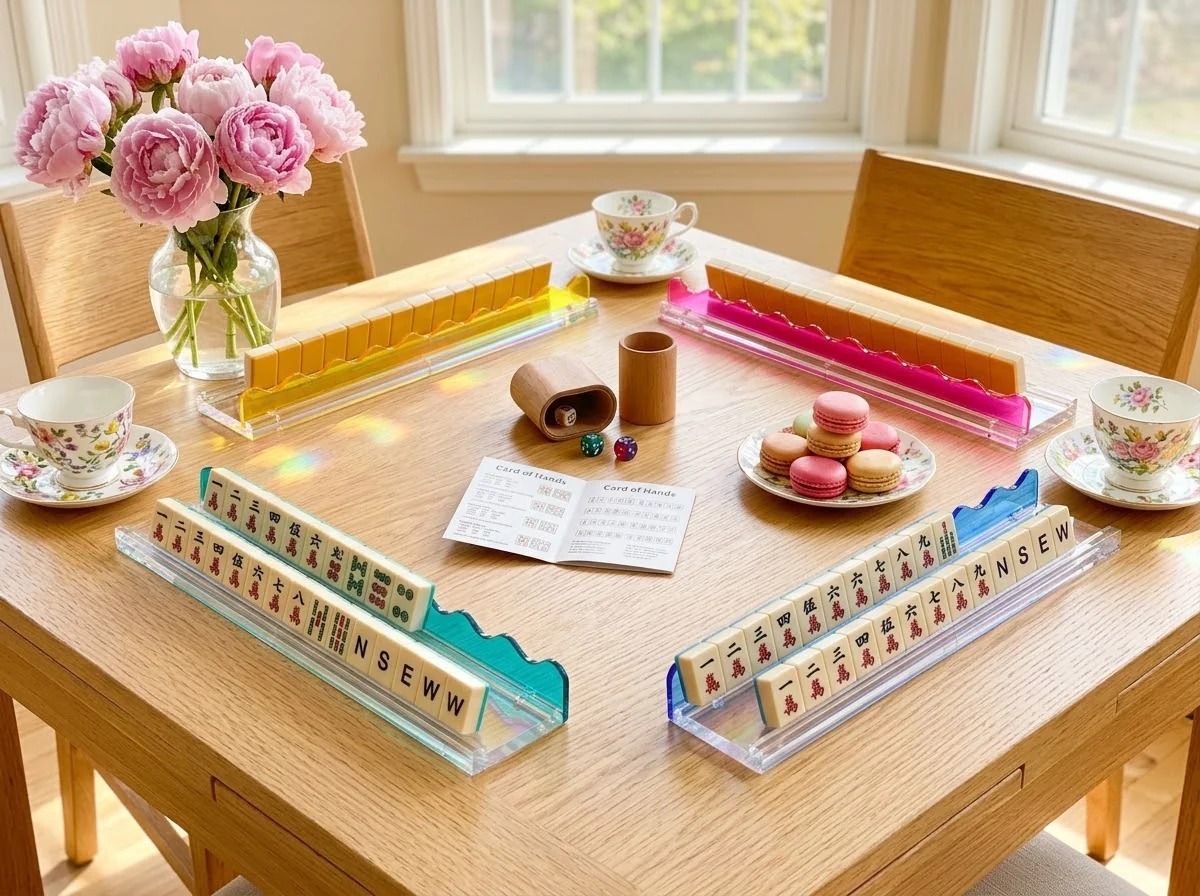
Before your first game with a new set, verify the count and condition of every tile type. Open the travel bag or case, sort tiles by suit and type, and confirm the National Mah Jongg League card for the current year matches your set's design (some sets use older card artwork). If your tiles are acrylic, check that none are cracked or warped—warped tiles get stuck in racks or fall out of stacks. Test every joker and white tile (Soap) to be sure they're distinct and not sun-bleached. Lay out a sample hand from the current year's card and verify you can find and arrange each tile without confusion. If you're hosting, test your mahjong mat for glare, check that the dead wall line is visible, and confirm your setup leaves enough room for discards and racks. Poor lighting and cramped tables are invisible mistakes that compound throughout the evening. A well-lit, spacious setup with a clear mat and high-quality racks reduces mistakes dramatically.
🎁 See our most-loved mahjong sets & accessories →
Why Do Tile Management and Communication Prevent Most Errors?
Successful tables develop a rhythm: tiles are placed deliberately, discards are announced clearly, and exposures are verified aloud. When a player picks a tile, they say "pick." When they discard, they name the tile and suit ("5 Crak"). When someone exposes a pung or kong, the table verifies it against the card. This redundancy sounds tedious but catches 90% of errors before they metastasize. Players who rush, mumble discards, or hide their racks breed chaos. We've hosted games where a single quiet player caused three resets in an hour because no one could track what was discarded. Enforce a simple rule: no silent plays. Slow, clear communication costs an extra minute per round and saves the entire evening.
✨ Find your Mahstead set — free US shipping →
Real Example: A Hand That Looks Right But Isn't
A player exposes three Bam, three Dot, and three Crak in three separate piles, believing she has three separate pungs. On the current year's card, the pattern she thinks she has requires four identical tiles (a kong). She's one tile short and didn't notice because she wasn't reading the card line carefully. She calls the hand; the table checks; her hand is invalid. Had she used racks with pushers and kept her tiles sorted by exposure type (singles, pungs, kongs), she would have seen immediately that the "pung" section was missing a tile. Racks force organization, which forces accuracy.
What to Check Before You Buy
Tile count: Confirm 152 playing tiles + spare pieces are in the bag. Missing jokers or bent corners cause mid-game headaches.
Card accuracy: Verify the set includes or references the current year's National Mah Jongg League card (issued each spring).
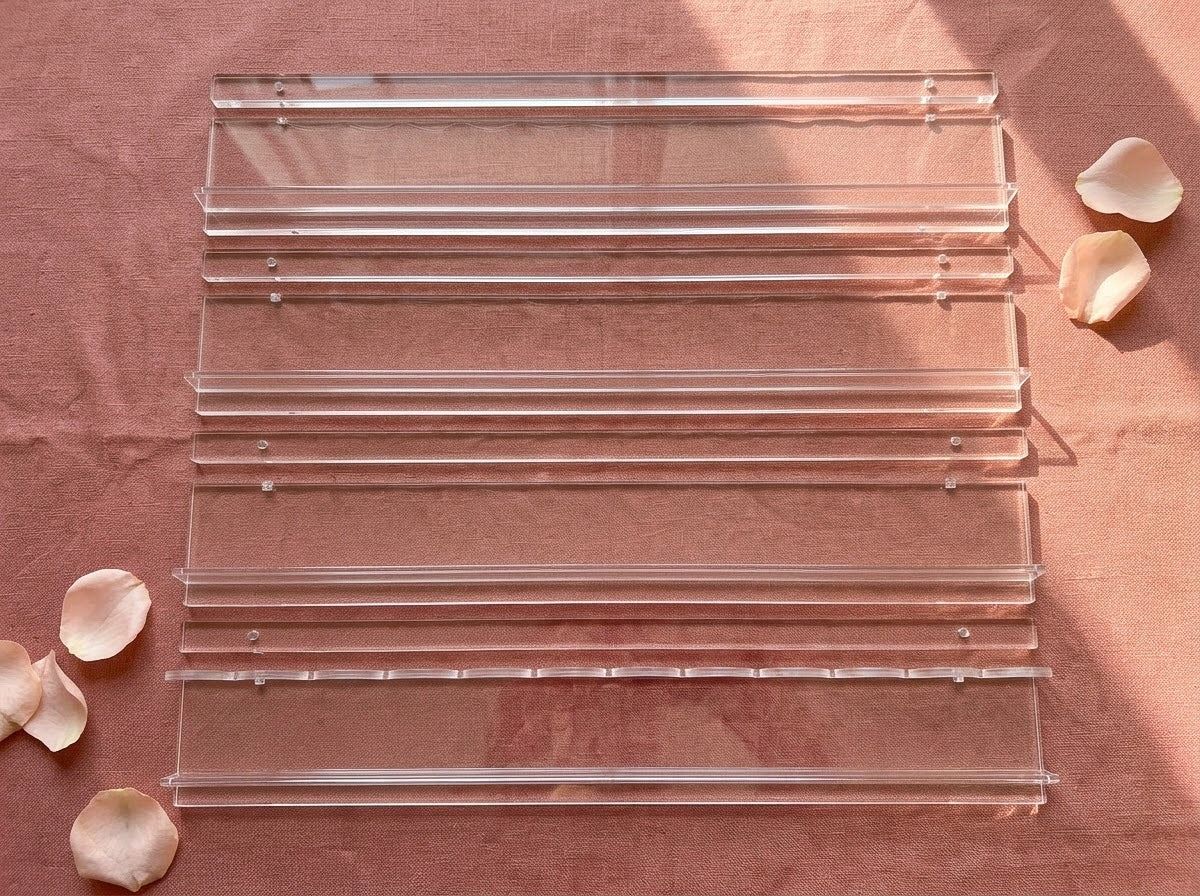
Rack fit: If you order racks, test one tile to be sure it slides without jamming.
Mat clarity: Check that dead wall lines, turn markers, and suit symbols are legible under your home or table lighting.
Bag durability: A soft travel bag protects acrylic tiles from cracking during transport.
FAQ
Can I use a joker in place of a single tile if I'm one tile short of a hand?
No. Jokers can only fill positions in pungs, kongs, quints, or sextets—never a single tile or pair. If you're short, the hand is invalid.
What's the difference between a chow and a pung in American mahjong?
A pung is three identical tiles (e.g., 5 Dot, 5 Dot, 5 Dot). A chow is a sequence (1-2-3) and cannot be called or exposed in American mahjong—it's legal only in Chinese and Hong Kong variants.
If I throw a discard too close to the dead wall and it lands past the line, what happens?
Depending on house rules, the discard is either voided or you must re-discard. Always pause and place your discard clearly in the center grid to avoid ambiguity.
How do I verify a hand is actually on the current year's card before I call it?
Read the entire hand line on the card: suit abbreviations, tile numbers, joker count, and any special notations. If one detail is off, the hand doesn't match and is invalid. When in doubt, ask the table to spot-check.
What's the most common joker mistake beginners make?
Using a joker as one of two identical tiles to form a pair (e.g., 3 Dot + joker). Pairs can never include jokers; jokers are only for exposed sets of three or more.


View More
View More
View More
