
Mahjong Mat for Dining Table: How to Choose & Compare
Last updated: Nov 23, 2026
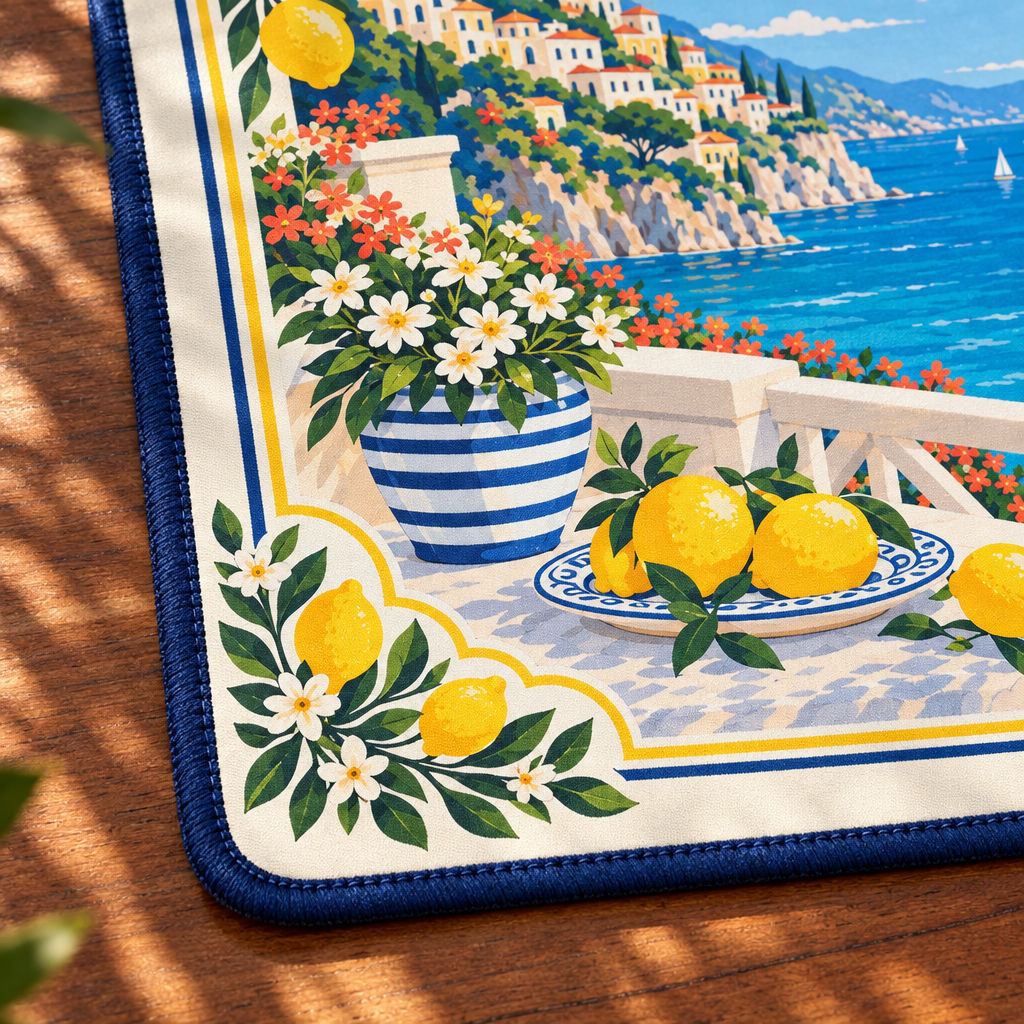
A mahjong mat is a dedicated playing surface—usually acrylic or felt fabric—that sits on top of your dining table during games. Mats range from compact folding designs (~2 × 2 feet) to full spreads (3 × 3 feet or custom-fitted). Most include printed guides for rack placement and tile zones; acrylic mats are washable and durable; fabric mats are lighter and portable. Cost varies by material, size, and customization. We recommend measuring your table width first: a mat should leave 4–6 inches of table visible on all sides for racks and player access. The right mat protects your table, prevents tiles from sliding, and keeps four players comfortable—essential if you host weekly games on the same surface.
What size mat fits your dining table?
Dining tables vary wildly: a 36-inch round seats two, a 48-inch rectangular fits four comfortably. A standard mahjong mat for four-player games measures 3 × 3 feet or close to it. To choose correctly, measure your table width and length, then subtract 8–10 inches (4–5 inches per side for player access and racks). A common mistake is buying a mat that's too large—it overhang off the table edge and becomes unstable, or crowds players into an uncomfortable squeeze. For a 48-inch table, a 35–40-inch mat works well. For 60-inch tables, a 4 × 4-foot mat or custom size is ideal. If your table is particularly narrow (under 42 inches), consider a folding or compact mat that you can reposition or store flat when not in use. Browse mahjong mats by size and material to see exact dimensions before ordering.
🀄 Shop best-selling mahjong sets →
Acrylic vs. felt: which material protects better?
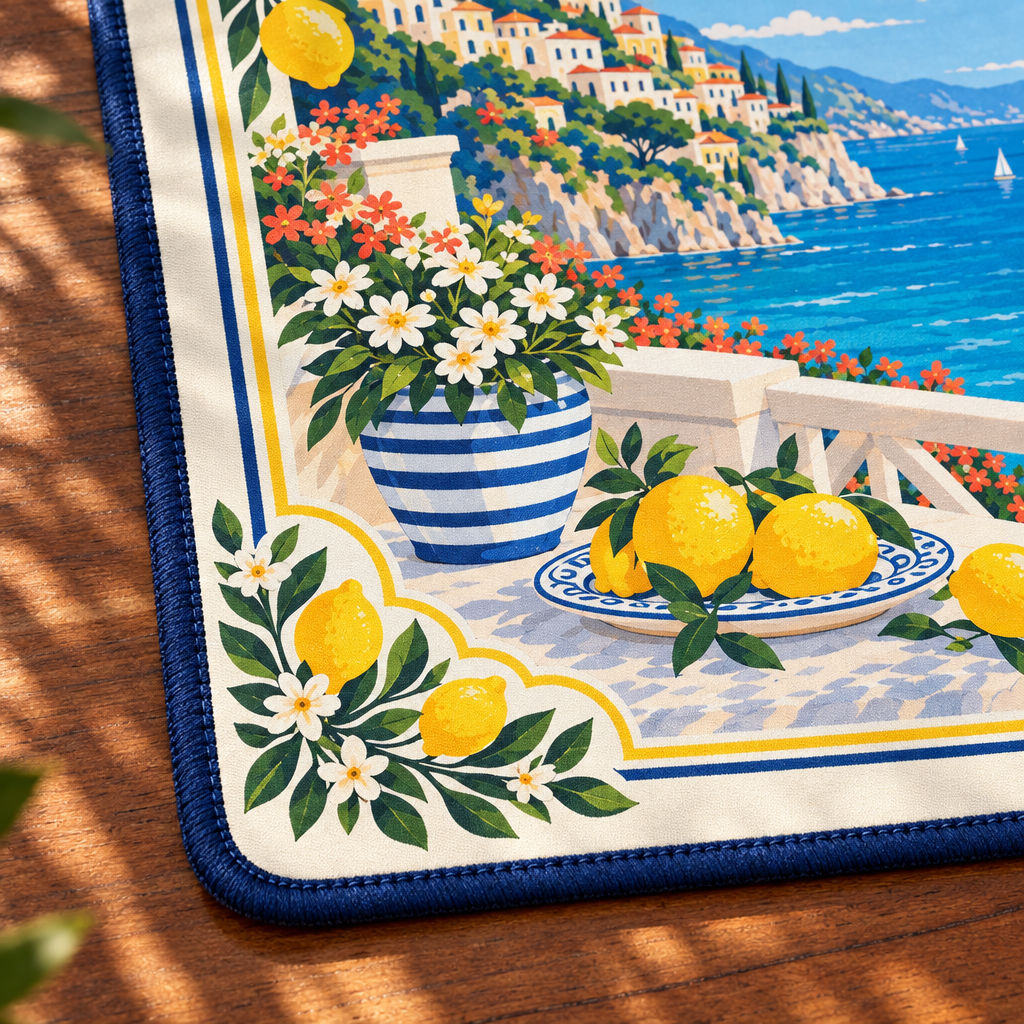
Acrylic mats are rigid, washable, and resist stains and moisture—ideal for tables used weekly or by players who snack during games. Felt (or felt-backed nylon) is softer, quieter when tiles move across it, and easier to roll up and store. Acrylic mats typically cost more upfront but last years without wear. Felt mats are lighter (easier for one person to lift onto a table), but felt can pill or fray after heavy use and absorb spills over time. If your dining table is also used for meals or wine, acrylic wins: a quick wipe cleans it. If you play occasionally and value portability, felt works fine. Many players who host regularly choose acrylic because it's simply easier to maintain and resets the same way every game. The playing experience differs slightly—tiles glide more smoothly on acrylic, feel more controlled on felt—but both work for American mahjong.
How do you measure for a custom or engraved mat?
If your table is an unusual size or you want personalization, custom mats are available. Measure three times: width, length, and depth. Most custom mats are designed to drape slightly over the table edge (1–2 inches) so they don't shift during play. Write down the exact table dimensions in inches and note any features you want—engraved player names, wind position markers, or a specific color. Check the mat's back: it should have a non-slip base so it doesn't slide when tiles are pushed or drawn. Some players add engraving to match their engraved American mahjong sets, creating a cohesive game night aesthetic. Before finalizing a custom order, request a digital proof so you can confirm sizing and text placement. Engraved mats take longer to ship than stock mats, so order at least 2–3 weeks before hosting an event.
🎁 See our most-loved mahjong sets & accessories →
What features should a dining table mat include?
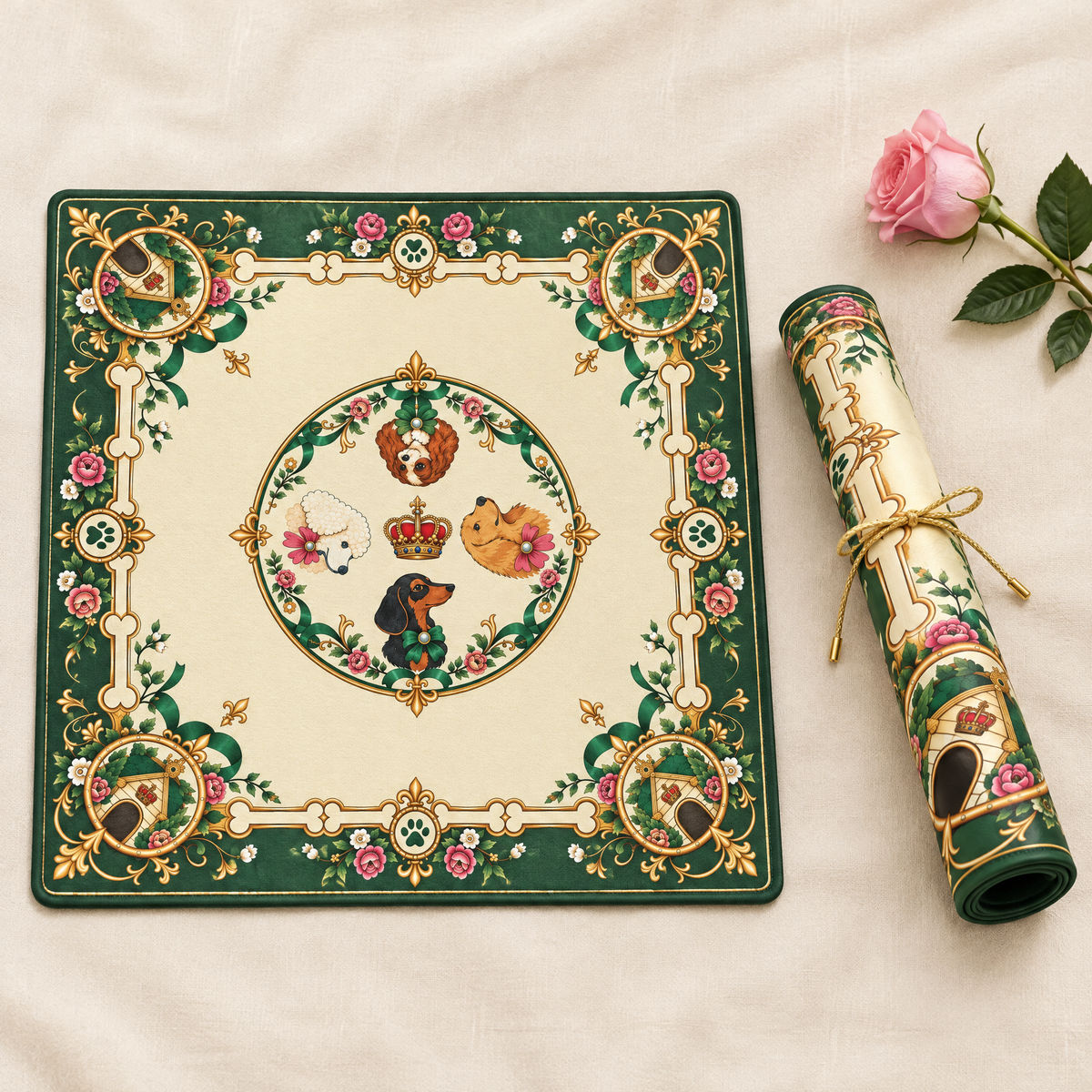
A well-designed mat has printed guides or zones that show where racks go, where the wall lives, and which player sits where (North, East, South, West). Some mats include a center zone marked for the dead wall. Corners should be reinforced or finished cleanly so they don't curl or fray. The mat's top surface should be textured slightly—not slippery—so tiles don't scatter when you sort your hand or draw from the wall. A non-slip backing is non-negotiable: it prevents the mat from shifting under the table, which ruins the game and risks spilled drinks. Grommet holes or corner pockets can help anchor a mat to a table if you play on a flimsy folding surface. If you also use mahjong racks with pushers, check that the mat's edge guides leave enough room for your racks to sit upright without tipping. Finally, confirm the mat is large enough that the wall and discard zone fit comfortably—players should never lean over or reach awkwardly.
How to compare mat options before buying
Feature | Acrylic Mat | Felt Mat | Folding Mat |
Durability | 5+ years, minimal wear | 2–3 years, can pill | 2–3 years with care |
Stain resistance | Excellent (wipes clean) | Fair (absorbs spills) | Fair to good |
Portability | Moderate (roll or fold) | Easy (lightweight) | Very easy (compact) |
Noise during play | Audible (tile glide) | Quiet | Depends on backing |
Cost basis | Higher upfront | Lower | Lower |
Best for | Weekly/regular games | Casual play, storage | Small tables, travel |
Customization | Yes, engraving available | Yes, engraving available | Limited |
Use this table to narrow your choice. If you host weekly games and keep a dedicated mahjong setup, acrylic is worth it. If you pack up after each game or play on a cramped table, felt or folding is smarter.
Should you choose a mat with player position markers?
Many dining table mats include printed position labels (North, East, South, West) or wind symbols in each corner. This speeds up seating if your group rotates players or doesn't always know who sits where. However, if you have a regular game with assigned seats, position markers are optional—you'll remember. They do add visual interest and make a mat look more intentional and professional. Engraved versions can include your group's name or year, turning a mat into a keepsake. Consider the mat's color and design: a mat with bright, legible markers stays visible on a darker table; a mat with subtle or monochrome markers blends in. If you're shopping as a gift for a longtime mahjong host, an engraved mat with position markers and your players' names is a thoughtful touch.
✨ Find your Mahstead set — free US shipping →
What to check before you buy
Measure your table first. Width and length in inches; subtract 8–10 inches total for player access.
Confirm non-slip backing. The mat should not move when you push a rack or draw tiles.
Check corner and edge finish. No sharp corners, no fraying or curling edges.
Verify the mat fits your racks. If you use pushers or stands, ensure enough edge clearance.
Review the return policy. If the mat arrives too large or too small, can you exchange it?
Allow extra time for engraving. Custom orders typically take 2–3 weeks.
Test on your table first if possible. Some retailers offer a brief trial; take advantage to confirm fit and feel.
FAQ
Can a mahjong mat sit directly on a wooden dining table without damaging it?
Yes—a quality mat with a non-slip backing protects wood. Acrylic and felt mats don't stain or scratch wood when applied evenly. However, if a mat is bunched or has a hard corner pressed into the table, it can create pressure marks over time. Always smooth the mat flat before play and ensure the backing is clean.
How do I keep tiles from sliding off a mahjong mat during a game?
Use a mat with a slightly textured or matte top surface (not glossy). Raised edge borders or a 1–2 inch lip also help contain tiles. If tiles still slide, check that your mat sits flat—wrinkles or folds underneath cause instability. Acrylic mats hold tiles more securely than very smooth felt.
Can I use a mahjong mat on a glass dining table?
Yes, but confirm the mat has a strong non-slip rubber backing. Glass is slippery, so a mat without proper grip will slide when players lean or move tiles. A felt mat with a quality backing works well on glass. Avoid mats with thin or worn backing.
Should a mahjong mat cover my entire dining table, or just the play area?
Cover only the play area—typically a 3 × 3 or 3.5 × 3.5-foot center square. Leave 4–6 inches of bare table on all sides for racks, drinks, and player comfort. A mat that covers the entire table surface makes it hard for players to set down phones, scorecards, or snacks.
How do I store a mahjong mat between games?
Acrylic mats can be rolled loosely or folded and stored flat in a bag or under a bed. Felt mats should be rolled (not folded) to avoid creases. Both types benefit from a dedicated mahjong bag or storage case to keep them clean and protected from dust.
Can I get a mat with my mahjong group's name or logo engraved on it?
Yes—many mats support engraving or custom printing. Provide your group's name, year, or design, and confirm the mat color and text placement in a digital proof before production. Engraved mats typically take 2–3 weeks.
What's the difference between a mahjong mat and a table cover?
A mat is designed specifically for tile play—with non-slip backing, printed guides, and dimensions optimized for four players. A table cover or tablecloth is decorative and lacks the grip and structure needed for a game. Learn the difference in detail here.


View More
View More
View More
