
Mahjong Around the World: Regional Rules & Variants Explained
Last updated: Nov 23, 2026
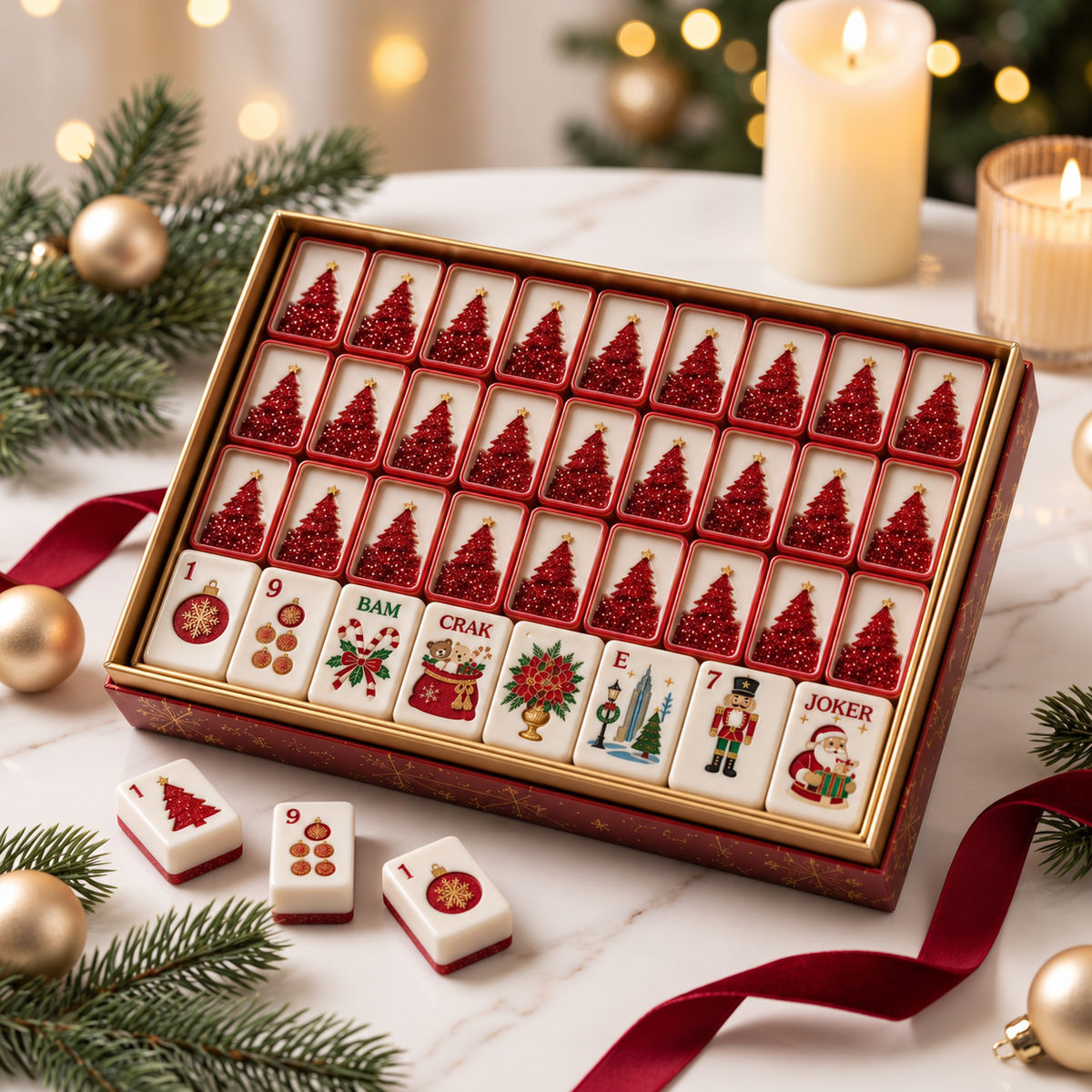
Mahjong has no single ruleset: the game evolved independently across China, Japan, Hong Kong, Taiwan, and the West, each region developing distinct tile counts, hand patterns, scoring systems, and calling mechanics. American mahjong uses 152 tiles (plus 8 jokers), draws hands only from the current National Mah Jongg League card, allows no sequences or chows, and forbids jokers in pairs or single tiles. Chinese classical mahjong uses 144 tiles, permits melds of any three or four identical or sequential tiles, and scores by point values rather than preset patterns. Hong Kong mahjong adds specialized suits, tipping systems, and rapid play. Riichi mahjong, Japan's variant, uses 136 tiles, requires a "ready hand" declaration, and emphasizes concealment until a hand is complete. Taiwanese mahjong blends classical Chinese rules with regional flower and money tiles. The differences reflect geography, playing speed, and cultural gaming preferences—no variant is "easier" or "harder," just distinct strategic universes. Hosting games across variants means knowing your table's rule book before tiles are drawn; many clubs and casual groups adopt house rules on top of published standards.
Mahjong is not one game—it's a family of games with roots in 19th-century China and branches across every major region of Asia and now North America. Walk into a mahjong parlor in Shanghai, Tokyo, Hong Kong, Taipei, and New York, and you'll see four very different games played with different tile sets, scoring systems, and strategies. Understanding these variants helps you find the game your table plays and respect the ruleset you're joining.
🀄 Shop best-selling mahjong sets →
What makes American mahjong so different from other variants?
American mahjong stands apart because it abolished sequences (chows) and sequences entirely, replaced point-based scoring with a preset pattern card, and introduced jokers as wild tiles. A hand in American mahjong is always a combination of pungs (three identical tiles), kongs (four identical), and quints or sextets (five or six identical tiles, plus jokers to pad them). You can only call and expose pungs, kongs, and longer melds; you can never build or call a sequence like 1-2-3. All hands come from the National Mah Jongg League card, issued every spring, which lists roughly 75–80 winning combos per year. This makes American mahjong rigid and pattern-focused: the skill is in spotting hands, managing the Charleston (the tile-passing ritual before play), and reading the card under pressure. The cost of a best-selling American mahjong set reflects the need for 160 tiles (152 in play, 8 jokers as spares) rather than the 144 or 136 used elsewhere. American mahjong emphasizes speed and social play over deep calculation; most games finish in 30–45 minutes, while classical variants can stretch to hours.

How do Chinese classical and Hong Kong mahjong differ?
Chinese classical mahjong uses 144 tiles—three suits (Bams, Craks, Dots) numbered 1–9 (four of each), seven pairs of honors (East, South, West, North, Red Dragon, Green Dragon, White Dragon), and eight flowers or seasonal tiles. The game allows melds of three or four tiles in sequence (1-2-3, 2-3-4, etc.) or identical sets, called "chows" and "pungs." Your hand is concealed until you declare a win, which must consist of four melds and a pair, or special hands like "all honors" or "all terminals." Scoring is point-based: each hand has an assigned value, and bonuses multiply for patterns like "all one suit" or "all simples." Hong Kong mahjong is a faster, looser evolution of classical play. It uses the same 144 tiles but adds regional house rules on tipping (passing honor to a winner), speed of play, and unofficial "lucky" hands. Both variants demand players memorize dozens of valid patterns and calculate points in real-time, making them strategically deeper but slower than American play. If you're learning classical or Hong Kong mahjong, expect 1–2 months of weekly practice before patterns feel intuitive; American mahjong can be grasped in 2–3 weeks because the card does the memorization for you.
What is Riichi mahjong and why do Japanese players love it?
Riichi mahjong, Japan's variant, uses 136 tiles: each suit (Bams, Craks, Dots) goes 1–9, and there are four each of the four winds and three dragons. Riichi is famous for its "ready hand" mechanic: when your hand is one tile away from winning, you declare "riichi," lock your hand, and can only draw and discard. This declaration signals confidence but also binds you to that win—if you win, bonuses apply; if someone else wins or the draw exhausts, you pay extra. Riichi mahjong is heavily tile-tracking; players remember discards, count open melds, and predict what tiles are dead. Hands consist of four melds and a pair, just like classical, but the scoring system is far more elaborate: base points, honor bonuses, dora (wild tile multipliers), and hand-type bonuses stack to create scores in the thousands. A single hand can be worth 4x or 10x another depending on luck and pattern. Riichi is taught in Japanese schools and clubs; competitive play is widespread, with national tournaments and professional players. The speed is moderate—games run 45 minutes to an hour—but the mental load is high. Riichi mahjong is rarely played in North America outside niche clubs; learning it requires commitment to Japanese rulesets, dora counting, and terminology.
How do Taiwanese and modern hybrid variants work?
Taiwanese mahjong is a fusion of classical Chinese rules with local traditions. It uses 144 tiles but often adds or removes flowers, introduces money tiles (bonus tiles worth cash), and permits hybrid melds in some house rules. The social element is central: Taiwanese play is fast, often with betting on every hand, and players negotiate rules before each session. Some Taiwanese games use "quint" or "sextet" melds (five or six identical tiles) borrowed from American mahjong, blending the two worlds. Modern hybrid variants exist in diaspora communities where families play classical or Taiwanese rules learned from parents, then encounter American mahjong at clubs and adapt. These hybrids are not published standards—they're house rules and generational knowledge passed down. Learning a hybrid means finding a table and asking the players directly; no card or rulebook covers your specific game. Taiwanese mahjong is less common in the US than Chinese classical or American; most US players learn one "official" variant rather than a local hybrid. If you're hosting a game and players have different backgrounds, agree on a rule card (classical, American, or house rules) before the Charleston begins.

What's the fastest way to pick the right variant for your group?
Here's a decision framework based on what matters to your table:
What You Value | Best Variant | Why | Time to Learn |
Social speed, casual fun | American | Pattern card eliminates memorization; games run 30–45 min | 2–3 weeks |
Strategic depth, long games | Classical Chinese or Hong Kong | Dozens of hands, point calculation, tile tracking | 8–12 weeks |
Competitive challenge, tile memory | Riichi | Dora counting, ready-hand rules, high scoring variety | 10–16 weeks |
Cultural heritage, family tradition | Taiwanese or regional hybrid | Reflects diaspora or family history; house rules dominate | 4–8 weeks |
The fastest pick: ask your players. If they learned mahjong from their parents or in their country, they already have a favorite. If they're new, American mahjong is the entry point because the National Mah Jongg League card handles all hand validation—no memorization. If they want to feel like they're solving a puzzle, classical Chinese or Riichi demands that commitment. There is no "best" variant; there is only the variant your table plays and the willingness to learn it together.
🎁 See our most-loved mahjong sets & accessories →
How do you host a game when your guests play different variants?
This is the question we hear most at the table. Three approaches:
Pick one variant and announce it before the game. If you're American-mahjong hosts, tell guests you're using the current National Mah Jongg League card. If classical, say "we're playing with point-based scoring and the standard 144-tile classical ruleset." This sets expectations and prevents mid-game arguments.
Teach a unified house rule. If guests have mixed backgrounds, propose a hybrid: "We're using American tile counts [152] but classical melds [chows allowed] and classical scoring [point-based]." Write it down and review it once before drawing tiles. House rules are legitimate as long as everyone agrees beforehand.
Separate into tables by variant. If you have eight guests and four speak Riichi and four speak American, run two games simultaneously. This is what large mahjong clubs do. It respects each group's expertise and keeps skill levels even.
The cardinal rule: never change rules mid-game. If someone "plays it differently at home," save that conversation for between rounds, not during scoring. Consistency builds trust and prevents resentment.
What equipment do you need for each variant?
Each variant uses tiles, a mat, and racks, but the specifics vary:
American mahjong uses 152 playing tiles (plus 8 jokers as spares) and always requires the current National Mah Jongg League card. Most sets are 160 tiles total—enough for four players. A mahjong mat marked with dealer and wind positions helps new players orient themselves. Racks with pushers are optional but popular in casual play—they keep your hand organized and signal respect to the table.
Classical, Hong Kong, Riichi, and Taiwanese mahjong use 136–144 tiles and do not use a pattern card. Scoring is mental or written on paper. Racks are common in Riichi clubs; they're less universal in casual Chinese or Taiwanese home games. A mat with wind positions is helpful but not required.
For any variant, a mahjong bag or case protects your tiles during transit and signals that you take the game seriously. If you're hosting a regular game, invest in one set and one mat; if you're joining multiple tables with different rules, a portable bag lets you carry the same set from an American game to a classical game without damage.
✨ Find your Mahstead set — free US shipping →
What to check before you buy a mahjong set for your group
Before purchasing, answer these three questions:
Which variant does your table play? If American, confirm the set is 160 tiles (152 playing + 8 jokers). If classical, Chinese, Riichi, or Taiwanese, confirm it's 144 or 136 tiles and that the honors and flowers match the ruleset. Mixing tile counts mid-game breaks play.
Are tiles acrylic, bamboo, bone, or plastic? Acrylic is durable, affordable, and easy to clean—ideal for weekly casual games. Bamboo and bone are heavier, more traditional, and fragile; they suit serious or collection play. Plastic is lightweight but tiles wear and discolor faster. For a group game, acrylic or plastic is practical; for a personal set, choose by feel and budget.
Does the set ship with racks, mat, or storage? If your table already has these, a tile-only set is cheaper. If you're the host, a complete set with a mat and racks reduces friction—new players won't fumble with unsupported tiles. Check the product description for what's included.
Most best-selling mahjong sets list the tile count, material, and included accessories upfront. If you're unsure whether a set is American or classical format, the product page will specify; if it doesn't, ask before buying—returning a 144-tile set to an American-only table wastes money and goodwill.

FAQ
Can I play American mahjong rules with a classical Chinese 144-tile set?
No. American mahjong requires 152 tiles (152 playing + 8 jokers) and draws hands only from the current National Mah Jongg League card. Classical sets lack jokers and don't support that card's patterns. Buy a 160-tile American set to play American rules correctly.
Which variant is easiest to learn if I've never played mahjong?
American mahjong. The National Mah Jongg League card eliminates memorization—the card lists every valid hand. Classical, Hong Kong, and Riichi variants require memorizing dozens of hand patterns and scoring values before play feels natural. American beginners are competitive in 2–3 weeks; classical beginners need 8–12 weeks.
Do jokers work the same in every variant?
No. American mahjong uses jokers as wildcards in melds (never in pairs or single tiles). Classical, Hong Kong, Riichi, and Taiwanese mahjong don't use jokers at all—they use "dora" (designated wild tiles) or bonus tiles instead. Never assume joker rules carry across variants.
Can I play Riichi mahjong with a mat and racks like American mahjong?
Yes. Riichi uses racks and mats in competitive clubs. The mechanics are the same: racks hold your tiles, mats show dealer and wind positions, and ready-hand declarations are called aloud. The difference is scoring and hand patterns, not equipment.
If my group plays a house rule hybrid, how do I find other players who know it?
You usually can't—house rules are local and generational. Ask your table to write the rule list on a card. If you move cities or want to join a club, learn the official variant for that region (American, classical, Riichi, etc.) and note your house rules as background. Most clubs teach their official rules on day one.
How fast do games move in each variant?
American mahjong: 30–45 minutes per game (faster due to preset patterns). Classical Chinese and Hong Kong: 45 minutes to 1.5 hours (more melds, more decisions). Riichi: 45 minutes to 1 hour (faster in competitive play, slower in teaching mode). Taiwanese: varies widely by house rules and betting pace—can be 30 minutes or 2 hours.


View More
View More
View More
