
Mahjong in Japan: History, Rules & Why It Differs from American
Last updated: Nov 23, 2026
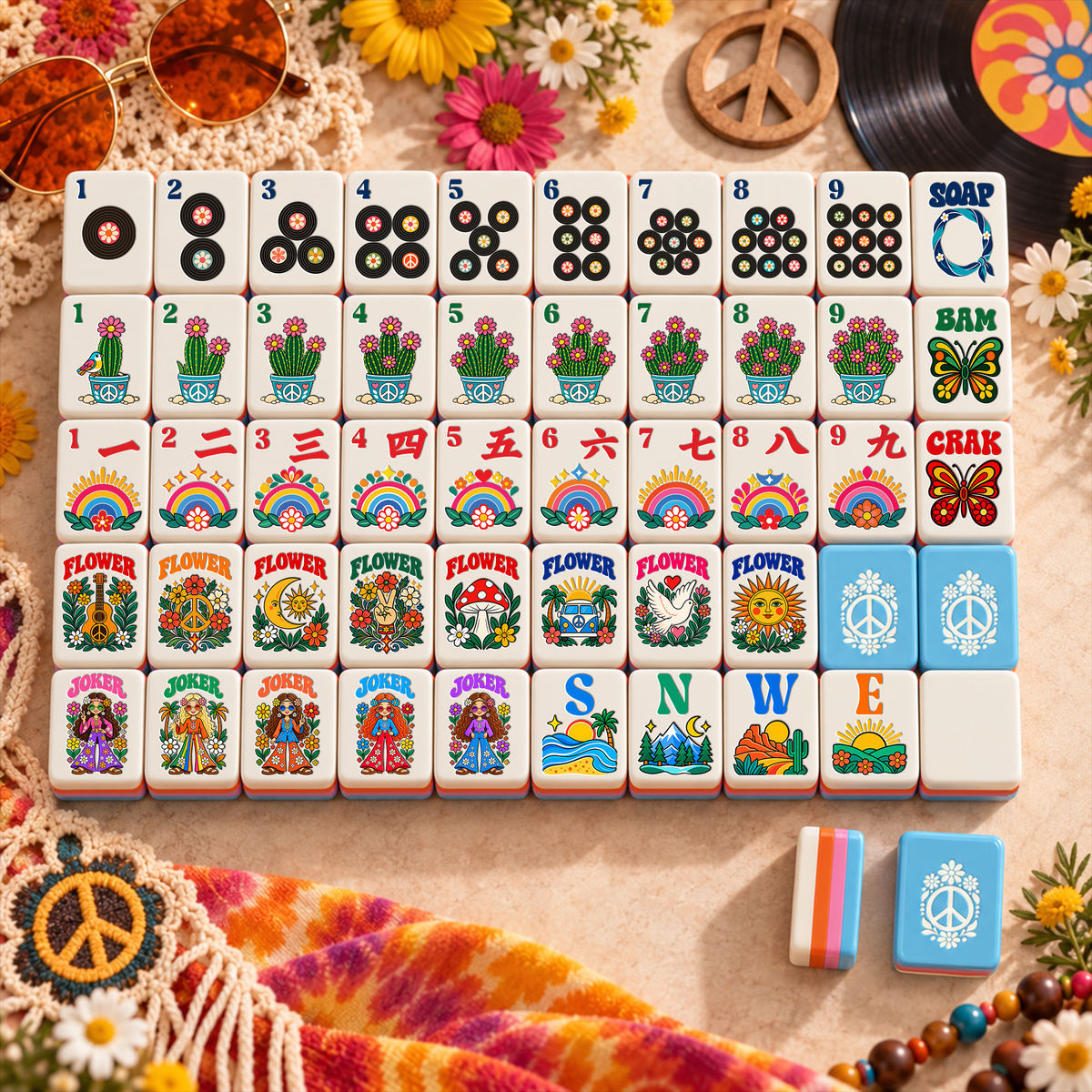
Mahjong entered Japan around 1906–1910, imported from China and quickly adapted to suit Japanese aesthetics and competitive gaming culture. By the 1920s–1930s, the game had evolved into what we now call Riichi mahjong (or Japanese mahjong), featuring 136 tiles, open calling of discards, and fast-paced hand completion. The core mechanic—drawing a tile, discarding one, and forming melds—stayed intact, but Riichi removed suits entirely from standard play and introduced a scoring system based on concealment (closed hands score higher) and tsumo (self-draw wins). Today Riichi is the dominant form in Japan, played in professional leagues, arcades, and home games. The American variant, developed separately in the 1920s in California, uses 152 tiles, an annual card of legal hands, and no calling—a completely different strategic framework from its Japanese cousin.
When did mahjong actually arrive in Japan, and what was the original Chinese game?
Mahjong began in China during the Qing Dynasty, likely in the 19th century, and spread to Japan through trade and cultural contact in the early 1900s. The earliest documented Japanese mahjong games appeared in major cities like Tokyo and Osaka by 1908–1912. The original Chinese game already used three suits (Bamboos, Characters, Dots), winds, and dragons; Japan kept these tiles but simplified rules and added speed—a hallmark of Japanese entertainment culture.
How does Riichi mahjong differ from American mahjong?
The differences run deeper than rule tweaks. Riichi mahjong uses 136 tiles (no flowers or American jokers), allows open calling of any discard on your turn (you announce "Chi" for a chow, "Pon" for a pung, "Kan" for a kong, or "Ron" if you win off it), and scores based on tsumo (self-draw) vs. ron (claiming a discard), concealment, and hand type. American mahjong, by contrast, has no chows you can call; you expose only pungs, kongs, and quints from a fixed annual card. There's no calling for winning tiles mid-game in American mahjong—you simply declare a win on your turn when your hand matches a card pattern. Riichi wins happen instantly when anyone discards a winning tile you claim. American hands are structural puzzles; Riichi hands combine probability, tile counting, and reading opponents.

What is "Riichi" and why is it called that?
"Riichi" (or "reach") is a declaring announcement in Japanese mahjong: when you have one tile away from a win, you announce Riichi, pay a small risk (typically 1000 points), and signal you're waiting. Once Riichi is declared, you cannot change your waiting pattern. This move doubles your payout if you win but locks you in, making it a bluff-and-gamble mechanic. Riichi also became the name for the entire Japanese ruleset, since declaring Riichi is so central to play and scoring. American mahjong has no equivalent—you never announce a pending win; you simply wait and declare when your hand matches.
Aspect | Riichi (Japanese) | American Mahjong |
Tiles in play | 136 | 152 |
Suits | Bamboo, Character, Dot | Bam, Crak, Dot + Winds, Dragons, Flowers |
Hand source | Player logic (any valid hand) | Annual National League card only |
Open calling | Yes (Chi, Pon, Kan, Ron) | No (no chows; pungs/kongs only) |
Winning trigger | Instant on discard claim or self-draw | Declared on your turn when hand matches card |
Jokers | None | 8 jokers in 152-tile set |
Scoring | Points awarded instantly; hand type multiplier | Score based on card pattern rarity |
Speed | 15–20 min/hand (fast) | 20–30 min/hand (deliberate) |
Why did Japan develop its own version instead of keeping the Chinese rules?
Japanese players loved mahjong's strategy but wanted faster, more competitive play suited to the post-WWI urban entertainment boom. Arcades, teahouses, and gambling dens demanded games that moved quickly and created tension—Riichi's open calling and instant winning mechanism deliver that rush. The addition of the Riichi declaration itself turned the endgame into psychological warfare: declaring Riichi signals strength, so opponents discard cautiously. This layer of bluffing and reading opponents appealed to Japanese sensibilities. American mahjong, by contrast, evolved in California as a parlor game for wealthy players and clubs; it kept the Chinese tile set largely intact but added the annual card to standardize hands and create a genteel, puzzle-like experience focused on pattern recognition rather than speed and betting psychology.

How is Riichi mahjong scored, and what does "yaku" mean?
In Riichi mahjong, "yaku" (役) means "hand pattern" or "melds arrangement"—a specific combination of tiles that earns a score multiplier. Examples include tanyao (all simple tiles, 1–8, no terminals), yakuhai (honor tiles: winds matching your seat, or dragons), pinfu (all chows, one pung, balanced structure). Each yaku has a point value, and hands can stack multiple yaku for bigger scores. The base win is typically 1,000 points, but a hand with one yaku might be 2,000; with two, 4,000 or 6,000. Concealment boosts score (a closed hand that self-draws is worth more than one where you claimed discards). Riichi declaration itself is a yaku. American mahjong uses a completely different logic: each pattern on the card is worth 1 point if exposed (shown), 2 points if concealed (hidden). There's no multiplier system; the hand's position on the card determines its value alone.
Where do people play Riichi mahjong today, and is it still growing?
Riichi mahjong thrives in Japan through professional tournaments (the Japan Professional Mahjong Association has ranked players and televised events), mahjong parlors (arcades with dedicated tables), online platforms (MajSoul, Tenhou), and casual home games. International Riichi communities exist in South Korea, Taiwan, Hong Kong, and growing communities in Europe and the US, often through manga/anime fans and dedicated meetups. American mahjong, by contrast, remains strong in the US (especially among women's clubs in Texas, California, and the Northeast) but hasn't spread internationally at the same scale. Both variants are alive; Riichi dominates Asia and is climbing globally as younger players discover it online, while American mahjong remains the fixture of weekly home games in English-speaking regions.
🀄 Shop best-selling mahjong sets →
What should you know before choosing a Riichi or American mahjong set?
If you're drawn to Japanese mahjong after learning its history, remember that Riichi sets are harder to find in North America (you'll need to source them online from specialty retailers or import them). American mahjong sets, by contrast, are widely available because our community here in Dallas and across the US has been hosting weekly games for decades. When you buy an American set—especially an acrylic one designed for durability and clear tile reading—you're buying into a proven, localized ecosystem of players, annual cards, and clubs.
For players interested in both variants, our best-selling mahjong sets are all American format (152 tiles with 8 jokers), so they won't help you play Riichi directly. However, understanding Riichi's speed and psychology can make you a sharper American player: you'll learn to read opponents' discards for intent, count tiles mentally, and recognize risk patterns faster. Many of us at Mahstead play both casually, and the skills transfer beautifully.
Choose a set based on where you'll play and with whom: American sets are your go if you have local weekly games or want to join a club; Riichi sets require a committed group or online community. Both are equally rewarding—the history just took different paths.
🎁 See our most-loved mahjong sets & accessories →
What to check before you buy
Tile count: American sets use 152 tiles + 8 jokers (total 160 tiles shipped). Riichi sets use 136 tiles—verify before ordering if you're buying outside the US.
Suit spelling and symbols: American sets label suits Bam, Crak, Dot; some Riichi sets use different romanizations. Check product images.
Joker handling: American mahjong requires exactly 8 jokers in active play. Riichi has none.
Annual card requirement: American players must buy the current year's National Mah Jongg League card. Riichi doesn't use one.
Acrylic vs. bamboo: Acrylic sets last longer and suit homes with high humidity; bamboo is traditional but needs care.
Shipping: We offer free US shipping on all orders, so there's no penalty for trying a new variant.
✨ Find your Mahstead set — free US shipping →

FAQ
Can I play Riichi mahjong with an American mahjong set?
No. Riichi requires 136 tiles with no jokers or flowers. American sets have 152 tiles including flowers and jokers, which don't fit Riichi hand logic. You'd need a dedicated Riichi set.
Is Riichi mahjong faster than American mahjong?
Yes, typically. Riichi hands complete in 15–20 minutes due to open calling and instant winning; American hands often take 20–30 minutes because discards are hidden and hands are verified against the card before claiming. Riichi's pace is part of its appeal in arcades.
Do professional Riichi players in Japan make money the way American club players do?
Yes, but very differently. Japan has licensed professional mahjong associations where ranked players compete in tournaments for prize money and sponsorships. American mahjong clubs operate on membership fees and house stakes (chips/money traded among players). Both are competitive, but Japan's model is more formalized.
What does "tsumo" mean, and why is it worth more than "Ron"?
Tsumo (self-draw) means you completed your winning hand by drawing from the wall yourself; Ron means you claimed an opponent's discard. Tsumo is worth roughly 1.5x Ron because you had no help from other players and demonstrates superior tile reading and luck. It also rewards defensive play.
Are there any Riichi communities in the US I can join to play?
Yes, growing ones, especially in major cities and online. Search for Riichi mahjong meetups on community boards, Discord servers, or platforms like MajSoul (the popular online client). The US Riichi scene is smaller than American mahjong's, but dedicated and welcoming to learners.
What's the easiest way to learn both variants?
Learn American mahjong first if you're in the US—it's easier to find local players and physical sets. Once comfortable with tile recognition and hand logic, pick up Riichi by watching online tutorials or finding a coach in your area. The tile names and basic melds transfer; the strategy and speed are the variables.


View More
View More
View More
