
Mahjong vs Solitaire: Which Game Suits You?
Last updated: Nov 23, 2026
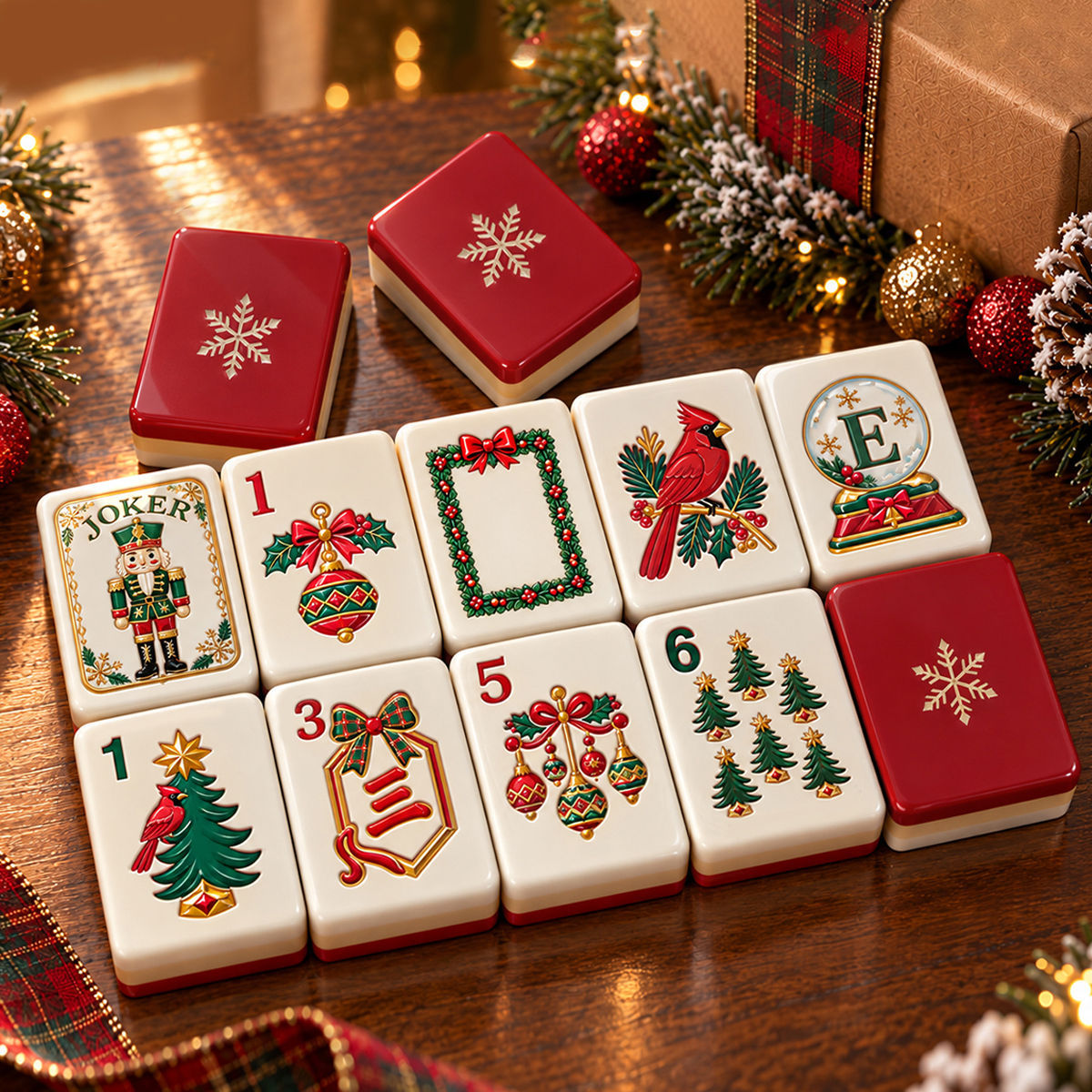
Mahjong is a four-player game (American variant uses 152 tiles: three suits—Bams, Craks, Dots—plus winds, dragons, flowers, and jokers) where players race to build a legal hand matching the current year's National Mah Jongg League card, with exposure of groups and mandatory tile passing (the Charleston) before play. Solitaire is played alone with a deck of 52 cards or digital tiles, using pattern-matching or sequencing rules to clear the board. Mahjong requires 1–2 hours, active opponent reading, and a table setup; solitaire takes 5–20 minutes and demands no partners. Mahjong is social and unpredictable; solitaire is meditative and outcome-driven. Both teach pattern recognition, but mahjong rewards luck, bluffing, and timing, while solitaire rewards planning and memorization. Most players choose mahjong for group play and solitaire for solo downtime—they scratch different itches. Mahstead makes best-selling mahjong sets for players ready to host a game.
Mahjong and solitaire sit on opposite ends of the gaming spectrum. Both reward strategic thinking and pattern spotting, yet they ask entirely different questions: "Can I build a legal hand faster than three opponents?" versus "Can I clear every tile from the board?" Understanding the gulf between them helps you pick the right game for your mood, time, and social appetite.
Why is mahjong a group game and solitaire solo?
Mahjong requires four players because tiles flow around the table: you draw, your neighbors pass, and everyone competes for the same pool of remaining tiles. The game generates pressure—you must track what opponents likely hold, guess when to claim a discard, and know when to stop before you bust. Solitaire has no opponent; you face only the deck and its shuffle. You move at your own pace, reset without negotiation, and play identical rules every time. Mahjong's rules change yearly (the League issues a new card each spring); solitaire rules stay constant. This social dependency is why mahjong groups meet weekly and solitaire players play between tasks.

How much time do you actually need?
A mahjong hand takes 1–2 hours (40 minutes to 90 minutes of live play, plus setup and Charleston). You sit down committed; leaving early disrupts the game. Solitaire rounds last 5–20 minutes, stack into a session, and pause whenever you choose. If you have an hour free and friends available, mahjong works. If you have 10 minutes and want a win, solitaire delivers. Mahjong requires a dedicated table; solitaire works on a phone, laptop, or kitchen corner.
What skills does each game teach you?
Skill | Mahjong | Solitaire | Winner for… |
Pattern recognition | High—suits, sequences, winds, dragons | Very high—memory + placement | Tie; both demand it |
Social reading | Essential—bluff, steal, block | None | Mahjong |
Memory (short-term) | Moderate—track discards, exposed melds | High—card positions matter | Solitaire |
Math & scoring | Yes—points vary by hand type, season | Rarely | Mahjong |
Adaptability | High—rules shift yearly | Static rules | Mahjong |
Luck tolerance | High—tile draw is random | Medium—shuffle matters, strategy limits it | Mahjong |
Solo focus | No—you depend on opponents | Yes—total control | Solitaire |
Mahjong teaches you to read people and handle uncertainty; solitaire teaches you to plan ahead and optimize sequences. Competitive types gravitate to mahjong; puzzle solvers favor solitaire.
What equipment does each one require?
Mahjong demands a full setup: a 160-tile acrylic set, a mat (to organize tiles and protect discard piles), racks with pushers (to hold your hand and manage tile placement), and a travel bag or case if you rotate hosting duties. Many groups use a score pad and pencil, dice for determining play order, and the current year's mahjong card printed or laminated. Solitaire requires a standard 52-card deck or a solitaire app—no furniture, no accessories, no setup ritual. The barrier to entry is lower for solitaire; mahjong asks you to invest in physical space and equipment, which signals commitment but also makes the game feel more formal and rewarding when you win.

Which game helps you find community?
Mahjong is inherently social. You join or start a weekly group (check community centers, libraries, synagogues, country clubs, or Meetup boards in your area). You learn faces, remember how people play, build inside jokes, and plan around the game day. Solitaire is private—you might compete on an app leaderboard, but the game itself isolates you. If you're seeking connection, mahjong is the answer. If you already have a social circle and want a shared mental challenge, mahjong cements that bond. Solitaire suits people who love games but value solitude or who play to unwind between social obligations.
How do you decide which one is right for you?
Ask yourself three questions:
Do I have four people I see regularly or can recruit? → Mahjong. Solitaire if no (or if you want solo play too).
Can I commit 1–2 hours on a fixed day? → Mahjong. Solitaire if your schedule is fragmented.
Do I want to learn new rules every year or play the same game forever? → Mahjong for novelty; solitaire for stability.
If your answers lean mahjong, start by learning the American game rules. Mahstead's guide to playing American mahjong walks you through the Charleston, hand-building, and exposure rules. Grab a best-selling set and host a game night—the investment pays off in community and weekly ritual.
🀄 Shop best-selling mahjong sets →
If solitaire calls you, download an app or buy a deck and play on your own schedule. Both games reward mastery, but only mahjong gives you opponents who remember how you played last week and show up to test you again.
What to check before you buy
If you're leaning mahjong: Confirm your group size (exactly four for American), check that at least one player owns or will buy a mat and set, and verify the group has a copy of the current National Mah Jongg League card. If none of those boxes tick, you're buying a set to start the tradition yourself—which is valid, but it means you lead.
For solitaire: No purchase needed unless you prefer physical cards over a screen. Standard decks cost less than a mahjong set and work just as well.
The real question isn't mahjong versus solitaire—it's whether you want to play with people or play alone. Once you decide, the game chooses itself.
🎁 See our most-loved mahjong sets & accessories →

FAQ
Can you play mahjong solo like solitaire?
American mahjong strictly requires four players because tiles rotate around the table and hands depend on what others discard. Solo mahjong variants exist (like Solitaire Mah-Jong), but they're not the standard American game and follow different rules. If you want solo play, solitaire is faster.
Is mahjong harder to learn than solitaire?
Yes. American mahjong has 152 tiles, wind/dragon/flower rules, a mandatory passing ritual (the Charleston), and a yearly card that dictates legal hands. Solitaire uses a 52-card deck and simpler rules. Plan 2–3 games to grasp mahjong; solitaire takes one game.
Why does mahjong take so long compared to solitaire?
Mahjong involves four independent players, discards that must be tracked, the potential for draws and replays, and complex scoring. Solitaire is one person moving tiles, no negotiation. Mahjong's length is part of its appeal—you're committing to a social event, not a quick puzzle.
Can you play mahjong or solitaire online?
Yes, both have digital versions. Online mahjong connects you to strangers worldwide but loses the in-person read. Online solitaire is identical to physical play. If you prefer meeting people face-to-face, a physical American mahjong set and a weekly group beat screens.
Do I need to buy a mahjong set to try the game?
Not for your first game—ask a local group if you can watch or play using their set. Once you're hooked, owning a set (especially an engraved one) deepens the ritual and makes hosting easier. Solitaire requires only a deck.
What's the social payoff of mahjong versus solitaire?
Mahjong builds a weekly habit and a tribe; you see the same four people every week, remember hands, celebrate wins, and support losses together. Solitaire is meditative but solitary. Choose mahjong for community, solitaire for peace. ✨ Find your Mahstead set — free US shipping →


View More
View More
View More
