
American Mahjong vs. Filipino Mahjong: Key Differences
Last updated: Nov 23, 2026
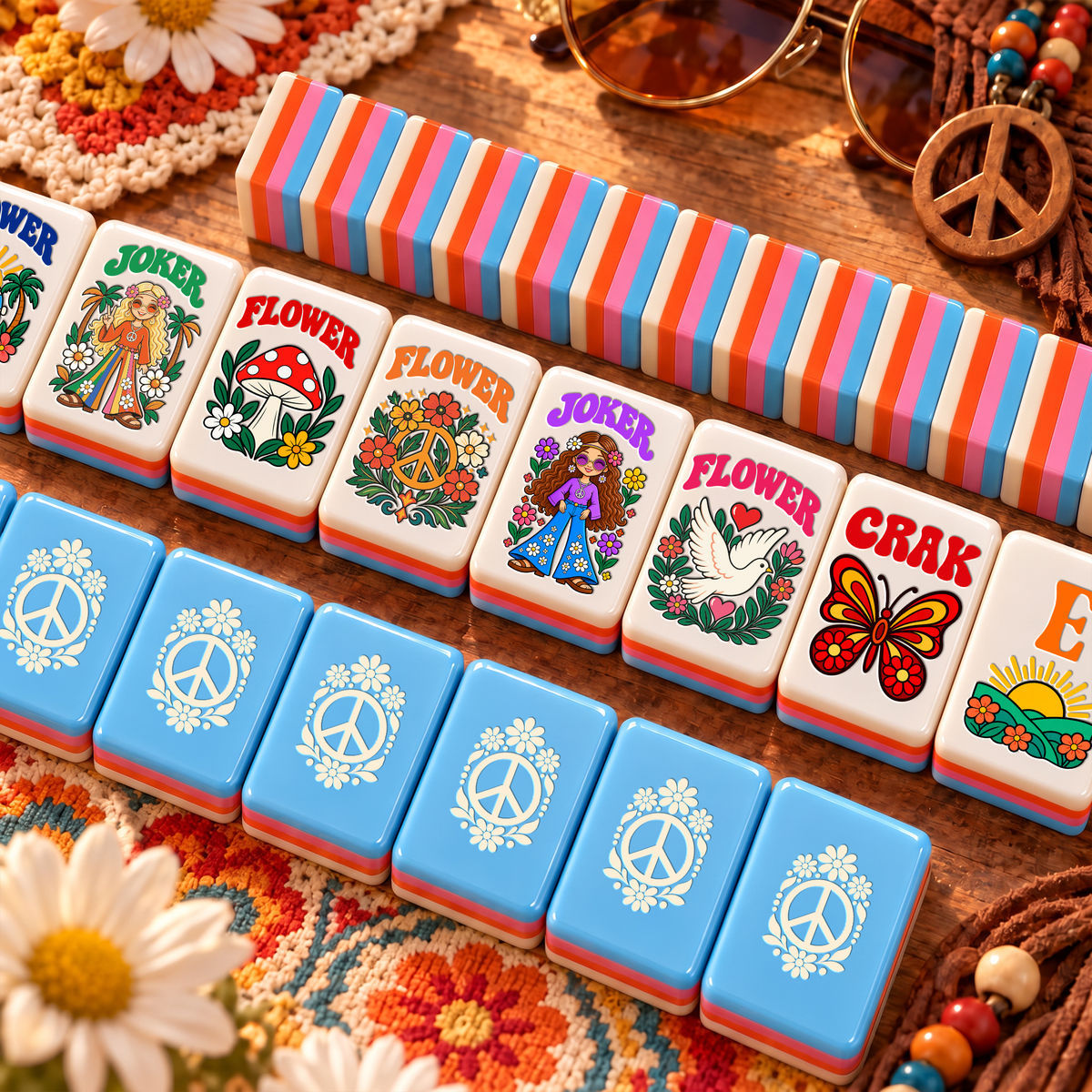
American mahjong uses 152 tiles divided into three numbered suits (Bams, Craks, Dots), winds, dragons, flowers, and jokers; hands are drawn from the current year's National Mah Jongg League card, and only identical sets of three or four tiles (pungs and kongs) can be exposed—no sequences. Filipino mahjong uses 108 tiles in four suits (Bam, Crack, Dot, Flower) with standard 1–9 and honor tiles; players memorize hand patterns instead of consulting a card, draw and discard freely, and can call and expose runs (three consecutive tiles), making it more similar to traditional Chinese play. The key difference: American mahjong is hand-card–dependent and rigid in what you can declare, while Filipino mahjong is pattern-memory–based and permits sequences. American games take 30–60 minutes; Filipino games often run shorter. If you're hosting a weekly game in the U.S., American mahjong is the standard; if you're learning in the Philippines or playing with Filipino families abroad, Filipino rules dominate.
What tiles does each game use?
American mahjong requires exactly 152 tiles: 108 numbered tiles (three suits × 1–9 × four copies), 16 winds, 12 dragons, 8 flowers, and 8 jokers. Filipino mahjong uses 108 tiles: four suits (Bam, Crack, Dot, Flower), each with 1–9 and four honor tiles (N, E, W, S). American sets contain spare jokers and blanks; Filipino sets do not. This means American tiles are more abundant and replacements easier to find if a tile cracks during play.

How do players build a winning hand?
In American mahjong, all legal hands come from the National Mah Jongg League card →—a laminated or digital reference printed each spring with hundreds of hand patterns. Players consult the card to verify their hand. In Filipino mahjong, winners memorize common patterns (specific melds and pairs) and call "Mahjong!" when matched; there is no card to reference mid-play. American players must study and carry the card; Filipino players must train their memory. For American beginners, the card removes guesswork but adds setup friction; for Filipino players, memorization is the skill barrier.
🀄 Shop best-selling mahjong sets →
Can you expose runs, or only identical sets?
American mahjong forbids runs (sequences like 1–2–3). You can only expose pungs (three identical tiles) and kongs (four identical). Jokers cannot appear alone or as a pair—they act only as wild tiles within an exposed meld. Filipino mahjong permits both runs and pungs, following closer to Chinese mahjong rules. This is the most dramatic rule difference: American play is more restricted and pattern-focused; Filipino play is more flexible and resembles classic Chinese variants. Players switching from Filipino to American often struggle with this constraint.

How long does a game take, and how do turns work?
American mahjong games typically run 30–60 minutes because tile count and card constraints limit hand options. Players draw and discard in strict rotation; the game ends when someone wins or the wall is exhausted. Filipino mahjong games often finish faster (15–40 minutes) because players can call discards immediately and the smaller 108-tile draw reduces the pool. Both games use a discard pile, but American play is more methodical; Filipino play has quicker tempo. If you host events with time limits, Filipino mahjong fits tighter schedules.
Which one should you learn and play?
Aspect | American Mahjong | Filipino Mahjong |
Tile count | 152 | 108 |
Hand source | National League card (current year) | Player memory (traditional patterns) |
Runs allowed? | No—pungs and kongs only | Yes—runs and pungs both |
Game length | 30–60 min | 15–40 min |
Where played | U.S., diaspora communities | Philippines, Filipino diaspora |
Setup complexity | Moderate (card + Charleston) | Low (no card, direct draw) |
Skill type | Pattern recognition + card reading | Memory + pattern recognition |
Choose American mahjong if you live in the U.S., want structured hand rules, and enjoy consulting a card mid-play. Choose Filipino mahjong if you're in the Philippines, prefer memory-based play, or want faster rounds. Many players learn both—they share tile suits and wind/dragon honors, so the fundamentals transfer.
🎁 See our most-loved mahjong sets & accessories →
What equipment do you need for each game?
For American mahjong, you need a 152-tile set (we design engraved American mahjong sets with custom titles or themes), the current National League card, a mahjong mat to organize the play area, racks with pushers to hold and display tiles, and a bag or case for storage and travel. For Filipino mahjong, you need a 108-tile set (often sold separately from American sets), no card, and optionally a mat and bag. American games add overhead because of the card and setup ritual (the Charleston); Filipino games are simpler to transport. If you host American games regularly, invest in a quality mat and racks—they speed setup and reduce fumbling. Filipino games need less gear but the same care for tile condition.
✨ Find your Mahstead set — free US shipping →
What to check before you buy
Tile material: American sets are acrylic or bone/bamboo; Filipino sets may be plastic or resin. Acrylic tiles are durable and clear.
Tile count: American requires exactly 152 tiles for play; Filipino uses 108. Verify the set contents before purchase.
Card vs. no card: American sets should ship with or link to the current year's National League card. Filipino sets do not.
Storage: American games generate more tiles, so a roomy travel bag is essential.
Local community: Check if your area has weekly American or Filipino mahjong groups before committing to a 152-tile set.

FAQ
Can I play American mahjong with a Filipino set?
No. Filipino sets have only 108 tiles and lack the jokers, additional dragons, and flowers that American play requires. You need a full 152-tile American set.
Do both games use the same tile symbols?
Mostly yes. Both use Bams (stick suit), Craks (circle suit), Dots, winds, and dragons. But American sets include 8 jokers and 8 flowers; Filipino sets do not standardize jokers.
Is American mahjong harder to learn than Filipino mahjong?
Different challenge. American requires memorizing the current year's card; Filipino requires memorizing hand patterns by heart. American has stricter rules; Filipino is more flexible but demands faster decision-making.
Can I teach my family Filipino mahjong if I learned American?
Yes. The tile basics—suits, winds, dragons, and honor concepts—transfer. But you'll need to unlearn the "no runs" rule and learn to call discards immediately. Allow 2–3 sessions to adjust.
Where can I find Filipino mahjong sets in the U.S.?
Filipino mahjong sets are rarer in U.S. retail than American sets. Check online retailers specializing in Asian imports, or ask Filipino community centers and churches for local sources or recommendations.
How does scoring differ between American and Filipino mahjong?
American mahjong uses point values printed on the card for each legal hand. Filipino mahjong uses simpler scoring (often based on meld type and speed). American scoring is more granular and card-dependent.


View More
View More
View More
