
Mahjong in Hong Kong Culture: History, Rules & Play Today
Last updated: Nov 23, 2026
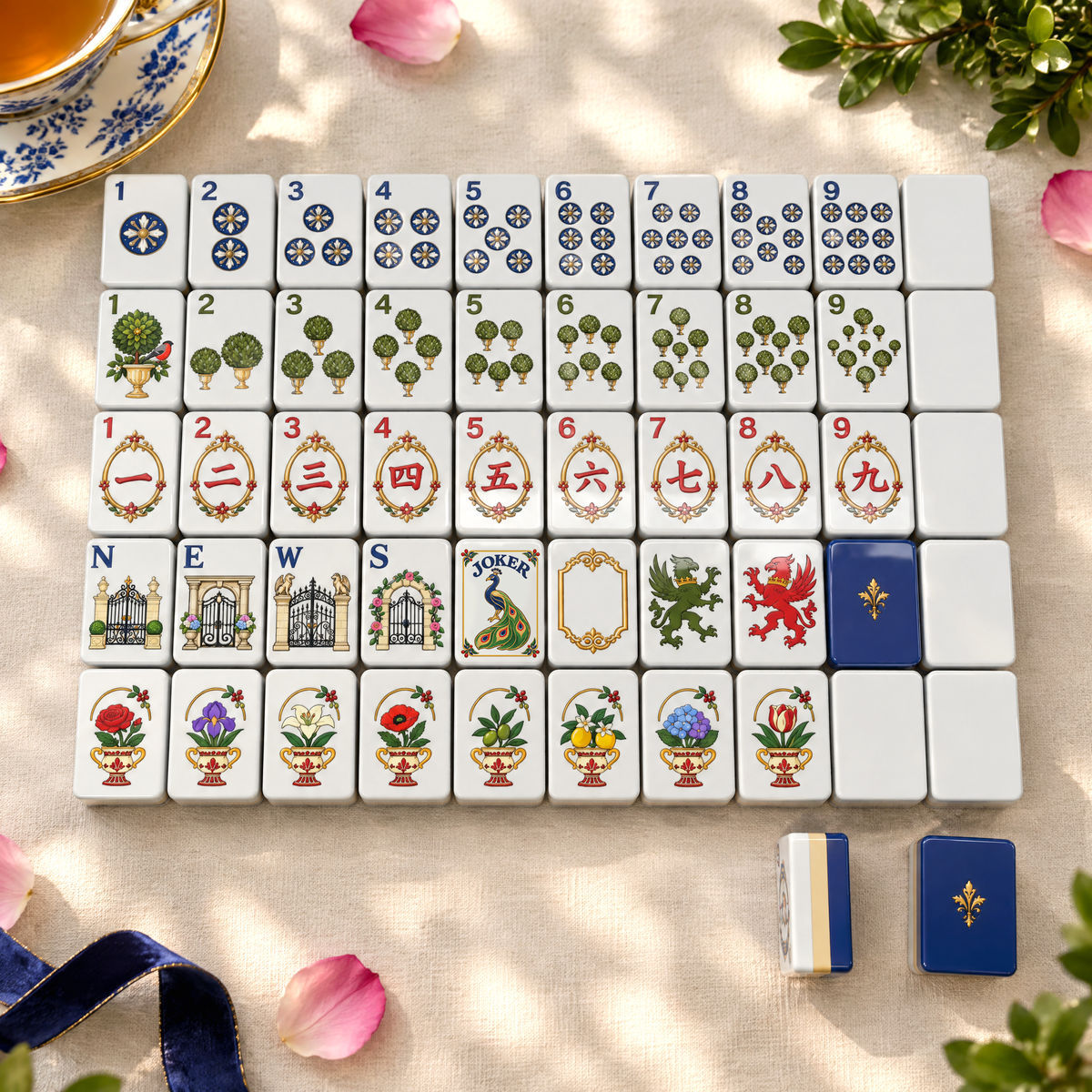
Mahjong arrived in Hong Kong in the early 20th century and became the nation's defining pastime, played in tea houses, homes, and now online across the world. Hong Kong mahjong—also called Cantonese mahjong—uses 144 tiles (compared to 152 in American mahjong) and emphasizes fast calculation, hand memory, and quick-call melds. A standard game lasts 16 rounds, with players sitting north, east, south, and west; winning hands follow specific pattern combinations called "fan." The game permeates Hong Kong culture so deeply that it shaped Cantonese slang, inspired films and literature, and remains the social glue at family gatherings. Unlike American mahjong, which relies on an annual card, Hong Kong players memorize hundreds of winning hands and apply real-time scoring rules. Today, both casual parlor play and high-stakes tournaments thrive, and many diaspora communities worldwide maintain the Hong Kong ruleset as their preferred variant.
Why does Hong Kong claim mahjong as its own?
Mahjong arrived in China centuries earlier, but Hong Kong became its cultural capital after the 1920s. British colonial influence meant Western exposure and leisure time; Chinese merchants and laborers adopted the game as social ritual in morning tea houses and evening gambling dens. Over decades, Hong Kong players refined the rules, standardized scoring, and created a fast, emotionally intense variant that prizes memory and nerve. The game became so central to identity that Cantonese cinema immortalized it, and older generations still measure friendship by how many hours they've played together. Hong Kong mahjong is not merely a game—it's proof of belonging to a community.

How does Hong Kong mahjong differ from American mahjong?
The most obvious difference: Hong Kong uses 144 tiles; American mahjong uses 152. Hong Kong mahjong has no annual card—instead, players memorize winning hand patterns (called "fan") and apply them across seasons. Sequences (chows) and pungs are both callable and exposable; in American mahjong, only pungs, kongs, quints, and sextets can be exposed—no chows ever. Hong Kong scoring is dynamic and calculated mid-game; American scoring follows a fixed card. American mahjong forbids jokers in single-tile or pair positions; Hong Kong has no such restriction. For a beginner deciding which variant to learn, American mahjong offers structure (the card rules all hands), while Hong Kong demands pattern memory and quick judgment. If you play American mahjong in a weekly game, switching to Hong Kong requires unlearning exposed chows and memorizing dozens of fan combinations—a significant mental shift. Both are equally rich; the choice depends on whether you prefer rules from a card or from your memory.
Aspect | Hong Kong Mahjong | American Mahjong |
Tile count | 144 | 152 |
Hand reference | Memorized fan patterns | Annual National Mah Jongg League card |
Callable melds | Chows, pungs, kongs | Pungs, kongs, quints, sextets only |
Joker rules | Can fill any position | Never in single-tile or pair positions |
Scoring | Calculated in real time | Fixed by card, totaled at win |
Variant focus | Pattern memory & speed | Rule adherence & hand planning |
🀄 Shop best-selling mahjong sets →
What does a typical Hong Kong mahjong session look like?
A game begins with tiles shuffled face-down in a long wall, then drawn into 13-tile hands. One player (the dealer, often called "Banker") begins the discard; others draw and discard in turn. Unlike American mahjong, where the discard must be taken, Hong Kong players call a tile only if they can use it immediately—a chow, pung, or kong. Speed and silence define the atmosphere: tiles clack rapidly, players study opponents' discards for patterns, and tension builds as the win approaches. When someone completes a winning hand (usually 14 tiles forming valid fan patterns), they declare "win" and score based on the hand's fan count. A single game round lasts minutes; a full game of 16 rounds typically runs 1–3 hours depending on player skill and luck. Many players gather for lunch or dinner, play 4–8 rounds casually, then disperse—this is how mahjong threads through daily life in Hong Kong. The rhythm is communal yet competitive; friendships deepen as much from shared defeats as shared wins.
🎁 See our most-loved mahjong sets & accessories →

How do Hong Kong winning hands and scoring work?
Winning hands are built from combinations—chows (1-2-3, 2-3-4, etc. in the same suit), pungs (three identical tiles), and kongs (four identical tiles)—plus a pair, totaling 14 tiles. The key concept is "fan," a multiplier assigned to each hand pattern based on difficulty and rarity. A simple hand might be worth 1 fan; a complex hand mixing rare patterns could be 5 or more. Players calculate final payment by multiplying the fan count by a base unit, with the winner collecting from all three opponents and losers potentially paying doubled amounts. Scoring rewards hand complexity and punishes being the "feeder" (the player whose discard the winner called). A player who wins 3 fan off a discard might receive a higher payout than a player who wins 2 fan by drawing from the wall. Unlike American mahjong—where the card specifies every playable hand and scorekeeping is absolute—Hong Kong requires players to identify fan on the fly and negotiate payouts in seconds. This demand for speed and pattern recognition is why Hong Kong players often joke they've trained their brains like athletes. For learners, mastering 20–30 core fan patterns is a good starting point; veteran players hold 100+ in memory.
✨ Find your Mahstead set — free US shipping →
Where can you play Hong Kong mahjong today?
In Hong Kong itself, players gather at mahjong parlors (麻將館), tea houses, and private clubs; most neighborhoods have at least one. Outside Hong Kong, diaspora communities in Toronto, San Francisco, Sydney, and London maintain active tables—often in Chinese community centers, restaurants, or dedicated mahjong cafés. Many cities host monthly or weekly casual games advertised through community boards, WeChat groups, or local Chinese newspapers. If you're new to an area, ask at community centers, cultural associations, or libraries; regulars are usually welcoming to learners. Online platforms now offer Hong Kong mahjong play across time zones, though many traditionalists argue the tiles-in-hand experience is irreplaceable. The barrier to entry is low: most parlors rent tiles by the hour, and casual home games charge minimal stakes. If you want to host, investing in a quality mahjong mat and a set designed for frequent play ensures comfort and longevity. A dedicated mat defines the space, keeps tiles organized, and signals respect for the ritual—important in a culture where mahjong is treated almost as ceremonial.
What should you check before buying a set for Hong Kong play?
Since Hong Kong mahjong uses 144 tiles, any set you purchase should contain exactly that count. Verify the tile thickness and finish—Hong Kong players often prefer smooth, slightly glossy tiles that slide cleanly across the mat, reducing friction and speeding play (essential when speed matters). Check that bamboo suits (Bams), character suits (Craks), and dot suits (Dots) are clearly labeled and distinguishable, especially under poor light (common in tea houses). Ensure dragons and winds are complete and unmistakable; mixed-up tiles mid-game are embarrassing. If you plan frequent play, choose a set with durable acrylic or professional resin tiles rather than thin plastic—they'll survive years of shuffling and stacking. For home games, pair your set with a quality mahjong rack with pushers to keep tiles organized and hidden from opponents' view. If you'll carry the set to different venues, a well-padded travel bag prevents tiles from chipping. Most importantly, ask your local group which set standard they prefer—consistency builds confidence and prevents table disputes over tile clarity.
What to check before you buy:
Tile count: Confirm exactly 144 tiles (Hong Kong standard).
Suit visibility: Each suit clearly labeled and visually distinct.
Material durability: Acrylic or professional resin withstands frequent shuffle and stack cycles.
Finish smoothness: Slightly glossy surface reduces drag for fast play.
Weight and balance: Heavier tiles feel more substantial and settle faster.
Storage accessories: Pair with a mat and racks to protect tiles and organize play.
Community standard: Ask local players which tile finish and thickness they expect.

FAQ
Can I play Hong Kong mahjong with only 144 tiles if my set is missing one?
Yes—players routinely replace a missing tile with a blank or substitute, especially in casual home games. Formal tournaments and parlor play are stricter. If you own a set with extra spares, use one immediately and source a replacement later. In a pinch, the substitute remains playable without affecting the game's outcome.
What's the fastest way to learn Hong Kong mahjong fan if I already play American mahjong?
Start by learning 10–15 common fan patterns (like all pungs, all chows, one suit only). Play many casual rounds focusing only on recognizing patterns, not scoring precisely at first. Watch experienced players call wins and ask them to explain the fan count aloud. Most players absorb 30+ fan through repetition within 50–100 hours of play; formal study accelerates this.
How do Hong Kong players determine who deals first?
Players roll dice or draw tiles randomly; whoever rolls highest or draws the highest-ranking tile deals first (usually the seat associated with the "Banker"). The dealer role rotates clockwise after each round or resets after every win by a non-dealer player. This varies slightly by region and house rules.
Is there money involved in Hong Kong mahjong?
Most casual games involve small stakes—players pay or collect chips based on wins and losses per round. Stakes range from social (near zero) to moderate (small loose change or play money). High-stakes games exist but are informal and unregulated. Beginners should ask about stakes before sitting and play only amounts they're comfortable losing.
Do Hong Kong and American mahjong players ever play together?
Rarely at the same table, because the tile count, fan patterns, and calling rules are incompatible. However, many experienced players learn both variants and enjoy them separately. If you're bilingual in mahjong, you have access to richer social circles in different communities—a real advantage in multicultural cities.


View More
View More
View More
