
Mahjong Hand Selection Mistakes to Avoid
Last updated: Nov 23, 2026
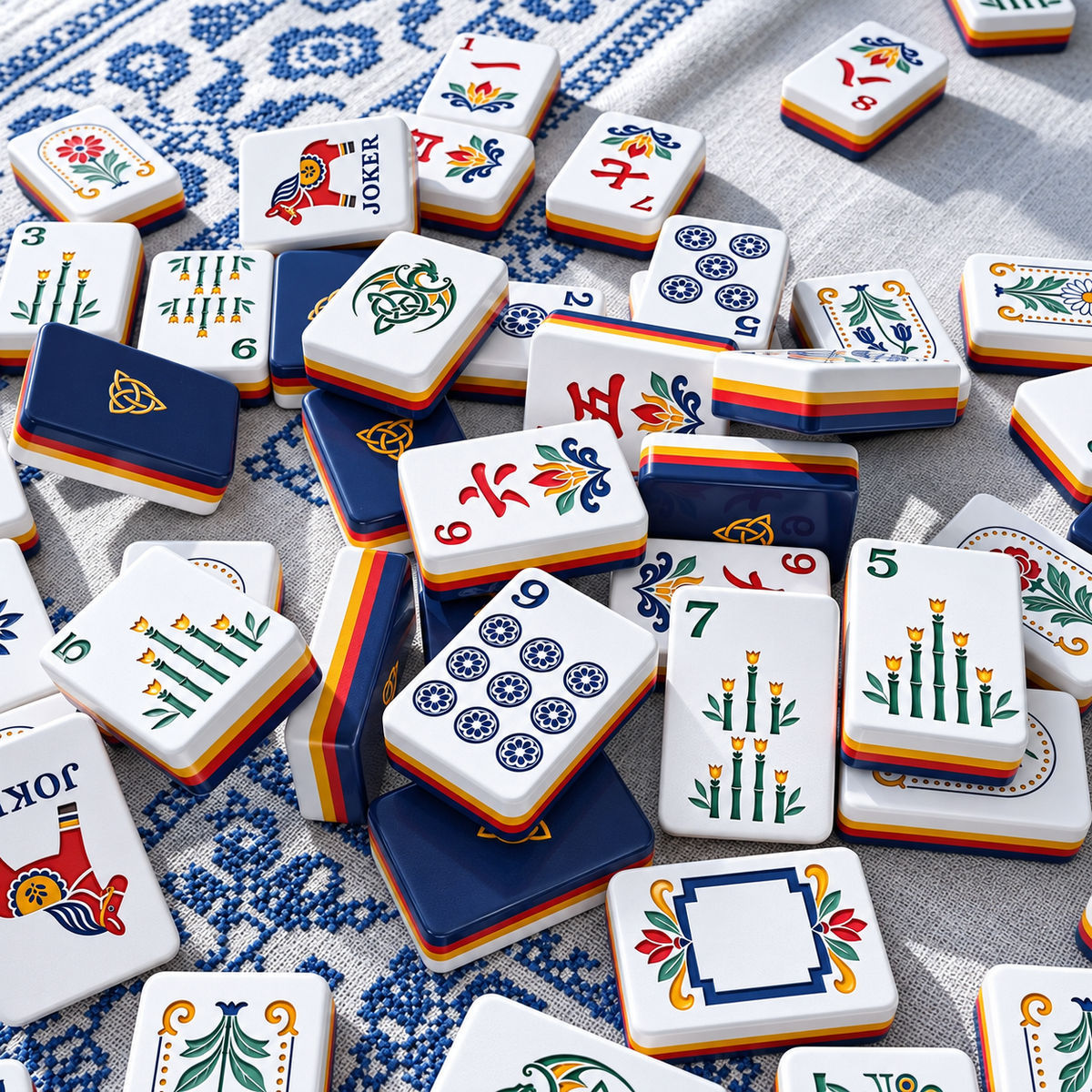
The top hand-selection errors in American mahjong are: misreading joker limits (using them in pairs or single tiles), confusing exposable shapes (only pungs, kongs, quints, and sextets count), mixing up tile names or counts before the Charleston, overlooking the yearly National Mah Jongg League card update, and discarding too early before checking all legal patterns. Most players learn these mistakes only after playing for months—or by watching experienced players avoid them. The fix is simple: before each hand, scan the current year's card for your target pattern, verify joker placement, and confirm your exposable melds don't break the rule (identical tiles only, never sequences). At Mahstead, we help players train faster by pairing high-quality acrylic sets with engraved titles and matching mats that show card zones clearly, so you can practice hand reading accurately week after week.
Do you really understand joker placement?
Jokers are not wildcards. In American mahjong, jokers can only replace tiles inside a called meld (pung, kong, quint, sextet)—never in a single tile, never in a pair, and never anywhere a blank tile sits. A joker filling a position in a called pung of 5 Dots is legal; a joker as the pair is not. This rule trips up newer players most often when they're building a hand that looks close to winning: they spot a gap, grab a joker, and later realize they've locked themselves out of that pattern. The card won't accept it. Before you commit to a meld, count: joker count in your target hand ≤ the number of jokers the card allows for that specific pattern.
🀄 Shop best-selling mahjong sets →

Are you mixing up exposable shapes?
American mahjong allows you to call and expose only pungs (three identical tiles), kongs (four identical), quints (five identical), and sextets (six identical)—never chows or sequences like 3-4-5 Bams. Many players switching from Chinese or Hong Kong variants expect to call 1-2-3 combinations; American rules forbid this entirely. If your target hand shows "3 Dots, 4 Dots, 5 Dots" in the listing, those tiles must stay in your hand concealed until you declare mahjong—you can never expose them mid-game. The mistake happens when players misread the card notation or forget to check which melds they've already exposed; they call a sequence out loud and the table catches the illegal move. Solution: before the game starts, learn how to read the card systematically—identify which section of your hand pattern is exposable and which must stay hidden.
Did you skip checking the yearly card update?
The National Mah Jongg League releases a new card every spring. A hand that was legal last year may not appear on this year's card, and new patterns emerge. Many players make the error of holding onto last year's card or playing hands from memory instead of the current printed card. During a live game, this costs you points or a misdeclare. The fix: confirm the year printed on your card before shuffling. If you're hosting weekly games, keep our guide to how American mahjong works handy and cross-reference the card each time someone declares a hand.
Are you reading tile counts correctly before the Charleston?
Before play begins, the Charleston involves passing 36 tiles in a structured ritual. Players often miscount tiles before or after the pass—especially when jokers are involved—and end up with 14 tiles instead of 13 in hand, or 13 instead of 14. This error ripples through the entire hand. To avoid it: count your tiles aloud after each exchange phase of the Charleston, and use a physical rack to keep tiles organized. A quality rack with pushers helps you count at a glance and prevents tiles tipping over mid-pass.
🎁 See our most-loved mahjong sets & accessories →

Are you discarding before you've scanned the whole card?
The single biggest timing mistake: you discard a tile because you think it's "safe"—only to realize later that same tile was in two different patterns you could have won on. Slower play is safer play. Before you discard, take 5 seconds to look at the card and ask: "Does this tile appear in any pattern I'm building toward?" If yes, keep it unless you're certain you can't reach that hand. If you're holding jokers, scan the card to see which hands accept jokers and which don't; some patterns use zero jokers and lock you into a rigid path. Write down one "backup" hand (a second path to mahjong) when you pick your main hand—this keeps you flexible when tiles don't flow your way.
Comparison: Spot Your Hand-Selection Weakness
Error | What goes wrong | How it costs you | How to fix it |
Joker misuse | Using joker as a pair or single tile | Move is illegal; you can't declare | Before play, verify jokers only fill inside melds |
Confusing exposable shapes | Calling 1-2-3 sequence | Illegal call; table catches it | Know the rule: only pungs/kongs/quints/sextets |
Stale card reference | Playing off last year's pattern list | Pattern doesn't exist on current card | Check the card year each session |
Miscounting tiles in Charleston | You end with 14 or 12 instead of 13 | Wrong tile count breaks the hand | Count aloud after each pass phase |
Premature discard | You throw away a tile you need for backup hand | You brick later when backup wins | Scan the card for every tile before discard |
Why experienced players slow down during hand selection
Watch a seasoned player: she picks her 14 tiles after the Charleston, sets them in her rack, and then sits quiet for 30 seconds. She's not stalling. She's scanning the card, checking whether her tiles can form multiple legal patterns, noting where jokers fit, and mentally rehearsing the discard order. Newer players rush this step and commit to a path too early—then watch their winning tile go to another player. The slower you move during hand selection (the first 2 minutes), the faster and more confident your play becomes.
What to check before you buy
Tile legibility: Can you read suit symbols and numbers clearly under table light? Engraved or printed tiles matter; poor contrast makes hand reading harder.
Rack fit: Your tiles should sit snugly in your rack without tilting. A poor fit causes miscounts and dropped tiles during the Charleston.
Card format: Ensure your card is the current year and in a size you can scan quickly from across the table (not too small).
Mat surface: A mat with clear, labeled zones (your hand, the dead wall, the discard pile) helps you and the table stay organized, reducing errors.
The long-term payoff
Fix these five mistakes now, and you'll see wins come faster. Most importantly, you'll earn the table's trust—no illegal calls, no misdeclares, no tile-count surprises. The real advantage isn't luck. It's the rhythm of confident, careful play. Our best-selling sets pair durable acrylic tiles, precision-cut racks, and clean mats designed for exactly this kind of error-free, week-after-week play.
✨ Find your Mahstead set — free US shipping →

FAQ
Can I use a joker as the pair in a pung?
No. Jokers can only replace tiles inside a three-tile, four-tile, five-tile, or six-tile identical meld. A pair must always be two real tiles of the same value. Using a joker as either tile of your pair makes the hand illegal.
What if I grab the wrong tile during the Charleston and don't notice until after the pass is done?
Stop immediately and tell the table. Recount all four players' tiles; if the count is off, replay the Charleston phase where the error occurred. This is why counting aloud after each phase prevents the problem entirely.
Do I have to declare which hand I'm playing before the first discard?
No. You can change your target hand mid-game if the tiles flow differently. But once you expose a meld, you've narrowed your options—so pick a flexible first hand and keep a backup pattern in mind as insurance.
The card shows a pattern with "0" (zero jokers). What does that mean?
That pattern uses no jokers at all. You must collect all tiles exactly as printed—no replacements allowed. These hands are rigid but often worth high points.
How do I know if a tile is counted correctly after the Charleston?
Count your hand in your rack: 13 tiles in front of you, 1 tile drawn in your hand or set aside = 14 total. If the number is off, stop and recount aloud with the table before the first discard. Do this every hand for the first month until it becomes automatic.


View More
View More
View More
