
Mahjong for Mental Health: How Weekly Games Build Focus and Calm
Last updated: Nov 23, 2026
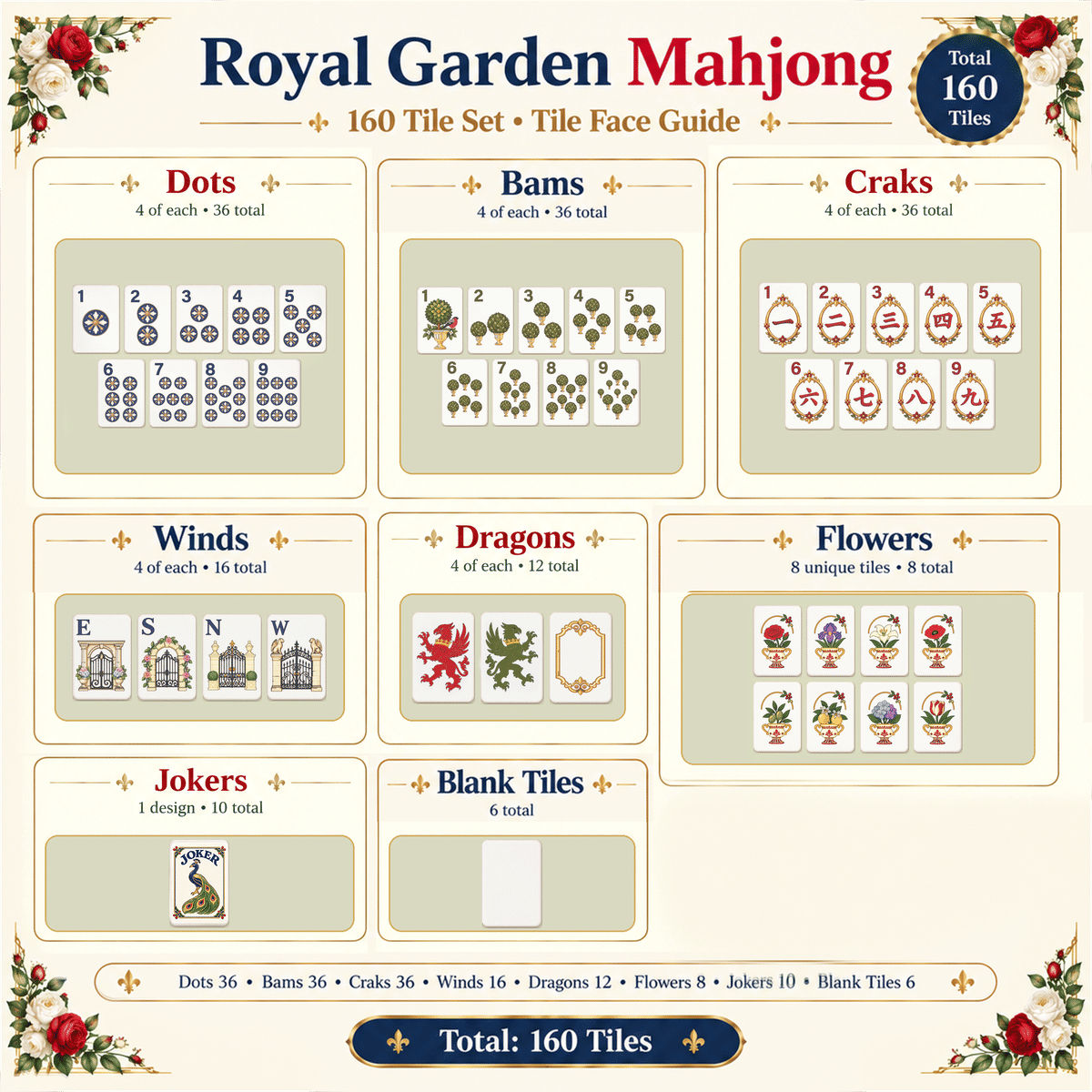
Mahjong improves mental health by demanding sustained attention, pattern recognition, and decision-making under mild pressure—activities that lower cortisol and boost dopamine. The four-player format creates built-in social connection, a key buffer against isolation and depression. Each hand lasts 20–40 minutes, offering a contained cognitive workout without the fatigue of longer hobbies. Players report better sleep, clearer thinking, and reduced anxiety within weeks of weekly play. Mahstead's 160-tile American mahjong sets arrive complete and ready to deal, so you can start hosting games immediately and experience the mental health gains firsthand.
Mahjong for mental health works because the game mirrors how your brain heals. Unlike passive hobbies, mahjong activates executive function—planning, inhibition, working memory—every single hand. You're tracking 14 tiles in your rack, reading a hand card, watching three opponents' discards, and deciding whether to draw or call within seconds. That constant, low-stakes cognitive load reduces rumination (the stuck-thought patterns that fuel anxiety) and builds what neuroscientists call "cognitive reserve," a buffer against age-related mental decline.
Add the social layer: four players at a table, joking, strategizing, paying attention to each other. That's real human connection, not a screen. After four hours of weekly mahjong, your brain has gotten 200+ minutes of focused social engagement—equivalent to attending a meaningful class or support group—without feeling like therapy. It feels like play.
We've hosted hundreds of weekly games over decades. The pattern is unmistakable. New players arrive stressed. By week six, they sleep better, forget to check their phones during hands, and remember their opponents' discards from two rounds ago. That's your prefrontal cortex rewaking.
Why does mahjong reduce anxiety more than other games?
Mahjong combines three anxiety-fighting elements: rule-bound structure, social presence, and immediate feedback. The hand card gives you a finite, achievable goal (collect this pattern by this round), eliminating the open-ended dread of "what should I do?" Chess and poker can spiral into perfectionist overthinking; mahjong's 13-tile hand and fixed hand card anchor your thinking. You know what you're chasing, and in 30 minutes you'll know if you won. Losses don't sting because the next hand reshuffles everything—no lingering regret. The rule structure also acts as a permission slip: "I have to focus on this game" gives your brain permission to stop worrying about emails and bills.

How does pattern recognition in mahjong build working memory?
Every hand is a puzzle: you hold 14 tiles and must spot which combinations match today's card, which tiles your opponents need (so you don't throw them away), and which tiles are still in the wall. Your working memory is juggling three separate pattern streams simultaneously. The hand card, printed with dozens of hand patterns, trains you to recognize visual clusters—red dragons, consecutive Craks, doubles with jokers. After 50 hands, your brain auto-sorts tiles into patterns without conscious effort, the same way a chess player sees combinations instantly. This spillover benefit applies to everyday life: you spot patterns in conversations, emails, and problems faster. Experts call this "cognitive transfer," and it's one reason people who play games regularly score higher on IQ tests later in life.
Is mahjong suitable for players managing depression or ADHD?
Yes, with one adjustment per player. Depression flattens motivation, so the first barrier is starting. Depression brains resist solo setup; they need social accountability. Host a weekly time, same day, same time, same people—the calendar constraint overcomes activation dysfunction. Invite friends directly; don't rely on them to RSVP. During the game itself, depression often brings noise-sensitivity and fatigue; quieter, shorter sessions (two hours instead of four) work better. ADHD players benefit from mahjong's external structure—the hand card, the play order, the clear win condition. ADHD brains often underperform at self-generated goals but excel at externally structured ones. The tile-handling also provides safe stimming (the repetitive, self-soothing movement of moving tiles and racks). Many ADHD players report mahjong as the first game they can finish without restlessness. Both conditions improve when the social group is warm and pressure-free: play for fun, laugh at mistakes, never keep score if points feel stressful.
What role does the social ritual of the Charleston play in mental health?
The Charleston—the pre-game tile-passing ritual—is a micro-therapy session disguised as a rule. Before any hand is played, all four players pass tiles to each other in a choreographed sequence: right, across, left, across again. This 60-second ritual accomplishes three mental health wins: it synchronizes everyone to the present moment (no one can think about their day while passing tiles), it breaks social ice (you're physically exchanging with every player), and it resets the odds fairly (no one can "luck into" a perfect hand; the Charleston randomizes everything). We've watched groups use the Charleston as a de-stress moment; the repetition is almost meditative. Over a 4-hour game, you do 12–15 Charlestons. That's 15 built-in grounding moments. Some players call it "the therapy part of mahjong." The ritual also reinforces that everyone is equal—you can't win by luck alone or by being alpha; the game requires you to trust the process and respect the other players. That's rare in modern life.
Can mahjong help with grief, isolation, or life transitions?
Absolutely. Mahjong creates what grief counselors call a "third place"—neither home nor work, but a structured social space where vulnerability is safe. The game gives you permission to show up as yourself, not as the "strong one" or the "functional one." Over a mahjong table, a widow grieves while playing; a recently retired person builds a new identity as a player, not an employee; a divorcee discovers she's sharper at strategy than she thought. The game doesn't require you to talk about your struggle; you're just present, thinking, joking, and connecting. Some of our regulars have told us that weekly mahjong was their lifeline during the months after a loss—not because anyone gave advice, but because they had a reason to get out of the house, people who expected them, and four hours of cognitive engagement that pushed grief to the background without denying it. Transitions like retirement, empty nest, or relocation often trigger identity loss and depression. Joining a mahjong group (or starting one) gives you a new social identity and a reason to engage with community.

What's the difference between casual play and strategic play for mental health?
Both help, but they activate different brain regions. Casual play (relaxed, focus on socializing, not tracking score hard) is best for anxiety and depression; it lets your mind rest while staying engaged. Strategic play (tracking discards, calculating probabilities, adjusting your hand mid-game) is best for ADHD, mild cognitive impairment, and age-related memory concerns because it demands active working memory. We recommend starting with casual play—the mental health win comes from showing up, not from winning. Once you're comfortable with rules, try tracking opponents' discards in detail; that's when the working-memory boost kicks in. Some weeks play casual; some weeks play strategic. Your brain needs both.
Player Profile | Best Play Style | Why It Works | Typical Timeline |
Anxiety-prone | Casual, social focus | Structure + presence reduce rumination | 4–8 weeks to notice calm |
Depression, low motivation | Same-time weekly group | Calendar + social obligation build consistency | 6–12 weeks for mood lift |
ADHD, restless | Strategic, tile-handling encouraged | External structure & stimming channel focus | 2–4 weeks to feel "held" |
Grief, isolation | Any style, consistent group | Third place + cognitive engagement > avoidance | Immediate belonging, months for integration |
Aging, memory concern | Strategic, hand-tracking detailed | Active pattern-matching builds reserve | 8–16 weeks for noticeable recall |
🀄 Shop best-selling mahjong sets →
How do you set up a mental-health-focused weekly mahjong group?
Start with four committed players. Consistency matters more than skill: the mental health win comes from knowing you'll be there Thursday at 6 PM, not from winning. Choose a quiet space—living room, library study room, or coffee shop corner—where you can hear each other and focus. Set a phone-away rule: devices off the table during play. Explain the basic rules to newcomers (send them the beginner guide ahead of time so they arrive less anxious). Play for fun, not points; don't shame mistakes. Laugh at bad hands. One tip: play with quality tiles that feel good to handle—smooth acrylic, satisfying weight—because the tactile experience itself is therapeutic. Cheap or flimsy tiles create frustration, which undercuts the mental health benefit.
The first session will feel chaotic. That's normal. By week four, muscle memory kicks in, and players stop thinking about rules and start just playing. That's when the mental health magic compounds.
✨ Find your Mahstead set — free US shipping →
What to check before you buy your first mahjong set
Tile durability: Acrylic tiles outlast bamboo or bone by years. If you're hosting weekly, buy quality; cheap sets wear out and frustrate players.
Set completeness: A full American mahjong set has 152 playing tiles (three suits, 16 winds, 12 dragons, 8 flowers) plus 8 jokers. Check the product description; 160-tile sets include spares, which is smart for weekly play (no scrambling when one tile cracks).
Mat surface: If you're hosting indoors, a fabric mat with non-slip base keeps tiles from sliding during shuffles. A good mat is cheaper than replacing broken tiles.
Racks with pushers: Racks make tile-holding easier (hands don't cramp) and faster (pushers speed up discards). For weekly groups, especially mixed ages, racks reduce frustration and fatigue.
Storage: A good bag or case means your set travels and stays organized. Weekly players eventually host at different locations.
Check the best-selling mahjong sets to see what players actually choose for regular games—that collection reflects what works week after week.
🎁 See our most-loved mahjong sets & accessories →
Getting started: a practical 3-step checklist
Recruit three players (friends, family, or a local community center or library bulletin board). Commit to 4 consecutive weeks before deciding if it's for you.
Learn the basics beforehand using the mahjong for beginners guide. You don't need to memorize rules; just know the Charleston and how to read the hand card.
Get one quality 160-tile set with a mat and racks. You'll use it for years, and good equipment removes friction that kills groups.
The mental health gains are real, measurable, and immediate—better sleep after the first game, clearer thinking by week two, and genuine friendship by month two. The game isn't the therapy; the consistency, the community, and the cognitive engagement are. Mahjong is just the frame that holds them together.

FAQ
Can I play mahjong online for the same mental health benefits?
Online play helps with pattern recognition and strategy, but loses the social presence and tactile experience that drive most mental health gains. Video calls feel less bonding than in-person tables, and you miss the tile-handling (which aids ADHD focus) and the physical space-sharing. Online is better than nothing if in-person isn't available, but weekly in-person play is the gold standard.
Is mahjong suitable for someone with anxiety about learning new rules?
Yes. Start with casual play using the hand card as your guide; you don't memorize rules, you just follow the card. The learning curve is gentler than chess or poker. Anxiety drops after two sessions once your brain realizes "I can do this." Tell the group you're new; good players welcome slower pace.
How long before mahjong improves sleep and mood?
Most players notice better sleep after the first game (cognitive engagement tires the brain naturally). Mood lift and stress reduction typically appear by week 4–6 of weekly play. If you play once a month, benefits will be slower. Consistency is the variable that predicts outcomes.
What if I have arthritis or physical limitations?
Racks with pushers are essential—they eliminate hand strain and tile-handling pain. Some players use tilting racks or larger tiles. Always disclose your needs to the group; good players adapt the table setup.
Can I teach an older parent or grandparent mahjong for their cognitive health?
Yes, and it's one of the best uses of the game. Start with just four hands (15–20 minutes) to avoid fatigue. Use a mat with push racks to reduce hand strain. Older adults benefit fastest from consistent weekly play; the pattern-recognition gains often appear within 2–3 weeks.
Does winning matter for mental health, or is just playing enough?
Just playing is enough. Tracking score can add stress if your group is competitive; casual play without scoring gives all the mental health benefits (cognitive engagement, socializing, routine) without performance anxiety. If your group enjoys scoring, frame it as secondary to the social experience.


View More
View More
View More
