
Common Mistakes in Taiwanese Mahjong
Last updated: Nov 23, 2026
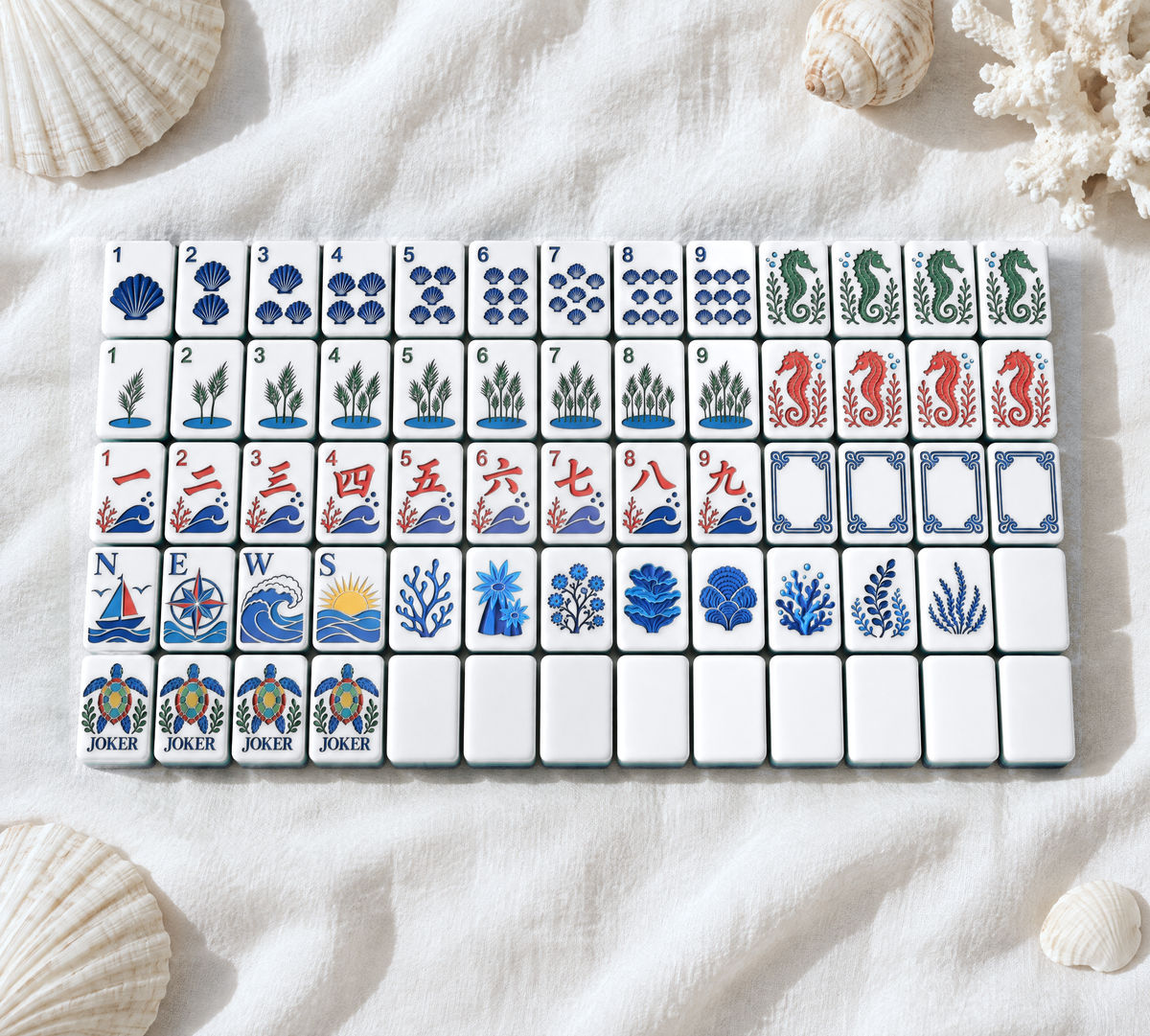
Taiwanese mahjong uses 144 tiles (one 1 Bam each, eight flowers, eight seasons—no jokers), plays with melds that can include sequences, and requires all 14 tiles to form a complete hand of four melds plus a pair. The most common mistakes are treating sequences like American mahjong (you can't call them in American, but you can in Taiwanese), forgetting that winning melds must be specific combinations from agreed patterns, and miscounting flower bonuses. Unlike American mahjong, which locks hands to an annual National Mah Jongg League card, Taiwanese games negotiate hand types before play. The game is faster and more flexible—but that freedom trips up players expecting rigid American rules. Our best-selling mahjong sets include the full tile inventory needed if you're mixing variants in one household.
What makes Taiwanese mahjong tile rules different from American?
Taiwanese mahjong starts with 144 tiles—three honor suits (winds, dragons, flowers, seasons) plus three number suits (Bams, Craks, Dots, each 1–9 in four copies). There are no jokers. American mahjong has 152 tiles, eight jokers, and no seasons. The core difference: Taiwanese allows sequences (1-2-3, 5-6-7) to be called and exposed on the table; American forbids sequences entirely. If you've been playing American weekly, resist the urge to call a sequence in Taiwanese—it's legal and often powerful. Flowers and seasons also work differently: in Taiwanese, they're bonus tiles drawn on your turn, not part of your hand count. When you draw a flower or season, you draw an extra tile from the wall to stay at 13 tiles. American mahjong doesn't use seasons at all. Beginners who've only played American often try to build American-style pungs (three identical tiles) for everything, missing that a strong Taiwanese hand mixes pungs, sequences, and honors strategically.

How do you actually win in Taiwanese mahjong—what hand counts?
Winning hand in Taiwanese requires 14 tiles: four melds (three tiles each) plus one pair (two tiles). A meld can be a pung (three identical tiles), a sequence (three consecutive numbers in one suit), or a kong (four identical tiles—you then declare it and draw a replacement). The pattern of melds must match a pre-agreed hand type; most house games use simpler sets than the intricate patterns of Hong Kong mahjong. A common beginner error: assuming any four melds plus a pair wins. Wrong. The melds must form a legal pattern—often "all simples" (no honors), "mixed honors and simples," or "all one family" (one suit only). Before the hand begins, players agree which patterns are in play for that round. American mahjong locks this to the League card; Taiwanese leaves it to negotiation. The second error: trying to hold too many options open early. Taiwanese rewards early commitment—if you're chasing three different possible hands by mid-game, you'll discard into an opponent's winning tile. Start with one target pattern and pivot only if you draw a run of useless tiles.
Why do Taiwanese mahjong players miscalculate scoring?
Taiwanese scoring multiplies base points by multiples—usually 2, 4, or 8 depending on hand difficulty, waiting tiles, and melds. A "simple hand" (all number tiles, one suit) might be base 2; a "mixed hand" (two suits and honors) base 4; an "all-honors hand" base 8 or higher. The biggest mistake: confusing fan (multiplier value) with actual payment. A player paying you 8 fan does not pay 8 chips—they pay your base points times 8. If base is 5 and the fan multiplier is 4, you collect 20 points per player (or 60 if three pay). American mahjong uses a fixed chip table you read on the League card; Taiwanese requires you to calculate live. Third error: forgetting that flowers and seasons add bonus points before multipliers are applied. Many players count a flower as 1 point and stop; in fact, a flower is often 1 base point plus it triggers a re-draw, which changes your whole hand strength. Keep a pencil and paper if you're new to Taiwanese—write down base, bonuses, fan, and final amount before collecting chips. This prevents disputes and speeds play.
🀄 Shop best-selling mahjong sets →
How do flowers and seasons work—and when do players get it wrong?
In Taiwanese mahjong, flowers and seasons are bonus tiles drawn from a special set or marked section of the wall. When you draw a flower (Plum, Orchid, Bamboo, Chrysanthemum) or season (Spring, Summer, Autumn, Winter), you do not add it to your 13-tile hand. Instead, you place it on your rack (and scoring area) and immediately draw a replacement tile from the wall to stay at 13. Each flower or season is worth bonus points—often 1 point per flower, scored separately before multiplying by fan. The most common mistake: treating flowers like regular tiles. New players sometimes try to use a flower as part of a meld, or they add it to their hand count and get stuck at 14 tiles before discarding. Another: forgetting that drawing a flower is not the end of your turn—you must still play a tile. American mahjong has no seasons, so this whole mechanic is foreign to players switching variants. If your household plays both, use a mahjong rack with pushers with a dedicated area for bonus tiles; it prevents the flower-as-regular-tile confusion because physically separating them enforces the rule.

Why do players confuse Taiwanese with Hong Kong or Chinese mahjong?
Taiwanese and Hong Kong mahjong are cousins but not twins. Hong Kong uses 136 tiles (fewer flowers and seasons), different bonus tile rules, and more complex hand patterns; Taiwanese uses 144, allows simpler negotiated patterns, and scores by multiplier. Chinese classical mahjong (four-player) uses 144 tiles but has no flowers or seasons as bonus draws—they're regular tiles in the hand. A player who learned Hong Kong and plays Taiwanese often miscounts flowers (Hong Kong has fewer) or expects more restrictive patterns. A player trained in classical Chinese sometimes doesn't draw an extra tile after a bonus, losing a tile and deadlocking the hand. The rule to memorize: Before the hand starts, agree on tile count, flower rules, and whether sequences are allowed. Taiwanese is the most forgiving of the three because house rules are negotiable—but that flexibility is exactly where confusion starts. If you're introducing Taiwanese to a group used to American mahjong, write down the hand patterns and flower rules on a card before play begins. It takes two minutes and prevents 20 minutes of disputes mid-round.
What's the fastest way to learn Taiwanese mahjong if you know American?
Start by accepting that sequences exist and are your friend. In American, a sequence (1-2-3) is worthless; in Taiwanese, it's as solid as a pung. Spend 10 minutes learning one simple hand type—all simples, or all one suit, or mixed—and play only that pattern for a full session. This builds intuition without overload. Second, practice flower mechanics separately: shuffle the 144-tile set, pull out the four flowers, and run a practice draw-and-replace cycle alone. You'll internalize the rhythm. Third, use a scorepad or phone calculator; don't try to do fan math in your head until you've played 20 hands. Fourth, ask the dealer or a veteran to announce which hand type is in play before each hand starts—this removes ambiguity. American mahjong forces you to read the League card for every hand; Taiwanese negotiates once per round, which is faster but requires communication. The biggest leap: letting go of "the card is law." In Taiwanese, the table makes the rules—which is liberating but demands clarity before the first tile is drawn. If you're hosting a mixed-variant game night, set up separate mahjong mats—one for American, one for Taiwanese—to signal that the rule set has changed.
Variant | Tile Count | Jokers | Sequences Allowed? | Scoring System | Hand Lock |
American | 152 | 8 | No | Chip table per year's card | League card (annual) |
Taiwanese | 144 | 0 | Yes | Fan multiplier (calculated) | Table negotiates per round |
Hong Kong | 136 | 0 | Yes | Fan + bonus tiles | Regional standards vary |
Classical Chinese | 144 | 0 | Yes | Point + multiplier | House rules |
Common mistakes reference table
Mistake | What Happens | How to Avoid |
Calling a sequence (thinking it's American) | Illegal move; hand deadlocks | Confirm Taiwanese allows sequences before play |
Adding flower to hand count (13→14) | Can't discard without going over 14 | Draw replacement immediately when flower appears |
Forgetting to draw after bonus tile | Stuck at 12 tiles; can't win | Use physical rack divider for flower storage |
Miscalculating fan × base | Pays wrong amount; disputes arise | Write calculation before collecting chips |
Using flower as part of a meld | Illegal meld; hand is void | Keep bonus tiles visibly separate from playable tiles |
Expecting American League card patterns | Hand doesn't match any agreed pattern | Agree on 3–4 patterns before the hand starts |
🎁 See our most-loved mahjong sets & accessories →
What to check before you buy a set for Taiwanese mahjong
If you're buying your first set for Taiwanese play, verify it includes 144 tiles—not 152, which is American-sized. A 144-tile Taiwanese set has four copies of each Bam 1–9, Crak 1–9, Dot 1–9; four of each wind; three dragons (no White/Soap as zero); four flowers; and four seasons. No jokers. If you're mixing American and Taiwanese games at home, buy two separate sets to avoid mid-game confusion about tile inventory. Check that the tiles are clearly marked (printed, not embossed, so you can read them in low light). Taiwanese games move faster than American, and hard-to-read tiles slow play. A set in a sturdy bag with dividers helps organize bonus tiles separately from the main draw stack. Some players prefer mahjong sets with engraved or titled designs if they're hosting regularly—it signals which variant is being played. Finally, confirm the tile size matches your hands and table space; 1.25-inch tiles are standard and work with most racks.
✨ Find your Mahstead set — free US shipping →

FAQ
Can you play Taiwanese mahjong with an American mahjong set?
No. American sets have 152 tiles and eight jokers; Taiwanese requires 144 with no jokers. The tile distribution is different—American has extra Bams and no seasons. Using the wrong set will deadlock the hand within a few draws.
Is Taiwanese mahjong faster or slower than American?
Faster. Taiwanese allows sequences (speeding melds) and has no annual card to look up—you negotiate patterns before play. A typical hand takes 15–20 minutes instead of 20–30, especially once players know the agreed patterns.
Do flowers in Taiwanese mahjong count as jokers?
No. Taiwanese has no jokers. Flowers are bonus tiles that stay separate from your hand; they're drawn as bonuses and don't form melds. They add points but don't replace or substitute like American jokers do.
What's the easiest Taiwanese hand pattern to start with?
"All simples"—all tiles are number 1–9 in one or two suits, no honors. This is worth low fan (often 2) but teaches you how to build and recognize sequences. Once you win three "all simples" hands, move to "mixed" or "all honors."
If I know American mahjong, will Taiwanese be easy?
Partially. You'll know tile names and basic strategy, but sequences flip your entire approach (they're forbidden in American, powerful in Taiwanese). The biggest adjustment is calculating fan multipliers instead of reading a card. Expect 3–5 hands to feel natural.
Can you play Taiwanese mahjong with fewer than four players?
Yes, but it's usually played four-handed. Two- or three-player variants exist but use different tile counts and patterns; ask your group if they've adapted it before trying—house rules vary widely.


View More
View More
View More
