
How to Teach Mahjong to Gen Z: A Player's Guide
Last updated: Nov 23, 2026
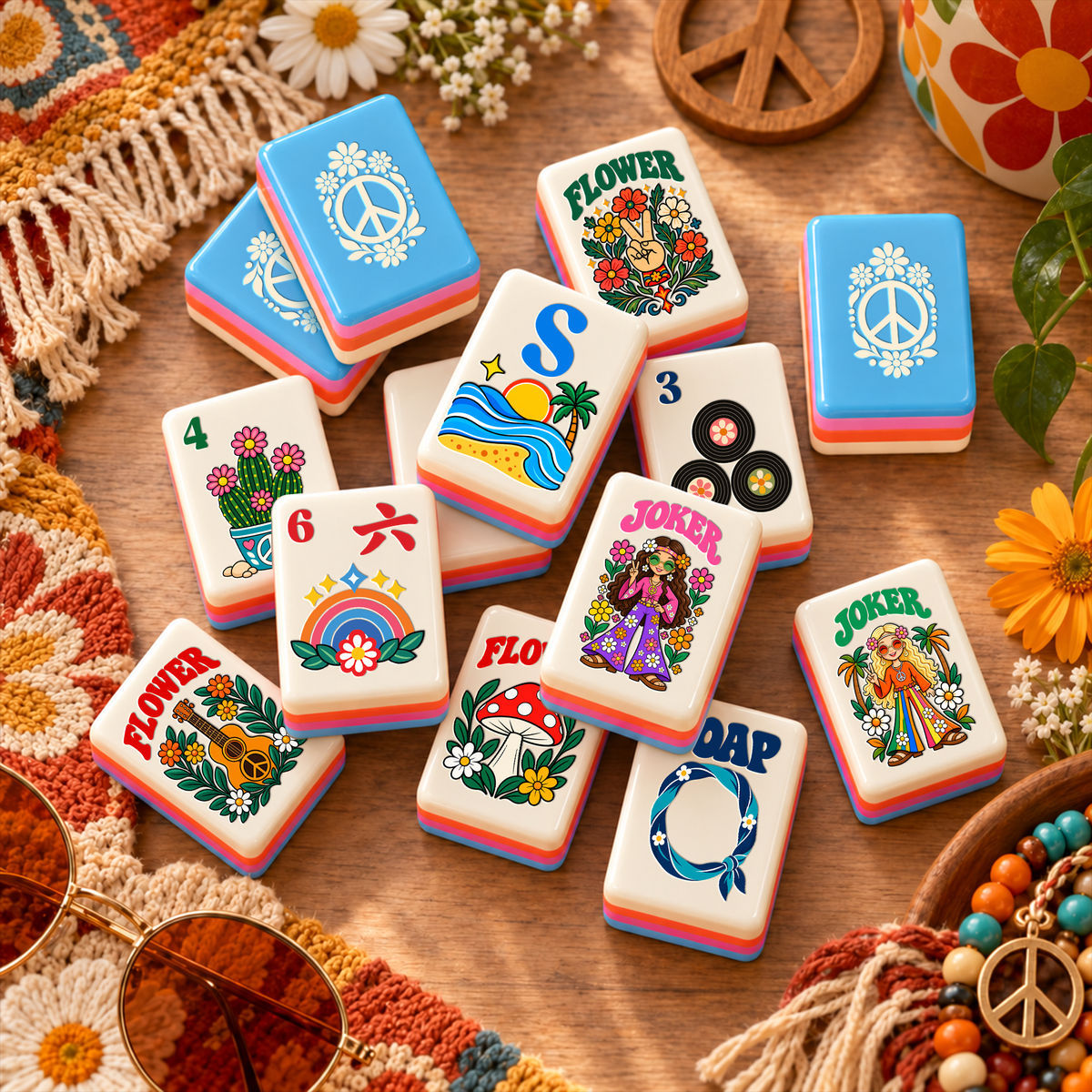
Gen Z learns mahjong fastest through a three-step method: teach the tile types and hand-reading first (30 minutes), walk through one complete practice hand (15 minutes), then deal a real game with a printed reference card within arm's reach. They absorb rules better by doing than by listening, so start them with an easy hand from the current year's National Mah Jongg League card and let them spot matches themselves. Most new players stumble on joker rules, the Charleston passing ritual, and confusing a pung (three identical tiles) with a run; call these out explicitly before play. A full game takes 45–90 minutes. Skip theory; use best-selling mahjong sets with clear acrylic tiles so everyone sees the same symbols, and keep a printed card and scorepad on the table. Gen Z respects honesty, so tell them upfront: you'll forget the card rules multiple times, and that's normal.
Gen Z is rediscovering mahjong through social media, college dorm nights, and cultural curiosity. Teaching them differs from teaching older players: they expect fast feedback, visual clarity, and permission to mess up. Here's what actually works at the table.
Why does Gen Z pick up mahjong so quickly?
Gen Z has grown up with pattern recognition in video games, apps, and online communities. Mahjong is a puzzle game masquerading as a social card game—three suits, four of each tile, one card with all legal hands, and strict turn rules. They're not intimidated by rules; they're bored by lecturing. A 20-year-old learns mahjong in one evening if you show, not tell. The barrier isn't mental—it's emotional. Many assume mahjong is "old" or "for grandmothers." Once they see a friend playing, they join in.

What's the fastest way to teach a complete beginner?
Start with the tiles, not the rules. Spread out one unshuffled set on the table. Point to each suit: Bams (bamboo sticks, 1–9), Craks (circles, 1–9), Dots (dots, 1–9). Show them the 16 winds (four copies of North, East, West, South), the three dragons (Red, Green, White), and the eight flowers. Say: "Mahjong is like rummy. You collect three or four matching tiles, or a run." Then stop.
Deal 13 tiles to each player. Have them arrange tiles by suit and number. Open that year's National Mah Jongg League card and point to one easy hand—say, a pattern labeled as three pungs and a pair. Ask them to find those four groups in their hand. Let them fail. Then show them where it is. Do this three times with different hands. Now deal a practice hand with 14 tiles and let them call "mahjong" when they match the card.
The first game is always clumsy. Expect it. A teaching session takes 45 minutes start to finish.
What mistakes does Gen Z make, and how do you catch them?
Jokers in pairs or single tiles. Gen Z often thinks a joker can replace any tile anywhere. It can't. A joker can only substitute for a tile inside a pung (three identical), a kong (four identical), or a higher-order group, never for a single tile or a pair. This is the single most common beginner mistake. Print a one-sentence rule on a sticky note: "Jokers work only inside groups of 3 or 4, never alone or in pairs."
Confusing a pung with a sequence. American mahjong has no open sequences. A pung is always three identical tiles—three 5 Dots, for example. Not 4-5-6. If a beginner says "three in a row," gently correct them: "That's Chinese mahjong. Here, we only stack identical tiles exposed on the table." Show them a printed hand card. Every exposed group is either three, four, five, or six of the same tile.
The Charleston ritual. Before the first hand, four players pass tiles to each other in a specific order: right, across, left, right again (second pass). Gen Z often asks, "Why not just shuffle?" Because the Charleston is the tradition and it randomizes equitably. Explain it once, then walk through it slowly with their hands. The second game, they'll lead.
Scoring confusion. American mahjong scoring is complex. Don't teach it in the first session. Let them play, call hands, and note down who won. Scoring comes later—after they understand what a legal hand looks like.
How do you structure a first group game for Gen Z?
Set up four chairs around a table. Place a mahjong mat in the center—it shows you where the discard pile goes and reduces argument about placement. Give each player a printed copy of the current year's National Mah Jongg League card. Put a pencil and score sheet near the dealer.
Explain the turn: draw one tile, discard one tile. Call "pung," "kong," or "mahjong" when you see a match on the card. That's it. No math yet. No scoring conversation. Play.
Halfway through the first hand, someone will call a hand incorrectly. Stop play. Find the error on the card together. Say: "Nope, see? That's a two-pung hand, but we need at least two pungs and something else." Restart the discard pile and keep going. Gen Z doesn't feel shamed by mistakes; they feel seen when you fix them kindly.
A first game takes 60–90 minutes. Order a pizza and play two hands. That's a full session.
Setup Element | Why Gen Z Needs It | What to Use |
Clear acrylic tiles | Symbols are visible from across the table; no squinting | |
Printed card (laminated) | No phone scrolling; everyone references the same document | Print the current year's card |
Mahjong mat | Defines the play zone; removes confusion about tile placement | Mahstead mat (any color) |
Racks with pushers | Holds 13 tiles upright; less hand fatigue in long games | Racks with pushers optional for casual play |
Score pad & pencil | Tracks who won; builds replay motivation | Any notebook |
🀄 Shop best-selling mahjong sets →

What equipment makes teaching easier?
Use a set with clear acrylic tiles and large, legible symbols. Tiles should be thick enough to feel sturdy in the hand—Gen Z notices quality immediately. Avoid tiny tiles or tiles with faint engraving; they cause frustration and eye strain.
A mahjong mat is optional but worth it. It shows exactly where racks sit, where the wall goes, and where discards pile. New players feel less lost with visual guides on the cloth. A mat also signals professionalism: "We're doing this right."
If you're teaching more than two people regularly, buy racks with pushers. They hold 13 tiles upright so beginners don't drop tiles or lose count. Pushers let them bump tiles forward as they play. Saves time and frustration.
A travel bag or case is useful only if you're moving sets between homes or hosting monthly. For a home game, store the set in a box.
How do you keep Gen Z engaged after the first game?
Replay the same game the next week. Most Gen Z players improve dramatically on game two—they remember three rules better, spot hands faster, and ask smarter questions. After three games, they're ready to learn scoring. After five, they can teach a friend.
Vary the venue. A dorm room, coffee shop, or friend's home feels fresher than a repeated location. Host games on a predictable schedule: same day, same time each week. Gen Z appreciates ritual once they feel comfortable.
Invite them to watch an in-person game before hosting one. Seeing play in action—tiles moving, hands being called, a real card in use—removes mystery. TikTok mahjong clips don't show the actual mechanics; watching real players does.
🎁 See our most-loved mahjong sets & accessories →
What should you check before you buy a set for teaching?
Ask: Do the tiles feel solid (not cheap plastic)? Are symbols printed clearly or engraved? Can a new player read a symbol from two feet away? Does the set come with a storage bag? Is there enough spare tiles if one gets lost or broken?
All Mahstead sets are acrylic, engraved (not printed), and designed so symbols remain visible after years of play. Choose a color that appeals to the group you're teaching—bright colors like red or teal engage Gen Z more than muted pastels. Check the collection for designs with humor or cultural motifs; gen Z players are more likely to return to a set that makes them smile.
Free US shipping means you don't need to visit a store. Order early enough to receive the set before your first teaching session.
✨ Find your Mahstead set — free US shipping →

FAQ
Do I need to teach American mahjong or can I teach Chinese mahjong to Gen Z?
Teach American. It has fewer complex sequences, uses a printed card as the rule book (which Gen Z finds reassuring), and allows jokers, which beginners enjoy. Chinese mahjong requires memorizing hand patterns and has longer, slower turns—Gen Z loses interest faster. American mahjong is also more widely played in North America among younger players. Start with one variant.
How long does it really take a Gen Z player to go from zero to independent?
Four weeks of weekly one-hour games. After two weeks, they can play a full hand without stopping to ask rules. After four weeks, they can teach someone else (slowly). If they play twice a week, two weeks is enough. Engagement matters more than calendar time.
What's the most common reason Gen Z quits mahjong?
Boredom during scoring. If you spend 10 minutes calculating points after every hand, players zone out. Skip scoring in the first month. Play to see who won, not by how many points. Scoring is a later layer—introduce it only when players ask.
Should I use an app or a printed card to teach mahjong?
Printed card. Apps lag, split attention, and require everyone to huddle around one screen. A printed card on the table stays visible for all four players simultaneously. Print one per player. It's faster, fairer, and keeps eyes up.
How do I handle a Gen Z player who thinks mahjong is only for older people?
Show them two minutes of mahjong content on TikTok or Instagram—there's plenty. Show them that people their age are playing. Invite them to watch one game without playing. Belonging to a peer group playing mahjong flips the narrative immediately. Once they see a friend take it seriously, it becomes cool.
Is it better to teach all four rules at once or spread teaching over multiple sessions?
Spread it. Session one: tiles and one practice hand. Session two: play a full game (rules as needed). Session three: add hand-calling strategy. Session four: introduce scoring. This prevents overwhelm and builds confidence. Gen Z learns faster with spaced repetition.


View More
View More
View More
