
Mahjong for Mac: Play, Learn & Host Online
Last updated: Nov 23, 2026
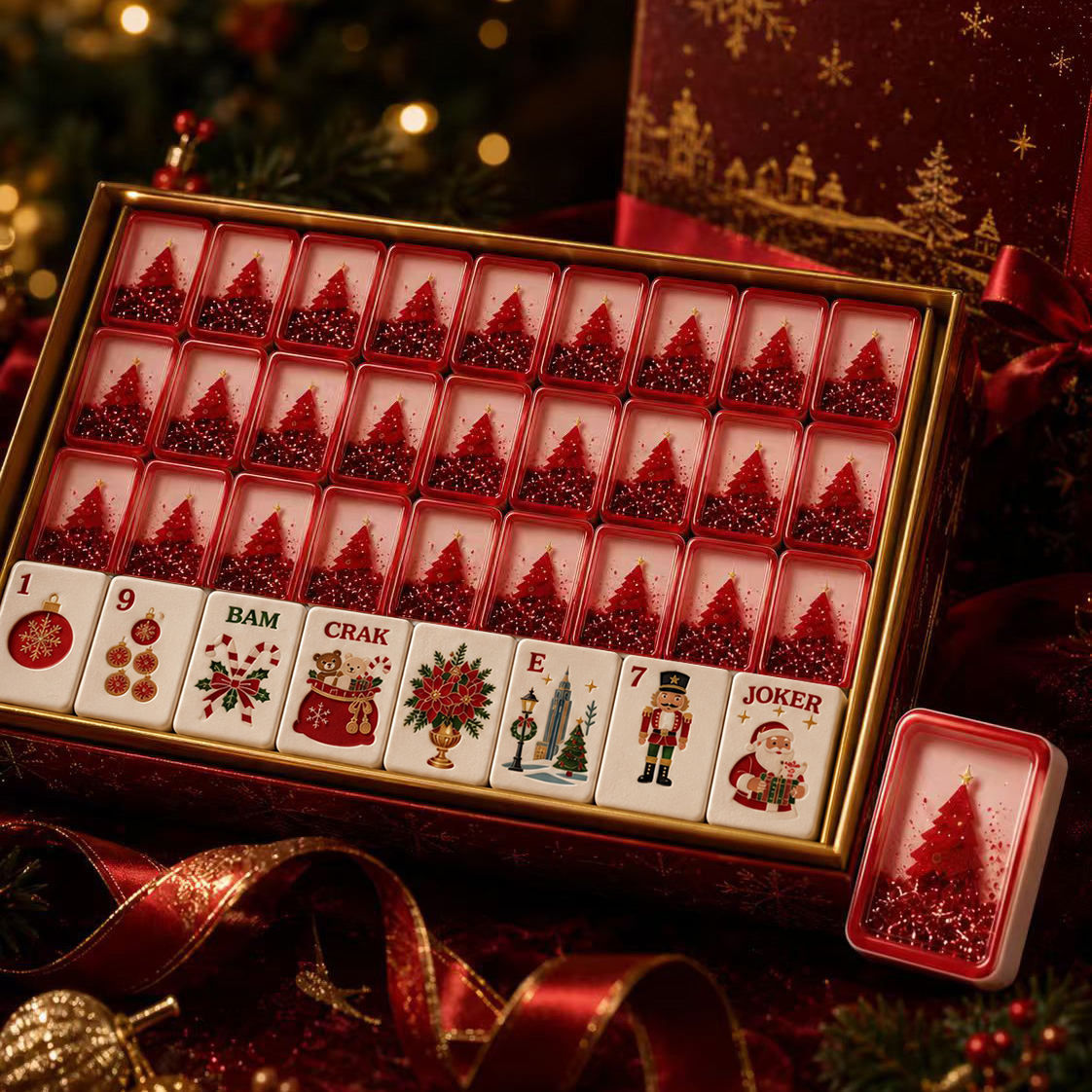
American mahjong has no dedicated Mac app, but you can learn and play via browser-based games (many free or freemium), multiplayer platforms adapted for macOS, and Chinese/Riichi variants through emulators or subscription services. Playing online teaches rules and hand recognition, but lacks the physical ritual and social depth of table play with a real 160-tile set. Most American players use Mac as a learning tool—to study tile combinations, watch tutorial videos, or check hand references before playing live games. True American mahjong requires the current year's official tile card, four players, and the Charleston tile-pass ritual, so desktop play alone cannot replace a weekly table hosted with an acrylic American mahjong set from our best-selling collection.
Why isn't there a dominant mahjong app for Mac?
American mahjong is niche—fewer than 100,000 active players in North America use the official tile card each year. Developers prioritize Chinese and Riichi (Japanese) variants, which have millions of players globally and standardized rulesets that don't change annually. American mahjong's rule variation (the card is reset each spring), requirement for the current-year reference, and smaller market make it economically risky for app makers. Result: no major publisher has built a full-featured American game for Mac; existing apps focus on learning or casual play, not tournament-style accuracy.

Which Mac-compatible mahjong games can you actually play today?
Browser games run on any Mac with Chrome, Firefox or Safari: Mahjong Soul (free, plays multiple variants including occasional American), Mahjongg Solitaire classics (single-player, tile-matching, not authentic), and web versions of Chinese Mahjong. Search "mahjong online free" and test two or three to see which feel natural. Download emulators (like Parallels Desktop) if you want to run Windows-only titles. YouTube has live streams of real games and tutorials filmed at tables—watch these to absorb the pace, calling conventions, and how the Charleston works before you sit down to play. None of these replace the cognitive and social experience of live four-player American mahjong, but they teach tile names, suit logic, and hand patterns fast.
What should you learn online before hosting a real game?
Start with tile recognition: the bird (1 Bam), the bamboo segments (Bams), the coins (Craks), and the circles (Dots). Memorize the winds (N, E, W, S) and three dragons (Red, Green, White). Online tutorials show you how a pung (three identical tiles) and a kong (four identical tiles) look and score differently. Study the current year's National Mah Jongg League card—download the PDF free from the league's website—and watch videos explaining why hands are called "like number" or "consecutive number." Learn the Charleston: three passes of tiles (first pass left, second pass across, third pass right) before anyone draws. If you grasp these fundamentals online, your first live game will feel manageable instead of chaotic.
🀄 Shop best-selling mahjong sets →
How do online players translate skills to a real table?
Online play teaches pattern recognition but skips the physical and social layers. When you sit at a table with an engraved set and a rack with pushers, you manage your own hand tactilely, read opponents' discard piles, and call "tile!" in real time—skills no screen replicates. The Charleston ritual (passing 6 tiles to each player in sequence) builds table rhythm and tension that online "auto-shuffle" skips entirely. Money exchanges at the end (even for fun stakes) create accountability and focus that free online play lacks. Your first live game should be hosted in a relaxed environment—a friend's home, a community center's mahjong afternoon, or a travel bag and case carried to a library—where veterans can pause play to answer your questions. Watch experienced players online, then learn by doing at a table.

Which online resources help beginners understand American mahjong fastest?
Resource comparison:
Resource | Best for | Time to grasp basics | Format |
YouTube tutorials (official league clips, "how to play" series) | Seeing tiles live, hand calls | 3–4 hours cumulative | Video |
National Mah Jongg League card PDF + written guides | Reference, hand patterns | 2 hours initial, ongoing | Text + image |
Browser games (Mahjong Soul, Solitaire variants) | Tile names, pung/kong practice | 5–10 games (30 mins) | Interactive |
Online forums & Discord mahjong communities | Questions, rule clarification | Ongoing | Text + real people |
Live-stream recordings of home games | Table etiquette, pace, calling | 1–2 full games (4 hours) | Video |
The fastest path: watch one 20-minute YouTube rules video, download and study the card for 30 minutes, play 5 solo browser games, then join a beginner-friendly table. You'll recognize 80% of what happens.
🎁 See our most-loved mahjong sets & accessories →
Can you host an American mahjong game after learning online?
Yes, if you follow the fundamentals and set expectations clearly. Host with experienced players who volunteer to guide beginners, or advertise a "learning game" so everyone arrives with patience. Use a printed copy of the current year's card at the table—tape it to the center of a mat so all four players reference it freely. Count out exactly 152 tiles into play (8 jokers are part of the set but reserved for hands that require them). Walk through the Charleston step-by-step before the first hand. If you've watched online tutorials and understand tile suits, pung calls, and how to read a hand line, you can host a beginner game; the table itself becomes your best teacher. Experienced players will signal errors gently ("green dragon goes in the Bam family") and help you build confidence. Start with one evening, not a league commitment.
What equipment makes hosting easier for a Mac-trained beginner?
An American mahjong set from our best-selling collection with clear tile engraving eliminates confusion—new players struggle to read worn, unclear tiles. A padded mat keeps tiles from sliding across wood or glass, which frustrates beginners. Racks with pushers let players organize their hand without dropping tiles; crucial for nervous newcomers. A printed card on a clip stays visible without phone distractions. A travel bag or case makes hosting portable—bring your set to a friend's house or community room where the game actually happens. The physical setup signals respect for the game, which encourages other beginners to take it seriously too.
✨ Find your Mahstead set — free US shipping →
What to check before you buy a set to host live games
Tile clarity: Can you read the suit symbols instantly, or do worn tiles blur Dots and Dots-like Craks? Acrylic tiles with engraved numerals and suit icons stay legible through 100+ games.
Joker count: American mahjong uses exactly 8 jokers during play. Buy a 160-tile set so you have spares if tiles chip (this is industry standard; never add jokers beyond 8 to active play).
Weight and sound: Lightweight plastic feels cheap and slides unpredictably; acrylic tiles have satisfying heft and click pleasantly during shuffles, signaling quality to players and building table confidence.
Card compatibility: Confirm the set includes or references the current year's National Mah Jongg League card, or download the free PDF and print it yourself before hosting.
Return policy: If tiles arrive damaged or unclear, you should be able to exchange them without hassle. Check the seller's policy before ordering.

FAQ
Do I need a Mac app to learn American mahjong?
No. Browser games teach tile names and basics; the real learning happens at a live table. Use online resources as warm-up, not replacement. Watch YouTube tutorials and study the official card for 1–2 hours, then play with experienced players who guide you through rules in real-time.
Can I play American mahjong online against real opponents?
Authentic American mahjong online is rare because the game's annual card change and niche market discourage app developers. Chinese and Riichi variants have full online communities. For American mahjong, use online tools to learn, then join local clubs, libraries, or community centers to play the real four-player game with tiles.
What's the fastest way to go from watching online to hosting a live game?
Watch one YouTube rules video (20 minutes), study the printed card (30 minutes), play 5 browser games (30 minutes), then host with at least one experienced player who can answer questions. Expect your first live game to last longer than online play; add 30 minutes for rule pauses. Plan for two to three games in a three-hour session.
Why does physical mahjong feel so different from online play?
Online play skips the Charleston (tile-passing ritual), tactile hand management, opponent-reading via discard piles, and the social presence of shared space. The physical game demands split-second calling and reading, which trains memory and attention in ways scrolling tiles cannot. Most players find the table version more rewarding once they experience it.
If I've learned mahjong online, do I still need to read beginner guides before my first live game?
Yes. Read guides on how to play American mahjong and the Charleston explained to anchor what you've watched. Online videos show movement and energy, but text guides clarify timing and order in ways rewatching videos doesn't. Combine both formats for solid readiness.


View More
View More
View More
