
Mahjong for Loneliness: How Playing Builds Connection
Last updated: Nov 23, 2026
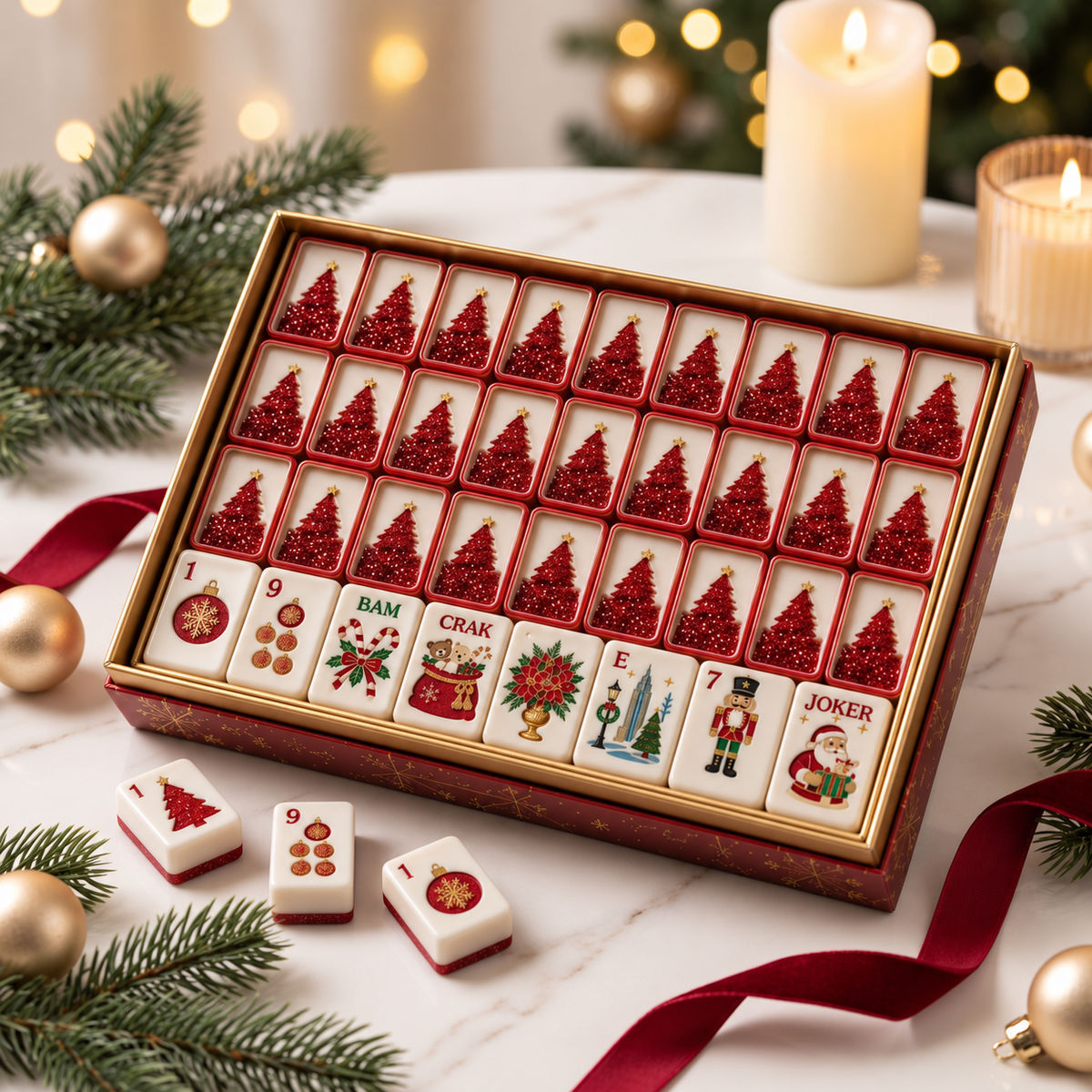
Mahjong directly counters loneliness by creating predictable weekly gatherings, shared focus, and a language of belonging. A typical game involves four players sitting for 2–3 hours, speaking constantly—teaching, joking, strategizing—with built-in roles (dealer, tile caller) that rotate every hand. The ritual itself matters: the shuffling, the Charleston (tile-passing exchange), the way each player arranges their rack and pushes tiles forward. Unlike online play, in-person mahjong requires your physical presence and full attention; you cannot multitask. Research on social connection shows that regular, structured group activities—especially those with skill progression and mild competition—reduce depression and anxiety more reliably than casual meetups. Mahjong has the added bonus of being accessible: most American games use the same 152-tile set and learn-as-you-play rules. Mahstead supplies sets and mats designed specifically for home hosting, making it practical to start a table in your own living room, garage, or community space.
Why Mahjong Works Better Than Other Group Activities for Loneliness
Mahjong creates what sociologists call "obligatory togetherness"—you cannot play if someone is missing, and players get used to counting on one another. Unlike book clubs or fitness classes, mahjong has no spectators: every person's decision matters on every turn. The game demands conversation: calling tiles aloud, announcing patterns, teaching newcomers, discussing strategy between hands. A player cannot sit silently or withdraw; the game pulls you in. The rules stay mostly consistent across decades and locations, so a skill you learn applies whether you play in Dallas, Denver, or your neighbor's den. This consistency reduces the anxiety that often keeps isolated people from joining groups ("Will I embarrass myself?" "Will I understand?"). The answer in mahjong is usually, "You'll learn by doing, and everyone at this table once sat where you are." Most tables also include built-in humor: playful teasing about bad discards, celebration of unlikely wins, and inside jokes that develop over months. This humor—low-stakes, recurring—becomes a form of belonging that loneliness-prone people often lack.
🀄 Shop best-selling mahjong sets →

How to Find or Start a Mahjong Table in Your Area
Start by checking community centers, public libraries, and synagogues in your city—many host mahjong groups or maintain contact lists for local players. Search your city name plus "mahjong" on social meetup boards, Facebook groups, or Nextdoor; many established tables recruit openly. Country clubs, retirement communities, and cultural organizations often run weekly games. If no existing table fits your schedule, starting your own is practical. You need four players, a mahjong set, and a mat or smooth table surface. Invite neighbors, coworkers, or friends—many people are curious but have never been asked. The first rule is gentle: play for fun, no high stakes, and teach as you go. Most newcomers feel competent within 3–4 sessions. Set a regular day and time (e.g., Thursday 7 p.m.) so players can commit; consistency matters more than finding perfect players. The ritual of showing up weekly becomes as important as the game itself—it's what counters loneliness most powerfully.
What You'll Need to Host a Game at Home
Hosting weekly mahjong is simpler than most people assume. You need a 152-tile American mahjong set (or 160-tile set with spares), a mat to protect your table, and racks with pushers to help players organize their hands. A mat also marks the space psychologically—it says "this is where we play"—and makes shuffling easier. Many people add a scorecard stand and dice, though you can score on paper. For comfort, have four chairs with good back support (you sit for 2–3 hours) and good lighting. A small side table for drinks and snacks keeps the main mat clear. A rack with pushers is not strictly necessary, but it speeds play and helps newer players visualize their hand without dropping tiles. Our best-selling sets come with acrylic tiles designed for durability through weekly play—the tiles and pushers resist damage and stay quiet (no loud clacking that annoys neighbors or stresses players).
What | Why It Matters | Who Needs It | Where to Source |
160-tile set | Standard US game; includes spares for longevity | Every table | Mahstead, online retailers |
Mat | Protects table; speeds shuffling; marks the space | Essential for hosts | Mahstead mahjong mats collection |
Racks with pushers | Organizes hands; helps beginners learn tile positions | Highly recommended | Mahstead racks collection |
Scorecard stand | Keeps score visible; reduces disputes | Optional but helpful | Mahstead, local game stores |
Dice | Determines seating and opening tile | Included in most sets | Check your set's contents |
Comfortable chairs | Reduces pain during 2–3 hour sessions | Essential for retention | Your home/thrift stores |
The Social Structure That Prevents Isolation
Mahjong's rules create a social architecture that combats loneliness at every level. First, the game has clear roles that rotate: dealer, tile caller, scorekeeper. Being assigned a role—even a temporary one—gives you a job and acknowledgment. Second, the Charleston is a pre-game tile exchange that requires every player to pass tiles to every other player. You touch everyone's tiles, make small decisions together, and transition into play as a unified group, not as strangers. Third, winning hands are announced aloud and celebrated, so every player, not just the winner, hears the win pattern. Fourth, games naturally pause between hands—there is time to talk, laugh, and reset. A typical evening includes 10–15 hands, so there are many micro-breaks where social bonding happens. Players often arrive early, stay late, and move the conversation beyond mahjong: families, jobs, concerns. This gradual trust-building is exactly what isolated people need. Finally, the skill progression keeps people engaged. You are not playing the same game forever; you learn hand patterns, remember the tile count, read the card faster. This growth gives you a reason to return next week.
🎁 See our most-loved mahjong sets & accessories →

Beginner-Friendly Tips for Your First Table
If you are joining an existing group, arrive on time, bring a small snack or drink to share, and let the group know you are new. Do not apologize for inexperience; most tables have made room for you on purpose. Ask clarifying questions freely—experienced players expect teaching. If you are hosting, choose people who are curious, not competitive. Invite friends of friends; mixed-experience tables work better than all-beginners. Start with the basic idea: you draw, you discard, you try to build a hand from the year's card. You do not need to understand every hand on first night. By session three, you will recognize patterns. Keep the first game light; play for fun, not money. Set a timer so the game ends at a known time—people feel better about committing to a regular slot if they know when they can leave. During the game, name tiles aloud as you play ("Discarding 3 Dot," "Calling 4 Crak"), so everyone knows the state of play. This rhythm—naming, listening, drawing, thinking—is meditative and deeply engaging. Most players report that during mahjong, they forget their worries completely; the game fills their attention the way meditation or running does.
What to Check Before You Buy Your First Set
If you are starting a home table, check what's in a standard 160-tile set: you need four Bams (numbered 1–9), four Craks, four Dots, winds, dragons, flowers, jokers, and typically two dice and a scorecard stand. Verify that the tiles are acrylic (more durable than bamboo or wood for weekly home play) and that the set includes a mat. Ask the seller whether racks and pushers come separately or bundled. For hosting, a set with a carrying bag makes storage and transport easier if you attend other tables. Mahstead engraved American mahjong sets allow you to personalize your set with a name or date—a detail that makes hosting feel special and often becomes a conversation starter. Personalization also deters loss if the set travels between houses. Test a mat or table cover in person if possible; it should have a slight grip so tiles do not slide during shuffling. Read reviews from other home hosts, not just casual players—hosts have experience with durability and comfort over long sessions. Mahstead items ship free across the US, so there is no shipping cost barrier to trying a setup.
✨ Find your Mahstead set — free US shipping →
Making It a Ritual, Not Just a Game
The reason mahjong works against loneliness is that it is a ritual, not an activity. A ritual has a fixed time, a fixed place, a fixed group, and predictable steps. Your brain learns to expect Thursday at 7 p.m., and dopamine starts releasing on Thursday morning in anticipation. This neurochemical anchor matters: it gives you something to look forward to. A ritual also communicates to your brain that you belong—you have a seat, a role, people who count on you. If you miss, someone notices. This accountability, which can feel burdensome in other contexts, is protective here because it means someone cares whether you show up. To build ritual, set the same day and time every week, use the same mat, invite the same core group, and open with the same greeting or joke. Celebrate milestones: someone's first win, someone's birthday, a player's return after illness. Take photos or keep a simple score log so there is a record of who played when. After a few months, your mahjong table becomes a fixture in your life and in your town—something you do, something you are part of. That is the engine that stops loneliness: not the game itself, but the reliable, recurring proof that you matter to a group.
What to Check Before You Buy
Tile material: Acrylic tiles resist staining and cracking through weekly play; verify your set uses acrylic, not cheaper plastic.
Set completeness: Confirm the set contains 152 playing tiles plus jokers, two dice, scorecard stand, and mat.
Mat size: Ensure the mat fits your table; a 36×36-inch mat suits most dining tables.
Racks and pushers included: Check whether they come with the set or are sold separately; most hosts find them essential.
Carrying case: If you attend other tables, a bag with handles saves damage and wear.
Return policy: Verify you can exchange or return within a reasonable window if the set does not fit your space.

FAQ
Can you play mahjong alone to reduce loneliness?
Solo mahjong (laying out solitaire hands) is meditative but misses the core benefit: other people. Loneliness is cured by reliable social contact, not by the game's mechanics. Play with a group, even online if in-person is impossible, for the anti-loneliness effect.
What age groups play mahjong, and am I too old or too young to start?
Mahjong players range from their 20s to their 90s. Most tables are mixed-age, and newcomers of any age learn quickly. Your age is never a barrier; willingness to show up and learn is.
Do I have to be good at math or strategy to enjoy mahjong?
No. You do not need math skills; you learn by pattern recognition. Experienced players enjoy the strategy, but beginners play fine by following the card and listening to others. The social connection happens regardless of your skill level.
How much does a mahjong set cost, and is it an expensive hobby?
See current pricing on our product pages; sets range based on material and design. Once you own a set and mat, the hobby costs nothing beyond the initial purchase. A regular home table involves no money stakes, so longevity is free.
What if I live alone and have no friends nearby to start a table with—how do I find players?
Check community centers, libraries, synagogues, and social media groups in your area. Many cities have established tables that welcome newcomers. If none exist, post on Nextdoor or Facebook; you will be surprised how many people want to play but did not know where to start.
Do I need to understand all the rules before my first game?
No. Learn the basics (draw, discard, build from the card) before you arrive, then learn specifics during play. Every table expects to teach newcomers; confusion is normal and accepted. The game is designed for learn-as-you-go participation.


View More
View More
View More
