
Mahjong for Left-Handed Players: Setup, Tiles & Table Tips
Last updated: Nov 23, 2026
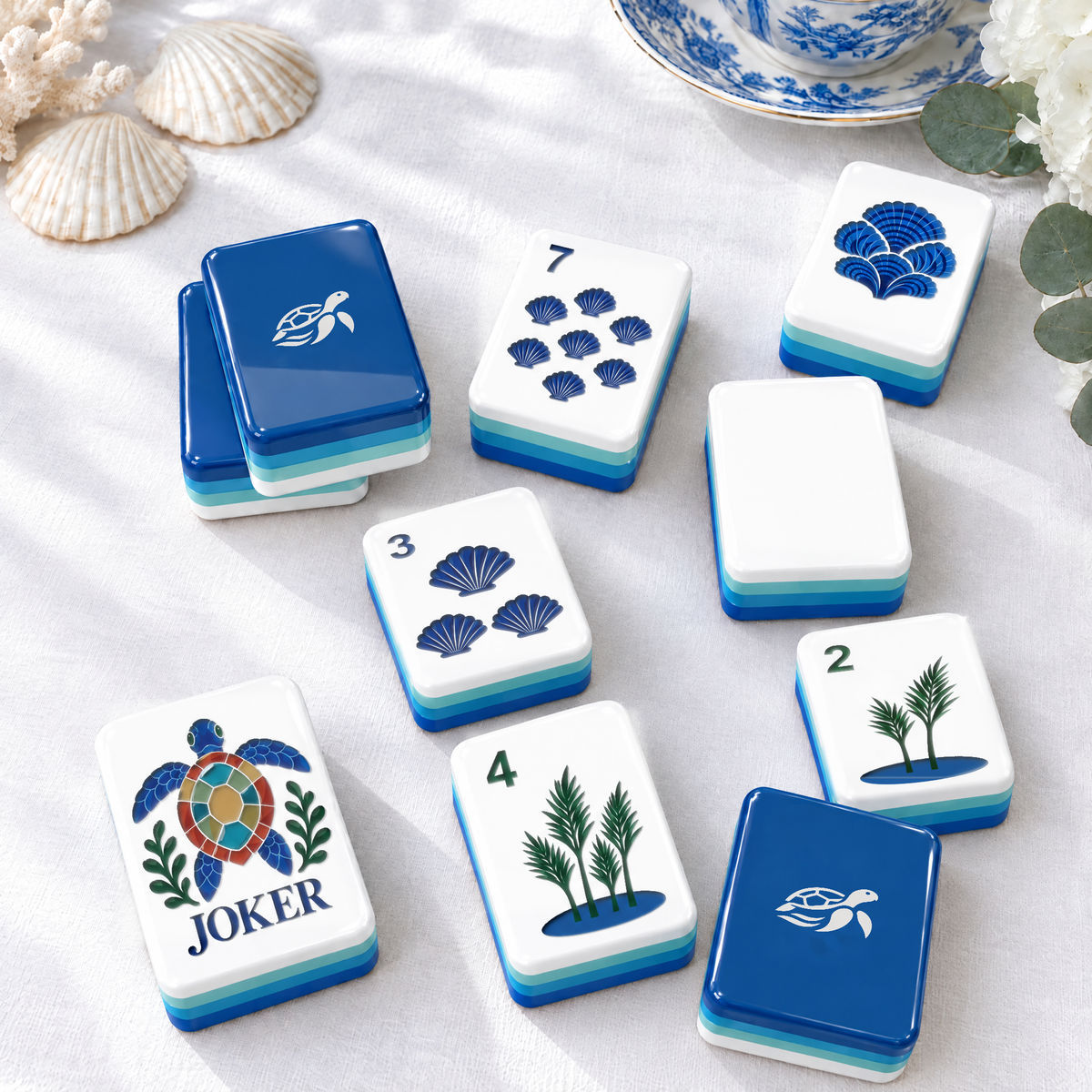
American mahjong's standard setup—with the wall drawn clockwise and racks positioned for right-handed tile access—puts left-handed players at a physical disadvantage. The fix is not complicated: sit in a seat (usually East or West) where you can draw from the wall with your left hand without reaching across your body, position your rack with pushers to your left so you draw and discard naturally, and agree with your table before play whether wall position rotates with the player or stays fixed. No rule forbids this. Many clubs allow seating rotation specifically to accommodate left-handed players. The best-selling American mahjong sets work equally well once you've claimed your spot; what matters is comfort, consistency, and—for fairness—telling your game partners your preference upfront.
Left-handed mahjong players often describe the same frustration: reaching across the table to draw from the wall, stacking tiles on your right side (against your instinct), or blocking right-handed opponents' view of the table. These aren't rule violations—they're geometry problems. American mahjong has no left-handed or right-handed tile, hand, or play. What exists is a seating ritual and a physical convention. Once you understand both, adapting is straightforward.
Does American mahjong have a left-handed rule or variant?
No. American mahjong—governed by the National Mah Jongg League—has no variant, accommodation rule, or specific instruction for left-handed play. The game itself is neutral; the challenge is table layout. Right-handed players naturally draw from the wall on their right and discard to their left. Left-handed players experience the reverse and need deliberate seating to avoid discomfort or accidentally blocking others. Many clubs and casual groups solve this by allowing players to choose their seat or to rotate the wall position. There is no official penalty or rule change required.
🀄 Shop best-selling mahjong sets →

How should a left-handed player position the mahjong wall?
The wall in American mahjong is broken (drawn from) in a specific order, starting from the dealer's position and moving clockwise around the table. For a left-handed player, the key is where you sit, not where the wall is. If you sit where the wall is on your left side, drawing from it becomes natural. Most tables have four seats (North, East, South, West). Choose East or West and confirm that the player in that seat draws from the wall on their left-hand side. Alternatively, some groups keep the wall orientation fixed but rotate seats so left-handed players get a left-wall position each round. Either approach works—just agree before the Charleston begins.
What's the best rack position for a left-handed mahjong player?
Your rack with pushers should sit on your left. In right-handed play, racks are typically positioned on the right edge of a mat or table, allowing right-handers to draw tiles from the right side of the rack and push them in with pushers. A left-handed player reverses this: position the rack on your left edge, draw from the left end of the rack, and push tiles in with your left hand. If your group uses a mat with a fixed right-hand rack pocket, rotate the mat so the pocket is on your left—or slide your rack to the opposite end of the mat entirely. No rule forbids it. If everyone at your table has a mahjong mat, this is often the easiest fix.
Can a left-handed player discard in a different direction?
Discarding direction is not a rule—it's a convention. In American mahjong, when a player discards (plays a tile from their hand), it goes into the center of the table and is exposed for all to see. The direction (left or right) in which you move your arm to place it does not matter, because the tile ends up in the same central pool. What matters is that the tile is clearly separated from your hand and rack and visible to all three other players. A left-handed player can discard to the right, left, or straight down—no rule is broken. Choose whatever direction is most comfortable and makes the discard clear.
Which seat should a left-handed player choose each round?
At the start of each game, one player is designated dealer (East), and the other three are South, West, and North. Before you shuffle, you can influence your seat if your group allows seat choice or rotation. Look for the seat where the wall (or the direction others will draw from) is on your left side. In a typical four-player setup with a centered wall, West and East are the left and right positions; if the wall is drawn from the center outward, try West or East, whichever puts the wall on your left. If your group rotates who is dealer each round, rotate seats as well so a left-hander always has a left-wall option. In casual home games, this is rarely an issue—just choose your seat before play begins.

What accessories make left-handed mahjong more comfortable?
A few tools remove friction:
Racks with pushers: Positioned on your left side of the mat, they let you draw and organize tiles naturally. Our racks with pushers collection includes designs that fit both standard mats and custom setups.
Mahjong mats: A mat with a left-side rack pocket (or one you can rotate) takes guesswork out of setup. See our mahjong mats for options that work in any orientation.
Larger or tilted sets: Some left-handers find acrylic tiles easier to manipulate than bamboo because they're lighter and less prone to slipping. Our best-selling acrylic sets are durable and widely used in clubs.
Dice and score pads: No left-hand variant exists, but keeping score written clearly prevents confusion during fast play.
Accessory | Purpose | Why It Helps Left-Handers |
Rack with pushers | Organize 13 tiles; draw and push smoothly | Positioned on left side; reduces reaching |
Mahjong mat | Define play area; secure tiles during draw | Rotatable; left-pocket option; prevents tile scatter |
Acrylic tile set | Easy grip; less slipping | Lighter weight; visible to all angles |
Score pad & pen | Track points | No left/right issue; clarity prevents disputes |
🎁 See our most-loved mahjong sets & accessories →
What should you tell your table before playing?
Before you sit down, speak up: "I'm left-handed. I'd like to sit [East/West] so the wall is on my left. That okay?" Most players will say yes immediately. If your group uses a mat, add: "I'm rotating the mat pocket to the left—does that work?" Again, almost always yes. If anyone objects, explain that you need the same ease of access they have as right-handers—it's fair, not a rule break. After the first hand or two, it becomes automatic. No apology needed.
How does a left-handed player handle the Charleston?
The Charleston is the tile-passing ritual before play begins. Three pairs of tiles are passed left-right-center in a specific order. Left-handed or right-handed play does not change the Charleston direction: tiles always move the same way. What may change is which direction feels natural when you're picking and passing. If you sit on the left side of the table, passing tiles to the right (clockwise) might feel like reaching. Simply pass across the table with your left hand—tiles don't care which hand touches them. The direction is fixed by rule, not by comfort.
Real-world table-test tips from left-handed players
Claim your seat first. Don't wait for the dealer to assign you; choose a left-wall position before hands are drawn.
Use a left-side rack if your mat has one. If not, bring your own or ask if someone has a spare you can flip.
Keep your hand organized on your left. Don't try to manage a hand on your right side; move tiles to your left as soon as you draw them.
Discard clearly into the center. Avoid discarding toward your right and having tiles slide off the mat.
Play a few hands before critiquing comfort. Sometimes what feels awkward in the first hand clicks after setup settles.
What to check before you buy a set if you're left-handed
Rack compatibility: Does the mat or bag include racks? Can they be positioned on either side? (Most can; it's just rotation.)
Tile weight and grip: Lighter, smooth acrylic tiles are often easier for left-handers to manage than heavier bamboo or bone tiles.
Mat size and pocket placement: A larger mat gives you room to spread your hand on the left; a fixed right-side pocket can usually be rotated or ignored.
Bag or case design: If you travel with your set, ensure the bag doesn't assume right-hand carry; most are ambidextrous.
✨ Find your Mahstead set — free US shipping →
Start with the mahjong-for-beginners guide to learn the core rules—left-handed or right-handed play follows them identically. Then, position yourself for comfort and tell your table upfront. You'll find that American mahjong is far more flexible in physical setup than many players assume.

FAQ
Is left-handed mahjong a separate game or rule variant?
No. American mahjong has one set of rules. Left-handed play means you sit and orient your rack and wall differently—not that the tiles, hands, or scoring change. The National Mah Jongg League makes no distinction; comfort is a seating choice, not a rule exception.
Can I sit in a specific seat every round if I'm left-handed?
Not always. Most casual home games allow seat choice, and you can negotiate seating to favor your hand. In league or tournament play, seats rotate by rule, so you'll have left-wall rounds and right-wall rounds. Ask your table or club what's standard.
What if my group uses a standard right-handed mat and won't rotate it?
You have three options: bring your own mat, flip the mat 180 degrees, or use a standalone rack on the left side of the table beside the mat. Many groups do the latter during casual play. If someone objects, explain that you need equal access—most agree immediately.
Do left-handed and right-handed players play the same hands and scores?
Completely. The National Mah Jongg League card is identical for all players. Hands, point values, and rules are the same. Position and comfort are the only differences.
Which seat (North, East, South, West) is best for a left-handed player?
West or East, typically—they put you on the left or right flank of the table where the wall is on one side. Exact preference depends on your table's wall-draw direction and mat layout. Ask your dealer or host before the first hand, or just claim a corner seat that feels balanced.


View More
View More
View More
