
Cantonese Mahjong Tile Set: Picking the Right One for Your Game
Last updated: Nov 23, 2026
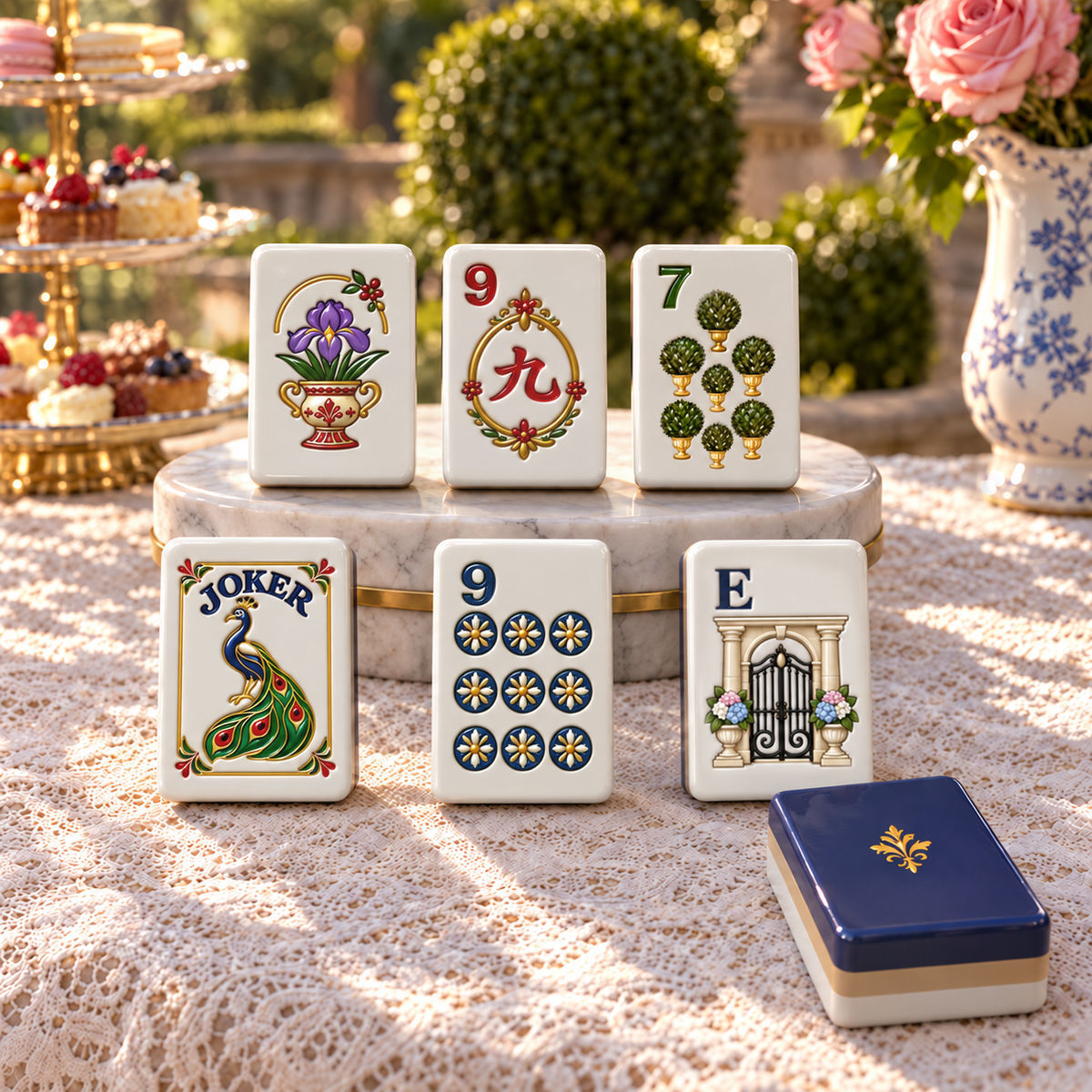
Cantonese mahjong tile sets contain 144 tiles—108 numbered tiles in three suits (Bam, Crak, Dot), plus 16 winds, 12 dragons, and 8 flowers, with no jokers. The suits and dragon colors differ slightly from American sets: the White dragon is called "White/Soap" and appears in Dot sets, while the layout and hand-winning patterns follow Chinese regional rules rather than the National Mah Jongg League card. Most Cantonese players buy sets designed for Hong Kong or Taiwanese play, which include racks and pushing sticks but no jokers or blanks. A Cantonese set costs less than American variants because it has fewer spare tiles. Check tile material (acrylic vs. bone) and size before ordering—144-tile sets are slightly more compact than American 160-tile sets. If you host weekly Cantonese games and need durability, acrylic from Mahstead's best-selling mahjong sets will withstand shuffling better than plastic alternatives.
What's different between Cantonese and American mahjong tiles?
The main difference: Cantonese sets have exactly 144 tiles with no jokers, while American sets contain 152 tiles plus 8 jokers. Cantonese suits use the same names (Bam, Crak, Dot) but the numeral designs differ—especially the 1 Bam, which may show a different bird or symbol. Honor tiles (winds and dragons) are identical in both, though Cantonese players call them by Mandarin or Cantonese names. The absence of jokers changes strategy entirely: in Cantonese mahjong, you cannot substitute tiles, so hand construction is more rigid than American play.

Why do Cantonese mahjong sets have no jokers?
Cantonese and Hong Kong mahjong rules don't allow wild tiles—the game relies on strict pattern recognition and luck of the draw. Jokers were added to American mahjong in the 1920s–1930s to make hands easier to form and speed up play for casual Western audiences. Cantonese players prize the traditional format because it demands more skill and memory. If you're learning Cantonese mahjong after playing American, removing jokers from your mental model is your biggest adjustment.
How do you choose between 144-tile and 152-tile sets?
Play style | Tile count | Who it's for | Key trade-off ---|---|---|--- Cantonese/Hong Kong rules | 144 tiles | Players following Chinese regional play | No jokers; stricter hand patterns American NMJL rules | 152 + 8 jokers | Western league players; casual groups | Jokers allow more hand variety Tournament-ready | 144 or 152 (per venue) | Competitive players in specific leagues | Must match the exact venue rules
Before buying, ask your game host which ruleset your group plays. Many Dallas-area mahjong clubs run both variants, so confirming the format prevents buying the wrong set. If your group is split, our best-selling collection includes acrylic sets that suit both traditional Cantonese players and American league members.
🀄 Shop best-selling mahjong sets →
What materials should you look for in a Cantonese mahjong set?
Cantonese sets come in three main materials: bone and bamboo (traditional, fragile), acrylic (modern, durable, loud), and plastic (budget, wear quickly). Bone tiles feel luxurious but crack if dropped; acrylic tiles last through years of weekly shuffling and are dishwasher-safe. Plastic is the cheapest but surface prints fade within 6 months of heavy play. If you host weekly games, acrylic wins: it handles aggressive shuffling, survives coffee spills, and tiles stay legible. Traditional Cantonese players often prefer bone for prestige, but acrylic is honest about durability—we've seen sets played 2–3 times weekly for five years without chipping.
How do rack and pusher designs differ in Cantonese sets?
Cantonese racks are typically smaller and angled lower than American racks because players hold fewer concealed tiles (since there are no jokers and hand composition is stricter). The pusher stick is often thinner and shorter. American racks are bulkier and designed for higher tile stacking. Some Cantonese sets ship without racks, assuming players use wooden tile stands or play with tiles fanned on a mat. Check the set's contents before ordering: if the listing doesn't mention racks, contact the seller or buy mahjong racks separately to ensure your tiles stay upright during shuffling and play.

Should you buy an engraved or plain Cantonese tile set?
Feature | Plain tiles | Engraved tiles |
Cost | Lower | Higher |
Legibility | Standard; fades over time | Stays sharp for years |
Gift appeal | Generic; no personalization | Memorable; custom names or dates |
Maintenance | Wipe with dry cloth | Same |
Best for | Weekly casual play | Gifts; tournament sets; heirloom use |
Engraved sets let you add your club's name, initials, or a memorable date to the tile backs or a corner. This makes the set instantly recognizable at a crowded game table and turns it into a keepsake. Plain sets cost less upfront but engravings don't fade like printed designs—a real advantage if you play twice weekly. For Cantonese groups that host tournaments or celebrate milestones, engraved mahjong sets create a sense of ownership and pride.
🎁 See our most-loved mahjong sets & accessories →
What should you check before ordering a Cantonese mahjong set online?
Confirm the tile count. The listing must say "144 tiles" (Cantonese/Hong Kong) or "152 tiles + 8 jokers" (American). Many sellers mix descriptions; mismatched counts mean you'll have the wrong hand patterns or missing jokers.
Verify material and weight. Acrylic sets typically weigh 8–10 pounds (including the case or bag); bone sets are lighter but fragile. Heavy acrylic withstands shuffling; lightweight plastic warps under pressure.
Check what's included. Does the set come with racks, pushers, a mat, and a bag? Cantonese sets often ship without mats, so budget separately if you need one. A mahjong mat protects your table and speeds up play.
Read the seat. If the set shows dragons or winds, confirm they match your regional ruleset (Hong Kong vs. Taiwanese vs. Mandarin-style naming). Some sets label tiles only in Chinese characters; others add English numerals.
Inspect the box or case. The set should arrive in foam-lined packaging or a sturdy carrying case. Cardboard-only shipping often results in chipped tiles. Mahstead ships all sets with free US delivery in protective cases designed for travel and storage.
✨ Find your Mahstead set — free US shipping →
Where do Cantonese players find tile sets in Dallas and beyond?
Community centers, libraries, and synagogues often host mahjong groups that welcome new players—ask the coordinator what set format they use. Online communities (Reddit's r/Mahjong, Mahjongg café forums) post local game schedules and which variant is standard in your area. If you're ordering online, look for sets that include a carry bag; travel-friendly mahjong bags and cases let you bring your set to rotating game locations without damage.
What to check before you buy
Tile count matches your game: 144 for Cantonese, 152 + 8 jokers for American. Mixing them breaks hand patterns.
Material durability: Acrylic survives weekly shuffling; plastic fades in months; bone is beautiful but fragile.
Packaging: Look for foam-lined boxes or cases, not loose cardboard—tiles chip easily in transit.
Racks and mats included: Don't assume; check the product description. If missing, buy separately.
Character labels: Confirm the dialect (Hong Kong, Taiwanese, Mandarin) or English numerals match your group's ruleset.

FAQ
Can I use a Cantonese mahjong set to play American mahjong?
No. Cantonese sets lack the 8 jokers and extra tiles American play requires. The hand patterns are also completely different—you'd be missing hands and unable to complete American League card patterns. Buy the correct tile count for your game.
What's the real cost difference between Cantonese and American mahjong sets?
Cantonese sets (144 tiles, no spares) typically cost less than American sets (152 tiles + 8 extra jokers) because they have fewer tiles and no jokers. See current price on the product page for exact comparison.
Do Cantonese mahjong sets come with jokers I can remove to play American rules?
No. Cantonese sets have zero jokers by design; you cannot add jokers to make it work for American mahjong. Jokers are specific tiles with their own backs and artwork—you'd need to buy a full American set.
Why don't Cantonese players use jokers if it makes the game easier?
Cantonese mahjong preserves traditional Chinese rules, which date back centuries before jokers existed. Removing the wild-tile element keeps strategy focused on tile probability, memory, and reading opponents rather than relying on luck. Serious Cantonese players see it as the "pure" version.
How do I know if a tile set is authentic Cantonese or a cheap knock-off?
Authentic sets have evenly printed or engraved tile faces, consistent weight across all tiles, smooth edges, and no bubbles in acrylic. Cheap sets have faded prints, warped tiles, rough edges, and inconsistent thickness. Hold two tiles together—if they feel uneven or rattle, walk away.
Can I play Cantonese mahjong with fewer than four players?
Yes, three-player and two-player Cantonese variants exist, but the hand patterns and tile draws change significantly. Confirm your group's ruleset before buying—some variants require modified tile counts or additional tiles. Ask your game host if you're unsure.


View More
View More
View More
