
Mahjong for Bunco Players: What Skills Transfer
Last updated: Nov 23, 2026
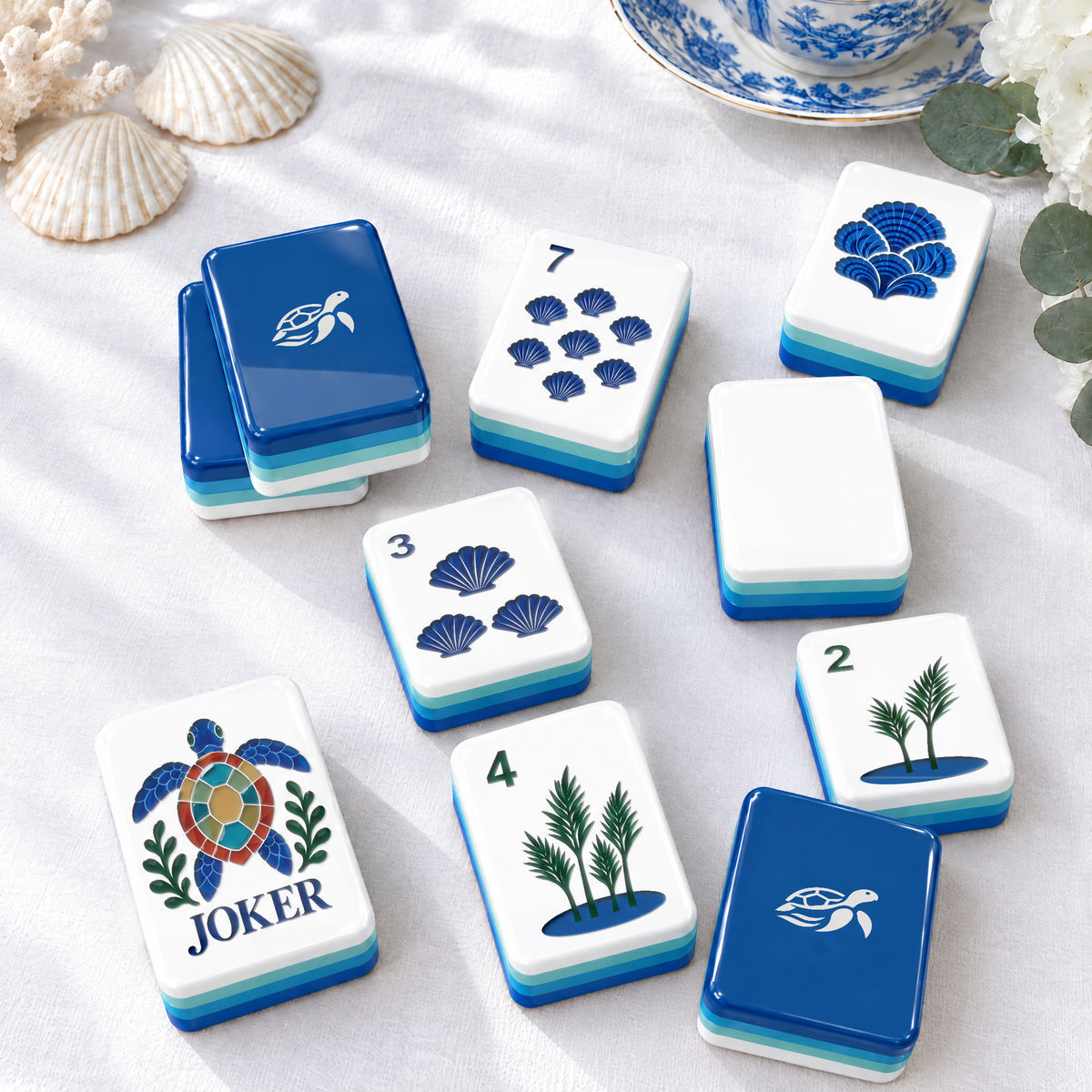
Bunco teaches you rhythm, dice luck, and group dynamics—all present in mahjong—but the core game logic differs completely. Mahjong replaces bunco's round-robin scoring with a single hand structure: you draw and discard tiles to build melds (identical sets of three, four, five, or six tiles) that match patterns on the current year's National Mah Jongg League card. Both games involve four players, careful scorekeeping, and conversation—but bunco is pure chance, while mahjong requires memory, hand reading, and strategic discard. Your bunco table, mat, and snack habits transfer perfectly; your bunco strategy does not. Most former bunco players pick up American mahjong's core in two to four sessions if they commit to one learner game per week.
Why bunco players adapt faster than total beginners
Bunco trains you to track rotation, manage a scoreboard, and stay focused through twelve rounds of rapid-fire play. In American mahjong, you'll recognize the same ritual: four players, a dealer position that rotates, and a scorekeeper at the table. Both games reward attentiveness—in bunco, you notice who rolled what; in mahjong, you track which tiles have been discarded and which player is closest to winning. You've already won the psychological battle: you're comfortable at a game table, you know how to handle stakes and settlement, and you won't panic when someone calls a hand. That ease is priceless. Where bunco is ninety percent luck, mahjong is sixty percent skill and forty percent luck and reading opponents.

The one skill that's almost identical: discarding under pressure
In bunco, you roll dice in order and hope for matches. The decision is passive. In American mahjong, you choose every discard—and that choice determines whether your opponent wins on her next turn. This is where your bunco experience shines: you already understand table pressure, the social cues that signal someone's close, and the rhythm of play acceleration. When a mahjong player discards, the table goes quiet for a half-second; everyone's calculating risk. You've felt that tension in bunco when the score is tight. In mahjong, you use it differently: a safe discard is one your opponents are unlikely to need, based on what tiles they've already thrown. This requires memory and inference—but the emotional skill—staying calm, reading the room, managing your face—transfers directly from bunco. Practice this one skill in your first game and you'll see the entire table relax.
What does not transfer: hand building logic
Bunco has no strategy beyond rolling the dice and following suit—the card dictates your path. American mahjong requires you to hold fourteen tiles in your rack and assemble them into sets before anyone knows you've won. This is radically different. You cannot tell your bunco-playing friend "I'll teach you mahjong in ten minutes"—you can teach the tile distribution and the passing ritual (the Charleston), but hand building is its own puzzle. A winning hand in American mahjong must match a specific pattern from the current year's League card: for example, three Bams in a run, two 5 Dots with a joker, four Green Dragons in a block, and two North Winds as a pair. You're building that exact combination while drawing and discarding, while other players are doing the same, without anyone else seeing your hand. In bunco, everyone's tiles are face-up and public—you're all rolling toward the same target. Mahjong is a secret hand game with a public penalty structure: if you're caught with the wrong tiles, you've mis-declared and lost the round. This cognitive leap—holding a private goal and disguising your progress—is the main adjustment from bunco. Plan for two to four weeks of regular play before hand building feels natural.
🀄 Shop best-selling mahjong sets →
The Charleston is bunco's secret cousin—the tile-passing ritual
Before the first hand of American mahjong, the Charleston happens: players pass tiles in sequence (three draws, then a blind pass, then a two-draw pass in a new direction) to randomize the distribution. It feels like bunco's pre-game shuffle—familiar, collaborative, slightly ceremonial. Bunco players appreciate this: it's a contained phase where no one has won yet, everyone's equal, and the table's energy is building. The Charleston takes four to five minutes, and many bunco players love it because it feels like a ritual their group can own—some groups have house rules, funny pass patterns, or running jokes about who always draws the jokers. This is where mahjong becomes social in a bunco-friendly way: the game itself is more cerebral, but the pre-game passing is theater. If you're introducing bunco friends to mahjong, start with the Charleston, let them handle the tiles, and explain that they're not choosing cards—they're passing randomly. That breaks the ice and removes the intimidation.
Scorekeeping transfers—but winning is different
In bunco, the highest score over twelve rounds wins. In American mahjong, a single hand determines a winner, and scores vary wildly: a simple hand might pay two points per player; a complex hand with rare tiles and patterns might pay six, eight, or more—all based on the League card. Your bunco scoreboard habit is useful: mahjong tables always have a pen and paper (or increasingly, a phone app or rack scoreboard). However, bunco players are used to cumulative scoring across many rounds; mahjong players score per hand and reset for the next game. The shift is subtle but real. In bunco, you're thinking about tournament positioning; in mahjong, you're thinking about the next hand. Many bunco players find this freeing—each hand is its own drama. If you've kept a bunco scoreboard, you can keep a mahjong scorecard; the mechanics are similar, even if the philosophy differs.

How to host your first mahjong night as a bunco player
Step 1: Read the current year's National Mah Jongg League card in advance (or ask your teacher to walk you through two to three hands). You don't need to memorize it—just recognize that patterns exist and that the card is law. This is a five-minute investment.
Step 2: Set your table like you would for bunco—a mat is optional (many tables use a tablecloth), but a set of 160 tiles, four racks with pushers, and a pair of dice are essential. If you're hosting, consider investing in engraved sets or a mat that reflects your group's personality; it signals that mahjong matters to you and makes the transition from bunco feel intentional.
Step 3: Assign one learner-friendly hand (the rules guide calls it a "hand of the week") and play only that pattern for the first game. Ignore all other hands on the card. This removes decision paralysis and lets you focus on the rhythm: the Charleston, the draw-and-discard cycle, and the payout.
Step 4: Play three hands maximum in your first session. Bunco nights often run 2–3 hours; mahjong rounds take 8–12 minutes plus talking, so you'll get four to five hands in an hour. Fatigue kills learning.
Step 5: Settle payment after the session, not after each hand. This mirrors bunco and reduces table friction.
Aspect | Bunco | Mahjong | What You Can Reuse |
Players | 4 | 4 | The four-person structure and rotation |
Turn structure | 12 predetermined rounds | Variable rounds, one hand per round | Table management and dealer rotation |
Skill vs. luck | 95% luck | 40% luck, 60% skill | Emotional composure, group dynamics |
Scoring | Cumulative over a night | Per-hand, varies widely | Scorekeeping habit; reset mentality per round |
Setup time | ~5 minutes (cards, dice, scoreboard) | ~10 minutes (Charleston, tile distribution) | Your ability to organize a table |
Hand visibility | All tiles face-up and public | Private racks, hidden hands | Poker-face discipline (carry over) |
What to check before you buy your first mahjong set
Tiles must include jokers. A standard American mahjong game uses exactly 152 tiles plus 8 jokers; sets sold as 160-tile sets include spares. Do not buy a 144-tile set if you're coming from bunco—you'll be short a complete game.
Buy or borrow one set for your first two weeks. You don't yet know if mahjong is your group's future; bunco devotees sometimes try it once and return to bunco. Test the commitment before buying four sets or custom gear.
Test a mat in your second or third session. Mats are not mandatory (a table and placemats work), but they organize the play space and protect your table. Bunco players often appreciate the mat because it's similar to placing felt on a card table—it signals "this is a game space."
Get racks with pushers if anyone in your group has hand arthritis or prefers not to handle tiles constantly. Bunco is card-heavy, mahjong is tile-heavy; physical comfort matters.
🎁 See our most-loved mahjong sets & accessories →
The hardest transition: patience and memory
Bunco is fast and loud; mahjong is deliberate and quiet. The fastest mahjong hand takes seven to eight minutes; a slow hand—one where players are learning or thinking hard—takes fifteen minutes. Bunco rounds are faster and more chaotic. If your group loves speed, mahjong will feel glacial at first. However, mahjong's slowness is its appeal: the long pauses let you think, read your opponents, and feel the suspense build. A bunco player who loves the social drama of the game (the trash talk, the near-misses, the close scores) will love mahjong's quieter intensity. A bunco player who loves the speed and constant action might find mahjong too contemplative.
Mahjong also demands memory: you must track which tiles have been discarded, which player threw them, and which player is closest to winning. Bunco requires almost no memory—the dice tell you what to do next. For bunco players over sixty, this is often the real hurdle, not the hand logic. The good news is that mahjong memory skills improve dramatically in the first month; your brain adapts faster than you'd expect.
Your bunco group's transition plan: a three-week checklist
Week 1: Host one mahjong learner night (three hands maximum, one pattern). Treat it like a bunco trial. Settle scores casually. Gauge interest.
Week 2: Play the same pattern again if interest holds. Add one new pattern if your group is eager. Keep it social and low-pressure.
Week 3: Decide as a group whether to alternate bunco and mahjong, replace bunco entirely, or return to bunco. No guilt either way—both games are excellent.
If your group commits, read the foundational guide to understand the Charleston, joker rules, and tile distribution. Then invest in custom mahjong sets that feel like yours—engraved with a year, a phrase, or a group name. The ritual and ownership make the transition from bunco to mahjong feel like evolution, not replacement.
✨ Find your Mahstead set — free US shipping →

FAQ
Can I use my bunco dice in mahjong?
Yes, but mahjong uses the dice differently. Bunco rolls dice openly; mahjong uses dice to determine which wall to draw from at the start. Bring your dice—they work fine, and they carry your group's history into the new game.
How long does a mahjong game take compared to bunco?
A bunco night (twelve rounds) takes 1.5–2 hours. A mahjong session (four to six hands) takes 45 minutes to 90 minutes, depending on player experience. Beginners are slower; experienced players zip through hands in 8 minutes.
Do I need a mahjong mat if I already have a bunco card table?
No, but a mat helps. It defines the play space, protects your table, and signals that mahjong is a dedicated ritual—similar to putting felt on a bunco table. Many groups skip mats and use a tablecloth; it works fine for casual play.
What's the biggest rule difference between bunco and mahjong?
Bunco is 95% luck; mahjong is 60% skill and 40% luck. In bunco, the dice decide your fate. In mahjong, your choices (which tiles to keep, which to discard, when to call a win) determine the outcome. This is why mahjong feels more rewarding but also more stressful to beginners.
Can three people play mahjong if someone from my bunco group can't make it?
Yes—two and three-player versions exist, though they play very differently from the standard four-player game. For a bunco group transitioning to mahjong, plan to play with all four players when possible; it preserves the group dynamic you've built.
If I learn mahjong, will I forget how to play bunco?
No. The games are separate enough that knowing mahjong doesn't erase bunco muscle memory. Many players happily alternate between the two.


View More
View More
View More
