
Mahjong Travel Sets: Pack Your Game Anywhere
Last updated: Nov 23, 2026
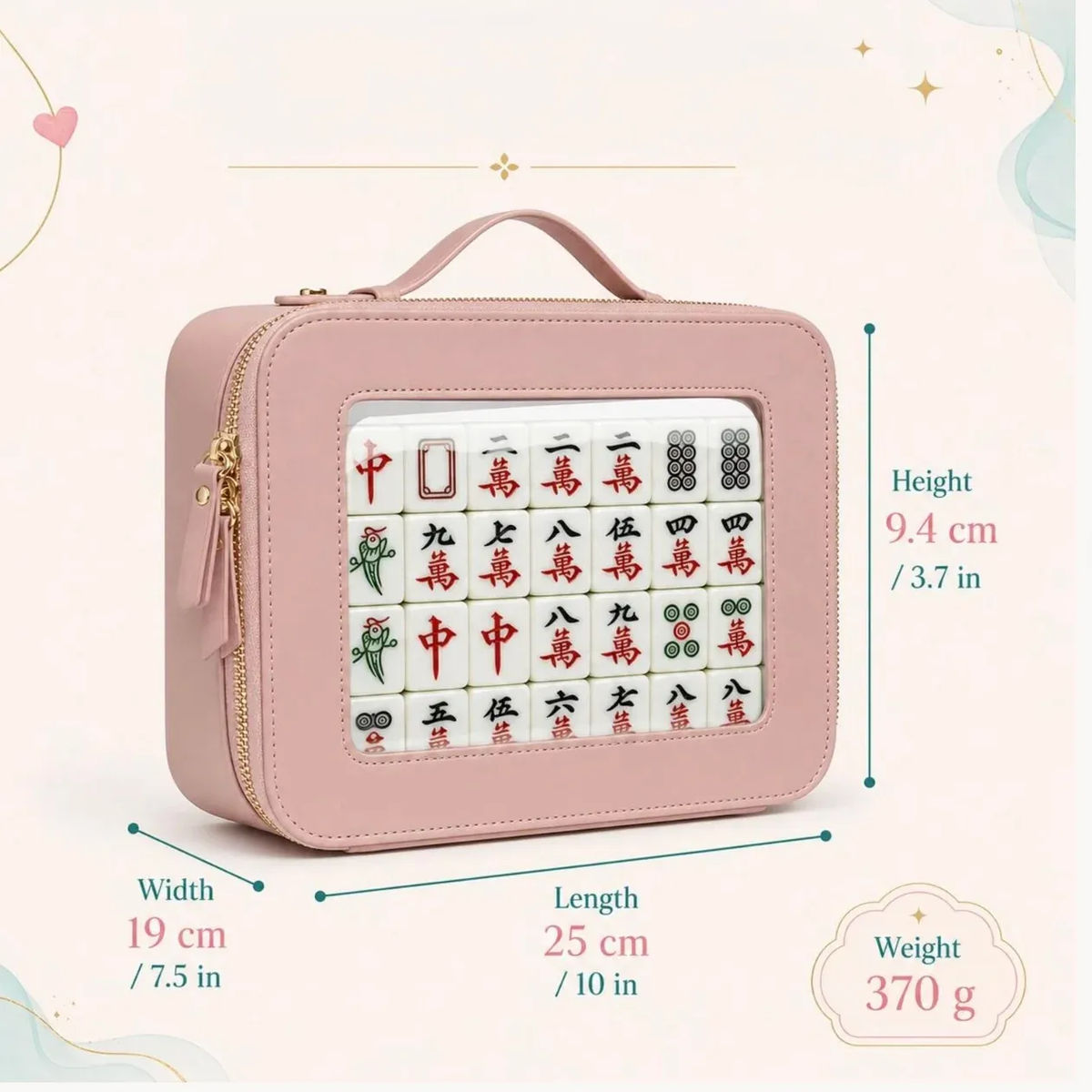
A mahjong travel set bundles a 160-tile acrylic set (152 playing tiles plus spares) in a carrying bag or hard case, sized to fit overhead luggage or a car trunk. The standard American set weighs 3–5 pounds and fits in cases ranging from soft nylon pouches (11×8 inches) to rigid boxes (14×10×4 inches). Sets come with tiles, racks with pushers, and often a mat; some include dice and a card holder. Cost varies based on material (acrylic vs. bone) and case type—check current price on the product page. Travel sets prioritize durability over bulk: acrylic tiles resist cracking on bumpy roads, and cases with handles and shoulder straps beat loose cardboard. Most US-based players choose soft-sided travel bags and cases from our most-loved collection for weekend trips, saving hard cases for permanent home setups. Avoid thin plastic cases and bags without padding; they fail within months.
Can a full 160-tile set actually fit in a travel bag?
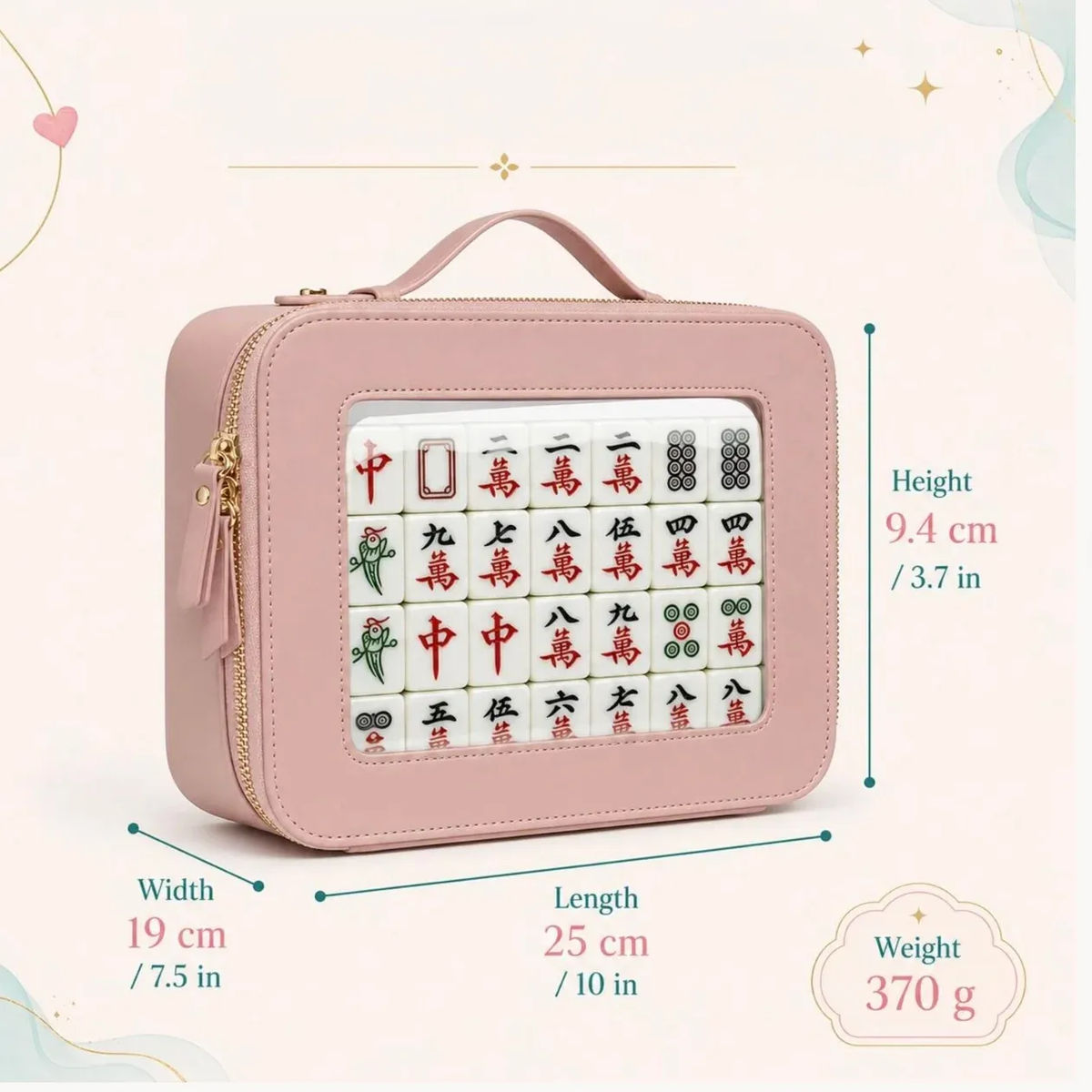
Yes, easily. A standard acrylic American mahjong set (all 160 tiles plus racks) compresses into a bag measuring roughly 14 inches wide by 10 inches deep by 4 inches tall. Most soft-sided travel bags have external pockets for scorecards, dice, and pen. Hard-shell cases stack tiles neatly in rigid trays, protecting them during airport security screening and car transport. Soft bags weigh less than hard cases but offer less crush protection on airplanes.
What's the difference between a travel bag and a permanent home case?
Travel bags prioritize portability: shoulder straps, lightweight nylon, compact zippers, and often a handle. Home cases prioritize aesthetics and protection: larger footprints, wood or rigid acrylic bodies, tile-specific compartments, and decorative hardware. If you're hosting weekly games at the same dining table, a beautiful home case belongs on display. If you're flying to a tournament or visiting a friend's house every month, a travel bag with a removable mat saves space and travel time. Most active players own both.
Which travel set works for airlines and tournaments?
Acrylic travel sets with TSA-compliant soft cases are airline-approved: tiles fit in standard overhead bins, no sharp edges trigger alarms, and nylon handles pass through security scanners. Best-selling acrylic sets typically come with padded bags suitable for checked and carry-on luggage. Tournament organizers accept acrylic or bone-and-bamboo sets equally, but acrylic sets weigh less—critical if you're carrying a second mat or extra racks. Check your airline's carry-on weight limit (usually 22 pounds) before booking.
Should you buy a mat with your travel set, or pack separately?
Mats ship folded or rolled, adding bulk. If your travel set includes a portable mat, test it before a trip: some fold to 20×10 inches (fits in most suitcases), others to 16×16 inches (requires a large bag). Buying a mat separately lets you choose thickness (¼ inch for travel, ⅜ inch for home) and size. A thin travel mat pairs well with compact acrylic sets and fits in a 22-inch roller bag alongside clothes. If you host weekend tournaments, buy a mat independently sized for two-table play and leave it at your venue.
How do you compare price and value across travel set options?
Set Type | Who It's For | Tile Material | Case Type | Includes Mat? | Weight | Best Use |
Acrylic + soft bag | Weekend players, travelers | Acrylic | Padded nylon | Often no | 3–4 lbs | Plane, car, hotel |
Acrylic + hard case | Tournament regulars | Acrylic | Rigid plastic/wood | Rarely | 4–5 lbs | Home + travel |
Engraved acrylic sets | Gifts, keepsakes | Acrylic (custom) | Soft or hard | No | 3–5 lbs | Personalized travel |
Bone + bamboo sets | Serious players | Bone/bamboo | Soft bag (usually) | Rarely | 5–7 lbs | Resorts, home |
Most travelers choose acrylic + soft bag because the total cost is lowest and replacement easy if luggage is lost.
What features reduce travel hassle?
Racks with pushers: Some travel sets include racks that let each player keep tiles hidden—essential when playing in noisy airport lounges or shared tables. Racks with pushers can be ordered separately if your travel set doesn't include them, though they add weight and bulk.
Dice and scorecards: Portable travel sets often pack a dice pouch and laminated scoring sheets. If yours doesn't, a small zippered pouch inside your travel bag keeps dice from rolling loose in your suitcase.
Shoulder strap on the bag: Not all travel bags include straps. A bag with a strap (or bag + separate strap attachment) saves your hands during airport walks and hotel lobby moves. Test the strap weight when fully loaded—thin nylon straps can cut into shoulders.
Tile compartments, not loose bins: Tiles rolling freely in a bag crack against corners. Bags with internal fabric dividers or cases with molded trays isolate tiles and spare jokers. Check product photos before ordering.
🀄 Shop best-selling mahjong sets →
What to check before you buy
Bag dimensions vs. your luggage. Measure your carry-on and checked bag's interior. Most travel bags fit roller bags; some don't.
Weight limit on your airline. Acrylic sets are lighter than bone; if your airline is strict, choose acrylic.
Tile color clarity. In hotel rooms with poor lighting, dark red Craks and dark green Bams can blur. Order a set with high-contrast acrylic (often listed as "bright" or "luminous").
Spare jokers and blanks. All 160-tile sets include spares; confirm your travel bag has a separate pouch for them—you won't need spares in play, but they prevent panic if a tile cracks during travel.
Mat thickness. Thin mats (¼ inch) fold small but offer no felt feedback; thicker mats (⅜ inch or more) are bulkier but more comfortable. For weekend trips, thin is fine. For week-long visits, consider mailing a thicker mat ahead.
Racks and pushers. Check if your set includes them. If not, lightweight plastic racks (not bamboo) are travel-friendly and cost less.
Common mistakes to avoid
Buying a home-sized case thinking it's portable: Large decorative cases look beautiful in a living room but won't fit overhead bins or car backseats. Read the exterior dimensions—anything over 15×12×5 inches is primarily for home storage.
Ordering bone-and-bamboo for travel: Bamboo racks expand and contract with humidity changes, potentially warping inside airplane cabins. Acrylic and plastic racks stay stable.
Overpacking accessories: Limit yourself to one mat, one set of racks, dice, and scorecards. Every extra item is weight and bulk. If traveling with a friend, split items between two bags.
Forgetting to test the bag's zippers before a trip: A zipper failure mid-journey leaves tiles vulnerable to spills. Open and close all zippers several times at home first.
Assuming "waterproof" means waterproof. Most nylon travel bags are water-resistant (they shed light rain) but not fully waterproof. If your flight involves heavy rain or pool-side play, pack the bag inside a lightweight dry sack.
Travel sets for different destinations
Weekend car trips: A soft-sided bag with shoulder strap and no mat works best. Leave the mat at home and play on the host's table. Total pack time: under 2 minutes.
Air travel (under 5 days): An acrylic set + compact mat + soft bag with carry-on dimensions. Check airlines' tile rules—acrylic and bone are universally permitted; no objections from TSA.
Tournament play (1–3 days): Bring your set and ask the tournament organizer if they provide communal mats and racks. If not, pack one portable mat and one backup set of racks. Engraved sets add personality if you're known by your tile aesthetic.
Extended stays (2+ weeks): Ship your home case ahead via mail; travel with a lightweight acrylic set and soft bag only. Ask your host if they have a mat; if not, a compact mat ships separately for under the cost of upgrading to a larger case.
🎁 See our most-loved mahjong sets & accessories →
How acrylic travel sets compare to bone-and-bamboo
Acrylic tiles are lighter (3–4 pounds for a full set), scratch-resistant, and survive luggage compression. Bone-and-bamboo tiles feel heavier and more authentic but weigh 5+ pounds and require careful handling on planes. Acrylic sets cost less and are easier to replace if lost or damaged during travel. Bone-and-bamboo sets are treasured keepsakes, not airport luggage candidates.
Most weekly players own one acrylic travel set and one bone-and-bamboo home set. The acrylic set lives in a travel bag, ready for next weekend; the bone set stays home, beautiful and untouched between games.
Regional choices: What wins on the road?
In humid climates (coastal cities, tropical destinations), acrylic and plastic racks resist warping better than bamboo. In dry climates, humidity isn't a concern, but weight matters—acrylic still wins for frequent fliers. In desert regions where dust infiltrates luggage, hard-shell cases with sealed compartments beat soft bags. Choose your bag's material based on your typical destination's climate and your travel frequency, not trends.
✨ Find your Mahstead set — free US shipping →

FAQ
Can I fit a mahjong travel set in a standard backpack?
A 160-tile set with soft bag (3–4 pounds, roughly 14×10×4 inches) fits in most 40-liter backpacks if you remove a few items. Hard cases rarely fit; they're wider. Test your backpack's zippered compartments against the bag's dimensions before traveling.
Do airlines allow acrylic mahjong tiles in carry-on luggage?
Yes. Acrylic and bone-and-bamboo tiles pass TSA screening worldwide. Soft bags fit standard overhead bins; hard cases usually do too if under 22 inches long. Confirm with your specific airline's carry-on size rules before booking.
What's the advantage of a case with dividers over a simple bag?
Dividers isolate tile stacks, preventing clinking during transit and reducing crack risk. Bags without dividers require you to wrap each stack in cloth—easier to forget in a rush. Hard cases with molded compartments are best for frequent fliers; soft bags work for occasional trips if you pack carefully.
Should I ship my travel set ahead or pack it in my suitcase?
For air travel, pack it in your carry-on or checked bag—no shipping delays. For car travel over 5 hours, pack in the car's interior (not trunk, where temperature swings warp tiles). Shipping is best only if you're staying 2+ weeks and want your home set, not a travel set.
How do I protect tiles during airport security screening?
Pack the bag so tiles lay flat in your carry-on, not standing upright. Remove the bag from your suitcase at security so it's X-rayed separately—TSA agents won't open it if they recognize acrylic tiles. Soft bags are faster; hard cases sometimes require a secondary inspection.
Can a travel set work for serious tournament play?
Yes, if it's acrylic or bone-and-bamboo. Tournaments accept both equally. The only limit is your comfort: if you prefer bamboo racks and heavy tiles, a travel set with those materials works fine, though it's heavier to carry than an all-acrylic set.
What size mat should I pack for travel?
A thin portable mat (¼ inch, 36×36 inches folded to roughly 18×18 inches) fits most luggage. Thicker mats (⅜ inch) are more comfortable but fold larger. If the venue has a mat, leave yours at home to save weight.


View More
View More
View More
