
Mahjong for Bridge Players: Transfer Your Card Game Skills
Last updated: Nov 23, 2026
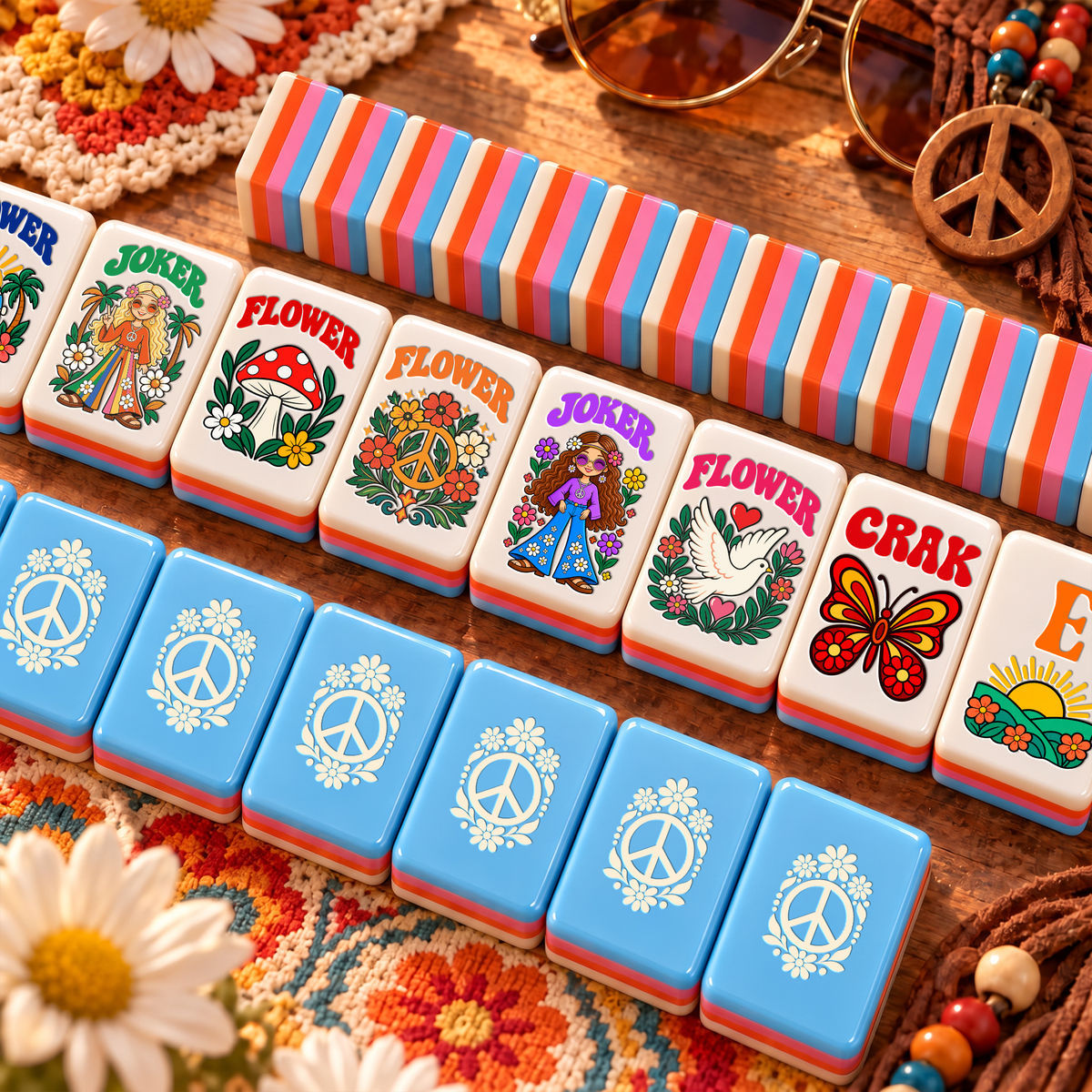
If you've logged thousands of hours at the bridge table, mahjong will feel surprisingly familiar: both games reward hand-reading, counting, and position sense. But American mahjong is not bridge with tiles. You don't bid, there are no suits in the traditional sense, and the hand changes entirely every game because you're locked to the current year's National Mah Jongg League card—a single reference sheet that dictates all legal winning combinations. Bridge teaches you to track opponent patterns and manage complexity; mahjong adds speed (you discard face-up into the center), a tile-passing ritual called the Charleston, and the use of jokers as wild tiles. Your card instincts will accelerate your learning curve, but you'll need to unlearn bidding and embrace a completely different rule book. A 160-tile acrylic set from our best-selling collection lets you start immediately with clear, durable tiles that won't wear after weeks of play.
How does bridge strategy actually transfer to mahjong?
Bridge teaches you three transferable skills: hand-reading (inferring opponent holdings from play patterns), counting (tracking played cards to calculate probabilities), and position logic (acting last gives you more information). In mahjong, you're constantly watching which tiles opponents discard and which they pick from the wall—this is pure hand-reading. If East discards two 5 Dots in a row, you know she's avoiding that tile; if West suddenly stops discarding winds, he's building with them. Position matters too: being South (dealer) or last to play lets you see more information before deciding whether to claim a tile or pass. The big difference? Bridge rewards you for hiding your hand; mahjong exposes your discard strategy constantly, so you play on surface-level tells, not hidden inference.

What does the mahjong card actually do that bridge bidding doesn't?
Bridge bidding is a conversation—you and your partner negotiate what you're holding and what you can make together. The mahjong card is a dictatorship: every winning hand already exists, printed on one card, renewed yearly. Instead of bidding seven no-trump and trying to make it, you're hunting for one of roughly 50–80 printed hand patterns that match the tiles you've drawn. This eliminates the partnership element entirely (four-player mahjong is competitive, not cooperative) and replaces strategic auction with speed and memory. You must learn the card layout before game night, or you'll fumble mid-hand trying to verify a win. We've linked the mahjong for beginners guide to walk you through the card system—it's the single biggest shock for bridge players.
How do you actually play a mahjong hand compared to a bridge hand?
Bridge hand: you bid, play thirteen tricks in sequence, track one trump suit, and score points at the end. Mahjong hand: you start with thirteen tiles after a tile-passing ritual (the Charleston), then draw and discard one tile per turn in strict rotation, aiming to complete one specific pattern from the card before anyone else does. The moment someone wins, the hand ends—there's no "finish the deal." Discards pile face-up in the center so everyone sees them; you can't hide a 1 Bam you threw away last turn. Speed matters enormously: hesitation signals weakness. Bridge rewards long-term memory (remembering all tricks); mahjong rewards short-term pattern recognition and quick decision-making. A single game round (four hands) takes 30–45 minutes with experienced players, versus 10–15 minutes per bridge hand.
🀄 Shop best-selling mahjong sets →
What tile vocabulary do you absolutely need to learn first?
There are three numbered suits—Bams (1–9, shown with bamboo symbols), Craks (1–9, shown with characters), and Dots (1–9, shown with circles)—plus honor tiles (winds: North, East, South, West; dragons: Red, Green, White). A standard 160-tile set contains 152 playing tiles (four copies of each tile) plus spare tiles. Bridge players often ask, "Can I call sequences like 1–2–3 Bam the way I bid no-trump?" The answer is no: in American mahjong, you can only expose groups of identical tiles (three 5 Dots, for example) plus jokers. No sequences. No pairs as a callable unit. This is a hard-stop rule that trips up bridge minds for the first two or three games. The card shows which patterns are legal; outside the card, nothing counts as a win. Once you internalize this, the tile names become second nature.

How does the Charleston change the game's opening compared to bridge dealing?
In bridge, someone shuffles and deals—done in 30 seconds. In mahjong, the Charleston is a tile-passing exchange that takes 2–3 minutes and determines your starting hand far more than random dealing ever could. You receive fourteen tiles, choose three to pass right, receive three from your left, then pass three more in another direction. This is partly strategy (blocking opponent patterns), partly luck, and partly reading subtle cues about what your opponents want. Bridge players find this oddly familiar: it's like an informal version of the bidding exchange, except entirely non-verbal and you're trading objects instead of information. The Charleston happens before any real play begins, so you can't mess up the actual game by misunderstanding it—but it's different enough that you should watch a round or two first. The Charleston explained covers every step in detail.
Aspect | Bridge | Mahjong | Why It Matters |
Opening | Deal 13 tiles each | Charleston exchange (14→11→14) | Mahjong adds strategy to the opening |
Bidding/Planning | 2–3 minutes negotiation | None; just pick a card pattern | Mahjong is faster, more reactive |
Hand Flexibility | Bid for a contract; adapt mid-hand | Locked to one card pattern; adapt tiles only | Mahjong leaves less room for improvisation |
Sequence Calls | Yes (part of bidding) | No (exposable groups are identical tiles only) | Removes a major bidding mechanic |
Counting | Count tricks, honor points | Count jokers, track discards | Same skill, different targets |
Scoring | Points awarded per contract made/failed | Points awarded per pattern complexity | Bridge is outcome-based; mahjong is pattern-based |
Time per Hand | 10–15 minutes | 5–10 minutes | Mahjong is faster-paced |
Partnerships | 2 vs. 2 (cooperative) | 4-player free-for-all (competitive) | Mahjong has no allies |
🎁 See our most-loved mahjong sets & accessories →
What mistakes do bridge players make in their first three games?
Expecting sequences to be callable. You draw 3–4–5 Bam and assume you can expose them like a suit sequence. You can't. Only identical tiles (pung) or joker-wildcard groups count as exposable melds. This rule alone frustrates bridge players for an entire first evening.
Slow decision-making. Bridge rewards careful thought; mahjong penalizes it. A five-second hesitation signals you're holding tiles opponents want, so they plan accordingly. Experienced players discard in under two seconds. Bridge trains you to think hard; mahjong trains you to decide fast.
Misreading the card. You think you've won, announce it, and a more experienced player says, "That pattern isn't on the card." The card is law. No winning hand exists outside it. Study the card layout before you play. If you're unsure mid-game, ask for a clarification—never guess.
Holding too many high-value tiles. Bridge players hoard honors (aces, kings) as power plays. In mahjong, holding six honor tiles you can't use is a liability; you're carrying dead weight while opponents thin their hands. Discard aggressively and let patterns emerge.
Not tracking discards. In bridge, you remember who played which card because play order is strict. In mahjong, the center discard pile is chaotic and visible to all. Still, many bridge players don't mentally bookmark what each opponent threw away. This is your biggest advantage: memorizing the last 6–8 discards tells you what opponents don't need.
What to check before you buy a mahjong set for bridge nights
Tile size and readability. Bridge players are used to playing cards you can see clearly from across a table. Choose a set with large, legible tile faces. Acrylic tiles from our best-selling collection are durable and easy to read under standard lighting.
Racks and pushers. If your group plays bridge with organized hands (racks for cards), you'll appreciate mahjong racks with pushers—they keep your tiles organized and hidden from opponents' view, just like a card rack. Racks with pushers are worth the investment if you're a serious bridge player moving to mahjong.
A reference card or laminated guide. Until you memorize the National Mah Jongg League card, you'll need to verify winning patterns mid-game. Having one printed card at the table saves disputes.
Carrying case for portability. Bridge players often play at clubs, homes, or restaurants. A good mahjong bag or case ensures your set survives transport and stays organized between sessions.
Joker count. A standard 160-tile set contains all you need. Spare jokers are included but stay in the box—they're not added to play unless someone loses a tile. Don't overbuy "extra joker sets"; they're unnecessary.
Why bridge players often love mahjong more than they expect
Bridge demands intellectual stamina over 20 hands; mahjong delivers intensity in 30-minute bursts. Bridge is partnership; mahjong is pure competition—no one to blame but yourself. Bridge rewards memory and card sense; mahjong adds speed, visual pattern recognition, and real-time hand-reading off a face-up discard pile. Many bridge players tell us they switched to mahjong for Friday nights because it's less cerebral drain but more adrenaline. Your bridge skills—counting, position logic, opponent reading—are exactly what mahjong rewards; you're just learning a new vocabulary and a faster cadence. Most bridge players we've worked with are winning regularly within four or five games.
The how to play American mahjong guide covers the full ruleset and is worth reading after your first live game to fill gaps your friends might have skipped.
✨ Find your Mahstead set — free US shipping →

FAQ
Can I use bridge bidding conventions to communicate in mahjong?
No. American mahjong allows no verbal communication during play except calling a tile you want to claim. The Charleston is wordless except for "pass left" cues. Bridge's entire language system doesn't apply.
If I'm good at counting cards in bridge, will I win at mahjong right away?
You'll have an advantage in tracking discards and opponent patterns, but mahjong adds speed and a locked hand-set (the card). Counting cards helps, but it's not the dominant skill here—pattern recognition and decision speed matter more.
Do I need to learn Chinese terms or can I play in English?
American mahjong uses English: Bam, Crak, Dot, wind names, dragon names. There's no Chinese vocabulary required. Bridge players fit in immediately on that front.
How long does it take a bridge player to go from never-played to competent?
Most bridge players grasp American mahjong rules in one to two games and play competently (not necessarily winning) by game five. Your hand-reading and counting transfer immediately; you're just learning new patterns and speed.
Can I play mahjong online if I'm waiting for a weekly in-person game?
Yes, but American mahjong online doesn't always follow National Mah Jongg League rules strictly. Start in person with a real card and a printed set to learn correctly, then explore digital versions if desired.
What's the biggest rule shock for bridge players moving to mahjong?
No sequences. You can't call or expose 1–2–3 of anything. Only identical tiles (pungs) count as exposable melds. This single rule resets your entire strategy framework.


View More
View More
View More
