
Mahjong for Absolute Beginners: Rules, Setup & Your First Game
Last updated: Nov 23, 2026
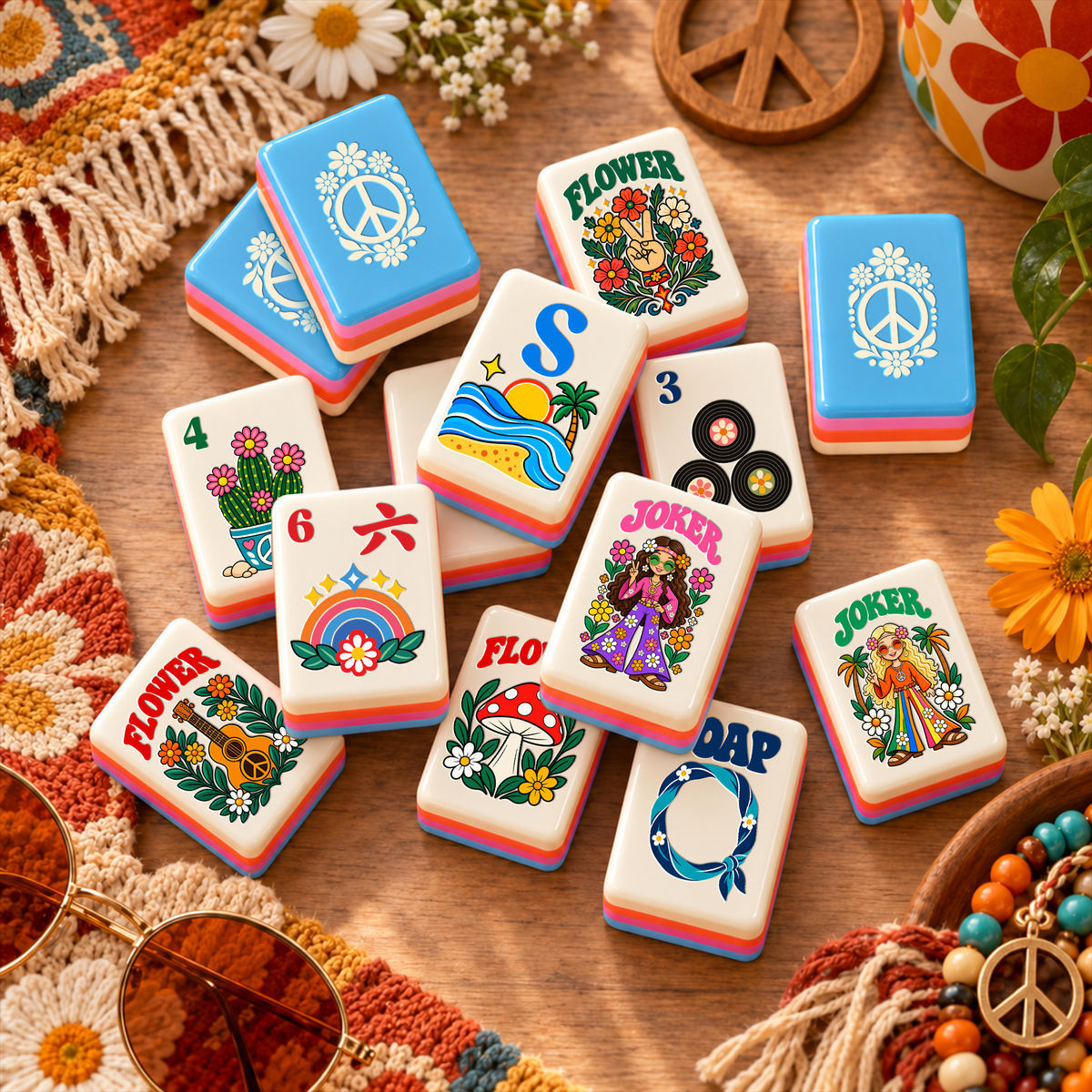
American mahjong is played by four people with 152 tiles divided equally among players, plus 8 jokers. The game uses three suits (Bams, Craks, Dots numbered 1–9), winds, dragons, flowers, and jokers. Before the hand begins, players pass tiles in a ritual called the Charleston. Each player draws and discards tiles, trying to match one of the hands on that year's National Mah Jongg League card. A winning hand is a complete set of melds (pungs, kongs, or pairs) that matches a listed pattern exactly. A typical game lasts 15–30 minutes per hand; a session is usually 8–12 hands. No prior experience is needed—only the card and a best-selling mahjong set with clear tile markings so you can learn to read symbols quickly.
What Are the 152 Tiles and How Do I Recognize Them?
American mahjong uses exactly 152 tiles: three suits of 1–9 (four copies each), 16 winds, 12 dragons, 8 flowers, and 8 jokers. Bams show dots or bamboo stalks (the 1 Bam has a bird). Craks are characters (reddish on some sets). Dots are circles, which is the easiest suit to count quickly at first. Winds are North, East, West, South. Dragons are Red (goes with Craks), Green (with Bams), and White, called "Soap" (with Dots and also serves as zero). Flowers are typically labeled 1–8 but are rarely required in modern hands. Each tile shows its symbol clearly; engraved American mahjong sets let you add your name or nickname to tiles, making them easier to spot when you're learning.

How Does the Charleston Work Before the Hand Starts?
The Charleston is a four-way tile exchange that happens before anyone draws. Sit East, South, West, North (or any rotation). East passes three tiles to the player on their right; that player passes three to their right, and so on, until all four players receive new tiles. Then you repeat two more times, each time passing in the same direction. On the third pass, each player may choose to pass three tiles right, or pass two left and one right, or keep all three. The Charleston is mandatory—you cannot skip it and your hand selection cannot be planned until after the Charleston is complete. This randomness levels the game; experienced players don't dominate simply because they drew first.
What's on the Mahjong Card and How Do I Read It?
The National Mah Jongg League releases a new card every spring with about 70–80 winning hand patterns printed in rows and columns. Each hand shows a set of melds and points. For example, a row might show "2024 card, Pung of 1 Craks, Pung of 2 Craks, Kong of 3 Craks, Pair of Red Dragons, 30 points." Your tiles must match that pattern exactly—same numbers, same suits, same meld sizes—and you announce the section and row where you found it. You don't memorize the card; you keep it on the table and reference it during play. How to read the mahjong card covers this in detail, but the short version: find a matching pattern that uses your tiles, call it out, and the hand ends.
What Does It Mean to Discard and When Can I Win?
After the Charleston, East draws one tile and discards one, face-up. South, West, and North take turns drawing and discarding around the table. You may call a discard if it completes a meld you're already collecting—a pung (3 identical), kong (4 identical), or quint (5 identical). You may NOT make a sequence or "chow" like 1-2-3 in American mahjong; pungs and kongs must all be the same tile. You win when you have a complete hand: all melds (pungs, kongs, or pairs) match exactly one pattern on the card. You announce "Mahjong," name the card row, and score points based on that hand's value. If two or more players could win on the same discard, the player closest to the discarder (going clockwise) wins. Common beginner mistake: calling a tile too early when you haven't read the card carefully, or thinking a sequence counts when it never does in American mahjong.
What Are Jokers and How Do I Use Them?
Jokers are wild tiles; they can stand in for any tile to complete a meld, and eight of them come in every set. You cannot use a joker as a single tile or a pair—only in a pung (3), kong (4), quint (5), or sextet (6). If you use two jokers and one 5 Dot to make a pung of 5 Dots, that's legal. If you use a joker to stand in for the Red Dragon in your pair, that's illegal. Jokers appear as blanks or are marked with a joker symbol, depending on your set design. Once a joker is placed in a meld and exposed, other players can see it; don't hide it. How jokers work explains edge cases, but the core rule is: jokers are wildcards for melds only, never for pairs or single tiles.

Should I Get a Mat, Rack, or Case as a Beginner?
Yes, all three help. A mat (usually 27–30 inches) keeps tiles from sliding off the table and displays each player's hand in lanes, making it easy to see what's exposed and what's still hidden. A mahjong mat also has a center area for the discard pile and a turn indicator. Racks and pushers hold your hand upright so tiles don't face-down leak information to opponents; they're optional but save time and reduce chatter. A bag or case protects your set during storage and travel. At home, your first priority is a mat; racks and a bag come later if you play weekly. See how to choose based on your table setup with how to choose a mahjong mat.
Item | Who It's For | Why It Works |
Mat | Every player | Keeps tiles organized, shows discard pile, prevents lost tiles. Saves 5–10 minutes per hand. |
Racks + Pushers | Regular players | Speeds up tile management, hides tiles from view, reduces passing mistakes. |
Case or Bag | Players with multiple sets or who travel | Protects acrylic tiles from scratches, keeps pieces together during moves or visits. |
Engraved Set | Groups or hosts | Names or jokes on tiles make games memorable and sets easier to identify in shared spaces. |
🀄 Shop best-selling mahjong sets →
What Mistakes Do Beginners Make and How Do I Avoid Them?
The most common error is calling a winning hand before checking the card carefully; you may think you have a match but miss the suit requirement or forget that one pung must be 2 Craks, not 2 Dots. Solution: always read the row aloud with your tiles in hand before announcing "Mahjong." A second mistake is misreading the 1 Bam (which has a bird, not a dot) and thinking you have a different suit. Solution: before your first game, ask an experienced player to point out Bams, Craks, and Dots in your set and say them aloud five times each. A third mistake is using a joker in a pair (illegal) or thinking you can make a sequence 1-2-3 (you can't in American mahjong). Solution: memorize: "Pungs only, no sequences, no joker pairs." A fourth mistake is not learning the Charleston before showing up; you'll slow down the first hand. Solution: watch a 3-minute video on the Charleston or ask the host to walk you through one dry run before anyone draws tiles.
How Do I Find and Join a Game Near Me?
Community centers, libraries, synagogues, and country clubs often host mahjong groups on weekday afternoons or weekends. Search "[your city] + mahjong" on community-board sites like Meetup or Facebook Groups; many groups welcome beginners and lend sets. Mahjong lessons are also available at some local culture centers; a single lesson clarifies rules faster than reading alone. Ask if the group uses the current year's card and if players bring their own sets or share. Some groups prefer newcomers to watch one hand before joining; others play immediately. Expect to lose your first few hands—this is normal and expected. Most groups are warm and patient; learning speed varies widely, but most people pick up the core rules in 3–4 hands.
🎁 See our most-loved mahjong sets & accessories →
What to Check Before You Buy Your First Set
A 160-tile set is the standard and includes spare tiles, so you'll never run short mid-game. Check that the tiles are clearly marked (laser-engraved or embossed symbols work best; avoid faded or small prints). Acrylic tiles are durable and won't crack if dropped; plastic is lighter but less satisfying to touch and move. Count the suits visually in the set description: you should see distinct Bams (bird symbol on 1), Craks (characters), and Dots (circles). If the listing doesn't show close-up photos of each suit, ask the seller for clarification. Size matters: tiles around 30 mm × 20 mm fit standard hands and racks without gaps. Weight should feel solid but not heavy enough to tire your hands over a 12-hand session. Avoid sets where jokers and blanks are hard to tell apart; they should be obviously different. New players often buy cheap plastic sets and regret the feel and durability; spending a bit more on best-selling mahjong sets pays off across years of games.
✨ Find your Mahstead set — free US shipping →

FAQ
Do I need to memorize the mahjong card before I play?
No. The card sits on the table during play and you reference it when deciding what to collect or when you win. You'll recognize common patterns within a few hands.
Can four complete beginners play together, or do I need one experienced player?
Four beginners can play, but one person who knows the rules and Charleston makes the first hand much smoother. Watch a video or read a guide together first.
How long does one hand of mahjong take?
15–30 minutes, depending on how quickly players draw and discard. Early games take longer; experienced groups average 15 minutes.
What's the difference between American mahjong and Chinese or Hong Kong mahjong?
American mahjong uses a card with set hand patterns (no sequences, only pungs); Chinese and Hong Kong mahjong allow sequences and have different melds and scoring. They're separate games; always confirm which one your group plays.
Is mahjong harder than poker or bridge?
Different skills. Mahjong requires faster pattern recognition and tile memory; poker requires odds calculation; bridge requires bidding language. Most people learn mahjong basics in one session and improve steadily over weeks.
What if I misread a tile and my "winning" hand isn't actually valid?
Tell the table immediately. The hand is void, play continues, and you learn to double-check before announcing. This is not a penalty; it's part of learning.
Do I have to use official National Mah Jongg League sets, or can I play with any tiles?
Any set works, but American mahjong requires the current year's official card to find valid hands. Without it, you can't play American mahjong (though you could play other variants like Chinese mahjong).


View More
View More
View More
