
How to Teach Mahjong to Millennials: A Player's Guide
Last updated: Nov 23, 2026
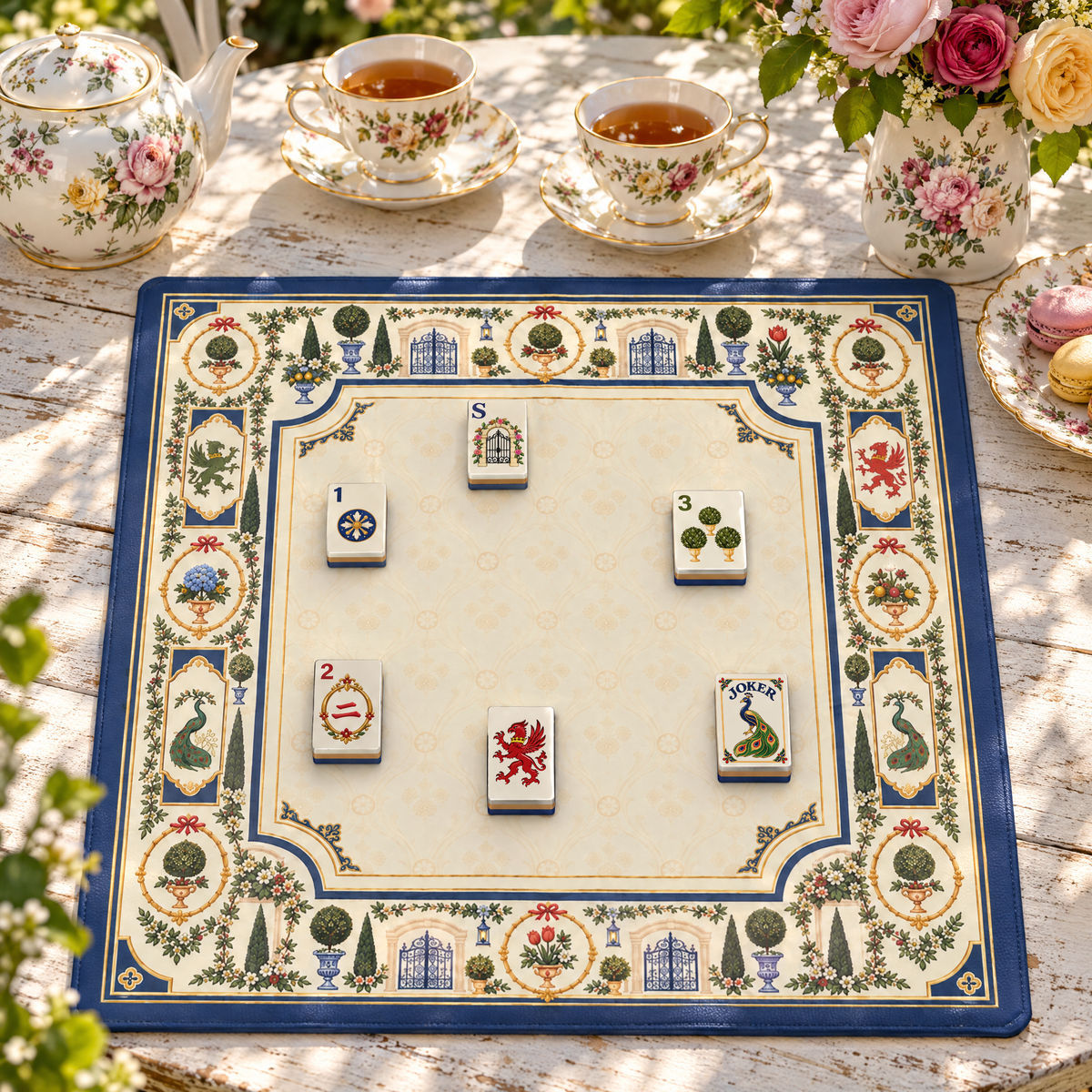
Teaching mahjong to millennials works best when you lead with the why: it's a skill game (not luck), a phone-free hangout, and culturally cool without gatekeeping. Start with four players, one 160-tile acrylic set, the current-year National Mah Jongg League card, and 90 minutes to learn basics. Skip the history lecture; jump straight to a real hand. Show them the Charleston (the pre-game tile pass—fun, ritualistic, zero pressure), then one simple winning hand from the card. Millennials love games with clear progression: they'll want to nail the Charleston, then read the card, then call their first pung, then win. Most quit early because they feel lost reading the card or confused about joker placement; prevent this by giving each player a laminated card copy and naming one "scorekeeper" who tracks melds aloud. Our best-selling mahjong sets come with pushers and racks, which makes reading tiles effortless for new players and keeps the table organized—a huge retention win.
Why Millennials Actually Love Mahjong
Millennials were raised on strategy games (Civ, Magic, board game nights) and crave analog experiences. Mahjong ticks every box: it's tactile (tiles click, you build a wall), social (talk, laugh, no pause menus), skill-based (same hand dealt twice = two different outcomes), and low-stakes fun—you're not grinding for achievement or comparing scores for hours. They also see it as culturally interesting: learning the game means learning something their friends didn't teach them on YouTube. The biggest draw? No one wins because they were lucky. You win because you read the card, tracked discards, and made a call. That matters to them.

Where to Start: The Four-Player, One-Hand Approach
Don't explain all 152 tiles or the scoring system upfront. Instead, bring four players, one clear set, and teach one winning hand. Here's the flow: (1) shuffle and draw a wall, (2) run the Charleston—the ritual tile-passing game before play begins, which feels fun and organic, (3) deal 13 tiles to each player, (4) show them a single hand from the current National Mah Jongg League card written for beginners—like three pungs, two pairs, or a simple run-based hand, (5) walk them through how to build that hand by drawing and discarding. Let them play three or four hands the same way. By hand four, they'll have muscle memory for the Charleston, tile flow, and the "call" rhythm. Then introduce a second hand pattern. Millennials learn by doing, not listening; this method gets them playing within 15 minutes.
Teaching the Charleston Without Overwhelm
The Charleston is the pre-game tile-passing ritual that confuses new players more than the actual game does. Here's how to frame it: "Imagine you're passing tiles like a very organized game of hot potato. You pass right, then left, then across. No skill, no judgment—just ritual." Run it in slow motion the first time. Everyone gets 14 tiles (instead of the game's 13), passes three tiles to the right, then three to the left, then three across, then three to the middle. Then players pull from the wall one more time to get back to 13. Done. On your second time, speed it up. By the third time, they'll feel like pros—the Charleston stops being scary and becomes the fun warm-up everyone looks forward to. Show them this early; it's a gateway moment.
The Card Reading Mistake—And How to Avoid It
New players see the National Mah Jongg League card (issued every spring) and panic: it's dense, coded, and looks like a tax form. The mistake: printing one card per table and expecting four people to squint at it. The fix: print one laminated card for each player. Use a highlighter pen to mark the hand everyone's hunting for that round. Example: if you're all working toward a "2024 Hand 23" (say, three pungs and two pairs), highlight it on each card. Players stop feeling lost and start pattern-matching. Also, tell them upfront: "You memorize maybe four hands per game. That's it. You don't learn the whole card." Millennials respect limits and goals; this reframes card reading from "learn 88 hands" to "nail these four."
Teaching Milestone | What to Do | Why It Works | How Long |
First meetup | Teach Charleston and one winning hand | Removes fear; creates early win | 15 min |
Hands 2–4 | Play same hand three more times | Builds automaticity; confidence grows | 45 min |
Second meetup | Show two new hand types; play six hands | Expands pattern library; game feels fresh | 90 min |
Third meetup | Introduce scoring light; play eight hands | Adds competitive layer; retention solidifies | 120 min |
What to Check Before You Buy or Host
Set quality matters more than you'd think for teaching. Cheap plastic tiles wear fast and don't slide smoothly—new players blame themselves when a tile doesn't glide into their rack. Acrylic tiles are clearer, last years, and feel premium. A 160-tile set includes spares; that's good insurance.
Racks and pushers are game-changers for beginners. A player holding 14 loose tiles looks chaotic; the same 14 tiles on a mahjong rack with pushers looks organized and professional. Pushers let players advance tiles without showing their hand. Millennials love this detail—it feels like actual game design, not improvisation.
Mats belong in your second or third game. A playing surface keeps tiles contained, mutes the noise (neighbors appreciate this), and signals "we're serious." You don't need an expensive mat right away; a simple cloth mahjong mat works fine once players understand the game.
Keep the rule book within arm's reach. Print a one-page cheat sheet for your first few games: (1) Charleston steps, (2) how to call a pung, (3) how jokers work (jokers substitute for any tile you need, except in a pair or single), (4) what winning looks like. New players ask these four questions in their first three games; after that, they rarely ask again.
Laminate your card copies. A laminated card survives marker edits, spilled drinks, and repeated use. Non-laminated cards get dog-eared and sticky by game three; players mentally associate worn cards with "old game" instead of "my game."

The Role of the Scorekeeper in Your First Games
Assign one player as scorekeeper for the first two meetups. Their job: announce each pung as it's called ("pung on fives!"), announce each kong, and at round's end, say which hand was played and who won. This means the other three players can focus purely on gameplay and learning. After two sessions, drop the scorekeeper role—the announcements become automatic. This role sounds boring, but millennials often volunteer for it because it reduces their anxiety about "getting it wrong" while still keeping them engaged.
🀄 Shop best-selling mahjong sets →
Mistakes That Kill Momentum
Mistake 1: Teaching too many hands at once. You explain hands 1, 5, 22, and 33 in one session. By hand 33, players are glazed. Pick one hand, play it four times, then introduce a new one.
Mistake 2: Letting new players "figure out" the card. New players will stare at the card for 60 seconds, then ask you anyway. Highlight their target hand. Saves 45 minutes per game.
Mistake 3: Explaining scoring before they've played. Millennials don't care about "four points for a pung." They care about calling a pung and building a winning hand. Introduce scoring in game three, after they've felt the basic rhythm.
Mistake 4: Playing with a worn or unclear set. Cracked tiles, faded symbols, and loose racks frustrate new players. They think they're "bad at mahjong" when the set is the problem. Use a clear, well-made 160-tile acrylic set; it pays for itself in faster onboarding.
Mistake 5: Skipping the Charleston. Some hosts want to "speed up" teaching by dealing straight to hand 1. The Charleston is where millennials get the ritual feeling they actually crave—it's also your first laugh together, which bonds the group.
Building a Recurring Table from Scratch
Millennials are loyal to recurring events—standing dinner dates, trivia nights, game sessions. Start with a specific day and time: "Thursday 7–9 p.m., my place" or "Sunday 2–4 p.m., the community center." Post a calendar invite; make it repeating. Invite four people you know will show up (even if they're skeptical about mahjong). Play three hands, then grab snacks or drinks for the last 30 minutes. Ask them directly: "Same time next week?" Most will say yes if the first game was low-pressure and social.
After three weeks, you'll have core players. After three months, they'll recruit friends. Millennials share experiences organically; if your game night is fun, they'll invite their partner or roommate. The game doesn't need to be flashy—it needs to be consistent, clear, and social.
🎁 See our most-loved mahjong sets & accessories →
Your Setup Checklist
[ ] One 160-tile acrylic set with racks and pushers (clear tiles, no cracks)
[ ] Current-year National Mah Jongg League card (one per player, laminated or in sleeves)
[ ] One highlighter pen per player (for marking target hands)
[ ] One laminated one-page rule cheat sheet
[ ] One mat (optional in game 1, essential by game 2)
[ ] Four dice for rolling
[ ] Snacks and water
[ ] Calendar invite sent 48 hours ahead
[ ] Phone on silent during play
When you've run your first three games and people ask to come back, that's when you upgrade your setup—maybe add a second set so two tables can play, or get a mat with good friction. But don't start there. Start with clarity, social fun, and one winning hand. The retention comes from that, not the equipment.
✨ Find your Mahstead set — free US shipping →

FAQ
Do I have to teach American mahjong, or can I teach Chinese or Riichi instead?
American mahjong is the easiest entry for millennials in the US because the National Mah Jongg League card standardizes hands, turns are short, and the ruleset is simpler than Chinese or Riichi variants. If your group wants to learn Chinese or Riichi later, that's fine—but for the first table, American mahjong has the gentlest learning curve and the widest player base.
How old does the National Mah Jongg League card need to be, or can I use an old card?
Always use the current year's card—issued every spring. Old cards don't match players' understanding of which hands are valid, and it confuses new learners who compare your card to a friend's newer one. Think of it like Pokémon: the card is the ruleset that season. Grab the current year's card online or from a mahjong player supply store.
What's the minimum number of people to teach?
American mahjong is designed for four players. You can play three or two with house rules, but it's not the same game. If you have fewer than four people interested, wait until you have four, or teach them the basics one-on-one and then introduce them to a four-player group. New players learn faster with peers at the same skill level.
Can I teach mahjong using a phone app instead of a physical set?
You can, but it's weaker. Millennials specifically chose analog games because they want to step away from screens. A physical set also forces slower play, which gives new players time to think. Teaching with an app skips the tactile reward—the moment you call a pung and push your tiles—that makes mahjong memorable.
How do I handle someone who loses interest after one game?
That's normal. Mahjong has a steep attention curve in game one; some people need game two or three to feel comfortable enough to enjoy it. Invite them back without pressure: "We're playing next Thursday if you want to try again." If they decline a second time, don't push. Some people click with it later; some don't. Your job is to run a good table and let the game self-select its players.
What should I charge if I'm teaching friends casually?
Don't charge anything for the first three games. You're building a community, not running a business. If a recurring table develops and someone asks about hosting fees or splitting supplies, handle that conversation when it comes up—usually by game six or seven. Most casual groups stay free; some shift to rotating hosts and shared costs. Let the group decide.


View More
View More
View More
