
Chinese Mahjong Strategy: Tile Reading and Discard Patterns
Last updated: Nov 23, 2026
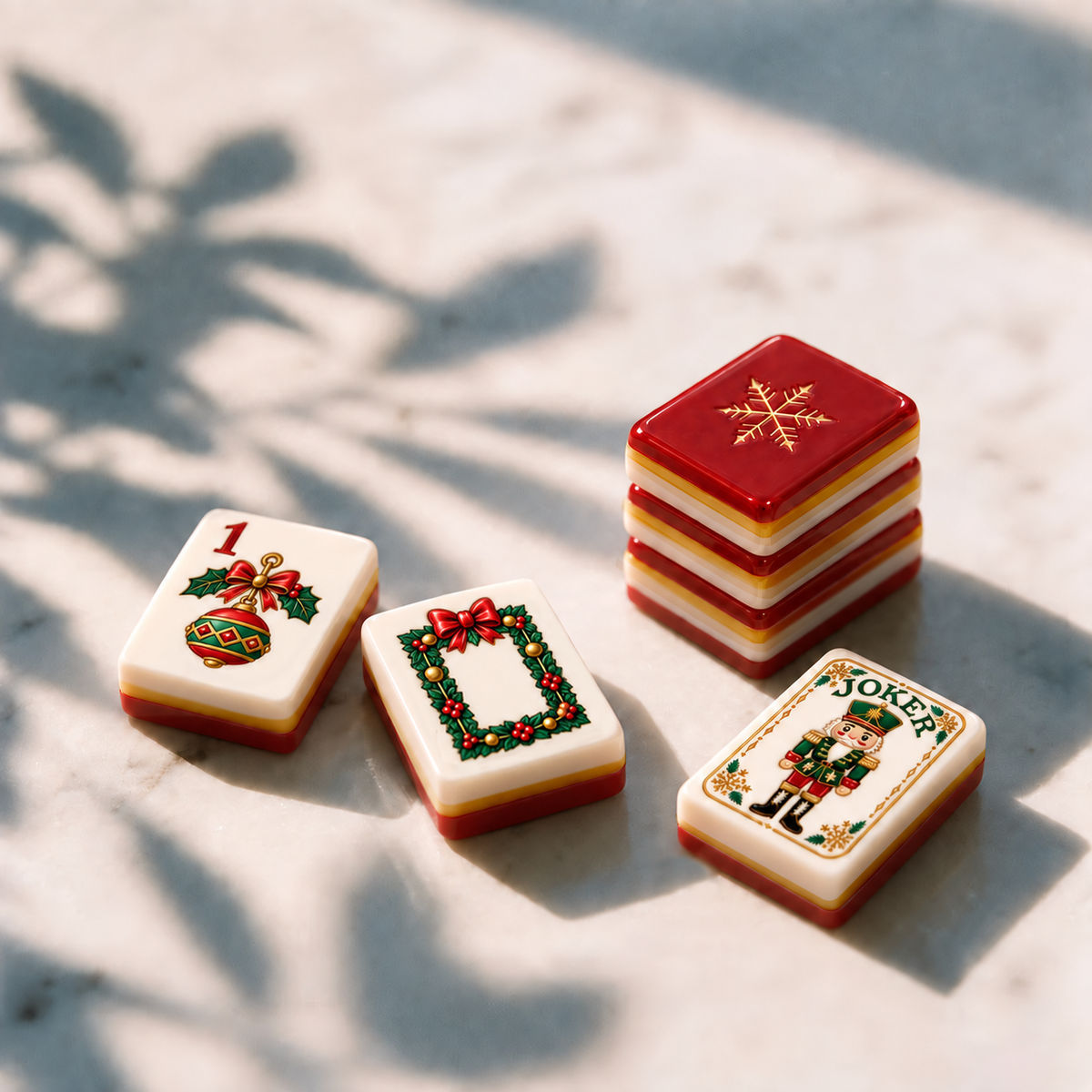
Chinese mahjong strategy centers on three core disciplines: rapid tile identification (reading suit markers and numeric sequences instantly), discard-pile analysis (inferring opponents' hands from what they throw), and hand-progression logic (knowing when to chase melds versus wait for concealment). The game moves faster than American mahjong—no preset hands, no annual card, no Charleston—so decisions compress into seconds. A winning player reads the discards within the first 10 turns to model what each opponent is building, prioritizes keeping tiles that blocks opponents' likely winning combinations, and adjusts hand direction (switching from a Pung-heavy line to a Chow-heavy line) mid-game based on available tiles and discard signals.
How do you read tiles faster in Chinese mahjong?
Tile recognition speed separates casual and advanced players. In the opening 12 turns, glance at what each player holds (mid-wall position, approximate thickness) and what they discard in order. Early discards—Honors (Winds, Dragons) and terminal Dots (1, 9) or Bams (1, 9)—reveal that a player is chasing a hand with few or no Honors, making mid-range numerics (4–6) safer to throw. Players who retain Simples (Craks 2–8, Dots 2–8, Bams 2–8) on their first turn typically build a Chow-heavy hand (sequences); those keeping Terminals and Honors build Pung or Kong hands. Practice by playing weekly: your hand-reading speed doubles after 20 games.

What patterns emerge from the discard pile?
The discard sequence tells a story. If East player discards 1 Crak, 9 Dot, then White Dragon in the first three turns, East is almost certainly not building a hand that needs those suites together—watch for East to call Craks or Dots mid-game from an unexpected player. Conversely, if South holds and then throws 2, 3, 5 Bams in sequence, South likely started with a Pung of 4 Bams or higher and abandoned the sequence line. The "dead" tiles (those thrown by a player who later calls a winning hand from that suit) signal that a suit became safe later; track these. Within eight turns, note which suits and Honors remain in the wall: if 7 Dots have appeared in discards and you're on turn 10, only one 7 Dot remains in the wall—adjust your tile retention accordingly.
When should you block versus build your own hand?
Early-game blocking (turns 1–6) is lower priority than in American mahjong because Chinese hands form from concealed melds you create yourself. However, if a player has drawn six tiles and discarded only low-value ones (1 Crak, 2 Dot, 3 Bam, etc.), that player is likely holding a concealed Kong or a rare high-value hand—throw your safest Honors immediately to avoid feeding them. Mid-game (turns 7–10), shift focus: if a player calls a Pung of 5 Craks, calculate whether they're one tile away from winning (check for obvious pairs or near-complete hands on the wall). Throw tiles that complete Chow sequences only if you're certain another player needs them; otherwise, retain them for your own hand. Late-game (turn 11+), blocking becomes critical again—if a player has called two melds and discarded only two tiles total, they're on turn 13 or 14, and you must block aggressively or you lose.
🀄 Shop best-selling mahjong sets →
How does hand-switching strategy work?
On turn 4 or 5, assess what your first 13 tiles suggest. Do you hold three 3 Bams, two 4 Bams, and one 2 Bam? You have the option to build a Chow (sequence 2–3–4) or a Pung (three 3 Bams). If only one discard yet shows Craks or Dots, Bams are likely safe for a few turns—build the Pung. If three opponents have discarded Bams already, Bams are dead; switch your strategy entirely and chase Craks or Dots instead. The key move is decisive hand commitment: if you flip between two strategies, you'll hold too many "bait" tiles and miss your hand. Commit to a direction by turn 7 at the latest. Exception: if you're waiting for a single tile and an unexpected discard appears, you can "flip" to an alternative winning shape in the last two turns—but only if it requires the same waiting tile (e.g., waiting for 5 Crak to complete either a 4–5–6 Chow or a Pung of 5 Craks).

What's the role of concealment versus exposure in Chinese variants?
American mahjong requires you to expose all three-tile melds and larger; Chinese mahjong allows you to hold a hand fully concealed until the final win. This changes strategy fundamentally: a concealed hand is worth more points (in most Chinese variants, a "fully concealed hand" or "all concealed" multiplies your score), so aggressive players often slow-play their hands—they might have won three turns ago but wait, gathering information, to ensure they win concealed for maximum value. Conservative players expose melds early to signal strength and discourage other players from feeding them tiles. Read your table: if you're playing casual league, exposure is often about table pace; in competitive Shanghai or Riichi, concealment is a serious scoring advantage. Track whether opponents are concealing to build winning tile likelihood: a player holding 12 tiles on turn 11 is almost certainly waiting and protecting a concealed hand. On how to read the mahjong card, American strategy involves matching tiles to hand patterns; Chinese strategy reverses this—you build hands dynamically, then score based on what you built.
Comparison: American vs. Chinese Mahjong Strategy
Aspect | American | Chinese |
Hand source | Fixed card (one per year) | Created dynamically by player |
Tile calls | Pung, Kong, Quint (preset) | Pung, Kong, plus any Chow (sequences) |
Decision speed | 30–60 seconds per turn | 5–15 seconds per turn |
Discard interpretation | Less critical (card limits options) | Vital (infers hidden tiles and strategy) |
Blocking priority | Mid-to-high (early game) | High only if opponent is close to win |
Concealment | N/A (all hands exposed eventually) | Rewarded with bonus points |
Tile retention | Match to card hand | Flexible, adapted per turn |
🎁 See our most-loved mahjong sets & accessories →
What common mistakes do new Chinese mahjong players make?
Mistake 1: Throwing all your dead Honors in the first three turns. New players panic—"I need a working hand!"—and discard White Dragon, East, North all at once. Opponents immediately know those suits are open; experienced players call from them and score heavily. Instead, throw Honors one per round, mixed with low Craks or Dots, to keep your hand opaque.
Mistake 2: Overvaluing concealment. You hold a winning hand on turn 10 but wait for concealment bonuses. By turn 13, an opponent calls an unexpected winning tile and beats you—concealment is worthless if you don't win. Claim your hand when you're certain it will win; scoring a concealed hand you never complete is zero.
Mistake 3: Ignoring the wall tile count. If you're on turn 11 and the wall is visibly half-depleted, every opponent is likely one to three tiles away from winning. Throw only Honors and edge tiles (1, 9 numerics) after turn 10. Feeding a mid-range tile (4–6) in the endgame is how you lose.
Mistake 4: Calling exposed melds too eagerly. You see a 5 Crak discarded and you hold two 5 Craks—you call Pung and expose. Now every opponent knows you're working with Craks, and they avoid throwing them. If you'd waited and built a concealed Pung, you'd have more flexibility and better scoring. Call only when it accelerates your win or signals a nearly complete hand.
Mistake 5: Not adapting to variant rules. A Riichi-rules game scores Tanyao (no Terminals or Honors) differently than Shanghai; a Cantonese game may reward seven pairs over sequences. Read the variant's scoring rules for your table before playing—ask directly: "Are we playing for Chows, Pungs, or both?" Your entire strategy shifts based on the answer.
What equipment helps you focus and play consistently?
When you're analyzing eight discards, calculating remaining tiles, and reading three opponents' hands simultaneously, having a clear, stable play surface matters. A quality mahjong mat with felt backing keeps tiles from sliding during rapid draws; mahjong racks with pushers organize your hand so you see tile edges instantly without tilting or rearranging. We recommend mats and racks especially for Chinese mahjong because the game's speed rewards fast, confident tile access—fumbling with tiles costs you decision time and signals weakness to your opponents.
For weekly games, a durable travel bag or case keeps your set protected; acrylic tiles are lighter and quieter than bone-and-bamboo sets, which is an advantage when you're concentrating on rapid calculations. Mahstead's best-selling mahjong sets use acrylic construction and come with pushers, so you can organize tiles and control game pace without distractions.
What to check before you buy
Tile clarity: Suit symbols (bamboo, character, dot) must be instantly recognizable under table lighting—squinting costs seconds.
Tile weight and grip: Lighter tiles (acrylic, around 6–8 grams each) let you move quickly; heavier tiles (bone-bamboo) suit slower, ceremonial play.
Mat surface: Felt backing prevents tiles from shifting; rubber backing on a concrete floor may stick and slow draws.
Pushers included: Tiles must separate cleanly during your hand scan; pushers are non-negotiable for Chinese mahjong's pace.
Set completeness: Chinese mahjong uses all 144 tiles plus jokers; confirm your set includes all numbers and Honors before play.
✨ Find your Mahstead set — free US shipping →

FAQ
Can I play Chinese mahjong with American tiles and rules?
No. American mahjong uses only Pungs, Kongs, Quints, and Sextets (no sequences), and hands are locked to a card; Chinese mahjong requires Chows (sequences) and builds hands freely. Tile counts also differ slightly. Use the variant your group has chosen and learn its specific rules first.
How long does a Chinese mahjong game typically last?
A full game (usually four rounds of play, one per position) takes 45–90 minutes depending on player speed and house rules. A single hand lasts 14–16 turns on average, which translates to 10–20 minutes per hand including scoring and tile reshuffling.
What's the difference between Cantonese and Shanghai mahjong strategy?
Cantonese mahjong uses 108 tiles (no Honors, no Flowers, no Seasons) and emphasizes Chow sequences and fast play; Shanghai uses 144 tiles with all Honor types and rewards melding flexibility. Strategy shifts: Cantonese players track which suits are exhausted (only 12 of each number in play), while Shanghai players manage Honors separately and focus on concealment bonuses.
How do I practice tile-reading at home without a regular group?
Play solo practice rounds: deal 13 tiles to four ghost hands, then play one hand yourself, moving through 14–16 turns and inferring what the ghost hands are discarding based on tile probability. Track your accuracy—within 20 solo rounds, you'll internalize common discard patterns and reading speed will increase dramatically.
Is it true that older, heavier tiles give an advantage in Chinese mahjong?
No. Tile material (bone, bamboo, acrylic, ceramic) is personal preference; acrylic tiles are actually preferred in competitive play because they're uniform and durable. What matters is that tiles are evenly weighted, clearly marked, and fast to manipulate. Your strategy and attention are the only true advantages.


View More
View More
View More
