
Mahjong Competition Rules With 2 Players
Last updated: Nov 23, 2026
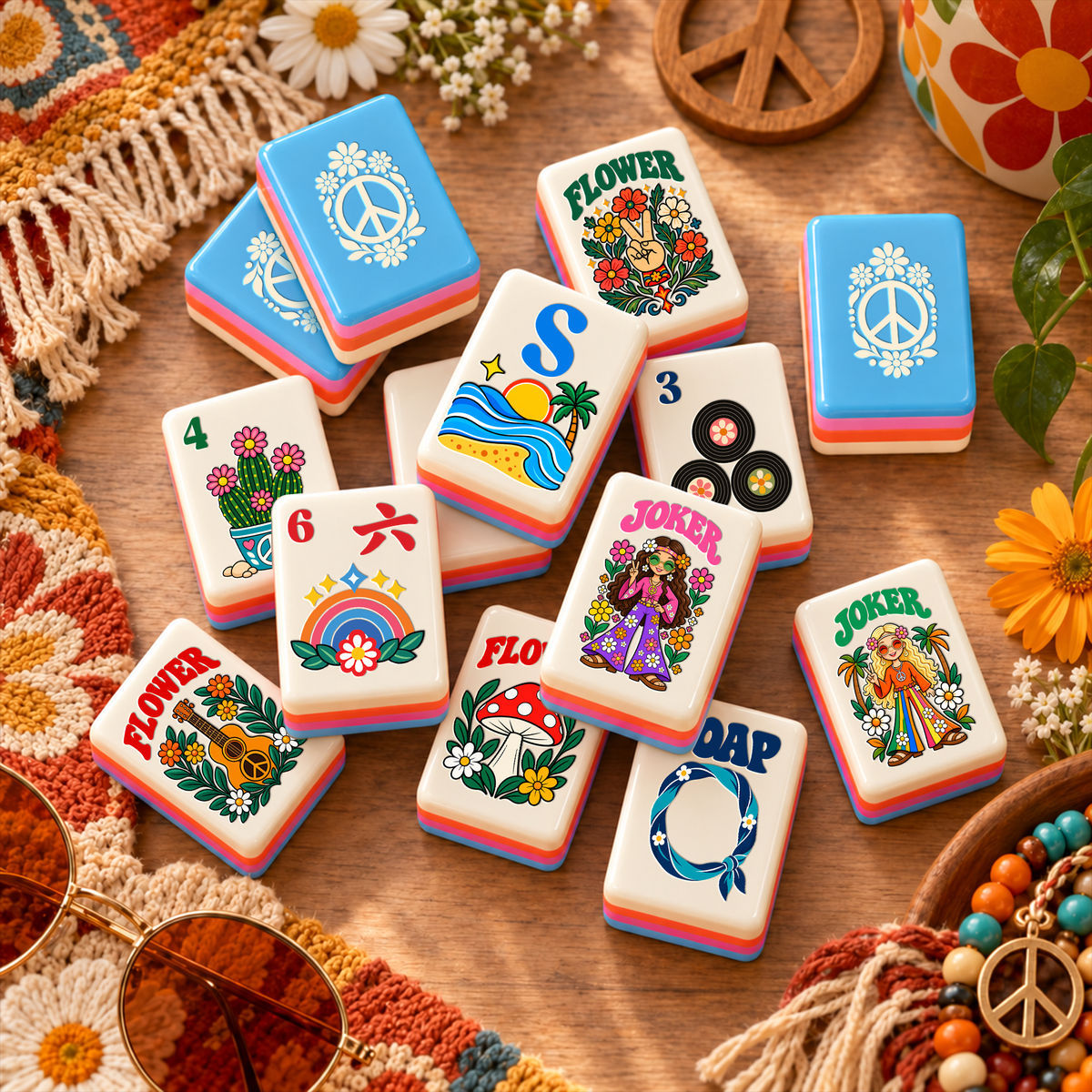
American mahjong is designed for four players and doesn't officially support two-player competition under National Mah Jongg League rules. However, you can play a modified two-player game by using a 152-tile set, removing the traditional Charleston passing ritual, each player drawing 13 tiles instead of the standard 14 for the first hand, and both players only building from remaining tiles and the discard pile. The critical constraint: you must still draw from a live wall and discard one tile each turn; sequences (chows) remain forbidden; only identical pungs, kongs, and joker-substituted melds count. Official tournaments don't recognize two-player hands on the current League card, so you'd need to agree beforehand on which patterns each player can claim—many two-player games use a house rule allowing both to play any hand they can complete. A Mahstead 160-tile set works well since the extra tiles let you experiment without constant resets.
Why does American mahjong resist two-player formats?
American mahjong was engineered as a four-player, turn-based game where discards flow to a shared pool and hand structure depends on four unique walls and four hand positions. With two players, you lose the strategic richness of third and fourth seats, the ability to block opponents' discards across seats, and the probability model that supports official hand patterns. The 152-tile deck becomes exhausted faster with fewer active players, reducing the likelihood of anyone winning. Most official League tournaments require exactly four seats because the hands on the published seasonal card are calibrated to that distribution; in two-player variants, you'll find many official patterns mathematically impossible to achieve.

What are the core rule changes for two-player American mahjong?
Start each player with 13 tiles instead of 14; deal 13 to yourself after the skip (the player who would normally take East after the Charleston). Remove the Charleston entirely—shuffle all tiles into the wall and draw normally. Both players build melds (exposed sets) the same way: calling Pung (three identical tiles), Kong (four identical tiles), or Quint/Sextet if your house rules allow them. Jokers substitute for any single tile in a meld but can never form a pair or stand alone. Each turn: draw one tile, discard one tile. Play continues until someone melds into a legal hand from the current League card or until the wall is depleted (a dead hand). Since there's no third or fourth player to pass melds to, both players have equal access to the discard pile—first call wins. Declare "Mah Jongg" when you complete a valid hand; verify it against the card before scoring. Many two-player games house-rule that any hand playable by either player counts (not just official patterns), which makes the game faster and more accessible.
🀄 Shop best-selling mahjong sets →
How do you handle the hand card in two-player games?
This is where honest play matters most. In official four-player League games, the current year's National Mah Jongg League card is the bible—every legal hand is listed. For two-player games, you have three real options:
Option A (Strict): Only hands appearing on the official card count. This works but limits your wins drastically and makes two-player games feel restrictive.
Option B (House rules with card reference): Both players can play any hand from the card (not restricted by seat position), but must show that the completed hand is literally on the card. This is how most friendly two-player games operate.
Option C (Free play): You agree beforehand that any meld of 14 tiles following basic rules (Pung/Kong/Pair structure, joker substitution where legal, no joker in a pair) counts as a win. This is fastest but abandons competitive structure entirely.
We recommend starting with Option B: get a current League card, learn to read it (sections, quint vs. pair patterns, dot-and-draw notation), and require both players to point to a matching pattern before taking the win. This keeps the game recognizable yet playable.
What tiles and setup do you need for two-player American mahjong?
You need the full 152-tile American set: three suits (Bams, Craks, Dots) numbered 1–9 with four copies each, 16 winds (four each of North, East, West, South), 12 dragons (Red, Green, White), eight flowers, and eight jokers. A 160-tile set from Mahstead includes spares so you never hunt for a lost tile mid-game.
Setup checklist:
Shuffle all 152 tiles face-down on a flat surface or a mahjong mat.
Agree who sits East; deal 13 tiles to East first, then West (alternating rounds: 2, then 2, then 2, then 1 for East; repeat). East draws the 14th tile to begin.
No Charleston. Each player manages their own hand—no passing.
Place all remaining tiles in a wall between players (or use a designated draw stack).
Lay out a current League card so both can reference legal hands.
Jokers remain face-up in the tile pool; anyone can announce a call if a joker is discarded and they can use it.
The simpler the setup, the fewer disputes arise; a mat with zones and racks with pushers help organize tiles visibly.
How do scoring and winning work in head-to-head play?
Standard American mahjong scoring is point-based: your completed hand earns a value printed on the League card (typically 30, 40, 50, 60, 70, or higher points). In two-player games, the winner takes those points from the loser (not split among four players). A single game runs until someone wins or the wall is exhausted. If the wall depletes and no one has won, the hand is dead and you shuffle and deal again.
Two-player scoring table:
Scenario | Standard Four-Player | Two-Player Adaptation |
Hand completes | Winner draws points from each player | Winner draws full hand value from opponent |
Bonus (if any) | Shared among players | Goes to winner only |
Dead hand | Losers pay small penalty; new deal | New deal; no penalty |
Passing/Charleston | Required ritual | Eliminated; no passing |
Because there's no third or fourth player, head-to-head games move faster and payoffs are higher per hand. Keep score on paper; after 8 hands (two complete rotations of East), total points and reset or declare a match winner.

What mistakes do two-player players make most often?
Mistake 1: Ignoring the League card. New two-player players sometimes invent hand patterns that look good but aren't on the official card. Always verify before calling Mah Jongg, or agree in advance on house rules so disputes don't derail play.
Mistake 2: Forgetting joker limits. In American mahjong, a joker can never sit in a pair slot or stand alone as a single tile. Even in casual two-player games, this rule holds—never use a joker to fill a pair.
Mistake 3: Reversing turn order. With only two players, turns can blur. Establish: East draws, discards; West draws, discards. Repeat. Clear, written turn order prevents conflicts.
Mistake 4: Treating discards as "safe." In four-player games, you can watch where three opponents' discards land. In two-player, your opponent knows what you've discarded; they see your discard pile directly. Don't assume a tile is safe just because the opponent hasn't called it yet.
Mistake 5: Ditching the mat. Two-player games on a bare table invite lost tiles, unclear boundaries, and misplaced melds. A mat keeps the game organized and makes rule disputes easier to settle visually.
Should you buy equipment specifically for two-player mahjong?
Not necessarily. A single 160-tile American set, a mat, and a current League card are all you need to play two-player American mahjong competitively or casually. You don't need four separate tile racks or four unique seat markers.
What helps but isn't essential:
Mahjong mats: Keeps tiles organized, visible, and secure. A mat with two clear player zones eliminates confusion about whose hand is whose.
Racks with pushers: Makes hidden tiles organized and easy to play. Pushers speed up meld exposure.
A travel bag: If you play two-player at multiple locations (friend's house, club, vacation), a case protects your set and keeps all tiles together.
Current League card: Non-negotiable if you want official-pattern play. Updated annually in spring.
For casual, house-rule play, you can start with just a set and a mat. Upgrade as your two-player games become regular.
🎁 See our most-loved mahjong sets & accessories →
What to check before you buy a set for two-player games
Tile legibility: Tiles must be large and clear enough for two players sitting across a table. Check that Bams, Craks, and Dots are visually distinct, and that wind/dragon symbols are crisp—you'll be reading them faster with fewer players.
Joker count: Standard American sets include eight jokers. For two-player games, you may use fewer, but spares are useful if a joker goes missing. A 160-tile set covers this.
Tile weight and feel: Two-player games don't require special materials, but tiles should shuffle smoothly and stack neatly. Acrylic tiles are durable for repeated play.
Set completeness: Count: three suits × 36 tiles each = 108, plus 16 winds, 12 dragons, eight flowers, eight jokers = 152. All present before opening the box.
Spare tiles and documentation: Check that your set includes spares (a 160-tile set does) and that tiles are clearly labeled by suit and number so replacement is straightforward.
Real-world two-player American mahjong: a worked example
You and a friend want to play a single hand of two-player American mahjong using Option B house rules (official League card only).
Setup (5 minutes):
Shuffle all 152 tiles face-down on a mat.
You're East. Your friend, West, shuffles again; you take 13 tiles; your friend takes 13 tiles.
You draw the 14th tile to start.
Spread a current League card between you where both can see it.
Play (10–15 minutes):
You draw a tile, look at your hand, discard one face-up.
Your friend draws a tile, looks at their hand, discards one.
If either of you can call the discard (e.g., "Pung 5 Dots"), you stop and expose the meld.
You both keep drawing and discarding.
Win (when someone melds into a legal hand):
You complete 14 tiles that match a pattern on the League card: e.g., two 1 Bams, Pung 3 Dots, Kong 6 Craks, Quint 8 Dots, Pair 1 Dots.
You call "Mah Jongg," point to the matching hand on the card, and lay out your melds on the mat.
Your friend verifies the pattern, counts the hand value on the card (say, 50 points), and you take those points.
You reset and play another hand, or you count total points and call the match done.
What goes right: Clear flow, no three-player dynamics, fast resolution. What can go wrong: Your friend disputes whether your pattern is on the card—fix it by agreeing in advance to only call hands you both can point to on the card, no exceptions.
✨ Find your Mahstead set — free US shipping →

FAQ
Can you play official National Mah Jongg League tournaments with two players?
No. League tournaments require exactly four players and follow the official seasonal card strictly. Two-player games are for casual or house-rule play only, not sanctioned competition.
Do the Charleston and tile-passing rules change in two-player games?
Yes. Most two-player games eliminate the Charleston entirely and each player builds their own hand. Some house rules allow optional passing, but it's uncommon. No passing makes the game cleaner and faster.
Can jokers substitute for any tile in a two-player hand?
Yes, with limits. A joker can replace any single tile in a Pung, Kong, Quint, or Sextet meld, but never sit in a pair slot or stand alone. This rule is identical to four-player American mahjong.
How many tiles do you start with in two-player American mahjong?
Each player draws 13 tiles at the start. The East player then draws the 14th tile to begin play. This differs from four-player, where each player starts with 13 tiles and East draws to make 14 before the first discard.
What happens if the wall runs out in a two-player game?
If no one has won by the time all tiles are drawn (a dead hand), you shuffle and deal again. No one scores. House rules may add a small penalty to the loser, but most casual games simply reset.
Which mahjong set should I buy if I only play with two players?
A standard 160-tile American set works perfectly. You'll use only 152 tiles per hand, and the spares protect you if tiles are lost. No special set is needed for two-player games; focus on clarity, durability, and a readable mat.
Can two-player mahjong use the same hand patterns as four-player?
Yes, if you use Option B house rules (official card, both players eligible for any hand). However, some patterns become mathematically rare in two-player due to lower tile circulation. Stick to the card to avoid disputes.


View More
View More
View More
