
Mahjong Bag Materials Compared: Canvas, Leather & More
Last updated: Nov 23, 2026
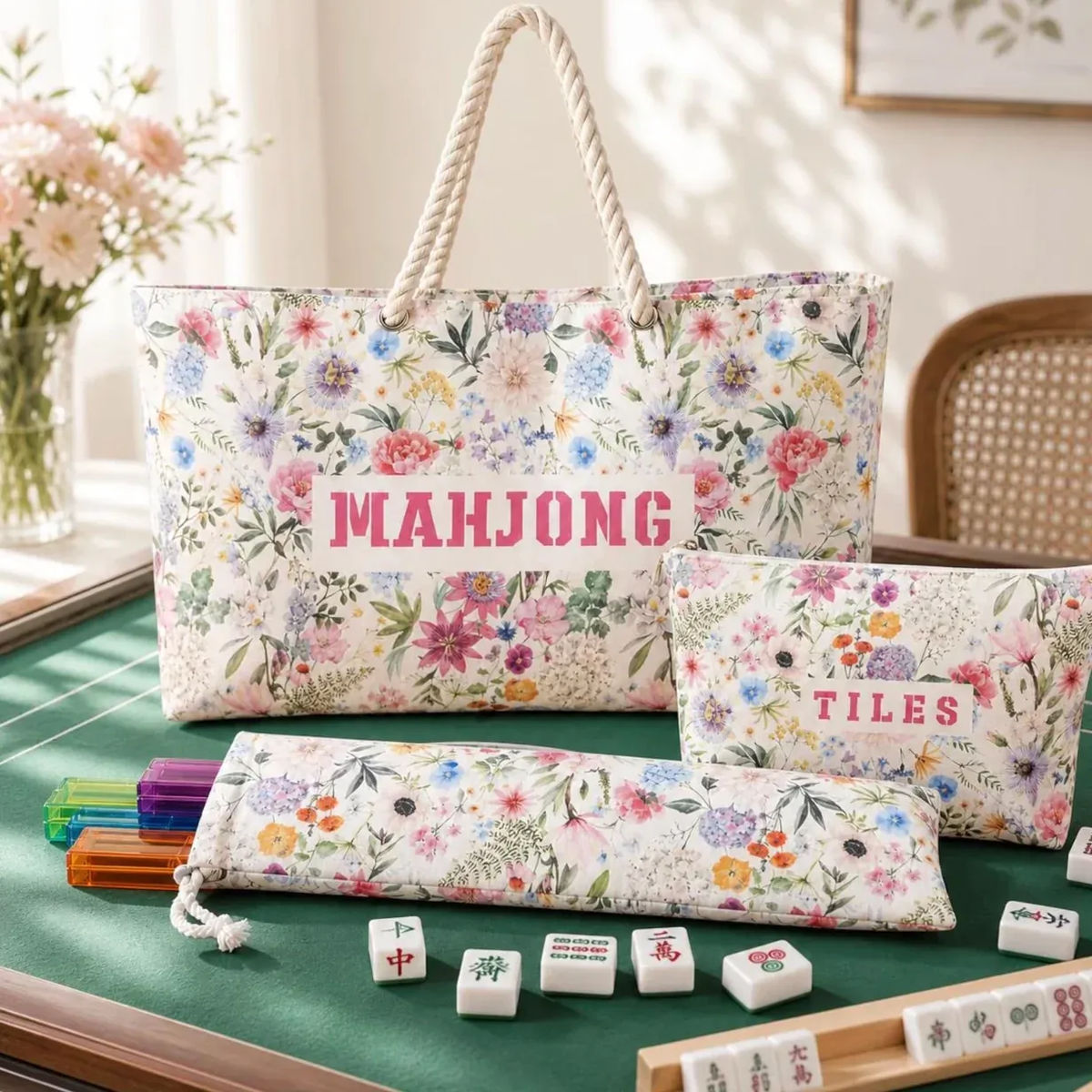
A good mahjong bag balances durability, weight, and protection for a 160-tile set plus mat. Canvas bags offer breathability and vintage charm but require more care; leather provides elegance and longevity at higher investment; nylon delivers lightweight convenience and water resistance; hybrid designs combine materials to minimize weaknesses. Mahstead offers mahjong bags and cases in all three material families, each suited to different travel patterns, climate, and frequency of play. Canvas suits players who host weekly games and keep sets at home; leather appeals to those seeking heirloom-quality storage; nylon works best for frequent travelers and humid environments. Inspect stitching, handle reinforcement, and interior compartments before ordering—these details outlast material alone.
Why does material matter for a mahjong bag?
Your bag carries tiles that cost more than casual board games—many players own custom engraved American mahjong sets worth years of play. Tiles chip if dropped; acrylic cracks under pressure. Material determines how well your bag cushions impact, resists moisture, and holds its shape over hundreds of trips up and down stairs or across a car trunk. A worn handle or failed seam doesn't just annoy you—it can spill your entire set mid-travel. Canvas wears predictably; leather gains character; nylon forgives neglect. Choose based on your real routine, not what looks best in a photo.
✨ Find your Mahstead set — free US shipping →

Canvas bags: tradition and breathability—what's the real trade-off?
Canvas is heavy cotton twill, woven tight enough to support weight without sagging. It breathes, so mildew won't hide inside during storage. Canvas bags develop a lived-in aesthetic—creases, softened edges, darkened seams—that many players love. The catch: untreated canvas absorbs water like a sponge and stains easily. Spilled drink, humid basement storage, or a sweaty car seat can darken or rot fibers. You must condition canvas yearly with appropriate cloth treatment to block moisture and dirt. Stitching on canvas bags tends to hold well because the material supports needle holes without tearing. Canvas suits players who host at home, store their sets indoors, and don't mind ritual maintenance as part of ownership.
Leather bags: heirloom weight and care demands
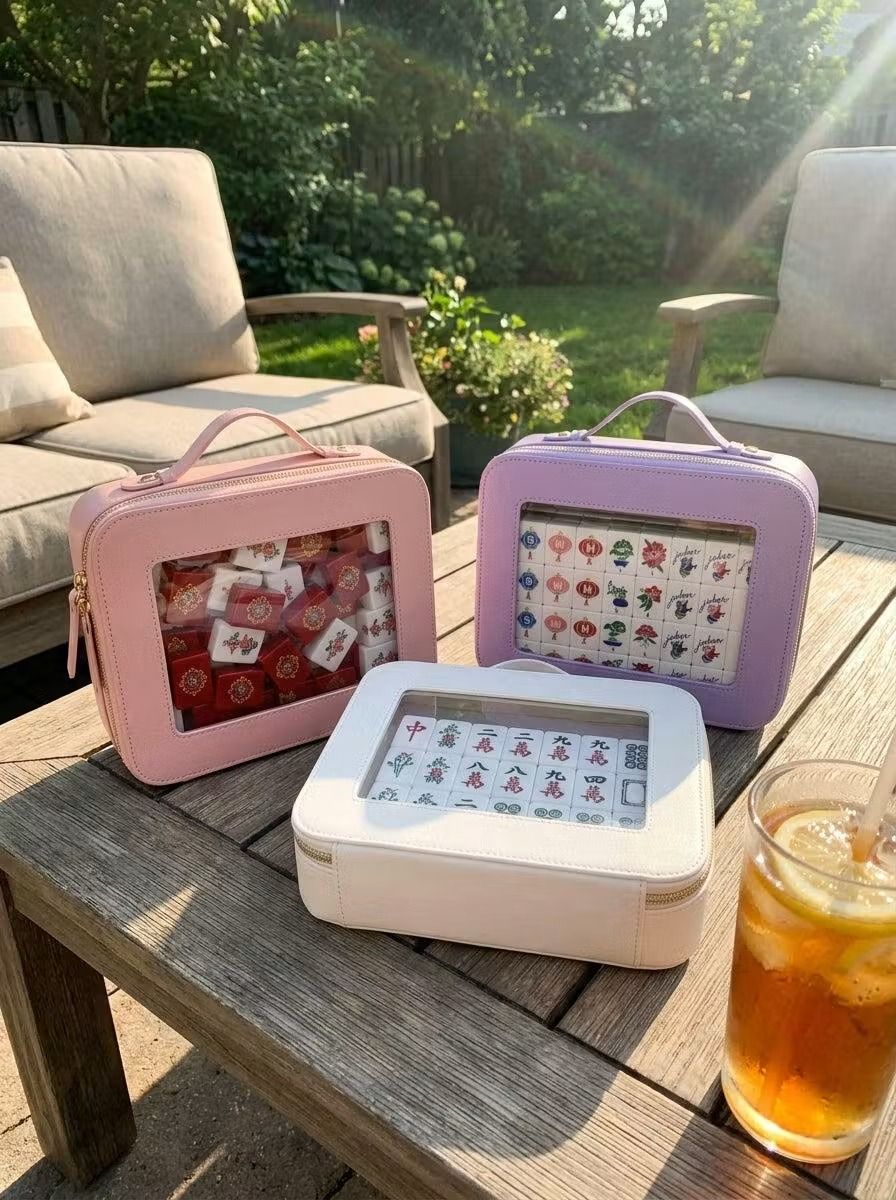
Leather is animal hide, tooled and finished to resist water and age beautifully. A leather mahjong bag can outlast the player—hide toughens over decades if stored dry. Leather develops patina, a darkened, rich surface that signals genuine use and care. The trade-off is upfront cost, weight, and vigilance. Leather absorbs oils from your hands; without regular conditioning, it cracks and dries. Salt, sweat, and humidity accelerate cracking. You must store leather in climate control, never in a damp garage. Leather bags are heavier than canvas or nylon by 10–15%, which matters if you carry sets weekly over distance. Leather is best for players who view their mahjong set as a heirloom, live in dry climates or stable interiors, and enjoy the ritual of conditioning. Expect to spend more upfront.
🀄 Shop best-selling mahjong sets →
Nylon bags: lightweight, water-resistant, low-maintenance
Nylon is a synthetic polymer, tightly woven and often coated with a water-resistant finish. Nylon weighs less than canvas or leather—significant if you carry your set in a hand bag or backpack. Water beads off nylon; brief exposure to humidity won't harm it. Nylon bags are easiest to clean: wipe interior and exterior with a damp cloth, air dry. Stitching on nylon requires reinforcement because the material can tear at puncture points (needle holes weaken synthetic fibers more than natural ones). Look for double-stitched seams and bar-tacked handle attachment on any nylon bag. Nylon is ideal for frequent travelers, humid climates, and players who prioritize convenience over tradition. It forgives neglect but lacks the character of canvas or the heirloom quality of leather.

Hybrid bags: combining the best of each material
Some bags pair canvas body with leather trim, or nylon shell with canvas lining. Hybrids aim to solve the weakness of single materials: canvas exterior for durability and look, leather handles and straps for strength and feel, nylon lining for water protection. Hybrids work well if you travel occasionally in variable climates—the canvas feels genuine, the water barrier protects during travel, the leather accents won't strain as quickly as all-canvas handles. The downside: if one material fails, the bag becomes awkward to repair. A torn leather handle on a canvas bag can be replaced; a torn nylon lining on a canvas exterior is harder to patch neatly. Hybrids cost more than single-material bags but less than all-leather. They suit players who want a balance—some aesthetic richness, some practicality, some durability.
Comparison table: which material fits your game?
Material | Ideal Player | Durability (years) | Weight | Water Resistance | Maintenance | Climate Fit |
Canvas | Home host, weekly game | 5–8 | Medium | Fair (untreated) | Yearly conditioning | Dry indoor |
Leather | Heirloom collector | 15–25+ | Heavy | Good (if conditioned) | Monthly oiling | Dry, climate-controlled |
Nylon | Frequent traveler | 8–12 | Light | Excellent | Wipe and dry | Any (humid OK) |
Hybrid | Balanced player | 8–15 | Medium-heavy | Very good | Light conditioning | Mixed climates |
What to check before you buy
Stitching: Open the bag. Run your finger along all seams—stitches should be tight, evenly spaced, and flush. Loose stitches or gaps mean the bag will fail within months.
Handle attachment: Grab the bag by its handle and hold it at waist height. The attachment points (where handle meets body) should move as one unit—no flexing, no creaking, no threads showing. Bar-tacking (an X or cross-pattern of stitches) at these points is a sign of engineering.
Lining: Look inside. If the bag is canvas or leather, is the lining reinforced? Water will find its way through exterior material; a sturdy lining buys you time to dry the bag before moisture reaches tiles.
Closure: Does the bag zip smoothly or does it snag? Test a zipper three times—open, close, open. Zippers are the first failure point on travel bags. Metal zippers (vs. plastic) cost slightly more and last much longer.
Interior pockets: Many mahjong sets come with a mat and dice bag. Does your new bag have compartments to separate tiles from mat? Tiles shift inside a flat bag, causing corner damage to acrylic.
Dimensions: A 160-tile set with mat requires roughly 16" × 12" × 6" (outer dimensions). If the manufacturer lists only one dimension, ask before ordering—your set may not fit.
You're ready to choose. Consider where your set lives most: your car, a friend's house, a storage closet, your hands. If it lives in your hands (frequent travel), buy nylon. If it lives at home (weekly game at one table), canvas. If you want a bag that will outlast your grandchildren, leather is worth the investment and care.
🎁 See our most-loved mahjong sets & accessories →
Browse our full travel bag collection to compare stitching, weight, and interior layout in person before ordering. Free US shipping makes it easy to try options without cost.
FAQ
Can I use a canvas bag in humid climates?
Yes, but treat it first with water-blocking finish and inspect it every 2–3 weeks for mildew. Untreated canvas in humidity risks mold inside, which damages tiles.
How often should I condition leather?
Every 6–12 months if stored indoors year-round; more often if exposed to dry heat or direct sun. Conditioning oils prevent cracking and restore water resistance.
Will nylon bags damage acrylic tiles?
No. Hard plastic tiles don't mind nylon linings. Use nylon if you travel frequently; the material won't harm your set, only protect it.
What's the weight difference between materials?
A canvas bag with a 160-tile set weighs roughly 3–4 lbs. Leather adds 1–1.5 lbs. Nylon saves 0.5–1 lb. For weekly travel, the difference is minor; for daily commute, nylon wins.
Can I repair a bag seam myself?
Canvas and nylon seams can be hand-stitched or machine-sewn if you have basic sewing skill. Leather should be taken to a leather repair shop to preserve appearance and strength.
Which material holds its shape best?
Leather and hybrid bags hold shape longest because hide and reinforced materials resist sagging. Pure nylon or thin canvas may slouch after two years of heavy use.
Is a bag warranty worth buying?
Check the warranty terms before ordering. Most manufacturers offer 1–2 year coverage on seams and zippers. Read what "coverage" means—some cover seams only, not handles.


View More
View More
View More
