
Mahjong Classes for Beginners in Orange County
Last updated: Nov 23, 2026
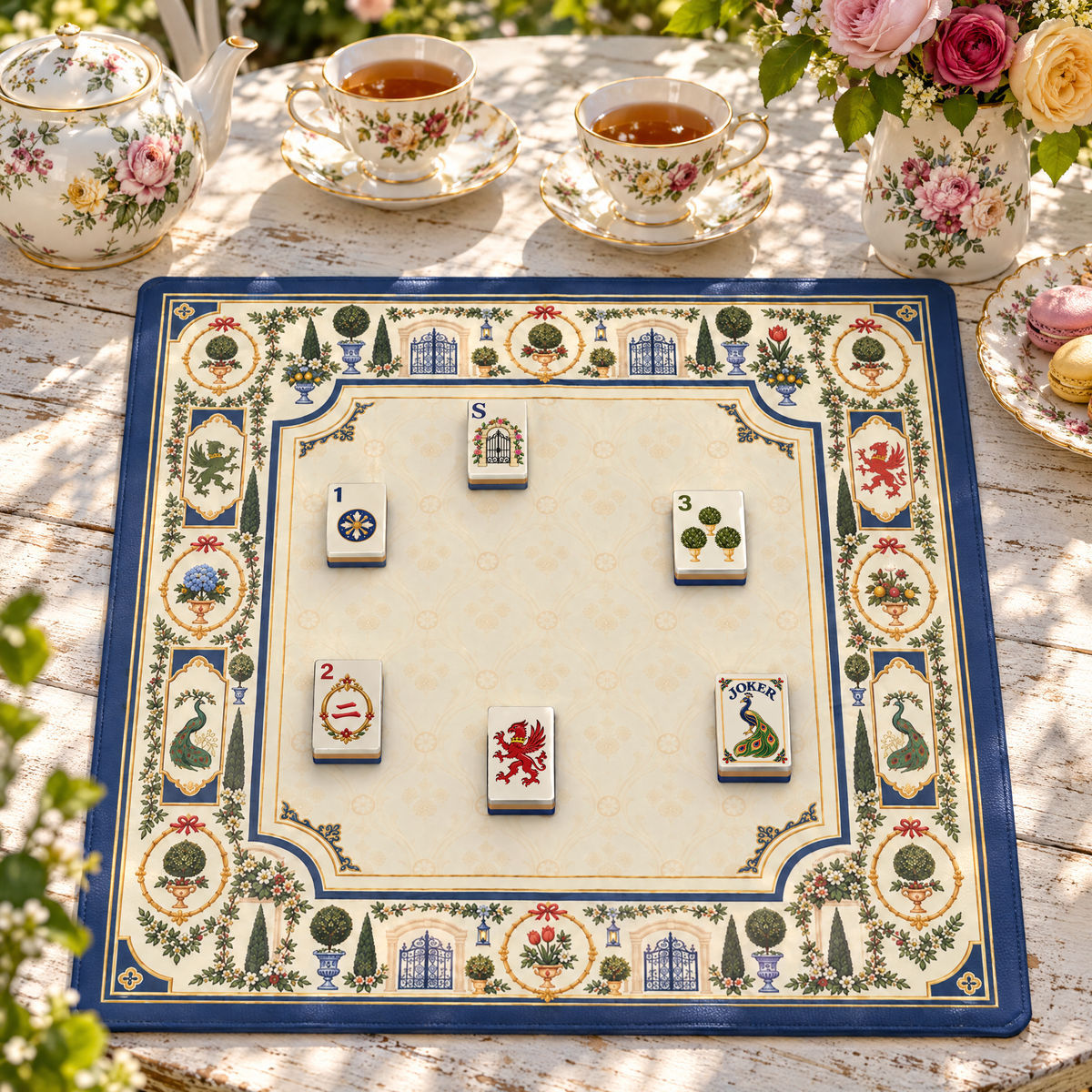
Orange County beginners can find mahjong classes through community centers (check recreation department websites), public libraries (many offer free or low-cost workshops), synagogues and Jewish community centers (often host weekly beginner sessions), and country clubs with game rooms. Private instructors advertise on local meetup boards and Facebook groups. Classes usually run 6–10 weeks, meeting once or twice weekly for 90 minutes to 2 hours, teaching American mahjong rules, the National Mah Jongg League card, tile passing (the Charleston), and hand-building fundamentals. Expect to learn about the 152 tiles (three suits plus winds, dragons, and flowers), hand patterns from the yearly card, and how jokers work. Most beginner programs cost between modest per-class or per-session fees; ask instructors directly. Avoid classes that promise mastery in one session or skip the Charleston—that tile-passing ritual is essential American mahjong etiquette. Mahstead's best-selling mahjong sets are designed for new players with clear tile markings and durable materials that survive a full beginner season. 🀄 Shop best-selling mahjong sets →
Where exactly do beginners find classes in Orange County?
Start with your city or county recreation department's online class catalog—many offer mahjong instruction in spring and fall. Public libraries frequently host beginner workshops; call your local branch or check their event calendar. Jewish Community Centers and synagogues across the county run weekly or monthly beginner circles; these are open to all faiths and tend to be welcoming. Country clubs, retirement communities, and senior centers often host classes; don't assume you need a membership—call ahead. Online meetup boards and hyperlocal Facebook groups let you see which neighborhoods have active game circles; instructors sometimes post one-on-one or small-group availability there. Search "[your city] mahjong beginner" plus "library," "community center," or "JCC" to narrow options. Ask instructors about class size—groups of 4–6 move faster than 12–15, and you'll learn hand construction more quickly in smaller cohorts.

What should a beginner mahjong class actually cover?
A solid 6–8 week beginner program teaches tile names and suits (Bams, Craks, Dots, winds, dragons, flowers), how to read the National Mah Jongg League card (the official hand chart updated every spring), the Charleston (the three-round tile-passing ritual before play begins), hand-building rules (why you can expose pungs and kongs but not chows or sequences), and how the discard-draw cycle works. Early weeks focus on recognition and card literacy so you stop looking up every tile. Mid-course lessons cover the difference between concealed and exposed tiles, how jokers can substitute for any tile except in pairs or single-tile melds, and basic scoring concepts. Final weeks include practice games with instructor feedback, common beginner mistakes (exposing tiles too early, forgetting to keep a closed hand, misreading the card), and etiquette (announcing your melds clearly, managing speed, tracking who played what). Avoid classes that skip the Charleston or treat it as optional—it's core American mahjong, not decoration. Good instructors also show how the mahjong card changes yearly and why patterns repeat, so you don't panic when the hand list shifts.
How long before a beginner can play in a real game?
Most players feel confident sitting down for their first full game after 4–6 weeks of weekly classes plus 2–3 supervised practice sessions. The first month teaches you to recognize tiles without hesitation—that's the foundation. Week 5–6, you'll start seeing hand patterns repeat and can build a simple hand without constant card checking. Weeks 7–8, you play full 13-round games with instructor guidance, learning to manage pace and pressure. After that, your speed and accuracy keep improving through play, but you're not lost. Plan on playing more slowly than experienced players for your first 10–15 games; that's normal and expected. A few classes offer "boot camp" formats (intensive weekends), but spreading learning over 6–8 weeks means muscle memory develops better and you retain tile-suit associations longer. Don't rush to play money games until you've completed at least one full beginner course and played 5–10 casual rounds. Confidence comes from repetition, not speed. Once you're playing regularly, you'll upgrade your gear—many beginners start with a basic set and later invest in custom or engraved tiles that make the game feel more like home.
What's the difference between American mahjong classes and Chinese or Hong Kong variants?
Orange County beginners will find almost all instruction in American mahjong, which uses a specific yearly hand card (not learned by memory), requires exactly 152 tiles, and forbids sequences (chows). Chinese and Hong Kong mahjong use different hand-winning conditions, allow chows that can be called or melded, and rely on memorized patterns—they're taught less frequently in the county and appeal mainly to players with family roots in those regions. If an instructor doesn't specify "American," ask directly. American mahjong classes are beginner-friendly precisely because you don't memorize 81 different hands; you reference the card. Riichi mahjong (Japanese variant) is even rarer locally. Stick with American unless you have a family tradition pulling you toward another variant. Once you're fluent in American, you can pick up a second variant later if you want. The skills (tile recognition, hand strategy, game psychology) carry over, but rules don't. Your first class should confirm it's teaching how to play American mahjong from day one.

What common mistakes do Orange County beginners make, and how do instructors correct them?
Table: Beginner Errors and How Instructors Fix Them
Mistake | Why it happens | Instructor's fix |
Exposing tiles before confirming the hand on the card | Excitement; not used to the card's layout | Teach card sections first; have students trace patterns before play |
Calling a pung or kong with the wrong tile count | Miscounting in hand or on table | Practice calling out melds aloud; count on fingers until it's automatic |
Using a joker as a pair tile (not allowed in American mahjong) | Assumes jokers replace any tile | Show the rule repeatedly; have a student mistake trigger a 30-second explanation each time |
Ignoring the Charleston or passing tiles carelessly | Doesn't understand its strategic role | Explain that every pass changes the table's odds; discuss which tiles to trap, which to seed |
Playing at the speed of experienced players (causes panic) | Peer pressure; class moves fast | Slow the first 3 games down; remind everyone: new players are expected to play slower |
Forgetting which suit is which (Bams look like dots, etc.) | Tile markings vary; eyes aren't trained yet | Use a mahjong mat with clear labeled zones to reinforce suit positions |
Not tracking which tiles are live or dead | Unaware of the discard pile's strategy | Have them write down the first 5 discards; build habit before speed matters |
Instructors who see these patterns repeat will slow the game, isolate the error, and drill it twice before resuming. Avoid any class that says "you'll pick it up" and rushes through a game—that breeds frustration and dropouts.
What equipment should you own before or after your first beginner class?
Before class, you need nothing; instructors provide tiles. After your first 2–3 classes, you'll want your own set so you can practice at home and become familiar with tile weight, size, and texture. A starter set from the best-selling collection gives you 152 playing tiles in a durable acrylic or bamboo material designed to survive weekly play. Once you're playing in regular games, a mahjong mat (felt or vinyl, typically 2' × 2' to 3' × 3') becomes useful; it keeps tiles from sliding, marks the discard zone clearly, and makes your home game feel legitimate. If you're hosting or attending games weekly, racks with pushers (tiered stands that hold 13–14 tiles and a pusher stick for easy tile advancement) accelerate game flow and reduce hand strain. A bag or case protects your set when you carry it to class or game nights. None of this is mandatory for a beginner class, but each piece removes friction and makes play more enjoyable. Instructors often recommend a mat after week 4 because players begin hosting their own beginner circles at home.
🎁 See our most-loved mahjong sets & accessories →
What to check before you sign up for a class
Instructor experience: Ask how long they've been teaching and whether they teach American mahjong exclusively.
Class size: Confirm it's 4–8 people, not a lecture to 20+.
Frequency and length: Verify it's weekly (or twice weekly) for at least 6 weeks, not a one-day cram.
The Charleston: Confirm it's taught and practiced before the first game.
Hand card: Ask if they use the current year's National Mah Jongg League card or print one for you.
Practice games: Ensure the class includes supervised play, not just rules lectures.
Peer mix: Ask if it's new-player-only or mixed (experienced players can rush the pace).
Location and parking: Check it's accessible and you can park easily; you'll carry a set once you buy one.
Cost: Most classes cost a modest per-session or per-course fee; compare a few options before committing.
Follow-up: Does the instructor help connect you to ongoing game circles after the course ends?
Getting started after your first class: how to find your game circle
Once you finish a beginner course, ask your instructor which local game circles accept new players at friendly (non-money) stakes. Many county community centers run "Mahjong Monday" or "Mahjong Thursday" circles open to graduates. Libraries often post flyers for local groups. Online meetup boards and neighborhood Facebook groups are reliable sources; search your city name plus "mahjong" to find active players. Don't hesitate to ask if you can observe a game before joining—most circles welcome an observer who sits out round 1. Your first real game as a player will feel overwhelming; that's universal. Go in knowing you'll play slower than everyone else, and that's expected. By game 3 or 4, you'll find your rhythm. What's in an American mahjong set will become second nature; you won't need to count tiles anymore. After 6–8 weeks of regular play (roughly 20–30 games), you might consider joining a standing weekly circle that has the same players, same time, and same mat. That's where mahjong becomes a ritual and a social anchor, not just a game you're learning.
✨ Find your Mahstead set — free US shipping →

FAQ
Can I learn mahjong without a class?
Yes, but it's slower and more frustrating. A 6-week class compresses learning that would take 3–4 months solo. Books and online videos teach rules, but they don't correct your mistakes in real time or show you game psychology. Classes also connect you to game circles, which is how you find your community.
Are Orange County mahjong classes open to non-residents?
Most public library and community center classes serve the broader county, not just residents. Call ahead; some senior-focused programs may ask for proof of age, but not address. Private instructors and game circles have no residency requirement.
What's the actual cost of beginner classes in Orange County?
Prices vary by provider and course length. Public library workshops are often free or very low-cost per session. Community centers typically charge a modest per-class or per-course fee. Private instructors may charge hourly rates. Ask instructors directly for their fee structure; most are flexible for group sign-ups.
Do I need to own a mahjong set before my first class?
No. Instructors provide sets for class play. You'll want to buy one after 3–4 classes so you can practice at home and get used to your own tiles' weight and feel.
How often do the hand patterns change, and will I need to relearn them?
The National Mah Jongg League releases a new card every spring, so 1 set of hands is current for about 12 months. You don't "relearn" patterns—you already know how to read the card, so scanning the new card for familiar motifs takes 30 minutes, not weeks. Instructors often do a brief "card transition" session in April.
Is mahjong an "older person's game," or will I find younger players?
Both age groups play, but county circles tend to skew toward retirees and empty-nesters. Younger players (30s–50s) join regularly, especially in urban areas. Ask your instructor about the age mix in the game circles they recommend; you'll feel more comfortable if players match your demographic range.
Can I play mahjong if I don't speak Mandarin or Cantonese?
Absolutely. American mahjong uses English tile names (Bam, Crak, Dot, wind, dragon, flower) and is played in English. You don't need to know any other language. The game's cultural roots are Chinese, but the modern American version is fully English-language.


View More
View More
View More
