
Mahjong Classes for Beginners in Austin: Where to Start
Last updated: Nov 23, 2026
Austin beginners can find mahjong instruction through public libraries (search your branch's adult education calendar), community centers (check Parks & Recreation department offerings), casual meetup groups (search "Austin mahjong" on Meetup or Facebook), and informal weekly games hosted at country clubs and synagogues—call ahead to confirm open enrollment. Classes typically run 4–8 weeks and cost per the venue; most teach American mahjong (152 tiles, hands from the yearly card). Expect to learn tile values, the Charleston (pre-game passing ritual), how to recognize hands, and basic etiquette. Bring a notebook. Once you finish a beginner series, you'll need your own set; many players start with our best-selling mahjong sets and a portable mat for home games. Avoid paid "crash courses" that promise expertise in one session; mahjong rewards steady practice over weeks. 🀄 Shop best-selling mahjong sets →
Where do Austin beginners actually find classes?
Austin's library system publishes adult education schedules online; visit your nearest branch's website and search "mahjong" or "game" under adult programming. Community centers and Parks & Rec departments often list seasonal offerings; call the main office to ask about current enrollment. Meetup.com and Facebook groups (search "Austin mahjong" or "Dallas-Fort Worth mahjong") show weekly game times, though not all are beginner-friendly—message the organizer first to confirm they welcome newcomers. Synagogues and country clubs often host women's mahjong circles; call and ask if they accept players learning the game. Word of mouth matters: tell friends you're interested, and you'll likely hear about home games. Most venues charge per session or a flat class fee; confirm what's included (tiles, instruction, mat).

What should you expect in your first lesson?
Your instructor will start with tile anatomy: three suits (Bams, Craks, Dots numbered 1–9), winds, dragons, and flowers. You'll learn how to hold your hand, how to draw and discard, and the basic structure of a winning hand. The Charleston (the tile-passing ceremony before each game starts) will take 10–15 minutes to practice; it feels confusing at first but becomes muscle memory. Expect games to move slowly in week one—that's normal. Most classes teach you to read the current-year National Mah Jongg League card, which shows all legal hands; you don't memorize it, you learn how to spot patterns. Bring a pen and a small notebook. A good class teaches you why certain moves matter (preserving flexibility, reading what others discard). If the instructor plays at game speed by week three without explaining strategy, it's not beginner-friendly; feel free to find a slower group.
🎁 See our most-loved mahjong sets & accessories →
How is Austin mahjong different from other cities?
Austin's mahjong scene leans heavily toward American mahjong (152 tiles, the National League card format), which is the most common variant in the US. You won't typically encounter Chinese mahjong (144 tiles, no card, different hand patterns) or Riichi (Japanese, different scoring) in beginner classes here. Austin's game culture is social and flexible: players chat during games, take breaks, and welcome newcomers without rigid formality. That said, once you move beyond beginner circles, some groups play faster and expect you to know how to read the mahjong card on your own. The Austin heat means many games move outdoors or to air-conditioned venues in summer; bring water. Cost is generally modest (a few dollars per game or a flat class fee), though some private clubs charge membership dues.

What gear do you need before your first home game?
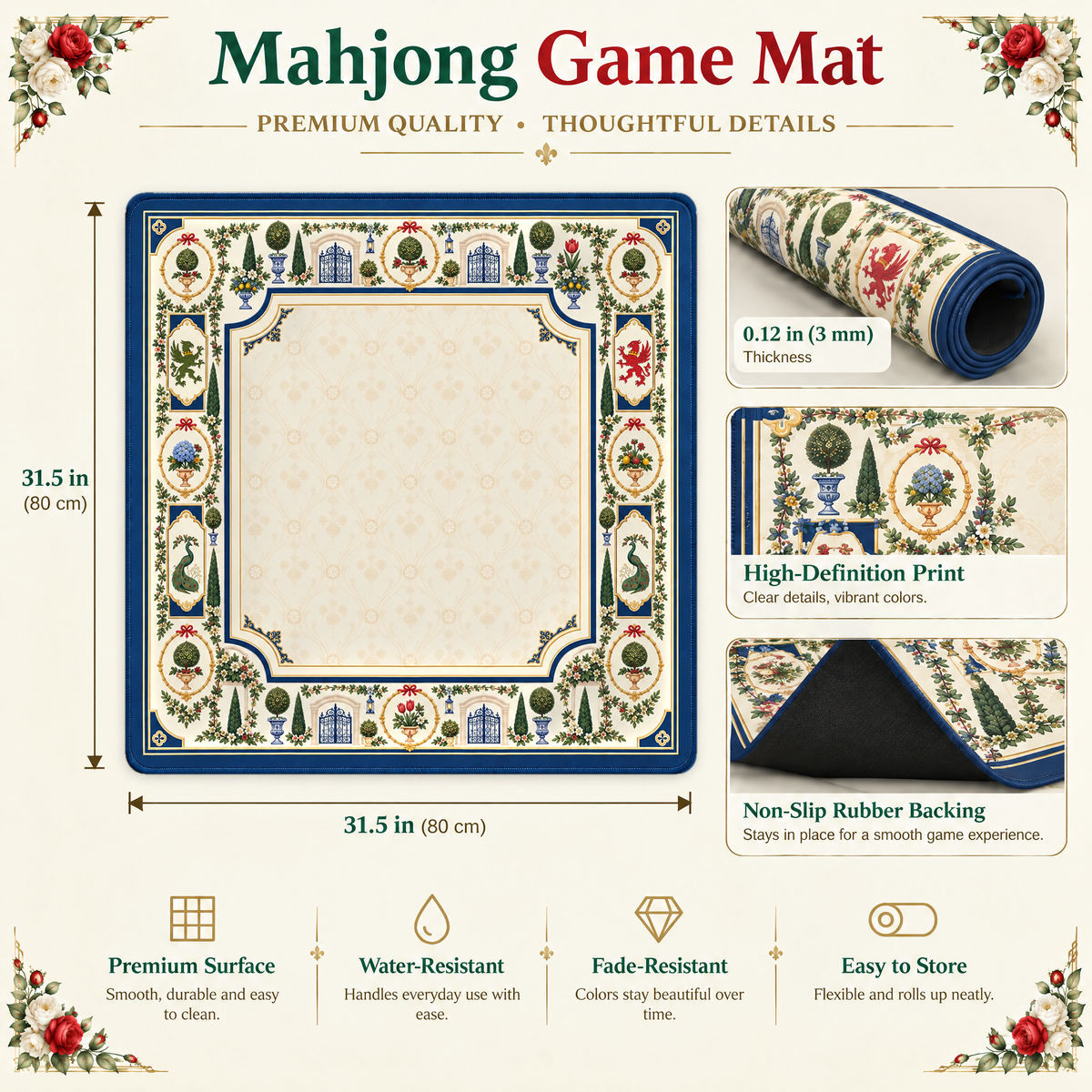
Once you've completed a beginner class, you'll want a 160-tile American mahjong set—the standard is 152 playing tiles plus spares, which covers all four players and every legal hand on the card. You'll also need a mahjong mat (soft cloth or neoprene, 2–3 feet square, keeps tiles from sliding and organizes the hand layout), and racks with pushers so players can hold and display tiles neatly. A portable bag or case makes it easy to carry your set to friends' homes. Many players customize their sets with engravings; if you're hosting regular games, an engraved set is a fun, lasting purchase. Below is a quick checklist of what works for different play scenarios:
Scenario | Essential gear | Optional but helpful | Why it works |
Weekly game at home (4 players) | Set + mat + racks | Engraved set, dice | Organized, durable, easy to read tiles |
Casual visits to friends' homes | Portable set only | Travel bag | Lightweight, fits in a car or backpack |
Hosting tournament or game night | Set + mat + racks + pushers | Multiple sets, scoring chips | Professional look, faster play |
Learning (borrowing a friend's set) | Mat only | Pen + card reference | Protects borrowed tiles, speeds learning |
Pick a mat that fits your table; measure before you order. Racks should hold 14–15 tiles per player comfortably. Most beginners start with a standard best-selling set and upgrade or customize later.
How do you avoid common beginner mistakes in Austin games?
Mistake 1: Not learning the Charleston before your first game. The Charleston is non-negotiable in American mahjong; it's the tile-passing ritual that happens before every hand. If you skip learning it, you'll hold up the game. Ask your instructor to drill it or watch videos of it in action—it takes 30 seconds per round once you know it.
Mistake 2: Trying to memorize all hands on the card. You don't. You learn to spot families of patterns (like "all Bams and winds" or "pairs and like numbers"). Beginners who try to memorize 70+ hands get overwhelmed; instead, learn to read the card quickly by scanning sections.
Mistake 3: Calling "mahjong" before you've checked the card. Always verify your hand against the card before declaring; an invalid win costs points and embarrasses you. Take an extra five seconds.
Mistake 4: Not asking clarifying questions during games. Experienced players expect beginners to ask why a discard was safe or why someone didn't take a tile. Ask. It's the fastest way to improve.
Mistake 5: Borrowing a set without a mat. Tiles are expensive and fragile. If you're borrowing, bring a mat to protect the tiles and keep the game organized. It shows respect.
Mistake 6: Ignoring the current National Mah Jongg League card. The card changes every spring. Always play with that year's card, not an old one—hands shift. Your instructor will provide it or tell you where to download it legally.
What to check before you buy your first set
Before ordering a set, ask yourself:
Who will I play with, and how often? Weekly home games justify a durable engraved set; occasional casual play works fine with a standard set.
Will I travel with it? If yes, choose a set that comes with a travel bag or budget for one separately.
Do I prefer a specific tile size or design? Our best-selling collection includes various sizes and styles; read the product description to match your hand size and aesthetic.
Am I hosting or attending? Hosts should invest in a mat and racks; players can get by with just a set at first.
Do I want an engraved or personalized set?Engraved mahjong sets are memorable gifts and take 1–2 weeks to produce; order early if you want custom text.
Check the product page for tile material (acrylic, bamboo composite, resin), dimensions, and what's included. We include free US shipping, so you won't pay extra for delivery.
✨ Find your Mahstead set — free US shipping →

FAQ
Can I learn mahjong online instead of in-person in Austin?
Online tutorials (YouTube, instructional websites) teach the rules, but mahjong is a social game played with real tiles and people. A beginner class—even a short one in person—is far faster and more enjoyable than solo learning. Consider a hybrid: watch videos at home, then join a beginner class to practice with others.
How long does it take to feel confident playing with experienced players?
Most people feel comfortable after 4–6 weeks of weekly play. You'll know the tile values, recognize common hands, and handle the Charleston smoothly. To play competitively (fast games, tricky strategy) takes 3–6 months; that's fine—casual players never reach that level and have a great time.
Do I have to use the National Mah Jongg League card, or can my group make up our own hands?
American mahjong requires the official League card; that's what separates it from other variants (Chinese, Riichi, etc.). Your group follows the card for that year. If you want to make up hands, you're playing a house variant—fun, but not American mahjong. Stick with the card if you want to join games outside your home group.
What's the difference between a 160-tile set and other sizes I've heard about?
American mahjong is always played with exactly 152 tiles and 8 jokers. A 160-tile set includes those 152 plus spare tiles (extra jokers and blanks) in case a tile cracks or is lost. Sets come as 160 tiles; you never add spares to the game itself. Larger sets (166+ tiles) include even more spares, but 160 is standard.
Is mahjong expensive to start as a hobby?
A beginner class costs per the venue (usually modest fees). Your first set and mat depend on quality and brand; ask an instructor for guidance on budget. Once you have a set and mat, there's no recurring cost—just the joy of playing weekly with friends.
Where should I store my set when not in use?
Keep it in its case or a dedicated box away from direct sunlight and moisture. Acrylic tiles can fade if left in a hot car or window. A portable mahjong bag or case both protects and organizes your tiles so you can grab it and go.


View More
View More
View More
