
Mahjong Circle Suit Meaning and American Tile Symbols Explained
Last updated: Nov 23, 2026
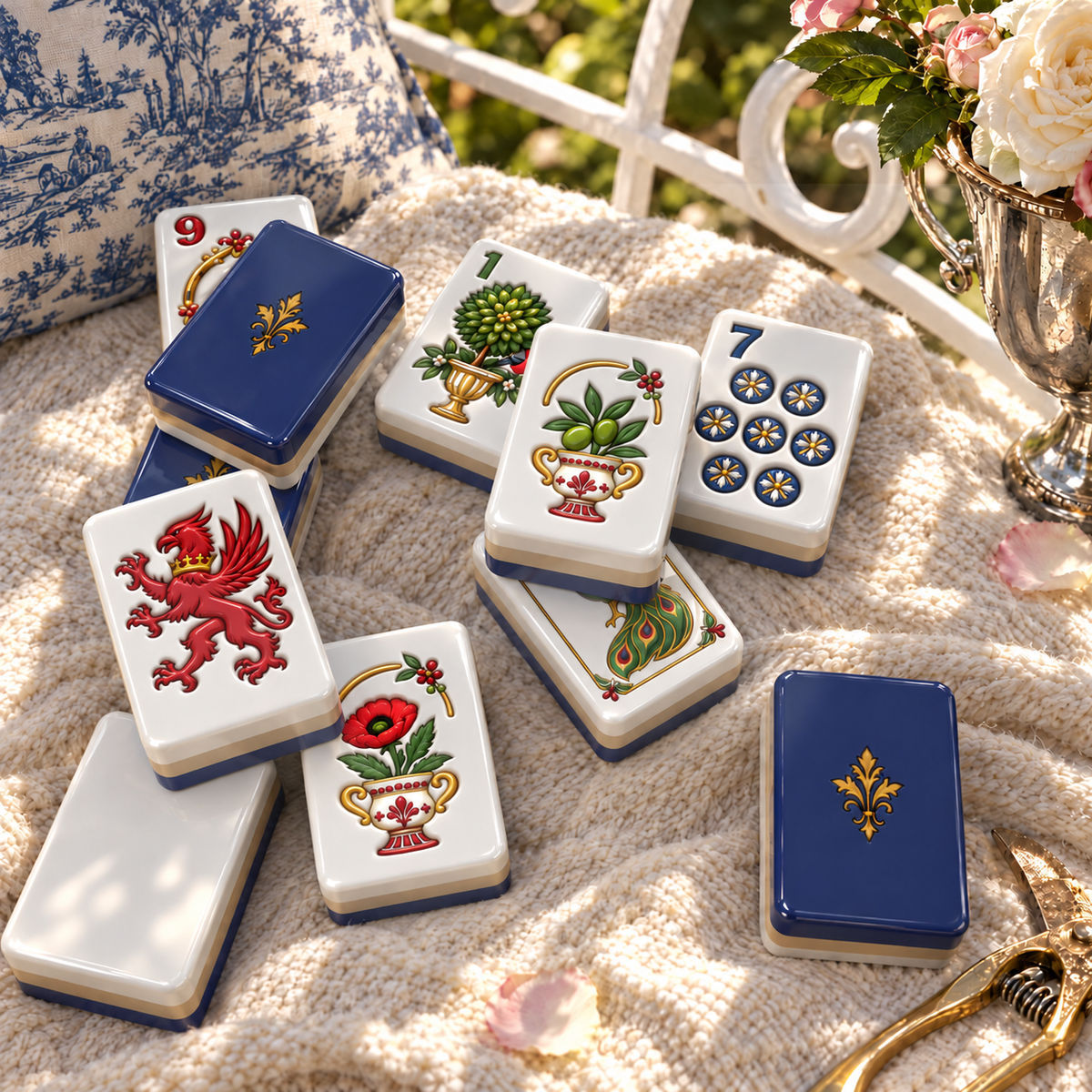
The circle suit in American mahjong—the Dots—is one of three number suits that form the backbone of every hand. Each suit carries its own visual identity, historical meaning, and role in strategy. Knowing what Dots represent, how to distinguish them from Bams and Craks, and why suit clarity matters at your table will speed up your game and reduce the confusion that trips up new players.
What is the Dots suit and why do we call it that?
Dots represent coins in the old Chinese numerical system. Each tile shows one to nine circles (or dots) arranged in patterns—think of them as the pips on dominoes. The 1 Dot shows a single circle (often decorative), while the 9 Dot displays all nine in a grid. Historically, dots were the lowest-value currency, making them a common element in folk games. Today, calling this suit "Dots" or "Circles" is standard in English-language American mahjong, though some older players still use the term "Coins" from Chinese origins. The visual clarity of dots—plain, countable, impossible to confuse with bamboo sticks or Chinese characters—makes them the easiest suit for beginners to learn first.

How do Dots, Bams, and Craks differ visually and strategically?
Each suit has a distinct symbol, honor tile partner, and feel:
Suit | Visual Symbol | Represents | Honor Tile (Dragon) | Memory Aid |
Dots | Circles arranged in patterns | Coins / currency | White dragon (Soap) | Plain dots, easy to count |
Bams | Bamboo sticks in bundles | Sticks / rods | Red dragon | Sticks bundle together |
Craks | Chinese characters (usually simplified "万") | Ten-thousands / characters | Green dragon | Complex visual = complex character |
On a mahjong tile, you'll see the suit symbol printed large in one or two corners, a numeral (1–9) in the opposite corner, and sometimes a decorative element. The pillar guide on what's in an American set explains the full tile anatomy. Strategically, Dots appear equally as often as Bams and Craks on the National Mah Jongg League card—no suit is "easier" or "harder"—but beginners often find Dots intuitive because counting visible dots is more direct than parsing stick imagery or recognizing a character.
🀄 Shop best-selling mahjong sets →
Which dragon tile pairs with Dots and why does it matter?
The White dragon—often called "Soap" because of its blank, clean appearance—belongs to the Dots suit. This pairing is not arbitrary: in classical Chinese mahjong, each honor tile family (winds, dragons) pairs with one number suit, creating thematic meld patterns on the card. When you see a hand slot labeled "Dot 1–5 + White," you're using the Dot suit's own dragon as a complement. The White dragon also serves a second role: it functions as the zero tile in scoring and some hand configurations, making it the most versatile honor in the game. Confusing which dragon goes with which suit is rare among experienced players but is one of the first mistakes rookies make; a set with clear engraved titles or suit markers eliminates doubt during the first few weeks.

Why does tile design clarity matter for reading Dots quickly?
At the table, speed kills mistakes. If you misread a 4 Dot as a 1 Dot because the dots are too small, crowded, or faint, you'll call a wrong hand or make an illegal meld. Low-contrast printing, worn tiles, or tiny symbols force your eyes to work harder—especially in dim lighting or when you're tired after two hours of play. Professional or semi-serious players invest in sets where dots, sticks, and characters are crisp, large, and instantly distinguishable from across the table. Tiles with a matte finish reduce glare and make counting dots easier on the eyes than shiny acrylic. When you're hosting a weekly game, a set with clear tile design and readable symbols means your players can focus on strategy, not deciphering. Even one moment of doubt per round, multiplied by four players and thirteen rounds, adds up to frustration and slow play.
🎁 See our most-loved mahjong sets & accessories →
How do you practice identifying Dots without making mistakes?
Drill tile recognition before your game night. Lay out all 36 Dots (if you have a spare set or tiles to practice with) and sort them by number, calling each one aloud: "1 Dot, 1 Dot, 1 Dot, 1 Dot" through "9 Dot, 9 Dot, 9 Dot, 9 Dot." This rhythm burns the visual pattern into muscle memory. Next, mix Dots with Bams and Craks and sort them back out—you'll catch any weak spots in your suite recognition. When reading the National Mah Jongg League card, always say the suit name aloud ("Dot 3," not just "3") until it becomes automatic. In your first few games, keep a printed card reference at your seat and glance at it if you freeze on a suit. Most players stop second-guessing within two to four sessions. Sets with high-contrast, large symbols speed up this learning curve.
What to Check Before You Buy a Set
Symbol size: Are dots at least 0.3 inches across? Can you count them from six feet away?
Contrast: Do the suit symbols pop against the tile background, or blend into it?
Finish: Is the tile surface matte (easier on eyes) or glossy (glare risk)?
Spare tiles: Do you have extra jokers and blanks for wear and tear, or will one lost tile ruin your set?
Storage: Does the set come with a bag or case to protect tiles during weekly games?
✨ Find your Mahstead set — free US shipping →
How does understanding Dots help you read hands from the card faster?
Once you recognize the three suits instantly, you can scan the National Mah Jongg League card without hesitation. A hand listed as "Dot 2–4, Crak 5–7, Bam 1–3, White" jumps out at you because you're no longer decoding symbols—you're reading instructions. Experienced players memorize dozens of hands and can spot a match within seconds; this speed comes entirely from overlearning suit recognition. When beginners hesitate on suit identity, they lose mental bandwidth for strategy: they're stuck in decoding mode instead of thinking ahead about what tiles to discard or when to hold. The card changes every spring, so old hands become useless, but suit mastery is forever. Invest an hour in this foundational skill and you'll play faster, make fewer errors, and enjoy the game more. A set with bold, professional tile design makes that investment pay off faster.

FAQ
What do the symbols on Dot tiles look like compared to Bams and Craks?
Dots show one to nine plain circles in geometric arrangements (1 Dot = one circle, 5 Dot = five circles in an X, etc.). Bams display bamboo stick bundles—typically three, four, or more thin lines. Craks show a Chinese character (usually "万" meaning ten-thousand) with numbers 1–9. Each is distinct once you see them side-by-side.
Is the White dragon always part of the Dots suit?
Yes. In American mahjong, the White dragon—also called "Soap"—is the honor tile paired with Dots. The Red dragon pairs with Craks, and the Green dragon pairs with Bams. This pairing appears consistently on every National Mah Jongg League card.
Can you use a Dot tile outside of Dot melds?
No. In American mahjong, you can only expose pungs (3 identical tiles), kongs (4 identical), quints (5), and sextets (6) of the same tile. You cannot mix suits in a single meld. A pung must be three 5 Dots, not a 5 Dot, 5 Bam, and 5 Crak.
Why are Dots easier for beginners to learn than Bams or Craks?
Dots are visual and countable. You can literally count the circles on each tile without knowing Chinese or deciphering abstract symbols. A 7 Dot shows seven dots; a 7 Bam shows seven sticks bundled together in a less intuitive pattern.
What happens if your tiles have faint or hard-to-read Dots?
Misreading tiles becomes common, leading to illegal melds, miscalled hands, and arguments at the table. Play slows down because everyone double-checks every meld. A set with clear, high-contrast symbols eliminates this friction entirely.
Do online mahjong games use the same Dot symbols as physical tiles?
Not always. Online platforms often simplify or stylize the symbols. When learning American mahjong, always drill with physical tiles from your own set first; the tactile and visual repetition locks in muscle memory far better than a screen.


View More
View More
View More
