
Mahjong Chips and Coins: What to Buy for Your Game
Last updated: Nov 23, 2026
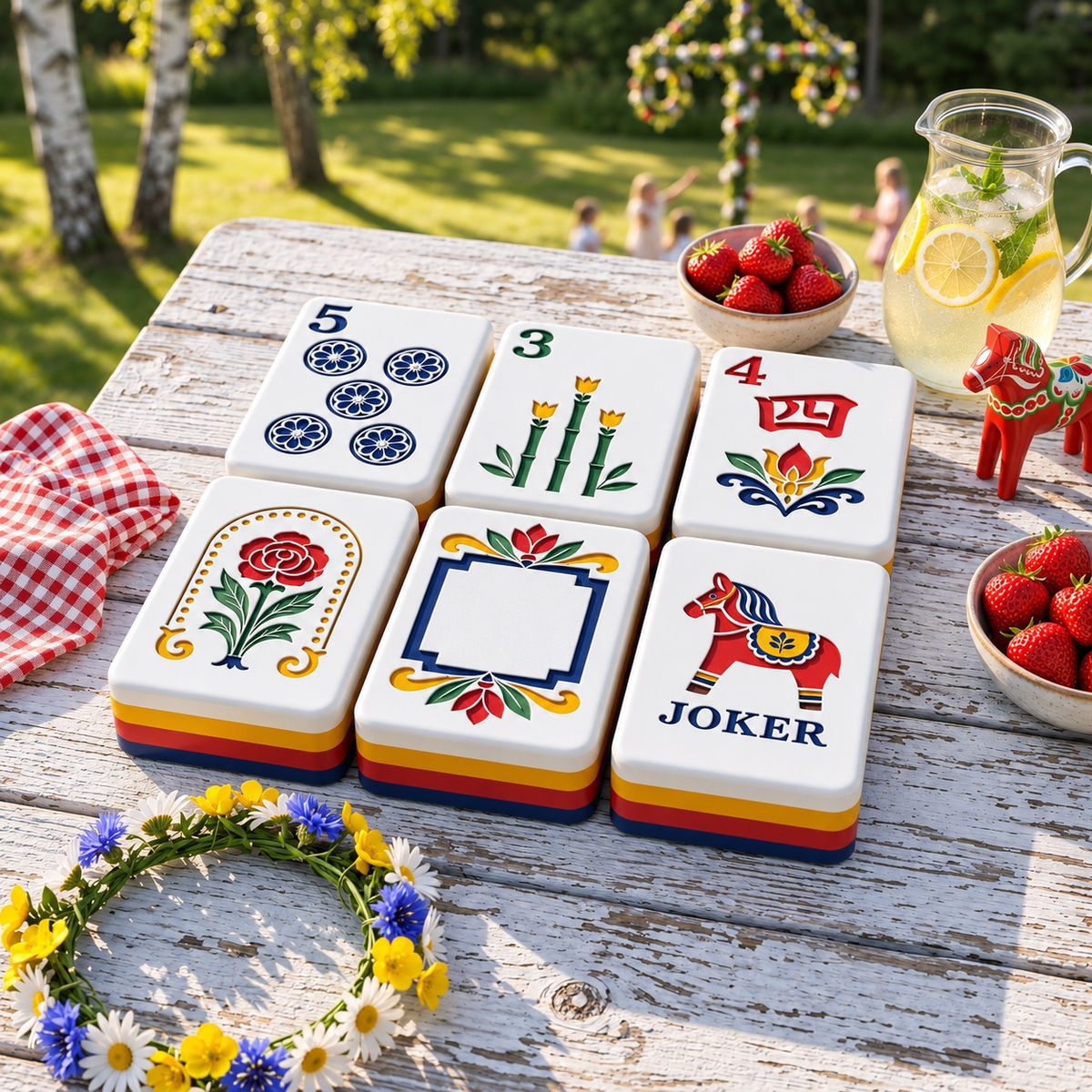
Mahjong chips and coins serve one job: keeping score visible and honest at your table. American mahjong players use tokens (also called counters or markers) to track points from hand to hand—no pencil-and-paper fumbling mid-game. You can buy dedicated mahjong chip sets (usually acrylic tokens in four colors, one per player), use non-standard tokens, or keep score on paper and upgrade later. The most flexible choice is a four-player chip set paired with a mahjong rack with pushers, which holds your tiles upright and leaves room for chips in front of you. Most Mahstead customers add chips to a best-selling mahjong set once they've played three or four times and want to speed up scoring. Don't buy chips before your first game—try paper scoring first, then decide. 🀄 Shop best-selling mahjong sets →
Do you need chips to play mahjong?
No—paper and pencil work fine, and many home groups use them for years. But chips eliminate mental math, speed up settlement between hands, and make the game feel more polished. If players are paying real money, chips make the exchange instant and clear. We recommend adding them after you've learned the hand patterns and scoring formula.

What's the difference between chips and racks?
Chips are tokens for keeping score; racks are tile-holding stands for your hand. A mahjong rack with pushers organizes your 13 tiles so you don't have to look at them loose on the table—it protects your hand and speeds up play. Many racks have a built-in chip slot or narrow shelf below the tile row, letting you display your score chips right in front of you. You can use racks without chips, or chips without racks; they solve different problems.
What types of scoring tokens exist?
Three main options dominate American mahjong tables:
Dedicated acrylic mahjong chip sets — Four colors, typically in denominations (e.g., white = 1 point, red = 5, blue = 10, green = 20), 20–40 chips per color. These are purpose-built, compact, and stack neatly in your game bag. Mahstead sells acrylic chip sets designed to match engraved tile designs.
Poker chips — Heavier, clay-composite or ceramic, 39–40 mm diameter. Poker chips look professional and last forever, but they're bulkier and overkill for casual home games. Many dealers carry them in bulk.
Crystalized or novelty tokens — Lightweight plastic or resin tokens shaped like flowers, dragons, or traditional Chinese symbols. These are fun for gift sets but can crack or lose their finish with repeated shuffling and stacking.
Most groups with racks and pushers prefer acrylic or ceramic—they're small enough to live in your rack's chip slot and tough enough to survive a year of weekly games.
How do you score with chips?
Here's the step-by-step process we use at our weekly table:
1. Know the point value per chip denomination. Agree before the game starts. A common setup:
White = 1 point
Red = 5 points
Blue = 10 points
Green = 20 points
(Some groups use different scales; adjust to match your local rules or the National Mah Jongg League scoring guide.)
2. Start each player with the same stack. For a typical 16,000-point starting score, each player begins with:
4 green chips (80 points)
4 blue chips (40 points)
2 red chips (10 points)
Total = 130 points in value, adjusted if your group uses a different base score.
3. Settle after each hand. The winning player collects chips from the losers based on the hand's point value. Discard chips are never returned mid-hand. Keep chips in clear piles in front of you at all times.
4. Exchange chips for larger denominations as needed. If you accumulate too many white chips, swap them for higher denominations to keep your pile manageable. This is called a "chip buy"—happens naturally mid-session.
5. Cash out at the end. Convert remaining chips back to points and settle money (if your group plays for stakes) or simply count as bragging rights.
🎁 See our most-loved mahjong sets & accessories →
What's the best chip setup for beginners?
Beginners should start with paper scoring, then graduate to one simple chip set. Here's why:
Paper lets you focus on tiles and the card. You're already learning 152 tiles, the four-hand permutations, and how to read the mahjong card. Adding chip math overloads you.
A single four-color acrylic set serves you forever. Once you pick a standard denomination (white = 1, red = 5, blue = 10, green = 20), you'll use the same chip set for 20 years. There's no need for multiple sets.
Add a mahjong rack with pushers once you move to chips. A good rack gives your chips a home and keeps your tile hand organized—two problems solved.
Beginners often buy elaborate or oversized chip sets because they look impressive. After three months, they realize they use the same four colors week after week and wish they'd bought a smaller, stackable set instead.

Chips vs. paper: when does each system shine?
System | Best for | Speed | Durability | Learning curve |
Paper & pencil | First-timers, casual play, no money | Slow (add, double-check, erase) | Good (just reuse paper) | Zero friction |
Simple acrylic chips (4 colors) | Regular home groups, all stakes | Fast (grab, stack, settle) | Very good (20+ years) | One session to learn |
Poker chips (ceramic) | High-stakes or exhibition games | Very fast (heavier, professional feel) | Excellent (ceramic lasts indefinitely) | One session (same as acrylic) |
Multi-denomination sets (8+ colors) | Complex betting schemes or teaching | Moderate (more tracking) | Good | Slower (need to memorize more rules) |
Our recommendation: Start with paper. Upgrade to a single four-color acrylic set and a mahjong rack with pushers after four to six weeks of weekly play. Stick with it forever.
How many chips do you need per player?
Here's the working formula we use:
Minimum: 20 chips per color = 80 total per player (if each denomination caps at 20 units and players cash out quickly).
Comfortable: 30–40 chips per color = 120–160 total per player (lets you accumulate a big stack without exchanging mid-hand).
Overkill: 50+ chips per color (only if you're running a 12-hour marathon or a tournament).
For a typical four-player home game, a 160-chip set (40 per color) with engraved American mahjong sets as your tile set is a complete package. You'll never run out mid-session.
Mistake to avoid: buying multiple chip sets thinking you need variety. You don't. One matched set, properly stacked and exchanged, is all any table needs.
What makes a good chip set for mahjong?
Material. Acrylic chips are light, stack cleanly, and fit in racks. Ceramic or clay chips are beautiful but heavy and rarely fit a standard rack's chip slot.
Size. Standard poker chips are 39–40 mm; mahjong-specific chips are usually slightly smaller (35–38 mm). Measure your rack before buying—a chip set that doesn't fit your rack shelf is an expensive mistake.
Denominations. Avoid sets with more than four colors unless your group explicitly votes for a complex scoring system. Three to four colors is universal and easy to teach new players.
Finish. Matte finishes (no gloss) are less likely to slip during stacking and feel more professional than shiny plastic. Check the product photos before ordering.
Matching your set. If you own engraved American mahjong sets with custom titles, look for chip sets in complementary colors (reds, golds, blacks, whites) so they photograph well together when you host. Mahstead's acrylic chips are designed to pair with our tile sets visually.
✨ Find your Mahstead set — free US shipping →
Where do you keep chips during the game?
Most players store chips in one of three ways:
In a mahjong rack with pushers. The best option. Your tiles sit in the rack above, your chips stack in a slot or tray below. Everything is visible, organized, and protected from accidental knocks.
In a small tray or coaster in front of you. Cheap and portable; you can use a ceramic dish, a bamboo coaster, or a dedicated mahjong chip tray. Downside: chips can roll during intense games, and the setup looks less polished.
In your lap or on the table edge. Works in a pinch but is chaotic—chips get knocked over, confused between players, or lost. Not recommended for serious or money games.
If you play weekly, invest in a mahjong rack with pushers that has a chip slot. It transforms the game experience and pays for itself in speed and durability within a month.
What to check before you buy
Will the chips fit your rack? Measure your rack's chip slot depth and width. Most standard mahjong racks accept chips 35–38 mm wide; poker-sized chips (39–40 mm) may not fit.
Are the denominations standard? Make sure the set uses universally recognized values (white = 1, red = 5, blue = 10, green = 20) unless your group has voted otherwise. Unusual schemes create confusion when you host new players.
How many chips per color? Count the product listing. For a four-player home game, 30–40 chips per color is enough; fewer than 20 per color will run out if one player wins big.
Do the colors match your tile set? If you have engraved American mahjong sets in gold or black, buy chip sets in matching tones so your setup photographs well and feels intentional.
Is the material durable? Acrylic and ceramic last 10+ years; soft plastic cracks or fades. Check reviews or ask the seller for material specs.
Do you need them tomorrow, or can you wait? Mahstead offers free US shipping, so ordering online is usually faster than driving to a store—but allow a few days for delivery.

FAQ
Can I use poker chips for mahjong?
Yes. Poker chips work perfectly—they're heavier, more durable, and feel premium. Downside: they're bulkier and rarely fit a standard mahjong rack's chip slot. If you own a rack, measure the slot before buying poker chips.
How do I teach a new player the chip system?
Show them the four denominations (white = 1, red = 5, blue = 10, green = 20), give them their starting stack, and let them watch one hand. After that, chip exchange becomes automatic. Don't overcomplicate it—simpler systems are easier to teach.
What if we run out of chips mid-game?
Exchange smaller chips for larger ones. If you're out of red (5-point) chips, swap five whites for one red. If the entire color runs out, use a chip of a different color as a temporary substitute—just agree at the table which color now stands for that value.
Do I need separate chip sets for different games or playgroups?
No. One four-color chip set works for every mahjong game forever. The scoring rules and denominations are standard across the US. Buy one set and keep it in your travel bag with your tiles.
Are there mahjong chips designed specifically by Mahstead?
Mahstead sells acrylic chip sets designed to complement best-selling mahjong sets in color and style. Check the product pages to see which sets pair with your tiles—we note the color and size to confirm they fit standard racks.
Should I buy chips at the same time as my mahjong set?
Not necessarily. Start with your set and paper scoring for 4–6 weeks. Once you're confident, add chips and a mahjong rack with pushers. This staged approach saves money and lets you choose a chip set based on how your group actually plays, not on guesses.


View More
View More
View More
