
Mahjong Card Holder for Beginners: Types & How to Choose
Last updated: Nov 23, 2026
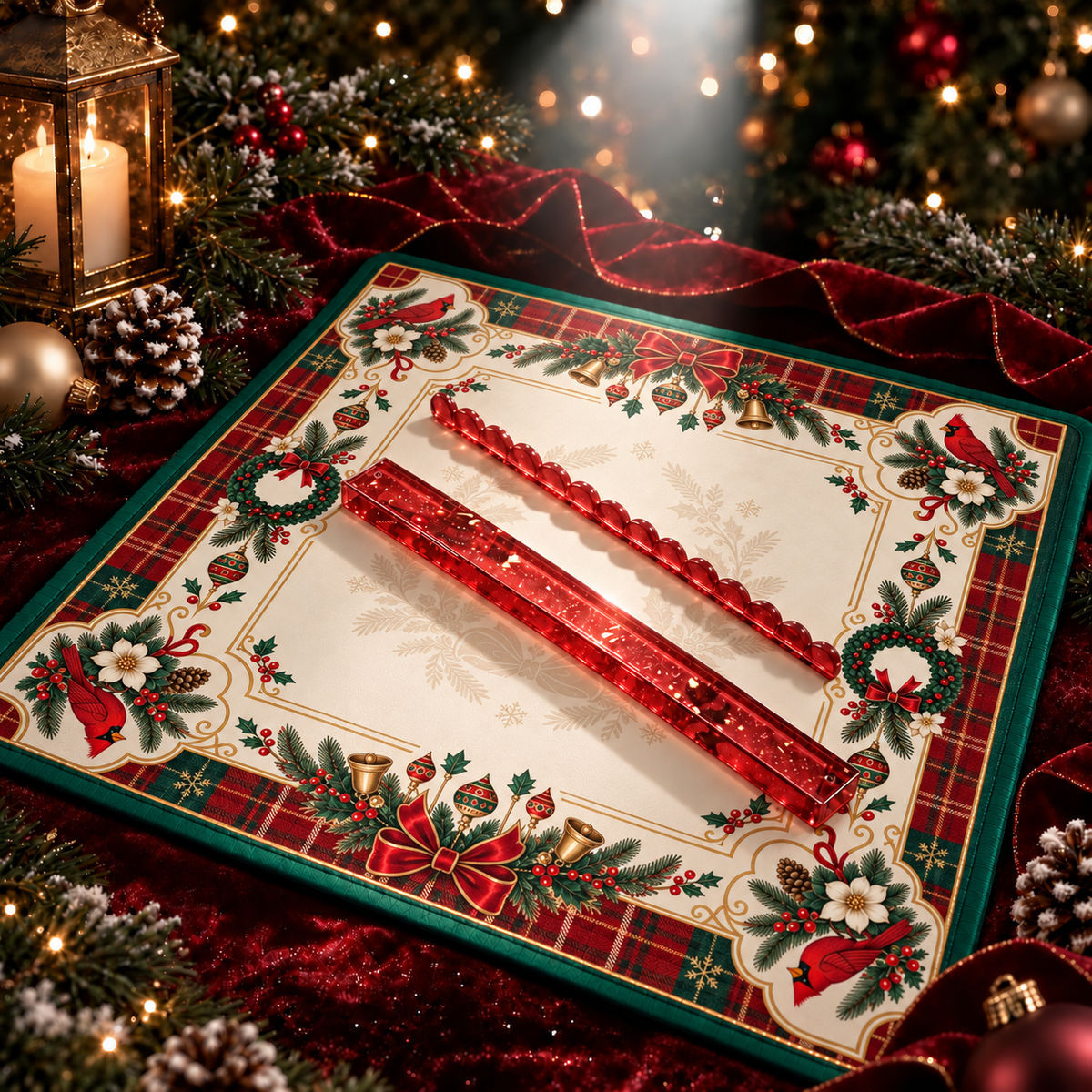
A mahjong card holder is a stand or rack that displays and secures your hand's tiles while you reference the National Mah Jongg League card—the rulebook that defines which patterns win each year. American mahjong requires exactly 152 tiles and 8 jokers, and as a beginner, keeping your hand upright and sorted lets you spot winning patterns faster and avoid accidental exposures. Card holders come in three main styles: wooden racks with enclosed tile grooves (durable, traditional, best for home play), acrylic clip-style stands (portable, lightweight, good for travel), and fabric-backed racks with pushers (the fastest for exposing melds mid-game). Beginners most often start with wooden racks because they're stable and force you to practice proper tile arrangement. Avoid flimsy plastic—cheap holders tip during the Charleston and frustrate learning.
Why do beginners actually need a card holder?
Your hand holds 13 tiles at game start, and you'll draw and discard one tile per turn. Holding 13 loose tiles in your hands invites mistakes: you forget what you have, accidentally expose a meld, or misread the card because your tiles keep sliding around. A good holder keeps tiles in suit order and at eye level so you can glance down at the card, see which melds are available, and make decisions without fumbling. Most experienced players use mahjong racks with pushers—they let you slide tiles into place and lock completed melds face-down on the rack itself, signaling to opponents what you've already exposed. Beginners usually skip pushers at first and use a simple upright stand to gain confidence reading the card.
What's the difference between a wooden rack and an acrylic clip holder?
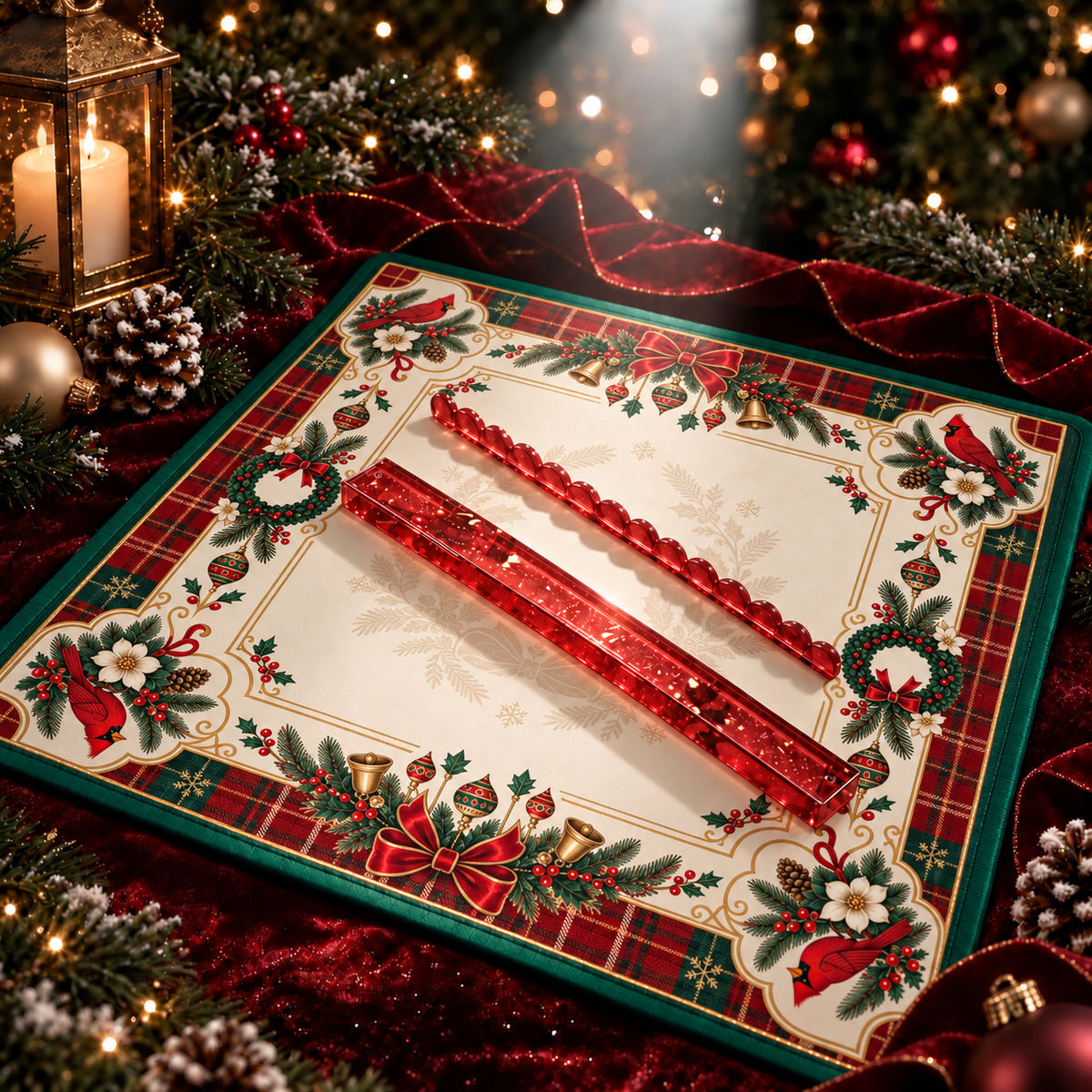
Wooden racks have solid grooves carved into the base, often angled slightly so tiles lean back toward you. They hold all 13 tiles in a long line, weigh 1–2 pounds, and don't shift during play. You slot each tile into its groove by suit and number—the ritual of arranging forces you to memorize tile positions and think through your hand structure. Wooden racks are quiet and look professional on a traditional mahjong mat, and they're harder to lose than lightweight alternatives.
Acrylic clip-style holders use a spring or magnetic grip to hold tiles upright on a clear stand, often small enough to fit in a bag. They're lighter (3–8 ounces), portable for potluck games, and let you arrange tiles more flexibly—you can shift them around without removing them from the rack. The downside: acrylic holds fewer tiles per rack (typically 6–8 per side, so you may need two), and tiles can slip if the clip isn't tightened. For beginners who travel between game locations, acrylic is practical; for home players who host weekly, wood is worth the investment.
Racks with pushers are the hybrid: typically wood or acrylic with a long grooved shelf and a short pusher bar. Once you lock a meld (three matching tiles, for example), you push them to the end of the rack and turn them face-down so other players see what you've exposed. Pushers teach proper meld etiquette early but can feel complicated when you're still learning the card. Most beginners graduate to pushers after 4–6 weeks of casual play.
Comparison: type, best for whom, durability, typical use case
Type | Best For | Durability | Setup Time | Cost Basis |
Wooden groove rack | Home players, learners | 5+ years | Under 1 min | Mid-range |
Acrylic clip stand | Travel, casual | 2–3 years | Under 1 min | Lower |
Rack with pushers | Serious learners, league | 5+ years | 1–2 min | Mid-range+ |
How do you actually set up a card holder during the game?
Before the hand starts, arrange your 13 tiles by suit: all Bams together (showing the bird on the 1 Bam), then Craks, then Dots, in numerical order left to right. Place the holder in front of you—usually about 12 inches from the edge of the table so you can see both your hand and the card. Set the League card on a card stand or just lean it against your holder so the hand patterns are at eye level.
During play, each time you draw a new tile, slot it into your hand in suit order (don't just add it at one end—reorganize). This takes a few seconds but helps you spot available melds instantly. When you're close to winning, your brain has already mapped the tile positions, so you don't fumble when another player discards the tile that wins your hand.
When you expose a meld, slide the three (or more) matching tiles to one end of the rack or, if using a pusher system, lock them face-down in the pusher slot. Other players confirm you've followed the rules, and the meld stays locked for the rest of the game. As a beginner, you learn what "a pung of 5 Dots" means by doing it, not by reading about it.
After the hand, clear your holder completely so the next dealer can reset. This habit prevents tiles from the previous hand lingering and causing disputes.
What should you check before ordering a card holder?
Tile count and groove width: American mahjong tiles are standardized at roughly 3/4 inch wide × 1/2 inch tall. A holder marked for 13 tiles should have grooves spaced roughly 3/8 inch apart. If grooves are too narrow, tiles jam; too wide, they tip sideways. Always measure or ask the seller if you're buying acrylic clips online.
Material stability: Wooden racks should be made from hardwood (oak, rosewood, bamboo) or composite with a reinforced base. Acrylic should be at least 1/8 inch thick; thin acrylic cracks in the clip mechanism or flexes during shuffling, allowing tiles to fall. Test by gently pressing on both ends—it should barely move.
Portability vs. durability trade-off: If you play at home only, invest in a heavier wooden rack; it'll last decades and won't slide across a mat during an enthusiastic discard. If you rotate between houses or a club, a lighter acrylic stand saves your back, but you may replace it in 2–3 years. Most of us compromise: a mid-weight wooden rack at home and a small acrylic clip in our travel bag for guest games.
Aesthetic fit: If you're building a matching set—a new engraved American mahjong set, a custom mat, and coordinated racks—check that colors and finishes complement each other. A clear acrylic holder pairs with modern designs; stained wood matches traditional aesthetics. This doesn't affect gameplay but makes hosting more enjoyable.

How do racks fit into a complete beginner setup?
When you're starting, you'll need more than a card holder. A best-selling mahjong set includes all 160 tiles (152 playing tiles plus spares), two dice, and a card-back case. To host or play regularly, add a mat—it defines the play zone, protects tiles, and includes printed sections for each player's hand. Racks go on top of the mat, one per player. A quality mat costs mid-range; paired with a set and a rack, you have a complete, professional-looking table that makes the game feel real and helps you stay organized.
Many beginners ask whether a rack is required. The answer is no—you can hold tiles in your hands—but a rack removes one cognitive burden so you can focus on learning the National Mah Jongg League card and understanding how American mahjong scoring works. Within your first game, a holder feels less like an accessory and more like a necessity.
🀄 Shop best-selling mahjong sets →
Common mistakes beginners make with card holders
Not cleaning tiles before inserting them. Humidity and dust can cause tiles to stick in grooves or make acrylic clips grip unevenly. Wipe tiles with a soft, dry cloth before play—it takes 20 seconds and prevents frustration.
Overstuffing the rack with extra tiles. Your hand is always exactly 13 tiles. If you've placed 14 in the rack out of habit, you'll draw on your turn and accidentally have 15, which is an illegal hand. Count before you sit down.
Mixing tile sizes or batches. If you're playing with tiles from an older set and newer tiles, they may not fit the same grooves. Modern American sets are standardized, but vintage or imported tiles vary. Confirm all tiles are the same before buying a new rack.
Choosing a rack that's too big. Larger racks take up table space and force other players to reach across you to discard. A 13-tile rack should be roughly 12–14 inches long—snug on a mat without dominating the table.
Treating the holder as furniture. Card holders are tools that wear out. Wooden racks can warp if exposed to humidity or heat; acrylic clips weaken from sun exposure. Store your rack indoors in a cool, dry place, and it'll last.
What to check before you buy
Groove width or clip size matches standard American tiles (roughly 3/4 inch wide)
Base is stable and doesn't rock on an even surface
Material is thick enough (hardwood or 1/8-inch acrylic minimum)
Fits your table and mat (measure depth if space is tight)
Matches your play style: home player (wooden), traveler (acrylic), league-serious (pusher system)
Tiles included in your set slot smoothly (test-fit if possible before final order)
🎁 See our most-loved mahjong sets & accessories →

FAQ
Do I really need a card holder if I'm just learning at home?
No, but it saves mental energy. You can hold tiles in your hands, but a rack lets you organize by suit and see the card without juggling. Most learners use a rack after the first game and keep using it.
What's the difference between a card holder and a rack with pushers?
A card holder just displays your hand; a pusher system locks completed melds face-down on the rack itself so other players see what you've exposed. Pushers teach proper etiquette and speed up meld confirmation, but simpler holders are fine for casual home play.
Can I use a card holder with any mahjong set?
Yes, as long as tiles are standard American size (roughly 3/4 inch × 1/2 inch). Vintage or imported Chinese tiles may be slightly different sizes. If you're unsure, contact the seller before ordering.
How do I clean tiles that are stuck in a wooden rack groove?
Stop. Don't force them—you'll damage the groove. Let the rack and tiles acclimatize to room humidity for an hour, then gently rock the tile side-to-side and lift. If still stuck, apply a tiny drop of silicone lubricant to the groove edge, wait 10 minutes, and retry.
Should I buy a new rack if I buy a new set?
Not necessarily. Racks and sets are independent—a good rack works with any standard American set. Buy a new rack only if your old one is damaged or you want to match a new color scheme or add pushers to your play style.
What happens if my rack tips during the Charleston?
Tiles spill, and you have to pick them up and verify no one saw them—creating delays and suspicion. Invest in a stable, heavier rack or play on a sturdy mat that won't shift underneath. This is why many players use wood instead of light acrylic.
Can beginners use a rack with pushers right away?
Yes, but it adds one more mechanic to learn. Most beginners start with a simple upright holder (wooden groove or acrylic clip) for 2–4 weeks, then move to pushers once they're comfortable reading the card and understanding melds. ✨ Find your Mahstead set — free US shipping →


View More
View More
View More
