
Mahjong Benefits for the Brain: Memory, Focus & Aging Well
Last updated: Nov 23, 2026
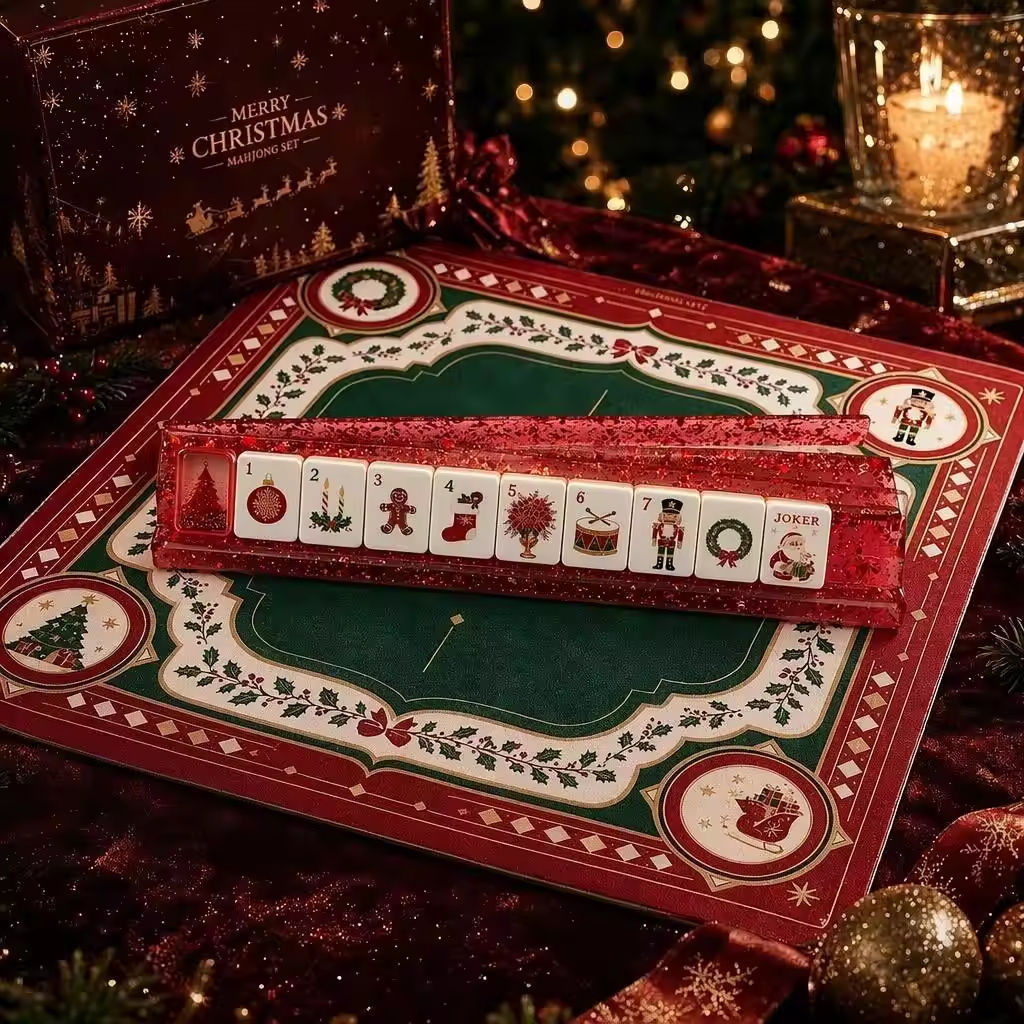
Mahjong trains memory, visual pattern recognition, strategic thinking and decision-making under pressure—all in one game. Players typically engage the prefrontal cortex (planning), working memory (tracking discarded tiles), and spatial reasoning (hand arrangement) for 1–2 hours per session. Studies suggest regular play correlates with slower cognitive decline in aging adults and sharper mental flexibility in all ages. American mahjong, played with 152 tiles and a hand-selection card, demands simultaneous attention to four players' discard patterns, probability, and tile combinations—more intense than solitaire variants. You'll need a quality set like those from our best-selling collection, a mat to protect your play surface, and ideally a weekly game group to sustain the cognitive load that drives the benefit.
How does mahjong work your memory specifically?
Every tile discarded stays visible on the table layout. You must retain which tiles each opponent has played, predict what they're holding, and track which tiles remain in the wall—all while organizing your own hand. This constant recall builds both short-term working memory (remembering the last five discards) and longer-term pattern recognition (recognizing which hands appear most often). After six weeks of weekly play, most players report faster mental indexing of tile positions and smoother decision-making. The National Mah Jongg League card changes yearly, so you're also learning and updating tile combinations seasonally, which prevents cognitive plateauing.

What's the difference between American mahjong and other variants for brain benefits?
American mahjong requires reading a hand-selection card, tracking joker substitution rules, and evaluating 40+ possible hand patterns each turn—higher cognitive load than Chinese variants, which use fewer tile types and simpler hand recognition. Hong Kong and Riichi mahjong reward memory less because chows (sequences) are called in real time rather than held and arranged. American play demands you keep a mental model of four other hands' likely compositions, which engages theory-of-mind reasoning (predicting others' strategies). Taiwanese and Chinese casual play tend to be faster and rely more on luck; American mahjong is slower, more deliberate, and leans harder on working memory and forward planning. If you're playing specifically for brain health, American mahjong delivers the highest sustained cognitive demand per session.
Does age matter—and can beginners still get the benefit?
Cognitive benefits appear regardless of age, though they manifest differently. Adults over 60 playing weekly show slower decline in processing speed and executive function compared to non-players (based on observational studies of long-term game groups). Beginners see immediate gains in pattern recognition within 3–4 sessions, even though their early scores are lower. The learning curve itself—wrestling with hand combinations, tile sequences, and the yearly card changes—is where the neuroplasticity work happens. Older players often report improved short-term memory and sleep quality within two weeks of starting a weekly game. Younger players tend to play for speed and social benefit, but still exercise working memory and strategic depth. Start slow, use a beginner-friendly guide, and play with patient players; the mental stimulus builds from week one.
What's the social brain benefit—and why does it matter for cognitive health?
Mahjong is a four-player game with real-time dialogue, table banter, negotiation of rules, and collective memory-building around patterns. This social engagement activates different neural pathways than solo brain games (apps, puzzles) and is protective against cognitive decline. Playing weekly with the same group also builds emotional regulation and stress resilience—factors strongly linked to healthy aging. Loneliness and isolation correlate with faster cognitive decline; a mahjong group becomes a standing social commitment, which research shows sustains mental sharpness more than occasional play. The game's pacing (one hand takes 30–45 minutes) allows for conversation, laughter, and relationship maintenance—all protective factors. For this reason, a weekly in-person game trumps online play for maximum cognitive and emotional benefit.

How to set up a sustainable mahjong brain-training practice
Start by joining or forming a weekly game group at a local community center, library, synagogue, or country club—search "mahjong near me" plus your city or check meetup boards. Consistency matters more than intensity; one 2-hour session weekly shows better outcomes than sporadic marathon play. Invest in a quality American mahjong set with clear, readable tiles (acrylic or bone are easiest on the eyes during long play); a worn or unclear set increases cognitive load and frustration rather than benefit. Add a protective mat to preserve your table and reduce environmental distraction. Use racks with pushers if hand arthritis or dexterity concerns arise—they reduce strain without compromising tile visibility or strategy. Buy or download the current year's official hand card and learn it over your first month; don't memorize every hand, just recognize common patterns. Track your play: most players reach "flow state" (optimal cognitive engagement) after 8–12 weeks of weekly play, when hand recognition becomes automatic enough to focus on strategy and social interaction.
Setup Element | Brain Benefit | Why It Matters |
Weekly consistency (same day/time) | Habit formation, predictable cognitive load | Sporadic play loses momentum; consistency builds neural pathways |
Four-player in-person game | Social cognition, emotional regulation | Solo or online play omits dialogue and real-time theory-of-mind |
Quality, readable tiles | Reduced visual strain, faster pattern recognition | Poor tiles force compensatory effort; clarity lets you focus on strategy |
Protective mat | Reduced anxiety about surface damage, steady hands | Worn or unstable tables distract and increase error |
Hand card reference (not memorized early) | Active learning, pattern recognition under time pressure | Premature memorization removes the learning stimulus |
Same group weekly | Relationship stability, collective memory for strategies | New partners each week reset social trust and group memory |
🀄 Shop best-selling mahjong sets →
What to check before you buy your first set
American mahjong sets sold today come with 160 tiles (152 playable tiles plus spares). Verify the tile material: acrylic is durable, lightweight, and clear; bone/bamboo sets are heavier, more luxurious, but require care. Check that all four suits (Bams, Craks, Dots, Winds, Dragons, Flowers) are complete and distinguishable—damaged or faded tiles will undermine your cognitive benefit by forcing compensatory visual effort. If you're gifting to a group or longtime player, engraved sets with custom names or jokes build investment and group identity. For travel or casual play, lightweight acrylic sets with a carrying bag or case let you practice anywhere. Pair your set with a mat sized to your table; a 36"×36" mat fits most dining tables and costs less than replacing a scratched surface. If you play weekly, you'll want your own set within 3–4 months; hosting players often appreciate consistent, familiar tile weight and size.
🎁 See our most-loved mahjong sets & accessories →
Is mahjong better for brain health than other games?
Mahjong engages working memory, pattern recognition, and strategic planning simultaneously for extended periods—attributes shared with chess but sustained more naturally because mahjong is social and faster-paced. Crosswords and Sudoku are more portable and require less setup, but involve only one player and less time pressure, so they offer less neuroplasticity stimulus. Bridge and poker demand similar cognitive load but have steeper learning curves and smaller player pools in most areas. Mahjong's advantage is accessibility: the rules are learnable in 2–3 hours, groups exist in most cities, and weekly play becomes a social anchor as well as a brain workout. Research on game-based cognitive intervention hasn't ranked mahjong against all competitors, but observational studies of regular players show sustained improvement in processing speed, memory, and executive function over 12 months—comparable to or better than passive brain-training apps.
✨ Find your Mahstead set — free US shipping →

FAQ
How long do I need to play mahjong to see memory improvements?
Most players report sharper tile recall and faster pattern recognition within 3–4 weekly sessions (2–3 weeks). Measurable improvements in processing speed and executive function typically emerge after 8–12 weeks of consistent play, though individual variation is wide.
Does playing online mahjong give the same brain benefits as in-person play?
Online play builds pattern recognition and working memory but omits the social cognition and real-time dialogue that protect against cognitive decline. In-person weekly play is superior for brain health; online can supplement but shouldn't replace group play.
What's the best age to start playing mahjong for cognitive benefit?
No age is too early or too late. Adults 30–60 build speed and pattern flexibility; adults 60+ show protective effects against decline. Teenagers can play, though the social and strategic engagement matters more than age.
Can I get brain benefits from mahjong solitaire or solo apps?
Solo variants train pattern recognition and visual memory but miss the working memory demands of multi-player play, real-time strategy, and social engagement that drive maximum cognitive benefit. They're useful supplements but not replacements for group play.
How often should I play to maintain cognitive benefits?
Weekly play (1–2 sessions of 2 hours each) shows sustained benefit. Sporadic play (once or twice a month) offers some benefit but loses momentum. Daily play beyond 3 hours adds fatigue without proportional cognitive gain.
Is American mahjong harder than Chinese mahjong for the brain?
Yes. American mahjong requires reading a yearly hand card, tracking joker substitution, and evaluating 40+ possible hand patterns per turn. Chinese variants use simpler hand recognition and faster pacing, so they demand less sustained working memory.
What tile material is best for eyesight during long play?
Acrylic tiles with clear engraving reduce eye strain over 2–3 hours because they're lightweight, bright, and easy to read from arm's length. Bone tiles are beautiful but slightly heavier; avoid sets with faded or poorly contrasted markings.


View More
View More
View More
