
What Is Exposure in American Mahjong
Last updated: Nov 23, 2026
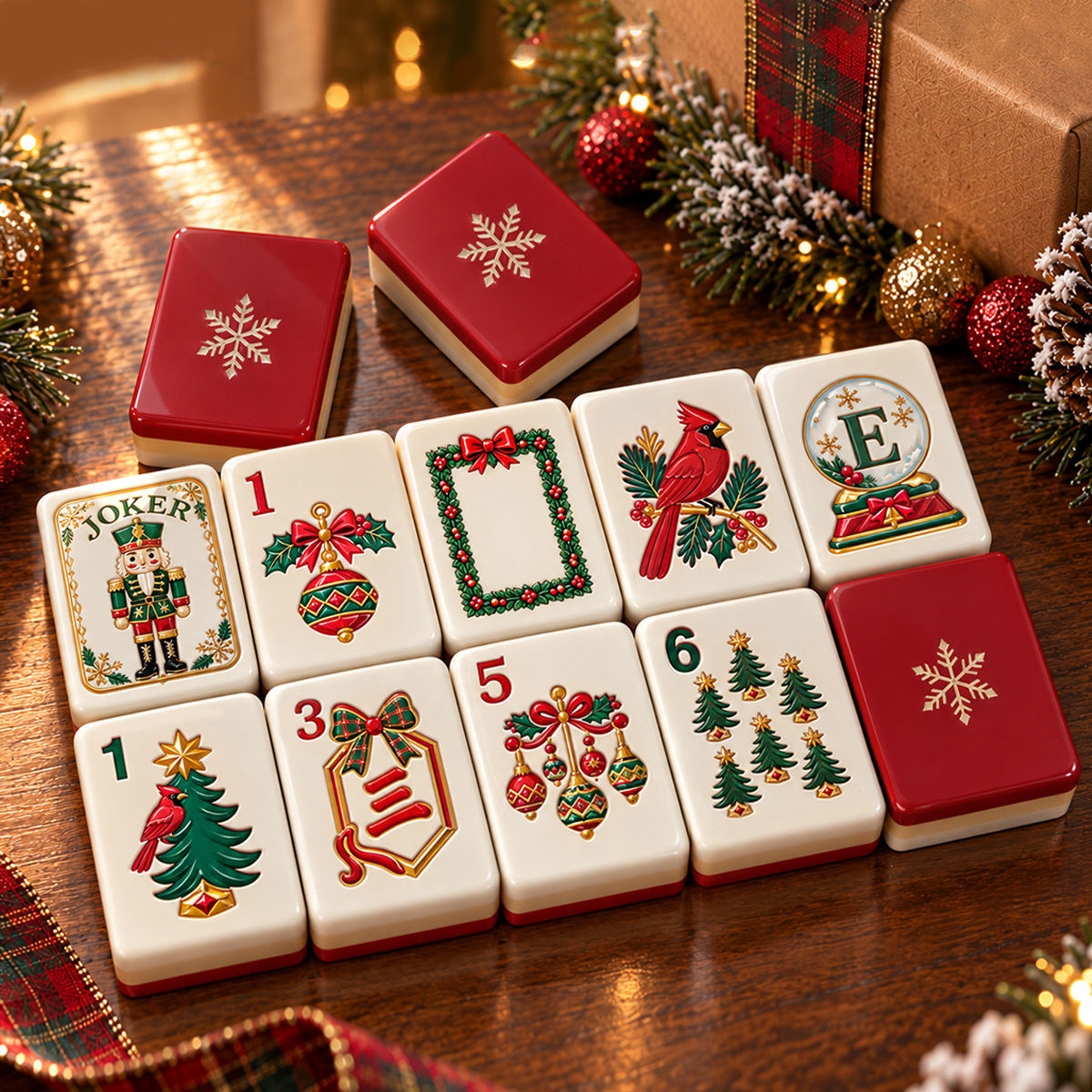
Exposure means laying tiles face-up on the table in front of you before you've declared a winning hand. In American mahjong, you can expose only pungs (3 identical tiles), kongs (4 identical), quints (5 identical), or sextets (6 identical)—never a pair or single tile, and never jokers in a one-tile slot. Exposed groups must stay visible until the hand ends; you cannot hide them again. The moment you expose, other players know what you hold, which shifts strategy. Most players expose to reduce hand clutter and signal strength, but some hold tiles close early in the hand to keep options hidden. Exposure is optional—you can win without ever exposing a group. Using a mahjong rack with pushers keeps your hand organized so you expose only when you choose to, and a clear mat helps everyone see exposed tiles at a glance. 🀄 Shop best-selling mahjong sets →
What tiles can you expose?
You can expose only these four group types: a pung (three identical tiles), a kong (four identical), a quint (five identical), or a sextet (six identical). Every exposed tile must be part of a hand pattern shown on the current year's National Mah Jongg League card. You cannot expose a pair, a single tile, or any partial sequence—American mahjong has no sequences. If a joker is in your exposed group, it counts as one of the identical tiles, never as a one-tile stand-in.

Can you expose jokers?
No. Jokers cannot be used in a single-tile slot, and they cannot be exposed alone. A joker can appear in an exposed pung, kong, quint, or sextet only as a replacement for one of the identical tiles. For example, if you have three 5 Dots and one joker, you can expose that as a kong of 5 Dots (with the joker standing in for the missing 5). But you cannot expose a joker by itself or use it to fill a pair. If you need a joker as a single tile in your hand, it stays hidden.
Why expose tiles, and when?
Players expose tiles for three reasons: to free up rack space, to signal they are close to winning (or mislead opponents about their hand), and to lock in a valid group so it cannot be questioned later. You might expose early to show strength and discourage others from discarding dangerous tiles. You might wait until the last moment to keep your strategy hidden. Exposure is optional—many winning hands are played without exposing a single group. The decision depends on hand position (are you leading or chasing?), tile count (how many racks left?), and table read (what are other players likely to throw?). There is no rule saying you must expose; do what serves your strategy.

What happens if you expose illegally?
An illegal exposure is one of the few rule violations in American mahjong that can trigger a challenge. If you expose a pair, a single tile, a joker alone, or a group that doesn't match any pattern on the current year's card, other players can call "challenge." The hand stops, the card is checked, and if your exposure was illegal, your hand is dead and the hand is replayed. To avoid this: always check the card before you expose. If you are unsure whether a group is valid, ask the table or leave it in your rack. A mat with clear zones helps you lay tiles out cleanly so other players can verify them instantly.
🎁 See our most-loved mahjong sets & accessories →
How do exposed tiles change the game?
Once you expose a group, every player knows what you hold. If you expose three 7 Bams, opponents will avoid throwing 7 Bams and watch for partners of your other groups. This information shapes discard strategy: safer tiles become riskier, and players may pivot their hand to avoid feeding your win. Exposure also shortens the game—fewer hidden tiles mean faster math on probability. Some tables house-rule that you must expose all kongs immediately (a Kong rule), but standard American mahjong does not require this. The choice to expose is yours, and timing is part of skill.
Exposure in other mahjong variants
Chinese mahjong, Hong Kong, Riichi, and Taiwanese mahjong all permit chows (1-2-3 sequences) and often require exposure of melds automatically. Exposure rules differ significantly: in Riichi, all melds are exposed face-down in order, and in Hong Kong mahjong, concealed hands score higher than exposed ones. American mahjong stands alone in allowing you to keep your entire hand hidden and expose only what you choose. This flexibility is part of what makes American mahjong unique.
Quick exposure checklist
Do you want to… | Then check… | Risk if you don't |
Expose a pung or kong | That all three (or four) tiles are identical | Illegal exposure; challenge; hand dies |
Expose a quint or sextet | The pattern matches the current year's card | Illegal exposure; hand dies |
Use a joker in your expose | That it replaces one tile in the group, not a single slot | Illegal exposure; challenge |
Challenge an opponent's exposure | That the card is available and the group doesn't match | Lose a turn or goodwill (rules vary by house) |
Keep tiles hidden | Nothing—exposure is always optional | None; this is always legal |
What to check before you expose
Before you lay tiles face-up:
Verify the group on the card. Use the current year's National Mah Jongg League card (not an old one). Find the hand you are building and confirm the exposed group matches a pattern section.
Make sure tiles are identical. Count: do you have three 3 Dots, or three different Dots? If jokers are involved, is each replacement correct?
Confirm joker placement. A joker replaces one tile in the group; it is never a solo tile or pair component.
Read your hand in full. If you expose now, can you still win on a legal draw before the dead wall? If not, wait.
Signal intention clearly. Say "Pung, three 4 Craks" as you place them, so the table agrees before play moves on.
✨ Find your Mahstead set — free US shipping →
Exposure is one of the few ways you control what other players know about your hand. Learning the full rules gives you a real edge: you'll know when to expose for advantage and when to stay hidden. The cleaner your tiles and mat, the easier it is to verify an exposure at speed, so other players trust your hand and the game flows smooth.

FAQ
Can I expose a pair?
No. Pairs cannot be exposed in American mahjong—only pungs, kongs, quints, and sextets.
What if I expose tiles and then change my mind?
Once tiles are exposed face-up on the table, they stay exposed for the rest of the hand. You cannot hide them again or rearrange them to a different group.
Does a joker count as an identical tile?
A joker counts as one of the identical tiles in a pung, kong, quint, or sextet. For example, three 5 Dots plus a joker = a valid kong of 5 Dots exposed.
Do I have to expose my winning hand?
No. You can declare "Mahjong" with a fully concealed hand and win the full points. Exposure is optional.
What happens if another player challenges my exposure?
The table checks the current year's card. If the group is illegal (wrong tiles, joker misuse, or not on the card), your hand is dead and the hand replays. If the exposure is legal, play resumes.
How does exposure affect the dead wall?
Exposure does not change the dead wall size. You still draw and discard in normal turn order, and the dead wall remains off-limits to everyone.


View More
View More
View More
