
Mahjong Accessories Under $300: What to Buy First
Last updated: Nov 23, 2026
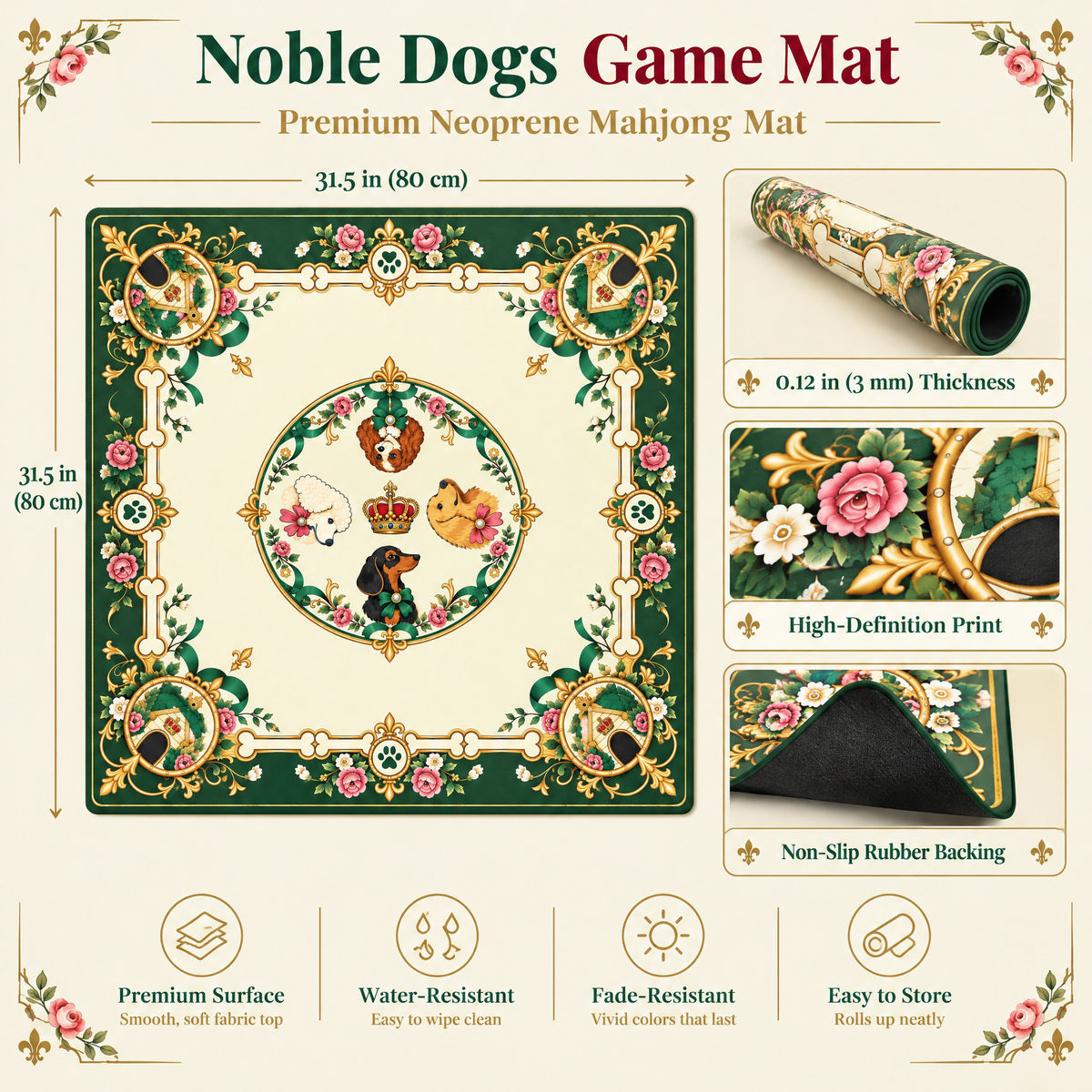
When you're setting up for weekly mahjong, accessories matter as much as tiles. A good mat protects your tiles and speeds play, racks keep your hand hidden and organized, a quality bag means your set travels safely, and dice roll true. Most players find that a best-selling set paired with a mat and rack covers the essentials. Sets run anywhere from mid-range to premium; mats and racks start low. At Mahstead, we design every accessory for real play—the mat doesn't slip, racks stack neatly, bags zip without snagging. What matters most depends on your game: casual home play needs less padding; competitive or travel setups demand durability. The sweet spot for most groups is a set, a mat, racks with pushers, and a sturdy bag. Read the fiber type and size before ordering—a mat too thick clogs your racks, and a bag too small leaves your tiles crammed.
What does a mahjong mat actually do—and do you need one?
A mat is your play surface. It keeps tiles from sliding, protects the table underneath, organizes the four walls, and gives jokers and scoring a dedicated space. Without one, tiles scatter on glass or polished wood; with one, your game is contained and faster. Most serious players use a mat every session.
🀄 Shop best-selling mahjong sets →
Our mats come in two main styles: felted fabric or embroidered linen. Felted mats are softer, quieter, and cheaper; linen mats are stiffer, more durable, and mark wear visibly over years of play. Both grip tiles well enough that you can shuffle hard without sliding off. Size matters: a 3-foot mat fits a tight apartment table; a 4-foot mat gives you room to breathe and lets each player claim real estate. Depth (how thick the mat is) affects how smoothly your tiles stack on racks—too plush and racks sit too high; too thin and you feel every bump in the table. Choose a mat as tall as your playing surface, not taller.

How do racks and pushers speed up your hand?
Racks hold your tiles upright so opponents can't see what you have. A pusher is a small stick that lets you pop tiles into the rack one-handed without fumbling. Without them, you're reshuffling your hand constantly and leaking information. They're not luxury—they're the difference between casual play and real mahjong.
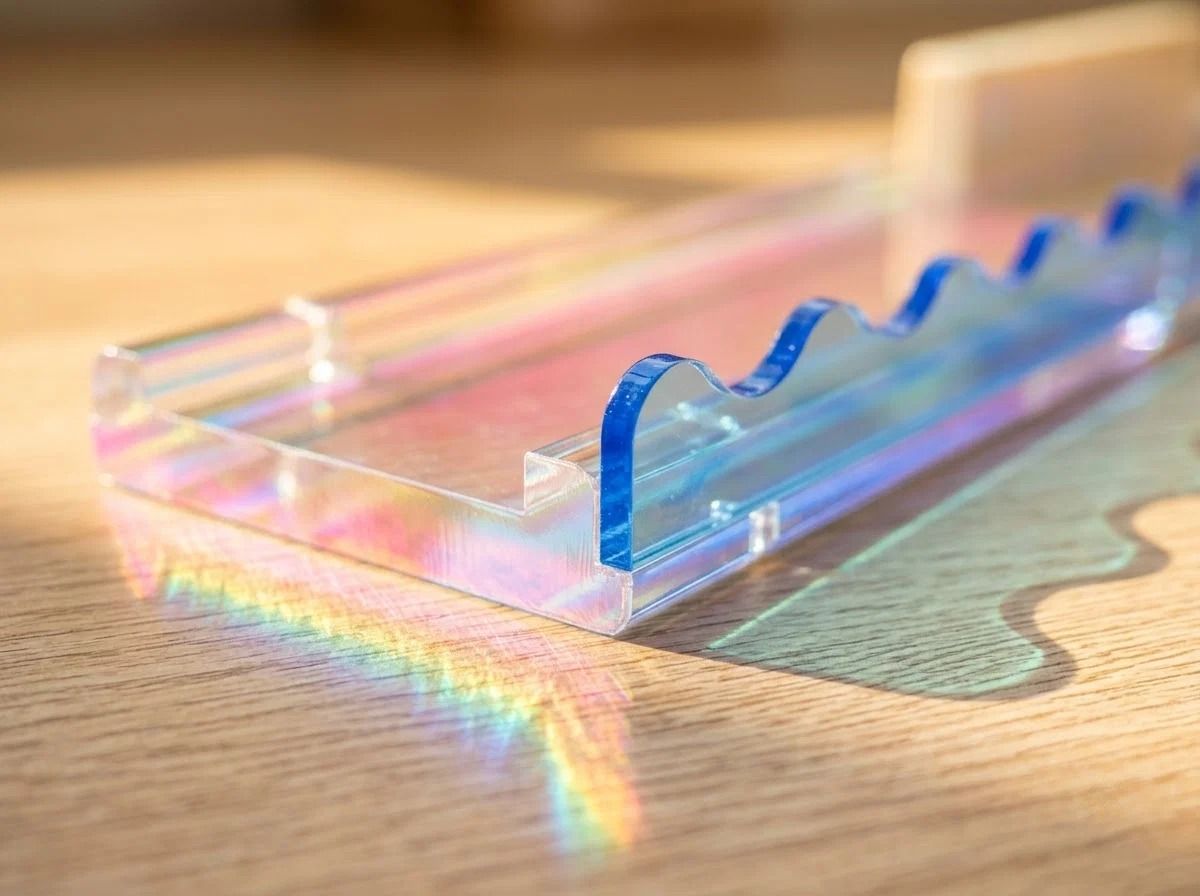
Our racks come with pushers already attached. They nest together for storage and slide smoothly into a bag. Bamboo racks feel warm and traditional; acrylic racks are cleaner and lighter. Both hold 13 tiles in a line for American play (some sets include extra racks for 2-player variants). Check that your rack height matches your mat thickness—a thin mat can't cradle a tall rack, and it will tip. Most groups want four racks, one per player; extras cost little and save you from dropping tiles mid-game.
Learn how racks and pushers work to pick the right depth for your setup.
Why does a dedicated bag matter?
A bag keeps your tiles, racks, and mat together. Without one, the mat gets wrinkled in a closet, racks break in a box, and tiles spill in the car. A bag tells you: everything is here, ready to go.
We design travel bags with a main compartment for the mat and racks, plus pockets for dice, joker markers, and a scorepad. The handle is reinforced so a full set (mat, four racks, eight jokers, tiles) doesn't rip the zipper. Bags take flat storage, which saves shelf space. Check the zipper quality before buying—cheap zips jam and split. Our bags are made with metal sliders and nylon tape, not plastic. A good bag costs less than replacing a cracked tile, and it lasts years.
See our guide to bags and cases to match size and material to your travel style.
What's the difference between basic and engraved sets?
A basic set has plain tiles. An engraved set has your initials, a family name, or a joke etched into the tile face. Both play identically—the difference is pride of ownership and a gift that sticks with you.
If you host every week or you're gifting a set to someone special, an engraved set turns a game night into a memory. We offer tiles printed with team names, family dates, funny phrases, and custom artwork. Engraving adds no cost to play quality—our tiles are still hand-washed, numbered clearly, and sized for American tournaments. The catch: order lead times are longer than stock sets, so plan ahead if you need it by a deadline. For casual players or trial games, a stock set is smarter. Once you know you'll play for years, engrave.
Browse our engraved American mahjong sets to see what personalizes your game.
How do you choose when every combo fits the budget?
Here's a decision table to compare your options:
Combo | What's in it | Best for | Total range | Why it works |
Set only | Tiles + jokers + instruction sheet | Learning or casual monthly play | Entry-level to mid-range | You play at a friend's table; no extras needed |
Set + mat | Tiles + mat | Weekly home games | Mid-range + mat cost | Contained, professional, table-safe |
Set + mat + racks | Tiles + mat + 4 racks with pushers | Weekly or tournament-style | Mid-range + mat + rack cost | Full tournament setup; hidden hands; smooth play |
Set + mat + racks + bag | Complete portable system | Travel or storage-conscious | Mid-range + mat + rack + bag cost | Everything in one; ready to go; travels safely |
A set is the anchor cost. A mat and racks double your ease of play. A bag protects the whole investment. If your budget is tight, start with a set and a mat; add racks and a bag later. If you play weekly in someone's home, the mat is your first add-on. If you travel, the bag justifies itself in one move.
🎁 See our most-loved mahjong sets & accessories →
What to check before you order
Tile count. American mahjong uses exactly 152 tiles plus 8 jokers. Mahstead sells 160-tile sets—that's 152 for play and spare tiles for backup. Don't buy a set advertised as "144" or "166" unless you know why you need it; American rules require 152.
Mat dimensions. Measure your table first. A 3-foot mat fits a small round or square table; a 4-foot mat needs a 5-foot or larger table. If unsure, 4 feet is standard for four players in a line.
Rack height. Racks rest on your mat. Too thick a mat lifts the rack so high tiles fall backward; too thin and the rack slides around. Our mats are designed to cradle standard racks—check the product page for mat-to-rack pairing.
Zipper quality. If you're buying a bag, open and close it a few times in your mind. Metal sliders stay smooth; plastic ones crack after 50 trips.
Joker markers. Some sets include joker markers (stones that show which tile is "wild" during play). Ask the product page or contact us if joker markers matter to your group.
Read what's inside an American mahjong set to confirm you're getting the full count.
✨ Find your Mahstead set — free US shipping →

FAQ
Can I use a kitchen table or do I need a special mat?
A kitchen table works fine, but a mat protects the surface from scratches and spills, and it keeps tiles from sliding on waxed wood. Mats also give your game a real edge—literally. Most weekly players use a mat on any table they own.
What's the difference between bamboo and acrylic racks?
Bamboo racks feel warm and traditional; acrylic racks are lighter, clearer, and stack tighter. Both work equally well. Choose acrylic if you travel or store in tight spaces, bamboo if you want tactile play. Our racks come with pushers attached—both materials push equally smooth.
Do I really need a bag if I only play at home?
If you play weekly in the same house, a bag keeps your mat and racks dust-free in a closet or under a bed. If you store everything loose, tiles can get bent and racks crack. A bag costs far less than replacing pieces.
How thick should my mat be?
A mat should be thick enough to grip tiles (usually 3–5 mm) but not so thick that racks sit too high. Our product pages note the mat thickness and which rack styles nest well with each design. Measure your playing table depth and ask us if you're unsure.
Can I use a mat designed for Chinese mahjong with an American set?
Most mats work with American sets, but American tiles are slightly larger than Chinese tiles, and Chinese mats sometimes have fewer pockets. Our mats are sized for American 160-tile sets and organized for the four-wall plus discard layout. Stick with mats we design for American play to avoid confusion at game time.
What happens if I spill something on my mat?
Felted mats absorb liquid; linen mats repel it better. Both can be hand-washed gently in cool water and laid flat to dry. Avoid the washing machine—the stitching can loosen. Prevent spills by using a coaster at each player's seat, not on the mat.


View More
View More
View More
