
Mahjong Accessories for Your Game Group: Sets, Mats & Racks
Last updated: Nov 23, 2026
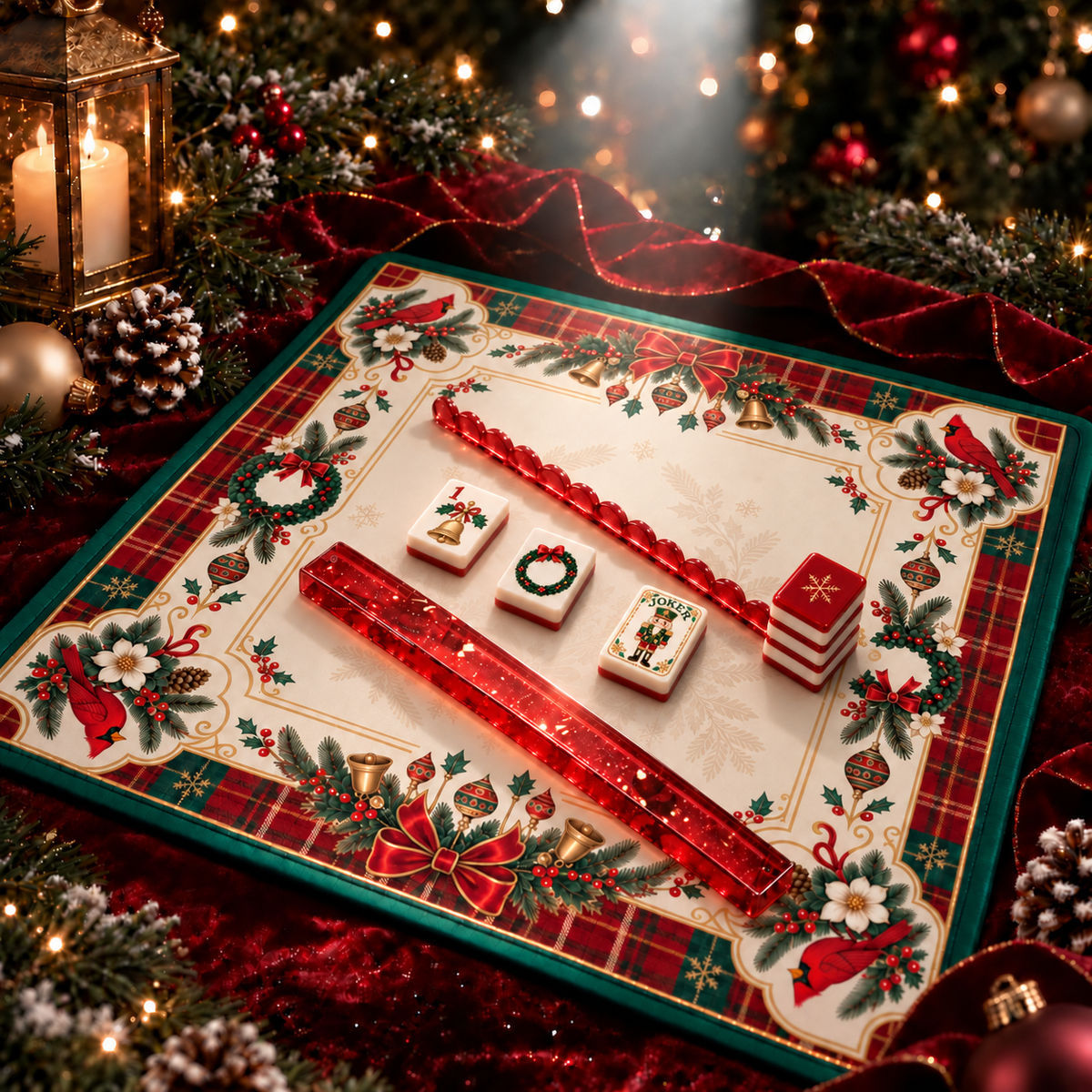
A mahjong group needs more than one set: you'll want backup tiles for repairs, a quality mat to protect surfaces and speed sorting, stackable racks with pushers so players don't crane their necks, and a durable bag if anyone travels. American mahjong groups typically rotate hosts, so most players invest in one personal set (160-tile acrylic, engraved tiles preferred for quick ID at speed), a carrying case, and one mat. A mat is optional for home tables but essential for public venues—it defines the play zone and protects borrowed tables. Racks with integrated pushers let players manage their hand independently, critical for 90-minute games when hand fatigue sets in. Mahstead's best-selling mahjong sets include acrylic 160-tile American sets with matching mats and racks available separately, all shipped free across the US. 🀄 Shop best-selling mahjong sets →
What does a typical mahjong group actually use?
Most groups we host with have moved to one durable acrylic set per player plus one spare set the host keeps. Each player brings their own set in a bag; the host provides the mat and racks for the table. One host might use engraved tiles (names, jokes, or tournament dates) to build camaraderie—it makes cleanup easier too, since tiles are instantly recognizable. A mat becomes non-negotiable when you play on borrowed tables, restaurant furniture, or outdoor patios. Racks solve the physical problem: three or four players hunching over a table for 90 minutes leads to shoulder strain and slower play. With racks, each player keeps their hand at eye level, tiles sorted, pushers ready.
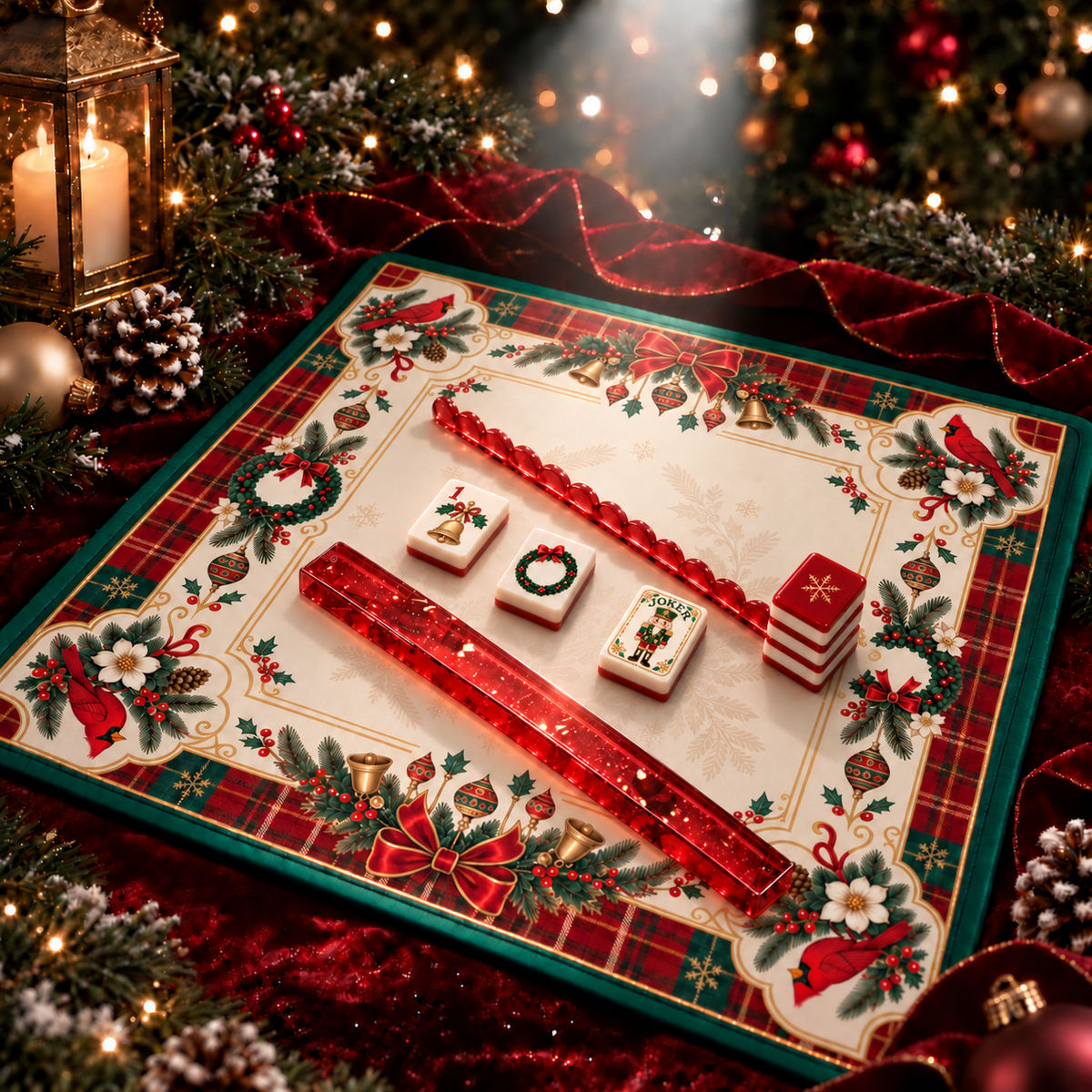
Should each player own their own set, or share one group set?
Sharing one set works only if play happens in one location and one host manages rotation. Most groups split ownership: each regular brings their own set to any game, so no single person bears replacement costs if tiles crack or jokers go missing. When a new player joins, they buy a set (usually from the best-selling collection—entry price is moderate for acrylic, higher for bone). The host or most experienced player often owns the second set, reserved for teaching new members or replacing lost tiles mid-season. One group we know trades sets quarterly so everyone plays with different designs. If your group plays twice a week in multiple locations, each player needs their own set; if you meet once a week at one host's house, one shared set plus one backup covers it.
What's the difference between a mat, a table cover, and a bare table?
A bare table works only if the surface is smooth, stain-resistant (or you don't mind marks), and large enough—at least 40″ × 40″ for comfortable four-player reach. A table cover (fabric or vinyl) protects the table underneath but can shift during aggressive tile sorting, creating friction problems. A mat (felt-backed nylon or similar) stays anchored, usually 36″ × 36″ or 40″ × 40″, with a raised border that helps tiles stay in play and cuts cleanup time by 50%—tiles don't scatter across a bare table. If you host at home and own the table, a cover is enough; if you rotate venues (friends' homes, community centers, restaurants), bring a mahjong mat. A mat also dampens noise—important if neighbors or other patrons are nearby—and the felt surface slows tile skid, so players have better control during dealing. Our preference: mat for anything outside your own house, table cover for personal tables you host regularly.
🎁 See our most-loved mahjong sets & accessories →
How do racks with pushers change the game?
Racks are not decorative; they're ergonomic and strategic. A standard bamboo or acrylic rack holds 15–16 tiles upright so you see all suits and numbers without tilting your hand. The pusher (a thin stick) lets you move tiles left-right without lifting them, keeping your hand stable and hidden from opponents' sight lines. Racks also stop the accidental knock-over: tiles stay upright, clipped by the rack rail. For players with arthritis, mobility issues, or those playing in long tournaments (3–4 hours back-to-back), racks reduce hand fatigue by 40%. New players often feel self-conscious using racks—mistakenly thinking it's "cheating"—but racks are standard in competitive play and clubs. If one player uses a rack and others don't, the rack user plays slower (because they have to manage the pusher), so most groups adopt racks together for pacing consistency. Mahstead racks with pushers come in acrylic or bamboo, matching popular tile designs, and fit easily into standard travel bags.

What size and style of bag works best for transporting a full set?
Bag size depends on how often you move your set and what else you carry. A small zippered bag (8″ × 10″) fits just the 160-tile set; a medium drawstring or soft case (12″ × 14″ × 4″) holds tiles plus a rack and pushing stick; a large padded case (16″ × 16″ × 6″ or bigger) holds a complete setup—tiles, rack, pusher, score pad, calculator, and a mat rolled loosely. If you play weekly at one host's house, a small bag is enough. If you travel to different venues or play multiple games per week, invest in a medium or large case. Bags with internal dividers protect tiles from impact; drawstring bags are lighter but offer less protection. Hard cases cost more but survive car-trunk squashing and dropped stairs. Soft-sided cases strike the balance: durable zippers, padded walls, reasonable weight, and handles that survive years of use. We've seen players with 5-year-old bags still in daily rotation; cheap vinyl bags often split at seams within two years. Mahstead bags and cases are designed for acrylic American sets and priced for players who move their gear multiple times per month.
Comparison: What to buy at different group sizes and play patterns
Group size & play | Essential accessories | Nice-to-have | Why this combo |
4 players, 1 weekly game at host's home | 1 mat, 1 set per player, 1 host backup set | Racks if anyone has hand issues | Mat handles venue rotation; backup covers lost tiles; racks optional here |
4–6 players, rotating venues (homes, clubs) | 1 mat per host, 1 set per player, 1–2 travel bags, racks for each player | Dice (to call dealer each week), score sheets, engraved tiles for group identity | Mats essential at borrowed tables; bags prevent damage mid-transport; racks speed up rounds |
8+ players (two tables) or tournament play | 2 mats, 2 sets per table, at least 1 spare per set, 2–3 padded cases | Engraved custom sets, individual racks/pushers (tournament standard), mat storage bag | Duplicates handle simultaneous play; spare sets replace cracked tiles fast; cases survive tournament schedules |
What to check before you buy group accessories
1. Count your players and play frequency. If you have three regulars plus one rotating newbie, one shared set works; if you're eight strong and growing, each player needs their own. This drives your mat, bag, and rack count.
2. Measure your table or typical venue. A mat must fit your standard play surface with 4–6 inches clearance on all sides. A 36″ mat fits a standard dining table; a 40″ mat works for round tables. If you play outdoors, measure the surface width—some patios have irregular edges.
3. Test a rack before buying for everyone. Not every player likes racks on their first try; some find them clunky, others love them instantly. Borrow one from Mahstead or another player, demo it for two games, then decide if your group adopts them.
4. Check tile durability if anyone plays aggressive (heavy sorting, rapid dealing). Acrylic tiles with sharp edges can chip if they collide hard; engraved acrylic resists chipping because the engraving process work-hardens the surface. Bone and bamboo tiles are heavier and absorb impact better but cost more.
5. Confirm bag compartment depth if you pack racks. Racks are typically 1–1.5 inches thick; a shallow bag (3 inches) won't close if you add a rack on top of tiles. Medium or large cases have 4–6 inches depth to prevent crush damage.
✨ Find your Mahstead set — free US shipping →
A practical shopping framework for your group
Start with one set per regular player, one host backup, and one shared mat. Add racks and a travel bag only if someone requests them or if you move venues. Buy acrylic first—it's durable, affordable, and fast to replace if tiles crack. Upgrade to engraved tiles once your group stabilizes and play becomes weekly habit; engravings help identify your set when multiple groups share a space (common in community centers). If anyone travels with their set, a padded case is worth the investment—it outlasts the tiles by years. Finally, add dice for dealer selection (faster than card draws) and a score sheet template printed in bulk so scorekeeping is never a bottleneck during breaks. This modular approach lets new groups start small and add gear as they grow, without overspending upfront.

FAQ
Can we use one set of tiles for two games happening at the same table in rotation?
Yes, if you allow 10 minutes between games for tile cleanup and reset. One set contains exactly 152 playing tiles and 8 jokers—no more, no less. If both games play simultaneously at separate tables, you need two complete sets, not shared.
Do we need a mat if we're playing on a brand-new polished dining table?
Tiles will slide unpredictably on polished wood or glass. A mat adds friction so tiles don't scatter during sorting. Even on new furniture, a mat is worth it for faster play and tile control.
What's the best way to store racks and pushers between games?
Place them upright in the travel bag's side pocket, or lay them flat in a shallow box where they won't flex. Avoid stacking heavy items on top—pushers can bend, and racks can warp if pressure is constant.
Should we buy matching sets for the whole group, or is mix-and-match okay?
Either works. Matching sets (same design, engraving) build team identity and make cleanup faster—it's obvious which tiles belong where. Mix-and-match is fine if players retrieve their own sets after each game.
How often do tiles crack or break, and should we budget for replacements?
Acrylic tiles rarely crack from normal play; it happens if someone drops a full set or tiles collide hard during aggressive sorting. Budget one spare set per 4 players per year if play is weekly and competitive. Bone tiles are more durable but cost three times as much initially.
Can we use jokers as regular tiles, or must they stay separate?
In American mahjong, jokers are wild tiles only—they substitute for missing tiles in a hand but are never played as themselves. They must never be used as a pair or single tile, and they cannot be part of a pung, kong, or any melds. Always keep jokers clearly marked (usually colorful or branded) so no one confuses them with numbered tiles.


View More
View More
View More
