
Cute Mahjong Travel Bag: Pick the Right Case for Your Set
Last updated: Nov 23, 2026
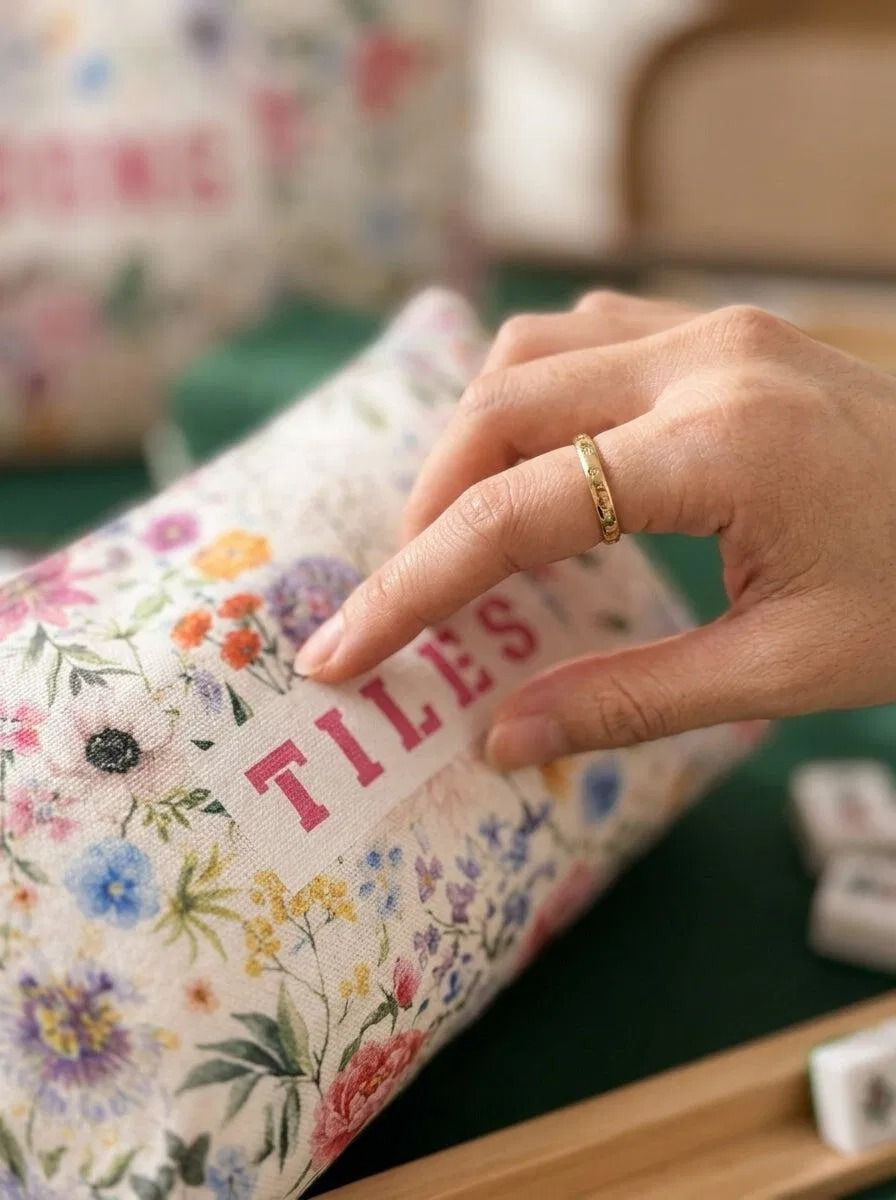
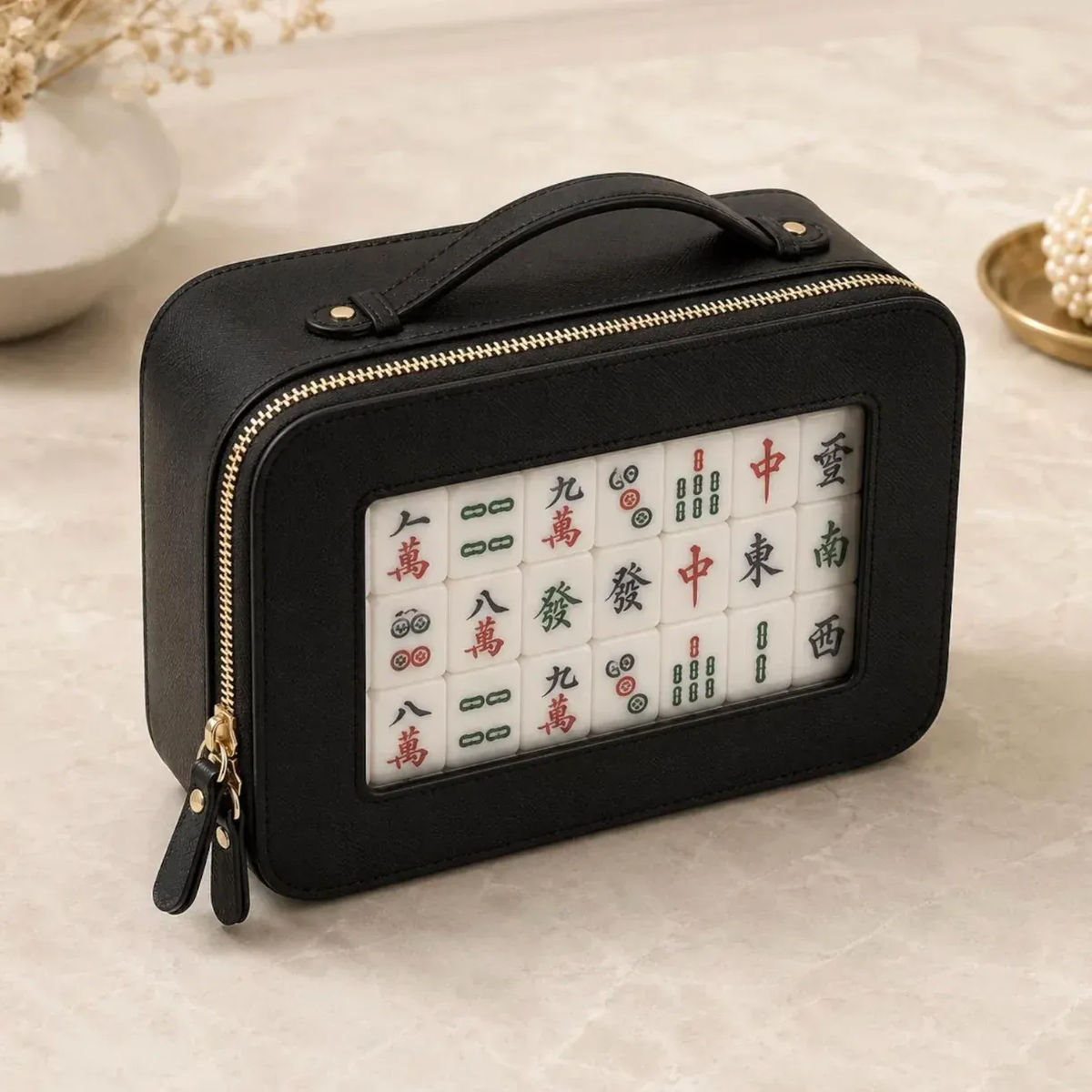
A cute mahjong travel bag is a padded or reinforced carrier—soft-sided pouch, hard case, or tote—designed to hold an American mahjong set (152 tiles plus accessories) without crushing tiles or losing pieces during transport. Most hold a full 160-tile set with room for racks, a mat, or dice; they're available in cotton canvas with embroidered designs, faux leather with metal accents, printed patterns, and custom-engraved finishes. Bags range from compact clutches for weekly game carpool duty to full totes that double as decoration at the table. We offer soft carriers in our travel bag collection with interior pockets, drawstring closures, and handles reinforced for the weight of resin or acrylic tiles—expect durable fabrics and stitching that survive seasons of play. Choose based on how often you travel, whether you'll stack other items on top, and whether you prefer classic, whimsical, or personalized aesthetics. 🀄 Shop best-selling mahjong sets →
What size bag do you actually need?
American mahjong sets come in one standard size: 152 playing tiles plus 8 jokers (jokers are never played as a single tile or pair, but kept in hand for moment-to-moment swaps). A 160-tile acrylic set measures roughly 2–3 inches deep in the tile box, 10 inches wide, and 8 inches tall—call it a dense shoebox footprint with weight. If you're carrying just tiles and a score sheet, a compact zippered pouch works; if you want racks, a mat (which folds to about 10 × 14 inches), and spare jokers, you need a bag that comfortably fits a hardcover book plus an inch of padding. Most carriers sold for mahjong are 12–16 inches wide, giving you breathing room and protection against the pressure of a car seat or backpack straps.

Soft bag vs. hard case—which protects your tiles better?
A soft padded bag lets tiles breathe, reduces echoing shuffle noise, and weighs less for frequent movers. A hard case (like a small suitcase or clamshell box) shields against crushing if stacked at a closet or in a car trunk, but adds bulk and weight. Soft bags with thick interior padding (cotton batting, foam) protect tiles from impact during normal handling; tiles rarely crack from a bag drop onto a living-room floor. Hard cases excel if you fly with your set, ship it, or store heavy items on top. For weekly home games and local carpool trips, soft carriers with reinforced handles and quality stitching perform as well as hard cases while staying portable. Acrylic and resin tiles are durable—the real enemy is water damage, so check for water-resistant fabric.
Does a cute design mean it's less protective?
No. Embroidered, printed, or engraved decoration is a finish on the fabric, not a structural trade-off. A bag with a playful dragon or bamboo motif provides the same compartment strength, handle durability, and seam integrity as a plain canvas one if both use the same weight of material and padding. The aesthetic choice doesn't compromise function. What does matter: stitching quality (look for double-stitched seams on handles), fabric weight (heavier canvas lasts longer than thin cotton), and zipper or closure durability. A cute design by a maker who understands mahjong game gear (not a generic tote vendor) usually means the interior is thought through—dedicated tile compartments, a pouch for dice or cards, and a flat sleeve for the score sheet. When shopping, check whether the bag is sized to prevent tiles sliding around; a bag with elastic webbing, dividers, or a fitted tile box sleeve will keep everything stable during transport.
✨ Find your Mahstead set — free US shipping →
How do you match a bag to an engraved or themed set?
If you've invested in engraved tiles with your name, a title, or a special phrase, or if you play with a seasonal holiday-themed set, a coordinating bag reinforces that identity and makes setup feel intentional. Many players choose a neutral or complementary carrier—a natural canvas pouch for an all-gold engraved set, or a festive print for a Christmas tile collection. Some prefer a bag that contrasts with the tiles (turquoise case for a warm-toned set) to make unpacking more visually striking. The key: pick a bag color or print that you'll still enjoy seeing every week, because a well-made carrier becomes a fixture of your game routine, not a hidden storage box.
What should you check before ordering?
Feature | Why It Matters | Red Flag |
Interior dimensions (W × H × D) | Must fit your tile box + racks + mat lying flat | Bag squeezes set diagonally or requires mat rolling |
Padding thickness | 1/4"–1/2" protects tiles from knocks | Thin cotton (feels like quilting) tears after 6 months |
Handle construction | Carries 5–8 lbs without fraying | Single-stitched handles or thin webbing |
Closure type | Zipper stays closed during transport; drawstring may slip | Broken or misaligned zippers; missing drawstring stopper |
Compartments | Keeps tiles, racks, dice, cards separated | One big pocket; things shift or nest awkwardly |
Fabric material | Canvas or faux leather withstands weekly use | Thin polyester fades or peels after 3 months |
Care instructions | Washable (wipeable exterior, removable inserts) is easier | Dry-clean only; ink bleeds if spilled on |
Common bag mistakes to avoid
Buying a generic cosmetics or crafts bag. They're sized for sunglasses, not 160 tiles. A mahjong set is denser and bulkier than it looks; a bag that fits a travel jewelry kit will either leave no room for racks or force your tiles to lean at an angle, increasing edge-chipping risk.
Choosing a bag larger than you need. Extra space creates movement. During a car drive or a hasty walk between rooms, tiles slide and knock against each other. A properly fitted bag (with a tile sleeve or divider) is safer than a roomy one.
Ignoring the weight of your handle attachment. Resin tiles are heavier than acrylic; a 160-tile set can weigh 4–6 lbs. If handles are sewn only at the top seam, they'll pull and detach after 20–30 trips. Look for handles that wrap around the bag sides or are reinforced with webbing tabs.
Forgetting that bags get wet. If you keep your bag in a car or a guest closet, humidity matters. A canvas bag exposed to moisture for weeks can develop mold or mildew, especially if tiles aren't fully dry before storage. Choose a bag you can air out easily, and consider a small breathable cloth to wrap the tile box inside.
Assuming "cute" means better quality. A playful design on cheap polyester won't outlast a plain canvas carrier stitched for durability. Inspect seams and zippers in photos or product descriptions before buying.
🎁 See our most-loved mahjong sets & accessories →
Real-player decision framework: Which bag is for you?
Weekly home games + short drives: A soft canvas or cotton tote with embroidered motif, interior pockets, and reinforced handles. You need portable, washable, and visually fun—it sits on the table or in a car for 2–3 hours at a time.
Tournaments or long-distance travel: A hard or semi-hard case with a shoulder strap or wheels (if available), water-resistant fabric, and a fitted tile compartment. Durability and protection matter more than cuteness; you're prioritizing safety of your investment.
Collectors showing off a themed or engraved set: A curated carrier that complements your tiles—a natural linen bag for engraved sets, a festive printed case for holiday tiles. Aesthetics and recognition are as important as function.
Players with limited storage: A bag that doubles as living-room décor—a patterned tote or an embroidered case you'd keep on a shelf. Choose a fabric and print you love enough to display.
Casual beginners with borrowed or shared sets: A no-fuss canvas pouch or soft case under 20 oz. You're not yet committed to custom gear, so flexibility and price are priorities.
When you're ready to select your travel bag, think about how many times a week you'll use it, what other items you'll pack alongside, and whether you want the bag itself to be part of your table presentation. A well-chosen carrier protects your tiles, reflects your style, and eliminates the mental friction of game prep. We've designed ours with padded interiors, quality zippers, and fabrics that hold up to weekly play across seasons of games.

FAQ
Can a mahjong bag hold tiles from a different variant (Chinese, Hong Kong, Riichi)?
Yes, if the bag is large enough. Chinese mahjong sets (144 tiles) fit easily; Hong Kong sets (152 tiles) match American size. Riichi mahjong uses smaller tiles and fewer of them, so any standard bag will work, but oversizing wastes space. Measure your specific set before ordering.
How do you clean a mahjong travel bag?
Spot-clean with a damp cloth and mild soap; air-dry fully before storing. If the bag has a removable interior lining or padding, detach and wash separately if instructions allow. Avoid bleach and direct heat.
Does a bag with a tile slot or divider ever trap tiles?
No, as long as the slot is loose enough to slide tiles in without force. A fitted sleeve keeps tiles from sliding during transport but shouldn't require you to cram them or wrestle them out. Check product photos for clearance.
Is a cute bag still functional if it has an ornate exterior design?
Yes. Embroidery, appliqué, and engraving are surface finishes; they don't weaken the structure if done by a maker who understands gear. The interior padding and stitching do the protective work, not the outside decoration.
What's the difference between a mahjong travel bag and a general-purpose padded case?
A mahjong-specific bag is sized for 160-tile sets, includes interior pockets for racks and dice, and often has flat sleeves for mats or card holders. A generic padded case may require you to nest components awkwardly or risk tile movement.
Can you take a mahjong bag on an airplane?
Yes, in carry-on or checked luggage. A hard case is safer in checked luggage due to stacking and pressure. A soft bag works fine in carry-on if it meets your airline's size limit; measure the dimensions first.


View More
View More
View More
