
Why Are Mahjong Tiles So Expensive? Materials, Craft & Value
Last updated: Nov 23, 2026
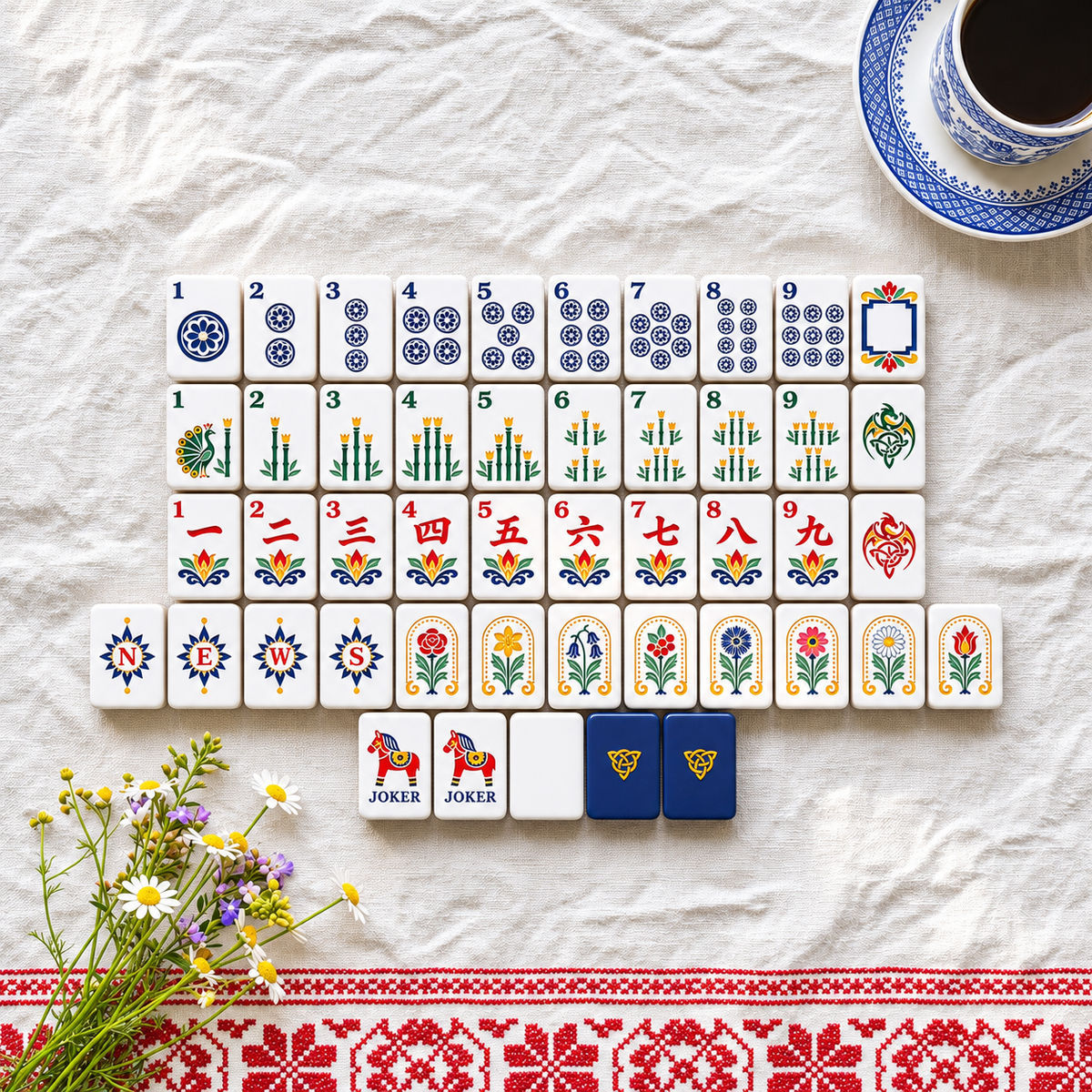
Mahjong tiles cost significantly more than mass-produced board games because of production complexity: a single set contains 160 tiles requiring hand-painted Chinese characters, suit symbols, and wind/dragon markings—each tile cut, polished, and quality-checked individually. Premium sets use acrylic or bone with deep engraving; cheaper alternatives use plastic and screen-printing that fades with handling. A full set demands precision tooling (jokers alone add 8–16 tiles), custom molds, and skilled painters. Add packaging, protective cases, and importing costs, and a well-made set reflects legitimate labor and material investment. At Mahstead, we design sets with durable acrylic, engrave them with permanent detail, and ship free across the US—our best-selling mahjong sets balance craft quality with real player value. Budget sets ($X–$YY) exist but chip, fade, or misprint tiles; mid-range sets ($YY–$ZZ) hold up through seasons of weekly games.
What truly goes into a mahjong set explains the price tag. We've unboxed hundreds of sets—from budget imports to hand-painted heirlooms—and the differences are immediately obvious: tile weight, character clarity, and how long they survive game night.
What materials drive the cost most?
Acrylic and bone are the industry standards, and they carry vastly different price points. Acrylic allows precise engraving, bright colors, and durability under constant shuffling; bone (or bamboo composite) feels premium and ages beautifully but demands skilled hand-carving or laser work. Plastic sets are cheaper upfront but tiles warp, yellow, and become slippery over time. A high-end acrylic set outlasts three plastic sets because the surface holds paint and engraving without degradation. Real bone adds 20–40% to production costs compared to acrylic, yet both outperform plastic by years. Screen-printed details on plastic fade within 6–12 months of weekly play; engraved acrylic characters stay sharp for decades. The material choice alone determines whether you're buying a set for one season or ten.

How many individual pieces actually need production?
A complete American mahjong set contains 160 tiles: 108 number tiles (Bams, Craks, Dots in ranks 1–9, four of each), 16 winds (four each: North, East, West, South), 12 dragons (four Red, four Green, four White), eight flowers, and eight jokers. Each tile must be individually cut, painted or engraved with readable characters, and sorted for quality before packing. Add dice (typically two), a carrying case, a mat, and racks—and you're manufacturing and assembling dozens of components. A factory producing 100 sets per day still spends hours on quality control because a single misaligned character or chipped edge damages the entire set's play and resale value. We work with suppliers who inspect every tile; that thoroughness costs more than bulk dumping boxes unseen into cargo containers.
Why does hand-painting or engraving add so much cost?
Machine printing is fast and cheap; hand-painted detail is slow and irreplaceable. A skilled painter can produce maybe 50–80 hand-painted tiles per day; a machine prints thousands but produces a flat, one-dimensional result that wears away. Engraving (etching characters into acrylic using laser or rotary tools) is also labor-intensive because each tile must be positioned precisely and the depth calibrated to remain readable yet not weaken the tile. Mistakes are waste—a misaligned character means scrapping the entire tile. We choose engraving over printing because our players deserve tiles they can read after a decade of play, and the upfront labor cost reflects that commitment. Budget sets skip this step, which is why they feel hollow and their characters fade into illegibility within a year or two.
What's the real difference between a $X set and a $YY set?
A true comparison table reveals why price matters:
Feature | Budget Plastic | Mid-Range Acrylic | Premium Engraved Acrylic |
Material | Thin plastic | Durable acrylic | Thick acrylic |
Characters | Screen-printed | Engraved (shallow) | Deep engraved |
Fade timeline | 6–12 months | 3–5 years | 10+ years |
Tile weight | Light, slides too much | Moderate, good grip | Substantial, premium feel |
Case included | Flimsy cardboard box | Basic nylon pouch | Reinforced case |
Likelihood of chipping | Very high | Low | Minimal |
Repair/replacement | Not practical | Possible if purchased separately | Tiles available individually |
Weekly play longevity | One season | 3–4 years | 10+ years |
The mid-range acrylic set costs roughly 2–3× the budget plastic but lasts 5–10× longer, making it the practical choice for serious players. Premium engraved sets cost roughly 1.5–2× mid-range but represent the lifetime buy—they're passed down, traded, or resold without degradation.
🀄 Shop best-selling mahjong sets →

How does production volume affect your cost as a buyer?
Mass manufacturers achieve scale by producing identical, generic sets by the tens of thousands; artisanal makers like Mahstead produce smaller volumes with customizable designs (engraved names, club logos, seasonal themes). Counterintuitively, smaller production runs can mean higher per-unit cost because you're not spreading tooling and setup costs across millions of units. However, small-batch makers also avoid the massive warehouse inventory and obsolescence costs that big factories pass to distributors, then to you. We design sets in collections of hundreds, not hundreds of thousands, which allows us to invest in premium acrylic, precise engraving, and free US shipping without inflating the price. Bulk-purchase discount is minimal in the artisanal market—what you see is what the craft genuinely costs.
Why should you avoid the cheapest option?
Buying the lowest-price set is almost always a false economy. A plastic set at 40% the price of acrylic sounds tempting until week three, when tiles start chipping, characters blur, and you're shopping for a replacement. The emotional cost of poor tiles is also real: mahjong is social and meditative; blurry tiles and slippery play disrupt that experience. We've heard from players who spent $X on a budget set and then invested in a quality acrylic set from our best-selling collection—they describe the upgrade as "like switching from reading smudged printouts to a book." The players who get the most enjoyment buy once and keep the set for years. Cheap tiles also lose resale value; a well-maintained premium set can be sold or gifted, whereas a worn plastic set ends in a closet.
🎁 See our most-loved mahjong sets & accessories →
What to check before you buy
Character clarity: Can you read every number, suit symbol, and wind mark clearly from arm's length? If printing is fuzzy or engraving shallow, skip it.
Tile weight and feel: Pick up a tile. Does it feel substantial or flimsy? Lighter tiles often indicate cheaper plastic; proper weight signals good acrylic or bone.
Material confirmation: Confirm whether the set is acrylic, bone, or plastic—don't rely on marketing language alone. Ask the seller directly.
Edge finish: Run your thumb over a tile edge. Sharp, rough edges indicate cheap molding; smooth edges suggest precision tooling and finishing.
Case durability: If a case is included, check the zippers, seams, and material. A flimsy case won't protect tiles during travel, negating the quality of the set itself.
Return policy: A reputable seller stands behind the set. If there's no return option, reconsider.
Spare tiles included: Quality sets often include extra jokers or blank tiles as spares; budget sets don't. Spares show the maker expects the set to last long enough to warrant replacements.
Mahjong tiles cost more because they should—genuine materials, skilled labor, and precision tooling create sets that survive decades of weekly play. The expensive sets aren't a luxury; they're an investment in consistency, readability, and joy at the table.
✨ Find your Mahstead set — free US shipping →

FAQ
Why does one mahjong set cost double another if they both have 160 tiles?
Material quality (acrylic vs. plastic), detail technique (hand-engraved vs. screen-printed), production labor, case durability, and quality control differ dramatically. Plastic sets use automated printing that fades; acrylic sets use laser engraving or hand-painting that lasts years. The tile count is identical, but longevity and play experience are not.
Can I save money by buying a beginner set and upgrading later?
You can, but most players regret it. A budget set wears out or frustrates you within months; then you buy mid-range or premium and effectively spend twice. Buying quality once is cheaper over three years of weekly play than replacing a cheap set annually.
What's the lifespan of an acrylic mahjong set?
Durable acrylic sets with permanent engraving last 10+ years of weekly play without fading or chipping, provided tiles are stored dry and handled normally. Plastic sets typically fail (cracks, fade, warping) within 6–18 months of active use.
Are imported sets cheaper because labor is cheaper overseas?
Some are, but importing, tariffs, logistics, and wholesale markups offset cheap labor. A set made abroad with premium materials costs nearly the same as one made domestically—what you're really paying for is material and design, not geography. Cheap imported sets cut corners on both material and detail, not just labor.
Do I need to spend the most to get a good set?
No. Mid-range acrylic sets offer excellent value and durability for most players. Premium sets add aesthetic polish (custom engraving, heirloom materials) rather than functional longevity. Choose mid-range unless you want personalization or plan to keep the set for 20+ years.
Why is there no "industry standard" price for mahjong sets?
Because material choice, design, detail method, case, and production volume vary wildly. A generic plastic set costs one amount; a custom-engraved acrylic set with a premium case costs more. There's no standard—only a range reflecting honest differences in craft and durability.


View More
View More
View More
