
Hong Kong Mahjong Terms and Glossary: A Player's Guide
Last updated: Nov 23, 2026
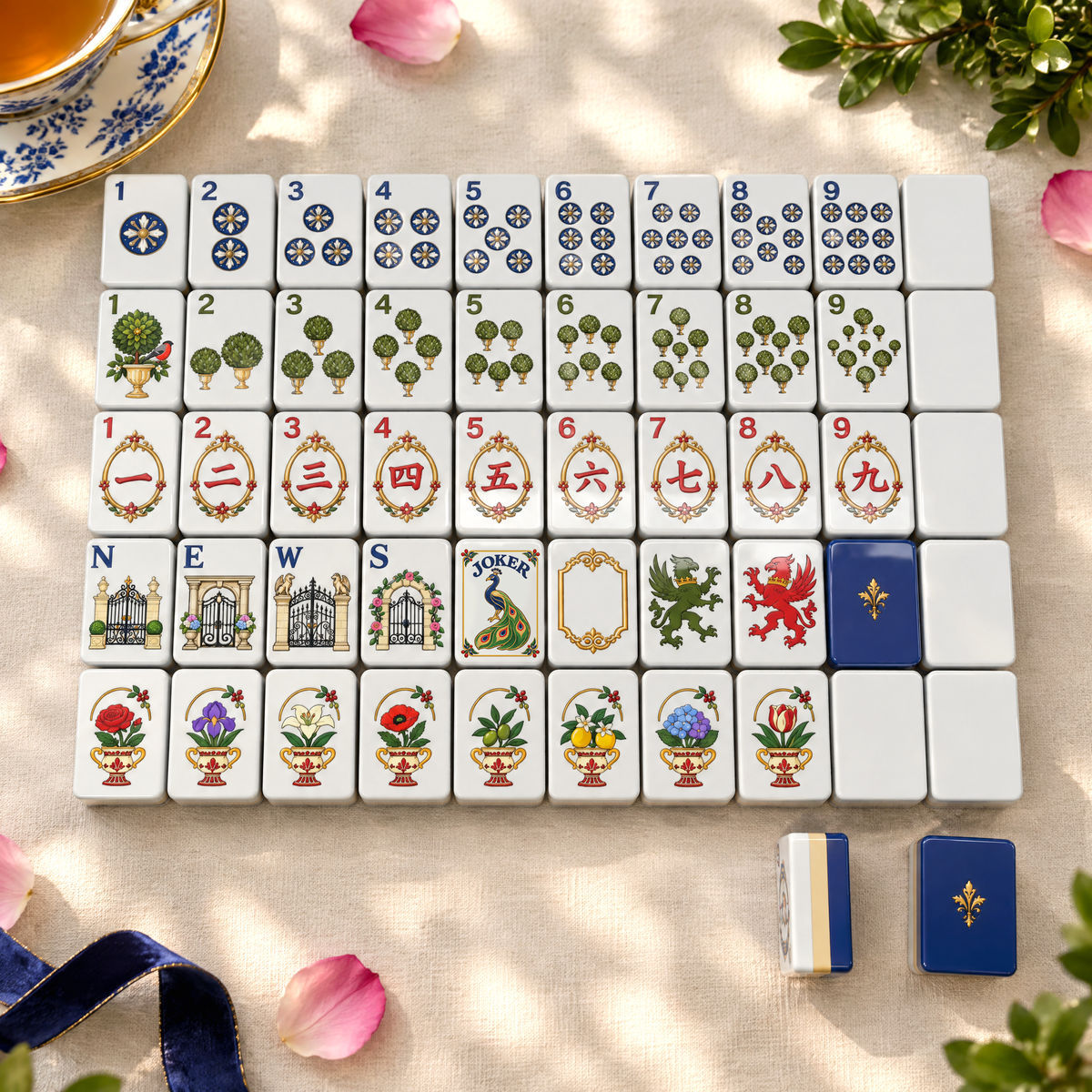
Hong Kong mahjong (or "Cantonese mahjong") is played with 136 tiles—three suits (Bams, Craks, Dots) numbered 1–9 in sets of four, plus 16 winds, 12 dragons, and 8 flowers—and allows sequences (chows) as exposed or concealed melds, unlike American play. The game emphasizes speed, tile discards are central to reading strategy, and scoring is based on combinations called "fans" rather than fixed hands from an official card. A typical game takes 10–20 minutes per hand; winning hands are far more common than in American mahjong because the requirement is simpler: 14 tiles in four melds plus a pair, drawn in standard play or claimed from another player's discard. If you've played American mahjong, Hong Kong will feel faster and more tactical—no elaborate hand combos from a yearly card, no complex joker rules, but instead constant pressure to watch what others discard and block their wins. 🀄 Shop best-selling mahjong sets →
What is a chow in Hong Kong mahjong?
A chow (also "chow" or sequence) is three consecutive tiles in the same suit—for example, 3 Bam, 4 Bam, 5 Bam. In Hong Kong play, chows can be exposed (shown face-up after claiming a discard) or kept concealed in your hand. American mahjong does not allow chows at all; winning hands must use only pungs, kongs, and pairs. This single rule change makes Hong Kong play radically different—sequences dominate the game, creating faster melding and shorter rounds. Chows are worth one fan (point) by themselves, but combining chows with other melds builds your hand score.

What does "fan" mean in Hong Kong mahjong?
A fan is a unit of hand value or scoring category in Hong Kong mahjong, roughly equivalent to how American players think about "points" or "card combinations." Each completed meld (chow, pung, kong) and winning condition (like drawing the winning tile yourself versus claiming a discard) awards fans. A basic winning hand might be worth 1–2 fans; a hand with rare tiles or special patterns can reach 5–8 fans or higher. Scoring disputes happen less often than in American play because fan values are standardized, but players often debate whether a particular hand qualifies for a bonus fan.
How do winds and dragons work in Hong Kong mahjong?
Winds (North, East, South, West) and dragons (White "Soap," Green, Red) function as tile values, just like numbered suits. A pung of East Wind, for instance, counts as one fan, or two fans if East is also the current round wind or your seat wind—this is called an "honor bonus." Winds and dragons cannot form sequences (chows); they can only appear in pungs, kongs, or quints. In American mahjong, winds are fixed based on seating and scoring; in Hong Kong, your wind or the round wind directly multiplies your hand value, adding strategy to tile selection and discards.
What is a kong and when do you declare it?
A kong is four identical tiles—three matched tiles plus a joker in American sets, or four actual identical tiles in Hong Kong play (which has no jokers). When you complete a kong during your turn, you declare it by exposing it face-up and drawing a replacement tile from the end of the wall. If another player discards a tile that completes your existing concealed trio into a kong, you can also "upgrade" and claim that discard. Kongs are scored higher than pungs because they are rarer; each kong typically adds fans to your final hand value.
How does the discard and "pung" claiming work?
After drawing a tile each turn, players must discard one tile face-up to the center. If that discard completes a pung (three identical tiles) in your hand, you may claim it immediately, expose it, and continue your turn. If you claim a discard for a pung or kong, other players still waiting can also claim that same discard for a win—the player who wins takes priority. This cascading claim mechanic creates tension and forces constant decision-making about which tiles to discard safely. Unlike American mahjong, where exposed melds are rarer and pre-defined by the hand card, Hong Kong play is fluid: almost any meld can be exposed, and the pace is brisk.
🎁 See our most-loved mahjong sets & accessories →
Quick comparison: Hong Kong vs. American mahjong terms
Aspect | Hong Kong | American |
Tiles in play | 136 tiles | 152 tiles |
Sequences allowed | Yes (chows), exposed or concealed | No chows; only pungs, kongs, pairs |
Jokers | None; tiles are always real | 8 jokers per set; can substitute in melds |
Hand source | No official card; any winning combo works | Official National League card; hand must match |
Scoring unit | Fans (cumulative point system) | Points (based on hand pattern & multiplier) |
Winning tile source | Draw from wall or claim discard | Draw, claim, or win on payout from card |
Game speed | 10–20 min per hand | 15–30 min per hand |
Melding pace | Frequent, exposed melds common | Rarer, more strategic |

Key Hong Kong terms every player should know
Tsumo: winning by drawing your own tile from the wall (higher score than winning via discard).
Ron: winning by claiming another player's discard.
Richi: declaring that you are one tile away from winning; locks your hand and adds bonus fans if you win.
All pongs: a hand with no chows, only pungs and a pair (high-scoring pattern).
All chows: a hand with only sequences, no honor tiles—risky but rewarding.
Pair (often "eyes"): the final two identical tiles required to complete any winning hand; cannot be jokers in Hong Kong play.
Wall: the stack of face-down tiles drawn during play; drawing from the wall is faster than drawing from a discard pile.
Dead wall (or "kong wall"): the last few tiles set aside at the start, drawn only after a player declares a kong.
Where Hong Kong mahjong is most popular
Hong Kong mahjong thrives across East and Southeast Asia—particularly in Macau, Taiwan, Singapore, Malaysia, and Chinese communities worldwide. Casual games happen in homes, community centers, and restaurants; professional tournaments run year-round. If you're learning in a Western city with a sizable Asian population, check local community centers, libraries, temples, or gambling halls (where house-cut games are common). Online platforms also host Hong Kong mahjong games, though the real-time pace demands quick recognition of tiles and scoring. The variant has exploded in popularity among younger players globally because rounds are shorter and the rule set is more forgiving than American mahjong's rigid hand card.
What to check before you buy a set for Hong Kong play
Tile count: Hong Kong uses 136 tiles, so you'll need a set with at least 136 playable tiles. Most acrylic sets sold in the West (including our best-selling collection) contain 152 tiles, which works fine—just set aside the extras.
Tile size and clarity: Hong Kong play is fast; tiles must be large enough to read at a glance and sturdy enough to survive rapid shuffling.
Character clarity: Ensure Bam, Crak, and Dot symbols are bold and easy to distinguish, especially in dim restaurant light.
Joker handling: Hong Kong sets have no jokers. If you're learning on an American set, simply remove the jokers and play with 152 tiles, or buy a dedicated 136-tile set.
Mat and racks: A mahjong mat designed for fast play (with marked dealer position and clear suit zones) speeds up the game. Racks with pushers help organize your tiles and avoid showing them accidentally.
✨ Find your Mahstead set — free US shipping →
Common mistakes when learning Hong Kong terms
Confusing chows with American sequences: American mahjong has no chows at all; if you assume they exist in American play, you'll break the rules immediately.
Forgetting wind and dragon bonuses: Many players new to Hong Kong play overlook the fan multiplier for seat wind or round wind, leading to miscalculation of hand value.
Discarding too carelessly: In American play, discards are less about blocking—you win from a fixed hand card. In Hong Kong, every discard is a signal and a safety decision; careless discards cost games.
Mixing joker rules: Hong Kong has no jokers; American sets do. If you play hybrid rules by accident, scoring and claiming become chaotic.
Mispronouncing "richi" and "tsumo": These Japanese-origin terms are standard in Hong Kong play (borrowed via Riichi Mahjong). Say them correctly to avoid confusion at the table.
Why learn Hong Kong mahjong alongside American play?
Many Western players discover that learning both variants sharpens their overall mahjong intuition. American play teaches rigid hand recognition and long-term planning; Hong Kong play builds tactical speed and real-time tile reading. Players who master both can switch between games at mixed tables, and you'll understand scoring nuances that apply across all mahjong family variants. Most importantly, Hong Kong mahjong is faster and more social—perfect for casual nights with friends or family who have limited time. If you already own American mahjong sets, you can learn Hong Kong rules on the same tiles by simply ignoring the American rules and hand card.

FAQ
Can I use American mahjong tiles to play Hong Kong mahjong?
Yes. American sets have 152 tiles; Hong Kong play uses 136. Simply remove the 16 extra tiles (usually jokers and blanks) and play normally. Tile design and size are identical.
Is richi mandatory in Hong Kong mahjong?
No. Declaring richi is optional and locks your hand; you cannot change melds or discard strategy. Many casual players never declare it, but competitive play often rewards richi winners with bonus fans.
How many fans does a basic winning hand score?
A minimal winning hand (four melds and a pair with no special bonuses) scores 1 fan. Most hands range 1–3 fans; rare patterns or all-pongs hands can reach 5–8 fans.
What is the difference between a concealed and exposed meld in Hong Kong play?
Concealed melds stay hidden in your hand until you win; exposed melds are shown when you claim a discard. Concealed kongs may score bonus fans in some rule sets.
Can a pair consist of different tiles in Hong Kong mahjong?
No. The pair must be two identical tiles—two East Winds, two 5 Dots, two Red Dragons, etc. This is identical to American mahjong pair rules.
How do I learn which tiles are safe to discard?
Watch which tiles other players discard and which they claim; avoid discarding tiles in those "active" suits. Early in the round, honor tiles (winds, dragons) are often safer because they cannot form sequences.
Is there a yearly hand card for Hong Kong mahjong like American mahjong?
No. Hong Kong mahjong has no official hand card. Any combination of four valid melds plus a pair wins; the only limit is that all tiles must exist in the set and must be drawn or claimed legally.


View More
View More
View More
