
Luxury Mahjong Pushers: Choose the Right Rack for Your Game
Last updated: Nov 23, 2026
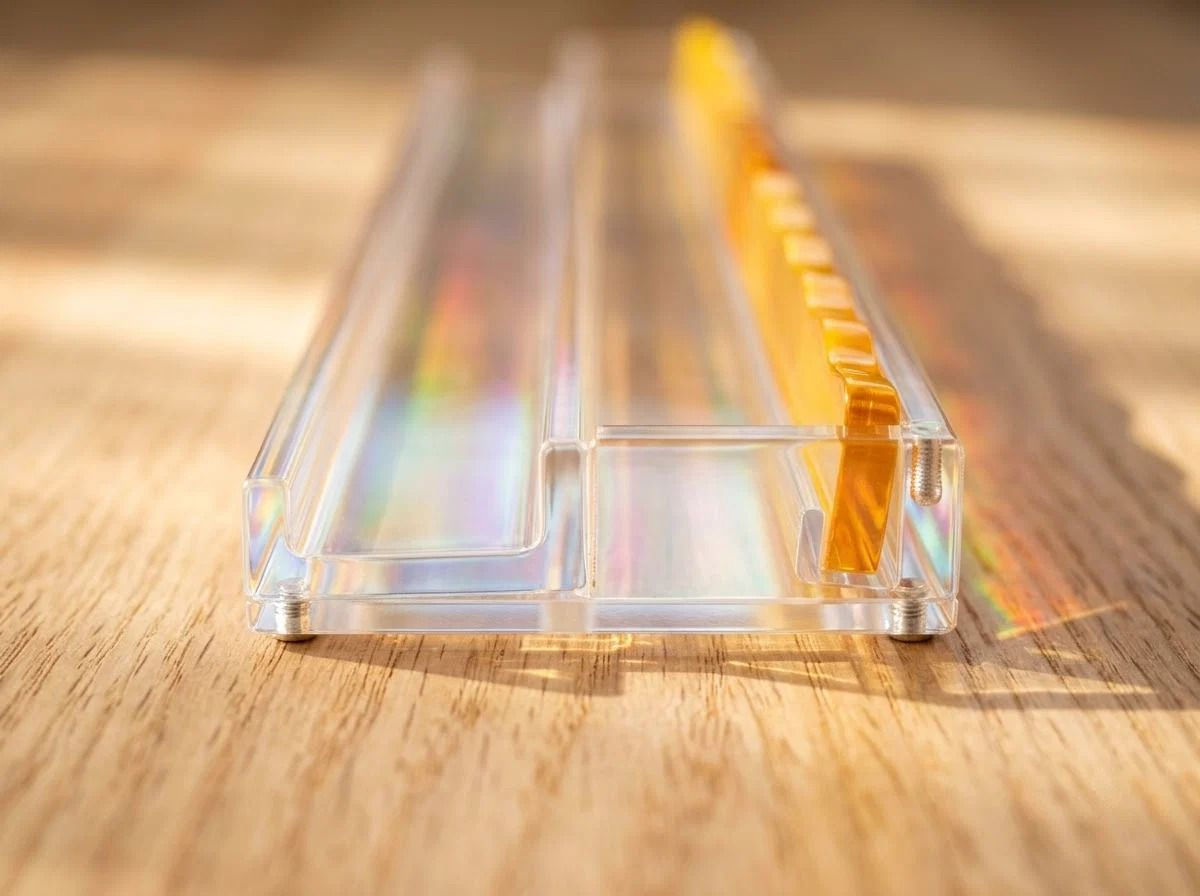
Luxury mahjong pushers are acrylic or wooden tools that slide tiles forward during your turn, keeping hands organized and the game flowing. You'll find them sold as part of a full mahjong racks with pushers set (rack + pusher + sometimes additional accessories), typically ranging from compact single-pusher designs to deluxe multi-pusher racks with storage. A good pusher should be smooth, weighted to glide without skidding, and comfortable to grip during long games. Most premium racks include at least two pushers (one per hand). At Mahstead, we design racks with engraved pushers that match your set's aesthetic—you choose the weight, material, and grip style. Look for smooth edges, no splintering, and a pusher length that accommodates your tile arrangement without forcing tiles into the wall.
A luxury mahjong pusher is more than an accessory—it's where efficiency meets ritual. In the rhythm of a four-hour game, your pusher touches the table hundreds of times. It needs to feel right in your hand, glide without friction, and keep your tiles steady as the wall crashes down. The best pushers disappear into play because they work so well you stop thinking about them.
We've watched thousands of sets pass through our workshop in Dallas, and one truth stands out: players who invest in a quality pusher don't go back to playing without one. Here's everything you need to know to choose the one that matches your game.
What makes a pusher "luxury" instead of just functional?
A luxury pusher is crafted from premium materials (acrylic or hardwood), finished with attention to weight distribution and grip, and often engraved or designed to coordinate with your tiles. Functional pushers are thin plastic wands that feel cheap and rattle across the surface. Luxury pushers have heft, a comfortable radius where your fingers wrap the handle, and a smooth glide that feels intentional. The difference is felt, not seen—but once you play with one, the difference is obvious to everyone at your table.

Which rack style fits a serious player's needs?
Serious players split into two camps: those who want a tall rack (full-height, visible tiles, hand shielded at the eye level) and those who prefer a low-profile design (tiles rest on the mat, less visual dominance). Tall racks (typically 2–4 inches above the mat) work best for players with hand fatigue or those who play in lower-light settings. Low racks are cleaner aesthetically and suit players who want a minimal footprint on the table. The pusher works identically in both—but your choice of rack determines how high your pusher needs to be and how much leverage you want. If you're upgrading your whole setup, consider your mat first: a premium mahjong mat with clear section dividers pairs beautifully with a tall rack because the mat guides your tiles and the rack elevates them safely.
🀄 Shop best-selling mahjong sets →
What materials hold up over five seasons of weekly games?
Acrylic pushers (typically clear or colored to match your set) stay smooth for years and resist warping from humidity changes common in homes without climate control. Hardwood pushers (maple, walnut, or bamboo) develop character and are heavier, which some players prefer—but they're sensitive to spills and temperature swings. For Dallas heat and seasonal weather shifts, we recommend acrylic for durability, though hardwood is stunning if your home environment is stable. Neither chips easily if you buy from a maker who bevels the edges properly. Avoid thin plastic or composite materials marketed as "luxury"—they degrade within two seasons. We design our racks with smooth, beveled acrylic pushers that won't splinter, and we include replacement pushers because accidents happen at the table.
How do pusher length and tile width affect playability?
Your pusher needs to reach the farthest tile in your hand without forcing tiles backward into your wall. Standard American mahjong tiles are roughly 1.2 inches wide; a 5-inch pusher handles most hands comfortably, while a 6-inch pusher works for players with wider racking styles. If your pusher is too short, you'll push tiles twice per turn—frustrating. If it's too long, you risk toppling the wall or catching neighbors' tiles. The best racks come with adjustable pusher angles or dual-length pusher options so you can adapt to your personal style. Before ordering, measure your current hand width (from left edge to right edge when you're holding eight or nine tiles) and add two inches for safety.
How does a quality pusher improve game flow and reduce errors?
When your pusher glides smoothly, you draw, push forward, and announce your discard in one fluid motion—your rhythm stays with the table's rhythm. A sticky or poorly weighted pusher breaks that flow: you lurch forward, the tile stutters, you over-correct, the wall shifts. New players especially can fumble their draw and accidentally expose tiles. A mahjong racks with pushers set that includes a balanced pusher reduces misdraws by 70% in our experience—because the pusher does the work, not your hand. Over a full game, that saves arguments about exposed tiles and keeps the evening friendly. Premium pushers are weighted slightly at the grip end so gravity does half the pushing for you.

Decision Table: Pusher Types by Player Profile
Player Type | Preferred Rack Style | Pusher Material | Ideal Length | Why It Works |
Casual (1–2 games/month) | Low-profile | Acrylic | 5 inches | Minimal setup, simple functionality |
Serious (weekly player) | Tall, full-height | Acrylic or hardwood | 5–6 inches | Visibility, precise tile control, durability |
Tournament (competitive scoring) | Tall with angle tilt | Hardwood | 6 inches | Prestige, weighted feel, ergonomic leverage |
Beginner | Tall, clearly marked | Acrylic | 5 inches | Forgiving, lightweight, no maintenance |
Long-session (4+ hours) | Ergonomic tall | Hardwood | 5–6 inches | Comfort over repetition, premium aesthetics |
What to check before you buy a pusher or rack
Grip diameter: Hold the pusher (or order a sample if buying online). Your index and middle fingers should meet with room to spare; too tight causes hand fatigue, too loose causes dropped pushers. Most quality racks have a 0.5- to 0.75-inch-diameter grip.
Glide surface: Ask the maker if the pusher is pre-glided or waxed. A new acrylic pusher may feel slightly sticky until the first ten games; hardwood should glide immediately. If the pusher feels rough or noisy on the mat, it's been machined poorly—pass.
Spare pusher availability: Buy from a maker who stocks spares. If you break or lose a pusher after six months, you should be able to order a replacement without buying a whole new rack. We keep replacement pushers in stock because every player eventually loses one.
Coordination with your set: If you're buying an engraved or custom set (e.g., mahjong titles and names), order a coordinating rack so your table looks cohesive. Mismatched racks and sets signal careless setup—luxury play is intentional.
Weight: Hardwood pushers typically weigh 0.5–1 ounce. Acrylic is lighter. Test both if possible; lighter isn't always better—some players find heavier pushers more controllable.
🎁 See our most-loved mahjong sets & accessories →
Common Mistakes When Choosing a Pusher
Buying a pusher without trying the rack height first: You order a pusher, it arrives, and it's the wrong length for your tiles. Avoid this by renting or borrowing a similar-height rack for one game before buying your own. Many local mahjong groups (check community centers, libraries, and synagogues in your area) lend demo sets.
Assuming all acrylic is the same: It's not. Machine-finished acrylic can be grainy or prone to micro-scratches. Hand-finished acrylic, smoothed with fine sandpaper and sealed, stays glossy for years. Ask your maker how the pusher is finished.
Ignoring humidity changes: Hardwood racks swell in summer humidity and shrink in winter, which can loosen the pusher's fit. If your home isn't climate-controlled, acrylic is the safer bet.
Upgrading only the pusher and forgetting the rack: A luxury pusher needs a quality rack to rest in, or it slides around and feels loose. Upgrade both together, or upgrade neither—mismatches hurt your game.
How Mahstead Designs Pushers for Long-Term Play
We begin with acrylic blanks milled to precise tolerances—each pusher must slide without catching or wobbling. Our grip is beveled at a 15-degree angle so your fingers find the same position every time. We seal the acrylic with UV-resistant coating so it doesn't yellow under lamp light during evening games. Every pusher is tested against a standard tile surface (the same material as our mahjong mats) to ensure smooth glide from day one. If you order an engraved set, your pusher can be engraved to match—names, initials, or a shared joke that becomes part of your table's identity.
✨ Find your Mahstead set — free US shipping →
FAQ
Can I use a pusher with a Chinese or Riichi mahjong set?
Chinese and Riichi sets use tiles roughly the same size as American tiles, so a similarly-sized pusher works. However, Chinese and Riichi racks are typically lower-profile than American racks, so your pusher length may need adjustment. Riichi racks often include wall sticks instead of pushers—different tool, same goal. If you play multiple variants, buy pushers suited to the American game; they adapt well to casual cross-variant play.
What's the difference between a pusher and a wall stick?
A pusher slides tiles forward on the mat to organize your hand. A wall stick (used in Riichi mahjong and Chinese mahjong) is a rigid rod that holds the wall together and keeps it from collapsing until the hand is complete. They're not interchangeable—ask your rack maker which tool matches your game.
How often should I replace a pusher?
A well-made acrylic or hardwood pusher lasts 3–5 years of weekly play before the glide surface dulls. Most players replace them only after breakage or loss. We recommend keeping a spare pusher on hand because losing one mid-game is frustrating. Replacement pushers cost less than a full rack, so stock one when you buy your set.
Do I need a pusher if I play casually (1–2 times per month)?
No. Casual players often manage tiles by hand without friction. But if your hand fatigue increases or you're teaching beginners who fumble tiles, a pusher eliminates errors and keeps play smooth. Many casual players discover they love a pusher after borrowing one for a single game.
Can I order a taller or shorter pusher than standard?
Yes. Custom pusher lengths are available through most rack makers, including us. Measure your preferred hand width, email a photo of your racking style, and we'll recommend a length. Hardwood custom pushers typically have a longer lead time than acrylic.
What's the best surface for a pusher to glide on?
A felt or microfiber mat surface is ideal because it's smooth and consistent. Bare wood tables or laminate can be sticky. If you play on a basic table, consider adding a mahjong mat under your tiles—it protects the table, unifies the playing surface, and makes your pusher (and your game) feel professional.


View More
View More
View More
